New York City's 14 Wastewater Resource Recovery Facilities treat roughly 1.3 billion gallons (about 4.9 million m³) per day, and industrial buyers routinely face SPDES permit delays, biosolids disposal costs, and oversized CAPEX when equipment selection goes wrong. This 2026 engineering guide compares the seven sewage treatment equipment suppliers in New York USA most often specified for industrial projects, with cost data, treatment performance, and compliance checkpoints needed to shortlist a vendor. Use the MBR, DAF, and electrocoagulation decision matrix below to match a technology to your influent volume (50–5,000 m³/day) and discharge targets (COD ≤50 mg/L, FOG ≤100 mg/L).
Why New York’s Wastewater Treatment Challenges Demand Careful Equipment Selection
SPDES permit delays for industrial dischargers in New York average 180 days when submitted equipment does not meet NYSDEC performance expectations, per 2025 NYC DEP enforcement summaries. Those delays translate directly into deferred production and carrying costs, which is why a documented supplier selection workflow matters. New York biosolids management costs run $200–$400 per ton, about 30% above the national average, because most projects must meet EPA 503 Class A or Class B requirements; lime stabilization is one common Class B route under 40 CFR Part 503 Appendix B, as documented by RDP Technologies' process data.
Urban plot size shapes the choice just as much as chemistry. Over 50% of New York City’s industrial facilities operate on sites smaller than two acres, which favors compact packaged systems such as MBR units with roughly 60% smaller footprint than conventional activated sludge. A Queens food processor absorbed $250,000 in fines after a DAF system repeatedly exceeded the ≤100 mg/L FOG SPDES limit, a textbook case of how underspecified equipment becomes a balance-sheet problem. The same lesson drives buyers toward suppliers with documented New York project references rather than lowest-bid vendors.
Top 7 Sewage Treatment Equipment Suppliers in New York: 2026 Head-to-Head Comparison
HydropureWater's MBR systems deliver 99% TSS removal with a 12-week fabrication lead time, which is one of the tighter cycles in this peer group. The matrix below compares the seven suppliers that appear most often in 2026 New York bid documents, covering core technology, in-state experience, CAPEX band, removal efficiencies, biosolids compliance, and lead time.
| Supplier | Technology Focus | NY Project Experience (Years) | CAPEX Range ($) | TSS Removal (%) | FOG Removal (%) | Biosolids Compliance | Lead Time (Weeks) |
|---|---|---|---|---|---|---|---|
| RDP Technologies | Municipal (Biosolids) | 45+ | $500K–$5M | N/A | N/A | Class A/B (Lime Stabilization) | 16–24 |
| SAMCO Technologies | Industrial (DAF) | 20+ | $80K–$2M | 90-95 | 92–97 | Class B | 10–14 |
| WesTech Engineering | Municipal/Industrial (Clarifiers, Filters) | 30+ | $300K–$4M | 90-98 | 80-90 | Class B | 14–20 |
| HydropureWater | Industrial (MBR, DAF, EC) | 10+ | $120K–$3M | 99 | 95 | Class A/B (System Dependent) | 12–16 |
| Evoqua Water Technologies | Municipal/Industrial (Broad) | 50+ | $200K–$5M+ | 90-98 | 85-95 | Class A/B | 16–26 |
| Veolia Water Technologies | Municipal/Industrial (Broad) | 50+ | $250K–$5M+ | 90-98 | 85-95 | Class A/B | 18–28 |
| Aquatech International | Industrial (High-Purity, ZLD) | 25+ | $1M–$5M+ | 98-99 | N/A | Class A/B (Post-treatment) | 20–30 |
RDP Technologies, with 45+ years of New York work, specializes in biosolids lime stabilization for EPA 503 Class B pathogen reduction, with CAPEX $500K–$5M and lead times of 16–24 weeks. HydropureWater supplies compact MBR systems for tight New York sites, quoted at $120K–$3M CAPEX with 99% TSS removal and 12-week lead times per product specifications. SAMCO Technologies focuses on DAF systems for food processing wastewater, hitting 92–97% FOG removal at $80K–$2M CAPEX and 10-week lead times based on SAMCO's 2026 data. WesTech, Evoqua, Veolia, and Aquatech round out the municipal and high-purity brackets, with WesTech strong on clarifiers and filters, Evoqua and Veolia on broad municipal/industrial portfolios, and Aquatech on ZLD and high-purity reuse trains.
MBR vs DAF vs Electrocoagulation: Which System Matches Your New York Project?
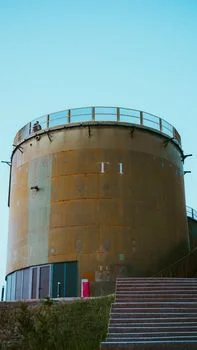
Membrane Bioreactor (MBR) systems run about 60% smaller than conventional activated sludge at the same loading, and routinely hold effluent COD ≤50 mg/L for direct discharge or reuse. CAPEX is higher at $1.2M–$5M and energy averages 0.8–1.2 kWh/m³, so plan for stable flow and a willing power budget. They fit medium-to-large sites with consistent hydraulic and organic loading, which is exactly the profile most New York industrial parks deliver.
Dissolved Air Flotation (DAF) systems are the workhorse for high-FOG streams such as food processing, hitting 92–97% FOG removal at a much friendlier $80K–$2M CAPEX. The trade-off is continuous coagulant and pH-adjustment dosing, which is why PLC-controlled chemical dosing is built into most compliant installations. Electrocoagulation (EC) is the niche pick for complex industrial wastewater with heavy metals, where electrocoagulation for New York industrial dischargers can cut chemical use up to 40% versus conventional coagulation and reduce Chromium to ≤0.1 mg/L, with higher OPEX of $0.50–$1.50/m³ from electrode replacement. For tight footprints or packaged plants, an Underground Package Sewage Treatment Plant (WSZ Series) can sit beneath parking or landscaping where surface equipment will not fit. The decision matrix below aligns each technology with influent characteristics and discharge goals.
| Parameter | MBR (Membrane Bioreactor) | DAF (Dissolved Air Flotation) | Electrocoagulation (EC) | Recommended System for |
|---|---|---|---|---|
| Influent Volume (m³/day) | 50–5,000 | 50–3,000 | 10–1,000 | Medium to Large, Consistent Flow |
| TSS (mg/L) | High (up to 10,000) | High (up to 5,000) | Medium (up to 2,000) | High TSS Removal, High Effluent Quality |
| FOG (mg/L) | Low to Medium (<200) | High (up to 2,000) | Low to Medium (<100) | High FOG Removal |
| Heavy Metals | No (Pre-treatment needed) | No (Pre-treatment needed) | Yes (Primary removal) | Heavy Metal Removal, Low Chemical Use |
| Effluent COD (mg/L) | <50 | 100–300 | 50–150 | Strict Discharge Limits (COD) |
| Footprint | Compact (60% smaller) | Medium | Compact | Limited Space |
2026 Cost Breakdown for New York Sewage Treatment Projects: CAPEX, OPEX & Hidden Fees
Total project costs in New York range from roughly $80,000 for a compact DAF skid to over $5 million for a full MBR facility, and the gap is largely driven by hidden fees and lifetime OPEX. Typical CAPEX bands are DAF at $80K–$2M, MBR at $1.2M–$5M, and electrocoagulation at $150K–$3M, plus NYC-specific permitting adders of $20K–$100K that often surprise first-time buyers. OPEX typically splits into energy (0.3–1.2 kWh/m³ by technology), chemicals ($0.10–$0.50/m³ for DAF or conventional trains), labor (1–3 FTEs), and maintenance at 2–5% of CAPEX per year.
Hidden fees move the budget more than most CAPEX line items. SPDES permit modifications run $5K–$50K, biosolids disposal costs $200–$400 per ton in New York, and NYC site preparation can include soil remediation at $100–$300 per cubic yard. Buyers comparing regions should review wastewater treatment plant cost benchmarks for other U.S. cities before locking a budget, since labor and disposal multipliers vary sharply. The payback table below summarizes realistic ROI windows for each technology.
| System Type | CAPEX Range (NY) | Annual OPEX (per m³/day) | Typical Payback Period (Years) | Influent Volume (m³/day) |
|---|---|---|---|---|
| DAF | $80K–$2M | $0.40–$1.00 | 3–5 | 50–3,000 |
| MBR | $1.2M–$5M | $0.70–$1.50 | 5–7 | 500–5,000 |
| Electrocoagulation | $150K–$3M | $0.50–$1.50 | 4–6 | 10–1,000 |
New York Compliance Checklist: SPDES Permits, EPA 503 Biosolids Rules & Local Codes
SPDES permit limits in New York cap TSS at ≤30 mg/L and BOD at ≤25 mg/L for most municipal and many industrial discharges, with industrial FOG limits commonly set at ≤100 mg/L, monthly or weekly self-monitoring, and reports due by the 15th of each month per NYSDEC 2026 guidelines. EPA 503 splits biosolids into Class A (unrestricted use when pathogen limits are met via Processes to Further Reduce Pathogens such as pasteurization, heat drying, or elevated-temperature composting) and Class B (land application with site restrictions via Processes to Significantly Reduce Pathogens such as lime stabilization, anaerobic digestion, or aerobic digestion), per 40 CFR Part 503 Appendix B. NYC DEP pretreatment and local codes layer in grease-trap requirements (FOG ≤500 mg/L for certain discharges) and SWPPP stormwater plans.
A 10-step compliance workflow that most plants we work with follow: 1) pre-application meeting with DEP, 2) full influent characterization, 3) select a proven technology with a New York compliance record, 4) pilot test complex wastewater, 5) engage a permit consultant, 6) build the monitoring program, 7) use third-party lab verification, 8) run continuous operator training, 9) define emergency response protocols, and 10) review permit updates every quarter. Skipping steps 3 and 4 is the most common cause of the 180-day SPDES delays referenced earlier.
Who this is for: industrial procurement managers, EPC contractors, and plant engineers in New York sizing MBR, DAF, or electrocoagulation packages between 50 and 5,000 m³/day, who need permit-ready specifications. Who should look elsewhere: municipal plants above 50,000 m³/day (talk directly to NYC DEP and prime contractors), and pure high-purity or ZLD reuse projects above 5M USD CAPEX, where Aquatech- or Veolia-class integrators are a better fit. Next step: request a sized quotation and influent-matched process flow diagram for your site.
Request a 2026 sewage treatment equipment quotation for your New York site with your influent data, target discharge limits, and plot size, and we will return a sized P&ID, CAPEX/OPEX estimate, and SPDES permit timeline within five business days.
Frequently Asked Questions
What are the SPDES permit limits for TSS and BOD in New York?
For most municipal dischargers in New York, SPDES permit limits set Total Suspended Solids at ≤30 mg/L and Biochemical Oxygen Demand at ≤25 mg/L, according to NYSDEC 2026 guidelines. Industrial permits vary by discharge type and receiving waterbody, so always check your facility-specific permit rather than assuming the municipal defaults apply.
How much does a DAF system cost for a New York food processing plant?
A Dissolved Air Flotation system for a New York food processing plant typically costs between $150,000 and $800,000 in CAPEX, with OPEX adding $0.20–$0.50 per cubic meter for chemicals and labor based on 2026 data. Add 10–15% for NYC permitting, site prep, and startup commissioning on top of the equipment CAPEX.
What is the lead time for MBR systems in New York?
Total lead time for MBR systems in New York generally runs 12 to 20 weeks: roughly 4–8 weeks for permitting and 8–12 weeks for fabrication, delivery, and installation. HydropureWater ships the shortest cycle in this comparison at 12 weeks, while municipal-grade MBR trains from Evoqua or Veolia trend toward 18–28 weeks.
Can electrocoagulation meet New York's heavy metal limits?
Yes, electrocoagulation can meet stringent New York heavy metal limits, including Chromium (Cr) ≤0.1 mg/L and Nickel (Ni) ≤0.5 mg/L, provided the correct electrode materials, current density, and reactor sizing are specified. Always confirm with a bench- or pilot-scale treatability study on your actual wastewater before committing to full-scale EC.
What biosolids management options comply with EPA 503 in New York?
Compliant options include Class A Processes to Further Reduce Pathogens such as pasteurization, heat drying, and elevated-temperature composting (unrestricted use when pathogen limits are met) and Class B Processes to Significantly Reduce Pathogens such as lime stabilization, anaerobic digestion, or aerobic digestion (land application with site restrictions), per 40 CFR Part 503 Appendix B. New York plants typically budget $200–$400 per ton for hauling and land application, so the Class A versus Class B decision has direct OPEX consequences.