Evaporation crystallization removes arsenic from industrial wastewater with 99.5%+ efficiency by concentrating arsenic-laden brine until supersaturation triggers crystal formation. The process produces stable, crystalline arsenic salts such as sodium arsenate that are classified under EPA 40 CFR 261.24 and are suitable for landfill disposal. Standard design specs include steam consumption of 0.3–0.5 kg per kg of water evaporated (MVR systems cut this by 60%), arsenic solubility of 1.8 g/L at 25°C, and 4–8 hour residence times for 1,000–5,000 mg/L influent streams.
How Does Evaporation Crystallization Compare to Other Arsenic Removal Methods?
Evaporation crystallization removes 99.5% of arsenic by driving wastewater past the supersaturation limit of arsenic salts. This is a physical phase change that is less sensitive to influent fluctuations than biological or electrochemical methods. In high-concentration industrial streams from smelting, mining, and semiconductor fabs, chemical precipitation often misses discharge limits because it depends on the equilibrium solubility of amorphous hydroxides. Evaporation bypasses those limits by removing the solvent (water) entirely and forcing arsenic into a solid, crystalline state.
Bioscorodite systems use organisms such as Acidianus sulfidivorus to oxidize Fe(II) and As(III) and precipitate scorodite (FeAsO4·2H2O). They cap out below 2,000 mg/L influent and need tight control at 70°C and fixed pH to avoid unstable amorphous phases. Electrocoagulation adsorbs arsenic onto iron or aluminum hydroxides generated in situ. Lower CAPEX, but the sludge is watery, amorphous, and frequently fails TCLP (Toxicity Characteristic Leaching Procedure). Scalability is where evaporation pulls ahead: MVR-based trains are designed for 10–100 m³/h with linear cost scaling, while bioscorodite reactors rarely exceed 20 m³/h because of oxygen transfer limits and slow biomass kinetics.
| Parameter | Evaporation Crystallization | Bioscorodite | Electrocoagulation |
|---|---|---|---|
| Removal Efficiency | 99.5% + | 95–98% | 90–95% |
| Effluent As Concentration | <0.5 mg/L | 1–10 mg/L | 10–50 mg/L |
| Sludge Characteristics | Crystalline, stable salts | Crystalline scorodite | Amorphous ferrihydrite |
| Max Influent Capacity | 100+ m³/h | <20 m³/h | 50+ m³/h |
| Regulatory Compliance | High (meets 40 CFR 261.24) | Moderate (stable but low yield) | Low (sludge stability issues) |
Evaporation Crystallization Process Design: Key Parameters and Specs
Industrial arsenic crystallization targets a 10x to 20x volume reduction to drive precipitation of stable sodium or calcium arsenate crystals. Arsenic solubility in water is the binding constraint: for Na3AsO4 brine it is about 1.8 g/L at 25°C, but it climbs sharply with temperature, so the crystallizer must run a higher concentration factor at 80–100°C to hit the design crystal yield. Engineers balance the boiling point rise (BPR) of the concentrated brine against MVR compressor input.
Supersaturation is controlled through the metastable zone width (MSZW). Operating too deep into the labile zone triggers spontaneous primary nucleation and produces "fines" that resist dewatering. PLC-controlled systems hold pH at 6–8 and temperature at 80–100°C. Using PLC-controlled chemical dosing for pH adjustment in arsenic crystallization keeps arsenic in the less soluble arsenate (As V) form, which crystallizes more readily than arsenite (As III).
| Temperature (°C) | As Solubility (g/L) | Kinetics Factor (k) | Boiling Point Rise (BPR) |
|---|---|---|---|
| 25 | 1.8 | 1.0 (Baseline) | 0.2°C |
| 50 | 4.5 | 2.4 | 0.8°C |
| 80 | 12.2 | 5.1 | 2.5°C |
| 100 | 28.5 | 8.8 | 4.1°C |
| 120 | 45.0 | 12.4 | 6.2°C |
Residence time drives crystal growth. For influent at 1,000–5,000 mg/L, hold the slurry 4–8 hours so secondary nucleation can grow crystals to 100–300 microns, the size range that dewaters cleanly. Above 10,000 mg/L, extend residence to 12 hours to keep heat exchanger surfaces from scaling. For very high arsenic feeds, some plants add resin adsorption as a pretreatment for high-arsenic wastewater to lower the load on the crystallizer and stabilize throughput.
Energy use is dominated by the latent heat of vaporization. Live-steam crystallizers consume 0.3–0.5 kg of steam per kg of water evaporated. MVR (Mechanical Vapor Recompression) systems recycle vapor latent heat and drop consumption to 0.1–0.2 kg/kg. After crystallization, a high-efficiency plate and frame filter press for arsenic sludge dewatering delivers 99% solids capture and a cake at 70–80% dry solids, which compresses downstream disposal costs sharply.
Cost Models and ROI: Evaporation Crystallization vs. Alternative Arsenic Removal Technologies

CAPEX for a 50 m³/h MVR evaporation crystallization system runs $2.8M to $3.5M. The payback comes from reduced hazardous-waste disposal volume and high-purity water recovery. Upfront cost is higher than electrocoagulation ($0.5M–$1.5M) or bioscorodite ($0.8M–$2M), but the 10-year total cost of ownership (TCO) usually favors evaporation because the sludge stream is small and predictable. In arsenic work, the "sludge penalty" is the dominant OPEX driver: amorphous chemical sludge is often 5x the volume of crystalline salts, with disposal above $300/ton in many jurisdictions.
OPEX for MVR trains is mostly electricity, typically 20–40 kWh per m³ of water treated. Electrocoagulation carries heavy electrode replacement costs, and chemical precipitation needs iron salt doses at Fe:As ratios of 10:1 or higher to hit compliance. When evaluating how electrocoagulation compares to evaporation crystallization for arsenic removal, engineers should also price in the iron-rich secondary effluent and the 15–20% downtime that electrode passivation can add.
| Cost Component | Evaporation (MVR) | Bioscorodite | Electrocoagulation |
|---|---|---|---|
| CAPEX (10 m³/h) | $1.2M – $1.8M | $0.8M – $1.2M | $0.5M – $0.8M |
| OPEX ($/m³ treated) | $2.50 – $4.50 | $1.80 – $3.50 | $4.00 – $7.50 |
| Sludge Disposal ($/m³) | $0.50 – $1.00 | $0.80 – $1.50 | $3.00 – $6.00 |
| ROI Period (Years) | 3.5 – 5.0 | 5.0 – 7.0 | 2.0 – 4.0 |
| Maintenance Frequency | Low (Annual) | High (Weekly) | Moderate (Bi-weekly) |
Payback is strongest in Zero Liquid Discharge (ZLD) schemes. The process returns 95–98% of the influent as high-purity distillate, which plants can reuse in process water and offset raw-water purchases. A facility treating 50 m³/h of arsenic-bearing smelting wastewater can save upwards of $150,000 per year on water alone, plus another $400,000 per year by cutting hazardous sludge volume versus ferrihydrite precipitation.
Compliance and Permitting: Meeting Global Arsenic Discharge Standards with Evaporation Crystallization
Under EPA 40 CFR 261.24, arsenic-bearing waste is hazardous when the TCLP extract exceeds 5.0 mg/L. Evaporation crystallization is the only mainstream option that produces a concentrated waste stream that can be tuned for stability. By managing crystallization kinetics to grow large, well-ordered sodium or calcium arsenate crystals, operators can meet landfill acceptance criteria without leaning on Portland cement or specialty polymer stabilization.
Global arsenic limits are tightening. WHO recommends <0.01 mg/L for drinking water, which has pulled industrial discharge limits down in the EU (Directive 2000/60/EC) and China (GB 25466-2010) to <0.1 mg/L or <0.05 mg/L. Evaporation easily clears these bars because the distillate carries arsenic below the detection limit (often <0.001 mg/L); arsenic does not volatilize at brine concentrator operating temperatures.
Compliance Checklist for Arsenic Removal Permitting:
- NPDES Permit: Ensure distillate meets local water quality standards for discharge or plan for 100% internal reuse.
- 40 CFR 261.24: Conduct quarterly TCLP testing on crystallized arsenic salts to confirm non-hazardous status or proper hazardous classification.
- Air Emissions: Monitor for VOCs if the influent wastewater contains organic co-contaminants that may co-evaporate with water.
- Hazardous Waste Manifest: Maintain detailed logs of crystal volumes and disposal sites to comply with "cradle-to-grave" regulations.
Emerging rules such as California's <0.005 mg/L and the EU's proposed 2030 industrial discharge ban are pushing legacy chemical methods past their useful range. Reaching the last few ppb of arsenic by dosing is brutally uneconomical. Evaporation sidesteps that curve by physically separating water from arsenic, regardless of the starting concentration.
Vendor Selection Framework: Choosing an Evaporation Crystallization System for Arsenic Removal
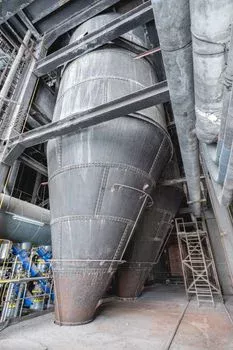
A serious vendor evaluation must lead with heat exchanger scaling control and arsenic-salt nucleation kinetics at the expected influent salinity. Arsenic rarely arrives alone; sulfates, chlorides, and calcium ride with it, and a vendor without arsenic experience can deliver a system that dies when calcium sulfate (gypsum) scales the heat transfer surfaces and insulates the train.
Step-by-Step Decision Logic:
- Verify MVR Capability: Does the vendor offer Mechanical Vapor Recompression? Live-steam TVR (Thermal Vapor Recompression) drives OPEX 2–3x above MVR benchmarks.
- Demand Pilot Data: For influent above 5,000 mg/L arsenic, run a 3-month pilot. Measure Boiling Point Rise and the Fouling Factor over time.
- Assess Sludge Dewatering Integration: Will the vendor supply an integrated dewatering unit, or are you sourcing the filter press separately? Integration ensures the crystallizer discharge matches the press's pressure and flow window.
- Check Compliance Guarantees: Will the vendor put it in writing that the distillate meets EPA/WHO standards and the sludge meets TCLP limits?
Red flags: vendors offering "standard" brine concentrators without requesting a full ionic analysis of your wastewater. Magnesium and iron shift crystal habit and produce "slush" instead of hard crystals. Skip vendors without smelting or mining references; those sites expose systems to corrosion that demands Titanium or Hastelloy construction, which general-purpose wastewater shops routinely miss. Most plants we size for this duty run at the lower end of the influent concentration range (1,000–3,000 mg/L) and stay there with a disciplined upstream segregation plan.
Engineers scoping a full arsenic treatment train often start by reviewing packaged options such as the Underground Package Sewage Treatment Plant (WSZ Series) to anchor the pretreatment side, then specify the crystallizer around the verified ionic profile. For next steps, send your influent analysis and target effluent quality to request a sized MVR evaporation crystallization proposal.
Frequently Asked Questions
What is the maximum arsenic concentration an MVR system can handle?
MVR systems can handle influent arsenic concentrations up to 50,000 mg/L (5%). At those levels the boiling point rise (BPR) becomes significant, which forces a larger compressor and specialized heat exchanger geometry to hold efficiency. Most industrial applications operate in the 1,000 to 10,000 mg/L range.
How does pH affect the crystallization of arsenic?
pH is the most critical operational variable. At a pH of 6–8, arsenic is primarily in the arsenate (H2AsO4- or HAsO4 2-) form. If the pH drops too low, volatile arsenic compounds can form; if it is too high, the solubility of certain arsenic salts increases, reducing crystallization efficiency. PLC-controlled dosing is mandatory for stability.
Can evaporation crystallization remove both Arsenic (III) and Arsenic (V)?
Yes, but Arsenic (V) crystallizes more easily and is more stable in solid form. Most industrial systems include a pre-oxidation step using hydrogen peroxide or ozone to convert all As(III) to As(V) before the brine enters the evaporation chamber, which holds 99.5%+ removal and a safer sludge product.
What happens to the recovered water (distillate)?
The distillate is typically high-purity water with <50 mg/L Total Dissolved Solids (TDS) and arsenic levels below 0.005 mg/L. It suits boiler feed, cooling tower makeup, or direct process reuse, which is why evaporation crystallization is a cornerstone of Zero Liquid Discharge (ZLD) strategies.