The 500 KLD wastewater treatment plant cost in Nigeria spans ₦120M–₦250M in CAPEX (2025), depending on whether you specify SBR, DAF or MBR technology. Annual OPEX adds ₦10M–₦22M, with energy, sludge disposal and membrane replacement driving the spread.
500 KLD Wastewater Treatment Plant Cost in Nigeria: The 2026 Baseline
Budget ₦120M for an SBR plant, ₦150M for DAF and ₦200M–₦250M for MBR at 500 KLD, quoted for 2025. Annual OPEX runs ₦10M–₦22M per technology. Energy averages 40% of OPEX at roughly ₦65/kWh in Lagos. Local fabrication trims CAPEX 20–30% and adds 8–12 weeks of lead time.
Effluent targets move that baseline more than steel prices do. MBR systems deliver near-reuse quality at COD ≤50 mg/L, while SBR systems meet NESREA discharge limits of BOD ≤30 mg/L at about 30% lower CAPEX. Membrane replacement accrues ₦5M per year on MBR, and sludge disposal runs near ₦3M per year whatever biology you choose. For international tender documents, 500 KLD equals 500 m³/day, roughly 132,000 US gallons per day.
A quoted CAPEX should cover civil works, mechanical equipment, electrical and PLC panels, commissioning and first-fill chemicals and spares. Vendors who quote equipment-only figures look 15–25% cheaper on paper and cost more at handover. Procurement teams searching "500 kld wastewater treatment plant cost nigeria" usually arrive with one of three briefs: replace a fined legacy plant, expand capacity, or qualify effluent for reuse. The sections below price each brief, then add the permit costs that gate the schedule.
Why Wastewater Treatment Costs in Nigeria Keep Rising
NESREA's 2023 effluent standards are now strictly enforced, with fines for non-compliance reaching up to ₦10M, according to LASEPA 2024 data. Industrial firms, from Lagos food processors to textile mills in Kano, face discharge limits of BOD ≤30 mg/L, COD ≤250 mg/L and TSS ≤30 mg/L. One Lagos food processing plant was recently fined ₦5M for exceeding COD limits. That single penalty equals a third of a 500 KLD SBR plant's annual OPEX.
Regulatory reach keeps widening. According to the agency's official site, the NESREA Act "empowers the Agency to be responsible for enforcing all environmental laws, guidelines, policies, standards and regulations in Nigeria." The same site notes that the Federal Government "has developed the following Thirty Five (35) Environmental Regulations." Permits and environmental audits now flow through NESREA's online portals, which shortens paperwork but formalises the monitoring records inspectors expect.
Energy is the second driver. Electricity in Lagos costs approximately ₦65/kWh and accounts for a substantial 40% of total OPEX. Aeration-intensive SBR plants cost up to 25% more to operate than MBR plants in energy terms, according to GTS Enviro 2025 benchmarks. Sludge disposal, which can reach ₦3M annually for a 500 KLD facility, has surged 15% since 2022 as landfill capacity dwindles in Lagos and Port Harcourt (NESREA 2024 report).
Municipal backstop is thin, so plants own their whole treatment train. According to Wikipedia's sector overview, "Adequate sanitation is typically in the form of septic tanks, as there is no central sewage system." No central sewage network means no shared capacity to absorb peak loads or shock spills. Every naira of energy, chemical and sludge cost lands directly on the factory's own budget, which is why industrial effluent treatment cost in Nigeria keeps climbing.
Upgrades can beat the trend. A Lagos textile factory running a conventional SBR system faced persistent fines and high operating costs. It upgraded to MBR despite a 20% higher initial CAPEX and cut annual OPEX by 35%. The saving came mainly from lower aeration energy and a more dewatered, lower-volume sludge stream that costs less to haul.
CAPEX by Technology and Capacity: MBR, SBR, DAF and Hybrid
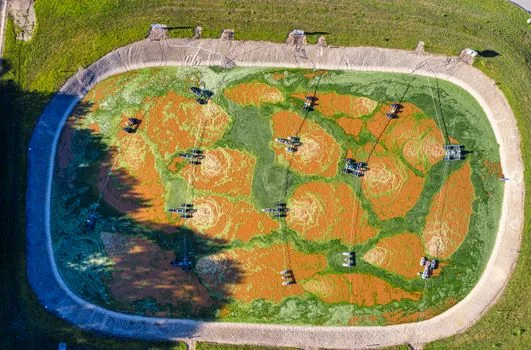
CAPEX for an industrial plant in Nigeria swings with technology class: ₦120M for SBR to ₦250M for MBR at 500 KLD in 2025. The spread reflects component quality, process complexity and the effluent standard each technology can hit. Dissolved Air Flotation systems sit between them at roughly ₦150M for 500 KLD and suit high-TSS effluents from food processing or pulp and paper. MBR membrane bioreactor systems for industrial wastewater treatment in Nigeria carry the highest ticket but deliver COD ≤50 mg/L effluent, often suitable for direct reuse without tertiary polishing.
Local suppliers in Nigeria offer CAPEX reductions of 20–30% against imported systems. The trade-off sits in warranty depth on critical components such as MBR membranes and PLC automation. Imported packages cost more yet typically bundle comprehensive warranties and established after-sales networks. Teams budgeting a smaller scheme should also read our breakdown of industrial water treatment plant cost 300 cubic meters per day nigeria, which prices the same technologies at 300 cubic meters per day.
Hybrid systems reward difficult loads. A 500 KLD DAF + SBR hybrid costs approximately ₦180M and can reduce OPEX by up to 20% against a standalone SBR, because the DAF stage pre-removes up to 80% of suspended solids and shrinks aeration demand on the biology (per EPA 2024 benchmarks). Buyers screening multi-stage schemes for difficult organics can also review hybrid systems for high-strength organic wastewater treatment in Nigeria before shortlisting vendors.
The table below sets out CAPEX across five capacity points, from a 50 KLD satellite plant to a 2000 KLD main factory treatment line. Interpolate between columns rather than scaling linearly. Civil works, yard piping and pump stations do not grow proportionally with flow, so per-klitre costs fall as capacity rises.
| Technology | 50 KLD (₦M) | 200 KLD (₦M) | 500 KLD (₦M) | 1000 KLD (₦M) | 2000 KLD (₦M) |
|---|---|---|---|---|---|
| MBR | 40 | 90 | 200 | 350 | 600 |
| SBR | 25 | 60 | 120 | 200 | 350 |
| DAF | 30 | 75 | 150 | 280 | 480 |
| Hybrid (DAF+SBR) | 35 | 85 | 180 | 320 | 550 |
MBR vs SBR Wastewater Treatment Cost in Nigeria: Which Fits a 500 KLD Budget?
MBR costs ₦200M against SBR's ₦120M at 500 KLD, and ₦22M against ₦15M in annual OPEX, so the choice hinges on effluent target and reuse plans. SBR wins on first cost, mechanical simplicity and operator availability. MBR wins where reuse, tight limits or footprint constraints dominate. Decide on permit mathematics, not on purchase order optics.
Energy separates the two biologies. MBR systems consume 0.8–1.2 kWh/m³ because membranes demand continuous aeration and filtration. SBR systems draw 0.6–1.0 kWh/m³ across intermittent aeration cycles, and DAF pretreatment sits lowest at 0.3–0.5 kWh/m³ (per EPA 2024 data). For a 500 KLD plant operating 24/7, those differences translate to millions of naira annually at ₦65/kWh. In practice, most food-sector loads we size run at the lower end of each band once equalisation is installed upstream.
Membranes are the MBR-specific line item: approximately ₦5M per year for a 500 KLD plant, incurred as replacement every 5-10 years depending on membrane type and operating conditions. SBR carries no membrane cost but produces greater sludge volume, which pushes disposal spend upward. SBR effluent generally complies but may need supplementary sand filters to hold TSS consistently below 30 mg/L on variable industrial loads.
Operator skill tilts many sites toward SBR. A batching SBR tolerates interrupted power and modest instrumentation, while an MBR rewards stable dissolved-oxygen control, disciplined cleaning cycles and fine screening upstream. Where a site already runs a chemical or pharmaceutical utility crew, the MBR skill set usually exists in-house already. Where it does not, budget for vendor-led operator training in year one.
OPEX in Nigeria: Energy, Chemicals and Sludge Disposal by System
Annual OPEX for a 500 KLD industrial plant in Nigeria lands between ₦10M and ₦22M depending on technology. Energy dominates, chemicals rank second for DAF-heavy schemes, and sludge disposal ranks third and is still rising. Maintenance and labour add ₦1M–₦3.5M yearly across the four system types, a line many first-time buyers leave blank in year-one budgets.
Chemical spend follows the process choice. DAF systems spend ₦2M–₦4M annually on coagulants and flocculants, while MBR and SBR schemes generally stay under ₦500K per year. Automatic chemical dosing systems optimise those costs and stabilise performance against load swings, so most DAF quotations now include them by default. Membrane replacement, unique to MBR, adds the ₦5M annual accrual noted above.
Sludge is the quiet budget line at roughly ₦3M per year for a 500 KLD facility, with regulatory pressure and landfill closures pushing it up. Sludge dewatering solutions to reduce disposal costs in Nigeria such as plate and frame filter presses change the arithmetic. A filter press adds about ₦10M of CAPEX, cuts sludge volume by up to 80% and reduces disposal OPEX by roughly 50%, which pays back quickly at current disposal rates.
The table below breaks the annual bill into its line items for a 500 KLD plant. Read it against your own energy tariff and sludge disposal contract. Those two lines move the total more than any vendor discount, and both are negotiable before signature.
| Technology | Energy (₦M/year) | Chemicals (₦M/year) | Sludge Disposal (₦M/year) | Membrane Replacement (₦M/year) | Maintenance/Labor (₦M/year) | Total OPEX (₦M/year) |
|---|---|---|---|---|---|---|
| MBR | 10.0 | 0.5 | 3.0 | 5.0 | 3.5 | 22.0 |
| SBR | 8.0 | 0.5 | 3.5 | 0.0 | 3.0 | 15.0 |
| DAF | 4.0 | 3.0 | 2.0 | 0.0 | 1.0 | 10.0 |
| Hybrid (DAF+SBR) | 6.0 | 3.0 | 1.5 | 0.0 | 1.5 | 12.0 |
DAF SBR Hybrid Wastewater Treatment Cost in Nigeria: Payback and ROI
The DAF + SBR hybrid costs about ₦180M CAPEX at 500 KLD and typically pays back in 2.0–3.8 years across food, textile and pharmaceutical loads. The DAF front-end pre-removes 80% of suspended solids, so the biological stage runs smaller and cheaper on aeration and chemicals. DAF systems for high-TSS industrial wastewater pretreatment in Nigeria are specified for exactly this duty. Payback shortens wherever avoided fines, banked reuse water and chemical savings are counted in the model.
The food-sector case is the cleanest. A Lagos food processing plant installed a 500 KLD MBR system with a CAPEX of ₦200M and now saves ₦15M annually, mainly by avoiding NESREA fines and cutting fresh water consumption through effluent reuse. Documented in a 2024 case study, the package reaches a 3.5-year payback. Sector-specific designs follow the same logic as food processing wastewater treatment.
Textile loads in Kano reward the MBR switch hardest. Despite approximately ₦250M CAPEX for a 500 KLD MBR plant, some factories cut OPEX by 40% through lower energy consumption and reduced sludge volumes (per NESREA 2024 data). The shift delivers an estimated 4-year payback in that sector. Pharmaceutical plants in Port Harcourt favour the hybrid instead: ₦180M CAPEX, 80% of suspended solids and COD pre-removed, roughly ₦2M per year saved on chemicals, and a 2-year payback.
Size the hybrid on load profile, not on flow alone. Where fats, fibres or heavy suspended solids dominate the raw effluent, the DAF stage earns its CAPEX back within the first sludge-disposal invoices. Where soluble organics dominate, a straight SBR or MBR usually prices better and runs simpler.
| Technology | Food Processing (Years) | Textiles (Years) | Pharmaceuticals (Years) |
|---|---|---|---|
| MBR | 3.5 | 4.0 | 3.0 |
| SBR | 5.0 | 6.0 | 4.5 |
| DAF | 4.0 | 5.0 | 2.5 |
| Hybrid (DAF+SBR) | 3.0 | 3.8 | 2.0 |
Local vs Imported Equipment: Cost, Lead Time and Lifecycle Trade-offs
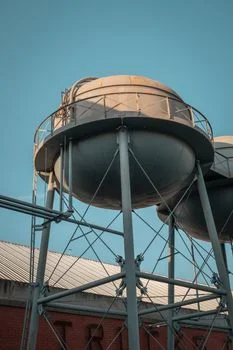
Local equipment in Nigeria cuts CAPEX 20–30% but stretches lead times to 8–12 weeks on inventory and fabrication limits (per GTS Enviro 2025 data). Imported systems run 12–16 weeks through shipping and customs clearance, cost 20–30% more, and arrive with advanced PLC automation plus warranties of 5-10 years on membranes and controls. Compliance-ready procurement weighs both sides rather than optimising the purchase order alone.
Lifecycle arithmetic often favours imports for MBR. High-quality imported membranes last around 10 years versus 5-7 years for some local alternatives, and unscheduled downtime drops with proven control systems. For simpler SBR plants, local supply usually balances better because maintenance is lighter and spare parts sit nearby. Run the full lifecycle analysis, factoring maintenance, spares availability and operational efficiency over the plant's life. Deeper equipment-selection guidance sits in the Lagos-specific wastewater treatment compliance and equipment selection guide.
Commissioning support deserves equal weight to price. Local vendors reach site quickly for commissioning and operator training, while importers fly engineers in on scheduled windows booked months ahead. Payment terms differ too: local fabricators often accept staged payments in naira, while imports tie you to letters of credit and foreign-exchange timing. Both patterns fit some projects and cripple others, so match them to your finance office before award.
The table below compares local and imported equipment across the metrics procurement actually negotiates.
| Technology | Source | CAPEX (₦M, 500 KLD) | Lead Time (weeks) | Warranty (years) | Maintenance Costs (₦M/year) |
|---|---|---|---|---|---|
| MBR | Local | 160 | 10 | 2 | 6.0 |
| MBR | Imported | 200 | 14 | 5 | 5.0 |
| SBR | Local | 90 | 10 | 3 | 3.0 |
| SBR | Imported | 120 | 14 | 5 | 2.5 |
| DAF | Local | 120 | 8 | 2 | 2.0 |
| DAF | Imported | 150 | 12 | 3 | 1.5 |
NESREA and LASEPA Standards, Permits and Compliance Costs
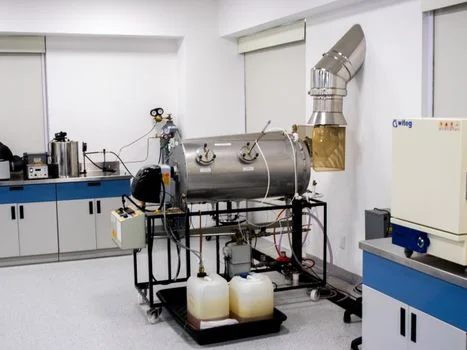
NESREA sets the national discharge floor: BOD ≤30 mg/L, COD ≤250 mg/L, TSS ≤30 mg/L and pH 6–9, with zero detectable E. coli required for specific applications or sensitive receiving waters (per NESREA Guidelines 2023). MBR effluent clears these limits without additional tertiary treatment. SBR effluent generally complies but may need supplementary filtration such as sand filters to hold TSS below 30 mg/L.
Lagos adds its own layer. LASEPA permits for industrial plants typically cost between ₦500K and ₦2M depending on capacity and industrial classification (LASEPA 2024 fee schedule), plus annual renewal fees of ₦200K–₦500K. The application process takes 6–12 weeks and requires a comprehensive Environmental Impact Assessment report, detailed engineering drawings of the proposed plant, and a NESREA compliance certificate. Common pitfalls include incomplete documentation, inadequate EIA studies and failure to demonstrate a robust monitoring plan.
Screen regulatory scope early, not after commissioning. NESREA administers 35 environmental regulations nationwide, and the ones touching your sector dictate monitoring frequency and reporting format. Start the permit file and the EIA before equipment delivery, since the 6-12 week processing window sits squarely on the project critical path. Renewal-year inspections run smoother when discharge logs are kept monthly, not assembled the week before.
Next Step: Build a Budget You Can Defend
A defensible 500 KLD budget in Nigeria needs five inputs locked: your effluent matrix, your energy tariff, the sludge disposal route, the local-versus-import decision, and the permit timeline. Cross-check each against the tables above before shortlisting vendors. Operations in the South-South can benchmark against the Wastewater Treatment Plant Cost in Rivers Nigeria: 2026 CAPEX, OPEX & Tech-Specific Breakdown, which prices the same technologies for Rivers State. Facilities in Lagos should layer LASEPA fees on top of the CAPEX table before board approval.
Once the shortlist is down to two technologies, ask vendors for performance bonds on effluent quality, not just equipment warranties. Need a customised estimate? Request a free quote with your flow rate and pollutant parameters, and the engineering team will price CAPEX, OPEX and permit support together.
Frequently Asked Questions
What is the cheapest wastewater treatment technology for Nigeria?
SBR is usually the cheapest entry point at about ₦120M CAPEX for a 500 KLD industrial plant. DAF pretreatment runs near ₦150M, while MBR tops the range at ₦200M or more. OPEX reshuffles the ranking: SBR costs ₦15M per year, DAF ₦10M and MBR ₦22M including membrane replacement. The cheapest fit therefore depends on your effluent limits, available space and long-term operating cost tolerance.
How long does it take to install a wastewater treatment plant in Nigeria?
Plan on 14 to 28 weeks from purchase order to commissioning. Equipment lead times run 8–12 weeks for locally sourced systems and 12–16 weeks for imported systems, depending on shipping and customs. Permits add another 6–12 weeks through NESREA and LASEPA, driven by documentation completeness and regulatory processing times. File permits in parallel with fabrication to compress the schedule.
What are the hidden costs of wastewater treatment in Nigeria?
Permits, sludge and membranes hold most of the hidden spend. Initial LASEPA permits cost ₦500K–₦2M, with annual renewals of ₦200K–₦500K. Sludge disposal averages ₦3M per year at 500 KLD and has climbed 15% since 2022. MBR membrane replacement budgets about ₦5M per year, typically incurred every 5-10 years, and spare-parts delays can add production losses on top.
Can I reuse treated wastewater in Nigeria?
Yes, treated wastewater can be reused when it meets NESREA reuse standards, which are stricter than discharge limits. Non-potable applications such as irrigation, industrial cooling and process water generally require COD ≤10 mg/L and TSS ≤5 mg/L. Meeting those numbers usually adds tertiary steps such as ultrafiltration or reverse osmosis, worth ₦50M–₦100M of CAPEX at 500 KLD depending on required purity and volume.
What financing options are available for wastewater treatment plants in Nigeria?
The Bank of Industry is the usual first stop, offering intervention funds and loans at competitive rates such as 9% interest with a 5-year tenor. Vendor financing from international suppliers typically requires a 20% down payment, with the balance paid over 12–36 months. Commercial banks also provide project financing, though often with higher interest rates and stricter collateral requirements.
What drives a 500 KLD plant budget in Nigeria most?
Technology choice moves the total most: ₦120M for SBR against ₦250M for MBR at identical capacity. Energy then dominates operations at about 40% of OPEX, with power near ₦65/kWh in Lagos. Sludge disposal adds roughly ₦3M yearly, and MBR membranes accrue ₦5M per year. Match the process to your discharge limits before negotiating price.