What Is a Package Wastewater Treatment Plant?
A package wastewater treatment plant is a factory-built, modular system designed for rapid deployment, typically handling flows from 10,000 gallons per day (GPD) to 3 million gallons per day (MGD). These systems arrive on-site as pre-assembled, pre-tested units, drastically reducing construction time and complexity compared to traditional site-built facilities.
Common configurations include sequencing batch reactors (SBR), membrane bioreactors (MBR), and anoxic/aerobic (A/O) processes. In South Dakota, these turnkey solutions are critical for small towns outgrowing lagoon systems, military installations like Ellsworth Air Force Base, food processing plants, and remote industrial sites where connection to a centralized municipal sewer is impractical or cost-prohibitive. Their modularity also allows for future expansion by adding additional treatment trains, providing a scalable solution for growing communities.
Why South Dakota Needs Modular Wastewater Solutions
South Dakota has over 100 communities with populations under 5,000, many of which rely on aging lagoon systems that are at or beyond capacity. The Box Elder SBR project is a prime example, where a new package plant was deployed to address compliance issues from an overloaded lagoon. Beyond capacity, the state's extreme cold presents a significant operational challenge; January temperatures can plummet to -30°F, which can halt biological activity in open lagoons.
Insulated, enclosed package plants maintain stable internal temperatures, ensuring consistent biological treatment and year-round compliance with stringent SD DENR and EPA NPDES permit limits for parameters like BOD, TSS, and ammonia. This makes them a necessary investment for communities and industries facing enforcement actions for non-compliance. The state's dispersed population and vast rural areas make centralized infrastructure economically unfeasible, making decentralized, modular treatment essential for public health and environmental protection.
Core Technologies in Package Plants: SBR vs MBR vs A/O
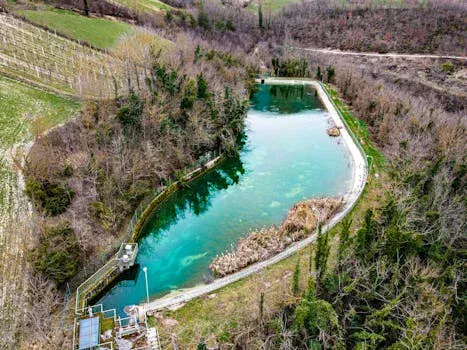
Selecting the right technology is the most critical step in specifying a package plant. Each process offers distinct advantages in footprint, effluent quality, and operational complexity.
SBR (Sequencing Batch Reactor): Systems like the 3.0 MGD unit in Box Elder use timed fill, react, settle, and decant cycles within a single tank. This eliminates the need for secondary clarifiers and achieves 90–95% removal of BOD and TSS. They are renowned for handling high peak flows—the Box Elder plant is designed for a 9.3 MGD peak. The process also provides inherent flexibility, allowing operators to adjust cycle times to match varying influent conditions.
MBR (Membrane Bioreactor): These systems integrate biological treatment with ultrafiltration membranes (0.1–0.4 μm), producing exceptionally high-quality effluent with turbidity less than 1 NTU, suitable for reuse. The compact MBR membrane bioreactor system requires up to 60% less space than conventional plants but carries a higher capital cost due to the membranes. However, this cost can be offset by reduced land requirements and the value of the high-quality effluent produced.
A/O (Anoxic/Oxic): This process uses submerged contact oxidation for robust biological nutrient removal, achieving 85–92% BOD reduction. A/O systems, like our fully automated underground package sewage treatment plant (WSZ series), are ideal for flows from 1–80 m³/h (264–21,100 GPH) in residential complexes or light industrial applications where minimal operator attention is desired. The anoxic zone facilitates denitrification, which is increasingly important for protecting sensitive water bodies.
| Technology | Ideal Flow Range | Footprint | Effluent Quality | Best For |
|---|---|---|---|---|
| SBR | 0.5 - 5.0 MGD | Medium | BOD ≤ 10 mg/L, TSS ≤ 15 mg/L | Municipalities, high peak flows |
| MBR | 0.1 - 3.0 MGD | Small | BOD ≤ 5 mg/L, TSS ≤ 2 mg/L | Space constraints, reuse goals |
| A/O | 10,000 GPD - 0.5 MGD | Medium to Large* | BOD ≤ 15 mg/L, TSS ≤ 20 mg/L | Remote sites, low operational budget |
*A/O footprint is larger than MBR but can be reduced with underground installation.
Key Performance Parameters for South Dakota Conditions
A system’s performance must be guaranteed under South Dakota’s harshest conditions, including extreme cold and seasonal flow fluctuations.
Temperature Resilience: Biological systems must maintain nitrification at water temperatures as low as 4°C (40°F). Package plants with insulated tanks, enclosed buildings, and sludge recirculation systems far outperform exposed lagoons in winter. MBRs, with their high mixed liquor suspended solids (MLSS) concentrations, are particularly resilient to cold-shock loading. Additional design considerations include heated equipment rooms and submersible mixers to prevent ice formation.
Peak Flow Tolerance: South Dakota's spring thaws and storm events can cause inflow and infiltration (I&I) that triple average daily flow. Systems must be designed for these surges, as seen in the Box Elder plant’s 3:1 peak-to-average flow ratio. Equalization tanks are often specified upstream of the biological process to dampen these surges and protect the delicate microbial ecosystem from being washed out.
Effluent Standards: SD DENR Class II limits are non-negotiable. Package plants must consistently meet these benchmarks, which are more stringent during the summer months to protect receiving waters. This seasonal variation requires a system capable of adjusting its treatment process, particularly for nutrient removal like ammonia, which has a significantly lower summer limit.
| Parameter | SD DENR Class II Limit (Annual Avg.) | Summer Limit (July-Oct) | Winter Limit (Nov-June) |
|---|---|---|---|
| BOD | 30 mg/L | 30 mg/L | 30 mg/L |
| TSS | 30 mg/L | 30 mg/L | 30 mg/L |
| Ammonia (as N) | Varies | 1.9 mg/L | 7.9 mg/L |
Cost Comparison: Package Plant Installation in South Dakota
Capital expenditure (CAPEX) for a package plant depends on technology, flow capacity, and site-specific winterization requirements. These costs include the turnkey system, blowers, controls, and disinfection.
For small systems (100–500 GPM), expect a range of $150,000–$400,000 for an A/O or SBR configuration. MBR technology typically adds a 25–40% premium due to the cost of membrane modules. Mid-size systems (500–2,000 GPM) range from $500,000 to $1.2 million. Budget an additional $50,000–$100,000 for site preparation, SD DENR permitting, and enhanced winterization measures, such as below-frost-depth piping and heated enclosures, particularly in northern counties. For a deeper dive into cost structures, our guide to industrial water treatment costs provides a useful framework. Operational expenditures (OPEX) should also be considered, including energy consumption, membrane replacement for MBRs, and chemical usage for disinfection.
| Flow Capacity (GPM) | SBR System (Estimated CAPEX) | MBR System (Estimated CAPEX) | A/O System (Estimated CAPEX) |
|---|---|---|---|
| 100 | $180,000 - $220,000 | $240,000 - $300,000 | $150,000 - $190,000 |
| 500 | $600,000 - $750,000 | $800,000 - $1,000,000 | $500,000 - $600,000 |
| 1,000 | $900,000 - $1,100,000 | $1,200,000 - $1,500,000 | N/A (Typically smaller) |
How to Choose the Right System for Your Community or Facility
Technology selection should align with project-specific constraints such as flow variability, space availability, and staffing.
Choose SBR if: Your priority is handling significant peak flow surges (e.g., from I&I) and you have access to trained operators for managing the batch process cycle. This is the ideal technology for municipalities serving over 2,000 people. It is also a strong choice when land is available but a simple, robust process is desired.
Choose MBR if: Your available space is extremely limited, you have plans for effluent reuse (irrigation, process water), or you are discharging to a sensitive watershed with the most stringent ammonia and nutrient limits. The superior effluent quality can also simplify the permitting process for new discharges.
Choose an A/O package plant like our WSZ series for fully automated, remote deployment. This is the best fit for small housing developments, remote industrial sites, or seasonal facilities where hiring a dedicated operator is not feasible. Its simplicity and reliability make it a workhorse for decentralized applications.
Frequently Asked Questions
What is the average lifespan of a package wastewater treatment plant?
Typically 20–25 years with proper maintenance and scheduled replacement of components like membranes and blowers. The structural tanks often have the longest lifespan, while electronic instrumentation may require more frequent upgrades.
Can a package plant handle industrial wastewater in South Dakota?
Yes, but often requiring pretreatment. Dissolved air flotation (DAF) systems are commonly paired with biological package plants for the removal of fats, oils, grease (FOG), and suspended solids from industrial waste streams. A detailed wastewater characterization study is essential before selecting a system.
Are package plants approved by SD DENR?
Yes, provided they are designed by a licensed professional engineer to meet all conditions of an NPDES permit and include necessary features like monitoring ports and alarm systems for compliance reporting. Engaging with regulators early in the design process is highly recommended.
How long does installation take?
From delivery to commissioning, installation typically takes 4–12 weeks. The timeline depends on the extent of site preparation, civil work, and utility connections required. Pre-ordering long-lead items can help avoid project delays.
Do these systems require an operator?
SBR systems require more skilled operational oversight for cycle management. Modern MBR and A/O units can be fully automated with remote monitoring and control, significantly reducing the need for on-site staff. However, all systems benefit from periodic professional servicing.