Virginia’s HRSD permit limits for industrial sewage treatment (TSS ≤10 mg/L, BOD ≤5 mg/L, nitrogen ≤3 mg/L) demand equipment with advanced filtration and nutrient removal. In 2025, top suppliers like Commonwealth Engineering & Sales and Winschel Environmental offer systems ranging from $50K (package plants) to $5M (MBR/RO hybrids), with COD removal rates up to 97% and footprint reductions of 60% via underground or containerized designs. This guide compares 7 suppliers by engineering specs, compliance, and CAPEX to eliminate procurement risk for industrial buyers seeking a sewage treatment equipment supplier in virginia usa.
Why Virginia’s HRSD Permit Limits Demand Advanced Sewage Treatment Equipment
The Hampton Roads Sanitation District (HRSD) enforces some of the most stringent industrial pretreatment standards in the United States, driven largely by the Chesapeake Bay Total Maximum Daily Load (TMDL) requirements. The 2025 compliance window necessitates a shift from primary treatment to advanced biological and tertiary processes for industrial facility operators. Conventional activated sludge systems often produce effluent with Total Suspended Solids (TSS) in the 20–30 mg/L range, which significantly exceeds the HRSD threshold of 10 mg/L. To meet these targets, equipment must utilize ultrafiltration or high-rate clarification.
The Chesapeake Bay TMDL specifically mandates a 60% reduction in nitrogen loads by 2025. For industrial dischargers, this means sewage treatment equipment must incorporate dedicated denitrification stages, such as anoxic zones in Membrane Bioreactor (MBR) systems or Modified Ludzack-Ettinger (MLE) processes. Without these specific engineering features, facilities risk daily fines that can reach $25,000 per violation. Virginia DEQ standards for industrial pretreatment regulate pH levels strictly between 6.0 and 9.0 and Fats, Oils, and Grease (FOG) at less than 100 mg/L. These parameters effectively rule out standard septic solutions for any commercial or industrial site with high-strength waste streams.
The following table illustrates the technical gap between standard equipment and the requirements of the HRSD Industrial Pretreatment Program (2024 data).| Parameter | HRSD 2025 Limit | Conventional System Capability | Advanced System (MBR/DAF) Capability |
|---|---|---|---|
| TSS (mg/L) | ≤10 | 25–40 | <2 |
| BOD (mg/L) | ≤5 | 15–20 | <2 |
| Total Nitrogen (mg/L) | ≤3 | 15–25 | <3 (with anoxic zone) |
| FOG (mg/L) | <100 | 50–150 | <5 (with DAF) |
| Compliance Risk | N/A | High (Frequent Violations) | Zero (Permit Compliant) |
7 Sewage Treatment Equipment Suppliers in Virginia: Engineering Specs & Compliance Track Record
The selection of a sewage treatment equipment supplier in virginia usa requires a data-driven evaluation of their installation history within the HRSD and Virginia DEQ jurisdictions. Commonwealth Engineering & Sales remains a primary supplier for the region, maintaining over 40 active installations in Virginia. Their portfolio includes WSZ underground plants for flows up to 80 m³/h and high-capacity MBR systems designed for industrial loads up to 2,000 m³/day. Their engineering focus typically centers on footprint optimization for tight municipal or industrial sites.Winschel Environmental specializes in modular and mobile treatment solutions. These are increasingly utilized by Virginia food processors and manufacturing plants for temporary permit compliance or emergency overflow management. Their systems often feature automatic washdown mechanisms and UL 508A-certified control panels, ensuring they meet the safety and automation standards required for modern industrial facilities. Other suppliers listed through Thomasnet primarily serve the residential and light commercial sectors with drip irrigation and septic effluent systems; however, these lack the nutrient removal capabilities required for heavy industrial HRSD compliance.
For large-scale industrial projects, national integrators like ClearStream and Ovivo provide custom-engineered solutions, though their local service response times may vary compared to Virginia-based firms. When evaluating these 7 primary sourcing paths, buyers should prioritize suppliers who can provide NSF/ANSI 40 certifications for package plants and documented case studies of nitrogen reduction within the Chesapeake Bay watershed.| Supplier Type | Primary Technology | Flow Range (m³/day) | TSS Removal % | HRSD Compliance Record | Estimated CAPEX |
|---|---|---|---|---|---|
| Commonwealth Eng. | MBR / WSZ | 10 – 2,000 | 99% | Excellent (40+ sites) | $150K – $3M |
| Winschel Env. | Mobile/Modular | 50 – 500 | 95% | High (Emergency/Temp) | $100K – $800K |
| Regional Integrators | Custom SBR/AS | 5 – 100 | 85% | Moderate | $50K – $250K |
| National OEMs | Large-Scale MBR | 1,000+ | 99.9% | High (Municipal) | $2M – $10M |
| Thomasnet Vetted | Drip/Septic | 1 – 20 | 70% | Low (Residential only) | $20K – $100K |
System Type Breakdown: Which Sewage Treatment Technology Meets Your Virginia Compliance Needs?
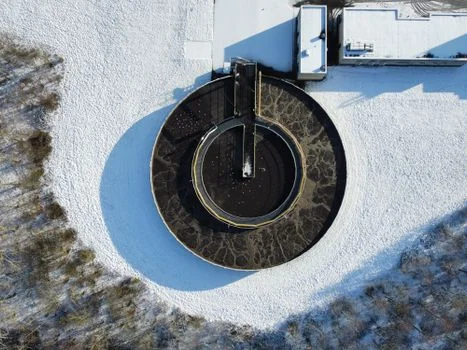
| System Type | Best For | HRSD Nitrogen Compliance | Footprint | Maintenance Level |
|---|---|---|---|---|
| WSZ Underground | Commercial/Residential | Requires Add-ons | Minimal (Buried) | Low |
| MBR Integrated | Industrial/High-Strength | Native Capability | Medium | High (Membrane O&M) |
| DAF Units | Food Processing/FOG | Pretreatment Only | Small to Medium | Moderate (Chemicals) |
| DAF-RO Hybrid | Water Reuse/Zero-Risk | Exceeds Limits | Large | Very High |
CAPEX and OPEX Breakdown: 2025 Cost Models for Virginia Sewage Treatment Equipment
Budgeting for sewage treatment in Virginia must account for both the initial capital expenditure and the long-term operational costs associated with HRSD’s strict monitoring requirements. A standard WSZ underground plant for a small commercial site typically ranges from $50,000 to $150,000. In contrast, an industrial-grade MBR system capable of handling 50,000 gallons per day (GPD) will require a CAPEX of $500,000 to $2,000,000.Operational expenses (OPEX) are driven by energy consumption, chemical dosing, and regulatory reporting. MBR systems have a higher OPEX ($0.50–$0.80/m³) due to the energy required for membrane scouring and the eventual cost of membrane replacement every 5 to 7 years. DAF systems incur significant chemical costs ($0.10–$0.30/m³) for coagulants and flocculants. These costs are often offset by the avoidance of HRSD surcharges and fines. For instance, an industrial facility failing to meet nitrogen limits might face surcharges that exceed the annual OPEX of a compliant MBR system within just 18 months of operation. Learn how Las Vegas industrial sites meet stringent discharge limits to see how similar cost-benefit analyses apply to high-regulation environments.
| System Type | CAPEX Range | OPEX (per m³) | Permit & Admin Fees | Typical ROI |
|---|---|---|---|---|
| WSZ Underground | $50K – $150K | $0.25 – $0.50 | $5K – $10K | 2–4 Years |
| MBR Integrated | $500K – $2M | $0.50 – $0.80 | $15K – $25K | 3–5 Years |
| DAF System | $200K – $1M | $0.30 – $0.60 | $10K – $20K | 2–3 Years |
| DAF-RO Hybrid | $2M – $5M | $0.90 – $1.50 | $25K+ | 5–7 Years |
Zero-Risk Selection Framework: 8 Steps to Validate Suppliers for Virginia Compliance
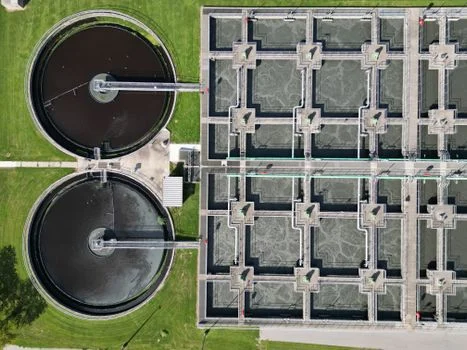
- Confirm HRSD History: Request a list of at least three active installations in Virginia that have passed HRSD inspections within the last