Paris Sewage Treatment Equipment Suppliers: 2026 Overview
Paris sewage treatment equipment suppliers must deliver systems that meet Ile-de-France pretreatment limits—COD below 500 mg/L to sewers—and Seine direct-discharge limits of COD below 125 mg/L. DAF, MBR, and A/O technologies each map to distinct Paris use cases and budgets.
Paris industrial buyers face a moving compliance target. EU Directive 91/271/EEC set the original secondary-treatment obligation, and Ile-de-France prefectures now enforce pretreatment limits such as COD below 500 mg/L for discharges to municipal sewers. On the equipment side, Dissolved Air Flotation (DAF) systems achieve 95-98% TSS removal at 4-8 m/h loading, while Membrane Bioreactor (MBR) systems deliver under 10 mg/L BOD in 60% less footprint than conventional plants. This guide covers Paris-specific engineering specifications, CAPEX and OPEX from €200K to €5M, and a compliance-ready supplier selection framework.
The pages below serve plant engineers, EPC contractors, and procurement managers in Ile-de-France. Specifications carry their operating conditions, and every regulatory number names the authority behind it. Suppliers are assessed on certifications, local support, and lifecycle cost rather than catalog claims.
Why local sourcing keeps coming up: delivery inside Ile-de-France typically runs 3-5 days against 4-6 weeks for intercontinental shipments, and commissioning windows in dense urban sites rarely tolerate the longer lead time. Keep that asymmetry in mind through the cost sections.
Paris Industrial Wastewater Treatment Compliance 2025 Drivers
EU Urban Waste Water Directive 91/271/EEC required secondary treatment for urban agglomerations with a population equivalent over 2,000, with stricter treatment above 10,000 p.e. in sensitive areas. That obligation reshaped collection and treatment across Paris and the wider Ile-de-France region. Industrial facilities felt it indirectly: their wastewater quality must align with municipal and direct discharge standards or penalties follow.
The rulebook has just moved again. According to the European Commission, the revised Urban Wastewater Treatment Directive entered into force on 1 January 2025. It requires collection and treatment in all urban areas of more than 1,000 inhabitants, down from the previous 2,000 p.e. trigger. The same text adds quaternary treatment to remove micropollutants, financed through extended producer responsibility, and requires treatment plants to become energy-neutral and cut greenhouse gas emissions by 2045.
Earlier guidance treated 2027 as the working deadline for upgrading stragglers, and many Paris buyers still plan against it. For an industrial site, the obligations translate into pretreatment before the municipal network. EUR-Lex defines secondary treatment as a process generally involving biological treatment with secondary settlement or an equivalent process. Package plants and skid-mounted biological units can satisfy the definition when the dossier demonstrates equivalent performance.
Industrial permits run on a second track. The Industrial Emissions Directive 2010/75/EU (IED) introduces BAT-AELs for COD, BOD, and nutrients, and an estimated 60% of Paris industrial facilities need upgrades to keep their operating permits. Under Article 4 obligations, Ile-de-France prefectures enforce pretreatment limits such as COD below 500 mg/L for discharges to municipal sewers.
Non-compliance is expensive and visible. One Paris food processing plant faced €120K in fines for repeatedly exceeding its COD discharge limits. After upgrading to a Paris-compliant DAF system for high-TSS wastewater, the facility cut COD by 92% and operating costs by 15% through better efficiency and lower sludge volumes.
Ile-de-France COD Discharge Limits Suppliers Must Meet
Ile-de-France pretreatment standards, aligned with the Paris Water Agency's 2024 guidelines, cap sewer discharges at COD below 500 mg/L, TSS below 300 mg/L, and pH 6.5-9.0. These limits sit below national averages, reflecting the region's focus on Seine water quality. Equipment that cannot demonstrably hold them will not survive dossier review.
The permit process runs through the Direction Régionale et Interdépartementale de l'Environnement, de l'Aménagement et des Transports (DRIEE Ile-de-France). The technical dossier must detail equipment specifications, hydraulic calculations, and a sludge disposal plan. Standard review takes 4-6 months; expedited permits of 2-3 months are sometimes granted for pre-approved equipment or exceptional compliance readiness. Equipment itself needs French and European certifications: NF EN 12566-3 for package treatment plants and NF EN 1825-1 for grease separators, with CE marking alone insufficient in France.
Continuous monitoring completes the file. Facilities discharging more than 100 m³/day must implement continuous pH and flow measurement, and remote telemetry such as SCADA reduces inspection burden while supplying real-time data. Keep at least the full reporting year of measurements on hand for audits.
Budgeting the full obligation matters as much as meeting the limits: the treatment and disposal of industrial waste guide for Warsaw shows how another EU market prices the same duties. For the wider picture, see how EU compliance differs across member states. Local specifics always take precedence.
Paris facilities discharging directly to the Seine face stricter limits (COD <125 mg/L) under the Seine-Normandie Water Agency's 2025 action plan, emphasizing the need for advanced treatment technologies.
Below is a summary of key Paris-specific compliance parameters:
| Parameter | Limit for Discharge to Municipal Sewer (Ile-de-France) | Limit for Direct Discharge to Seine (Seine-Normandie 2025) | Relevant Directive/Standard |
|---|---|---|---|
| Chemical Oxygen Demand (COD) | <500 mg/L | <125 mg/L | EU Directive 91/271/EEC, Ile-de-France Prefectural Orders |
| Total Suspended Solids (TSS) | <300 mg/L | <35 mg/L (secondary treatment) | EU Directive 91/271/EEC, Ile-de-France Prefectural Orders |
| pH | 6.5 - 9.0 | 6.0 - 9.0 | National Environmental Code |
| Equipment Certification | NF EN 12566-3 (package plants), NF EN 1825-1 (grease separators) | NF EN 12566-3 (package plants) | French National Standards (AFNOR) |
| Monitoring Requirement | Continuous pH & flow for >100 m³/day | Continuous monitoring for all major parameters | DRIEE Ile-de-France, Seine-Normandie Water Agency |
Two rows drive design: the Seine direct-discharge column forces tertiary-grade performance, while the certification row rules out equipment that carries only CE marking. Build the dossier around whichever column applies to your outfall.
DAF System Suppliers Ile-de-France: Engineering Specs
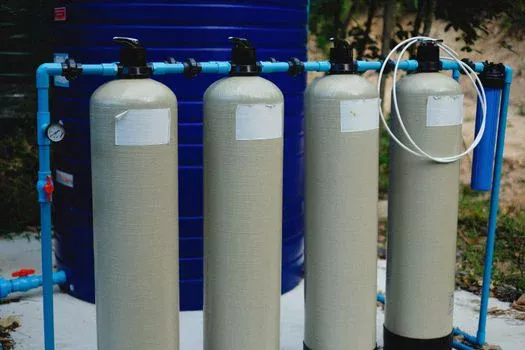
DAF systems earn their place in Paris pretreatment by achieving 95-98% TSS removal at hydraulic loading rates of 4-8 m/h (HydropureWater field data, 2025). Micro-bubbles float suspended solids, oils, and greases to the surface for mechanical skimming. Food processing, pulp and paper, and metalworking plants—FOG-heavy or solids-heavy—all benefit first. In our experience, flotation chemistry ahead of the DAF, meaning coagulant dose and mixing time, decides half of the final TSS number.
MBR System for Urban Paris Industrial Sites
MBR systems deliver below 10 mg/L BOD in a 60% smaller footprint than conventional activated sludge, decisive for hospitals, hotels, and commercial complexes where real estate is premium. MBR systems for urban Paris sites with footprint limits pair biological treatment with ultrafiltration through 0.1 μm PVDF membranes. For advanced nutrient removal, Anoxic/Aerobic (A/O) systems offer 85-90% nitrogen removal via denitrification then nitrification. Chemical plants and municipal pretreatment facilities with high nitrogen loads are the natural A/O fit, a recurring demand in ile-de-france wastewater treatment projects.
Energy draws the operating-cost line. MBR systems typically consume 0.8-1.2 kWh/m³ for aeration plus membrane filtration. DAF systems use 0.3-0.5 kWh/m³, mostly for air compression and pumping, while A/O sits between at 0.4-0.6 kWh/m³ dominated by aeration demand.
Footprint pressure in Paris is severe: industrial sites often allocate only 50-100 m² for wastewater treatment. At 100 m³/h capacity, an MBR saves 20-30 m² against a conventional activated sludge build. For parallel challenges in healthcare settings, review EU hospital wastewater compliance strategies.
Here is a detailed comparison of the three systems:
| Feature | DAF (Dissolved Air Flotation) | MBR (Membrane Bioreactor) | A/O (Anoxic/Aerobic) |
|---|---|---|---|
| Primary Application | Primary/Secondary treatment, FOG/TSS removal | Advanced secondary/tertiary, high effluent quality, footprint-limited sites | Nitrogen removal, biological treatment |
| Key Performance | 95-98% TSS removal, 4-8 m/h loading | <10 mg/L BOD, <5 mg/L TSS | 85-90% Nitrogen removal |
| Footprint (Relative) | Medium (efficient for pre-treatment) | Small (60% less than conventional activated sludge) | Medium (larger than MBR for same capacity) |
| Energy Consumption | 0.3-0.5 kWh/m³ | 0.8-1.2 kWh/m³ | 0.4-0.6 kWh/m³ |
| Typical Industries | Food processing, pulp/paper, metalworking | Hospitals, hotels, urban commercial, municipal | Chemicals, municipal pre-treatment |
| Membrane Type (if applicable) | N/A | PVDF (0.1 μm pore size) | N/A (biological process) |
Read the table against your own constraint ranking. If footprint leads, MBR wins despite its energy line; if chemicals supply and sludge hauling lead, DAF keeps OPEX low; if nitrogen is the permit driver, A/O is the starting point. Most Paris tenders rank constraints before technology.
Paris-Specific Cost Breakdown: CAPEX, OPEX, and Hidden Expenses
CAPEX for sewage treatment equipment in Paris spans a wide band by technology and capacity. DAF systems run €200K to €1M for 50-300 m³/h; MBR systems command €500K to €5M for 100-2,000 m³/day; A/O systems fall between at €300K to €2M for 50-500 m³/h. Budget accuracy in Ile-de-France depends on labor, permit fees, and sludge routes as much as on the equipment itself.
Labor is the first local cost driver. Paris labor costs run 20-30% above the national average, with certified installers and specialized technicians at €80–€120 per hour (French labor statistics, 2024). Permit fees payable to DRIEE Ile-de-France range from €5K to €50K depending on facility size, discharge volume, and system complexity. Those fees cover administrative review and environmental impact assessment.
OPEX splits cleanly by technology. MBR systems typically cost €0.50–€1.00/m³, driven by membrane replacement cycles and energy; DAF systems run €0.20–€0.40/m³ on chemicals and sludge handling; A/O lands near €0.40–€0.60/m³ on aeration and sludge. Hidden costs follow for paris industrial sewage equipment buyers: sludge disposal at €150–€300 per ton in Paris, telemetry integration at €10K–€50K, and French documentation at €5K–€20K. Efficient Paris sludge dewatering solutions with low OPEX blunt the disposal line, usually the largest hidden item.
Five drivers dominate the total: technology choice, labor rates, permit fees, sludge disposal route, and monitoring scope. Installed cost—not quoted equipment price—is the number that survives contact with a Paris tender. Separate the two in every bid sheet, and demand the split in writing.
When auditing suppliers of process engineering plants equipments in france, weigh sludge dewatering economics first—our France dewatering dataset shows where local OPEX actually goes. That audit discipline transfers directly to the selection framework below.
Here is a breakdown of typical costs:
| Cost Category | DAF System (50-300 m³/h) | MBR System (100-2,000 m³/day) | A/O System (50-500 m³/h) |
|---|---|---|---|
| CAPEX Range | €200K – €1M | €500K – €5M | €300K – €2M |
| OPEX Range | €0.20 – €0.40/m³ (chemicals, sludge) | €0.50 – €1.00/m³ (membrane replacement, energy) | €0.40 – €0.60/m³ (aeration, sludge) |
| Paris Labor Rate (Installation/Maintenance) | €80 – €120/hour (20-30% higher than national average) | €80 – €120/hour (20-30% higher than national average) | €80 – €120/hour (20-30% higher than national average) |
| DRIEE Ile-de-France Permit Fees | €5K – €50K (depends on scale) | €5K – €50K (depends on scale) | €5K – €50K (depends on scale) |
| Sludge Disposal Cost (Paris) | €150 – €300/ton | €150 – €300/ton | €150 – €300/ton |
| Telemetry System Integration | €10K – €50K (optional but recommended) | €10K – €50K (optional but recommended) | €10K – €50K (optional but recommended) |
| French Documentation/Translation | €5K – €20K | €5K – €20K | €5K – €20K |
Sewage Treatment Equipment Selection Guide France: Five-Step Framework
Choosing a sewage treatment equipment supplier in Paris is a lifecycle decision, not a purchase order. The five-step framework below keeps regulatory adherence, local support, and long-run cost in one evaluation. Buyers who skip a step usually rediscover it later as a commissioning delay or a permit query.
- Step 1: Verify Certifications and Paris-Specific Case Studies.
Demand proof of compliance with French national standards such as NF EN 12566-3 for package plants or NF EN 1825-1 for grease separators, in addition to standard CE marking. Request references for similar projects completed in Ile-de-France, specifically DRIEE approval letters from past projects. A supplier with ISO 9001 certification demonstrates a working quality-management system. This step confirms the supplier understands EU directive 91/271/EEC compliance at the local level.
- Step 2: Assess Local Logistics and Support Infrastructure.
Evaluate the supplier's capacity for rapid local delivery—aim for 3-5 days for critical components—their spare-parts inventory inside France, and the availability of French-speaking technicians. A strong local presence captures the local supplier advantages France offers: faster response for emergencies and routine maintenance, and less downtime on continuous-production lines.
- Step 3: Review Compliance Track Record.
Beyond equipment certifications, ask how the supplier has navigated the paris sewage treatment permit process before. Request examples of projects that received DRIEE Ile-de-France approval, and speak with clients about their experiences during regulatory inspections and audits. Practical expertise with the local environmental agency shows up here or nowhere.
- Step 4: Compare OPEX Models and Long-Term Costs.
Request detailed OPEX projections covering energy, chemicals, and membrane replacement for MBR systems, then test them against your own operating data. Scrutinize how the chosen technology moves wastewater CAPEX OPEX paris totals—particularly sludge disposal at €150–€300 per ton—and the service life of critical components.
- Step 5: Negotiate Comprehensive Maintenance Contracts.
A maintenance contract is non-negotiable. Ensure it includes 24/7 technical support, contracted response times for breakdowns, and transparent labor rates for preventive and corrective work. Clarify spare-parts availability, warranty periods, and routine inspection frequency before signing.
For dense sites where surface area is the binding constraint, buried plants reclaim usable land. The Underground Package Sewage Treatment Plant (WSZ Series) places the treatment train underground, cutting the visible footprint on constrained Paris plots. Pair any buried installation with the leak-detection and ventilation provisions expected under NF P 16-001 from the first design sketch.
Next Steps for Paris Buyers
Paris sewage treatment equipment suppliers should be shortlisted two or three deep, each with DRIEE-reference projects and written OPEX projections. The same spec-and-cost logic travels across markets—our Chonburi Wastewater Treatment: Specs, Cost Models & Compliance guide applies the framework in another region. Send your flow data and discharge limits through our request a quote page for equipment sizing and budget figures.
Frequently Asked Questions
Paris industrial buyers most often ask about discharge limits, permitting timelines, payback, and underground installs for sewage treatment equipment.
What are the COD limits for industrial discharges in Paris?
Ile-de-France prefectures enforce COD below 500 mg/L for discharges to municipal sewers. Direct discharges to the Seine face a stricter limit below 125 mg/L, under the Paris Water Agency's 2024 guidelines and the Seine-Normandie Water Agency's 2025 action plan. TSS below 300 mg/L and pH 6.5-9.0 apply to sewer discharges alongside the COD cap.
How long does it take to get a sewage treatment equipment permit in Paris?
The standard DRIEE Ile-de-France review takes 4-6 months for a sewage treatment equipment permit. Expedited permits, processed in 2-3 months, are sometimes available for facilities using pre-approved equipment and submitting a complete technical dossier. Build the dossier early: hydraulic calculations, equipment specifications, and a sludge disposal plan are mandatory contents.
What is the typical ROI for a DAF system in Paris?
Food processing plants in Paris typically report DAF payback within 12-18 months. The driver is avoided regulatory fines for exceeding discharge limits plus lower sludge disposal costs, which run €150–€300 per ton in the Paris region. One plant cut COD by 92% and operating costs by 15% after installing its DAF system.
Can I install a sewage treatment system underground in Paris?
Yes, underground installation is permissible in Paris and often preferred given urban space constraints. Such installations must comply with NF P 16-001 for buried structures and include robust leak detection and ventilation systems. Packaged underground units simplify permitting because the treatment train arrives pre-assembled and needs only compliant burial works.
What maintenance is required for MBR systems in Paris?
MBR systems in Paris need weekly membrane cleaning by chemical backwash or relaxation, quarterly integrity tests to catch membrane damage, and annual membrane replacement depending on wastewater characteristics and load. Budget technician visits at €80–€120 per hour under a maintenance contract. Chemical cleaning frequency rises with FOG in the feed.
Does the 2024 Urban Waste Water Treatment Directive change Paris deadlines?
Yes. According to the European Commission, the revised Urban Wastewater Treatment Directive entered into force on 1 January 2025. It requires collection and treatment in all urban areas of more than 1,000 inhabitants, plus quaternary treatment to remove micropollutants funded through extended producer responsibility. Ile-de-France pretreatment limits still govern your sewer discharge permit.