Industrial Wastewater Treatment Sweden MBR: UWWTD Compliance From 2025
Industrial wastewater treatment in Sweden now follows the recast UWWTD, in force since 1 January 2025. Swedish permits still sit near COD removal of 95% and TSS of 30 mg/L, and MBR is the train most mills pick for nitrogen below 10 mg/L.
The directive binds Swedish outfalls only once it is written into national law. Naturvårdsverket, the Swedish EPA, presented its proposal on 30 January 2026, opened consultation on 20 March 2026, and closed it on 30 June 2026. Until the Swedish text exists, the individual discharge permit still sets the enforceable numbers.
Below the EU layer, practice is unchanged. Facilities above 10,000 population equivalent (p.e.) must run biological treatment. Sweden applies stricter local standards for sensitive areas, which cover almost all inland waters and parts of the Baltic coast. Phosphorus leads those permits, and many sites run chemical dosing for phosphorus removal in industrial effluent to hold effluent below 0.5 mg/L.
The tiered discharge system is the working design basis. Inland waters require total nitrogen of 10 mg/L or less, and coastal zones are generally capped at 15 mg/L. Plants under 10,000 p.e. on the coast may seek exemption from secondary biological treatment where primary treatment plus disinfection protects the receiving water. Failure triggers penalties under the Swedish Environmental Code Chapter 29, where fines can reach SEK 1 million (€85,000) alongside shutdown orders. Earlier guidance spoke of 2025 zero-discharge goals for sensitive coastal zones; reuse economics, not a national mandate, drive those projects today.
Swedish EPA Industrial Wastewater Discharge Limits on Nitrogen
The recast directive tightens the nitrogen ladder on sensitive waters. According to Svenskt Vatten (2026), the largest works face effluent requirements of at most 8 mg N/L or 80% removal. The middle size class faces at most 10 mg N/L or 80% removal.
Quaternary treatment joins the same calendar for the largest urban works, and industrial pharmaceutical load reaches it through the municipal contract. About 85–90% of Nordic industrial sites discharge to a centralized works, so pretreatment quality decides both the permit and the surcharge.
| Parameter | Inland Discharge (Sensitive) | Coastal Discharge (Standard) | UWWTD Minimum Requirement |
|---|---|---|---|
| Chemical Oxygen Demand (COD) | ≤70 mg/L (or 95% removal) | ≤125 mg/L (or 75% removal) | ≤125 mg/L |
| Total Suspended Solids (TSS) | ≤30 mg/L | ≤35 mg/L | ≤35 mg/L |
| Total Nitrogen (TN) | ≤10 mg/L | ≤15 mg/L | 70–80% removal |
| Total Phosphorus (TP) | ≤0.5 mg/L | ≤1.0 mg/L | 80% removal |
Industry Load Profiles: COD, TSS, FOG, and Metals
Pulp and paper carries the heaviest organic load in Sweden, often reaching COD of 5,000 mg/L. Lignin and hemicellulose resist a standard biological stage, as the Himmerfjärdsverket WWTP studies show. Untreated, that load can shock a municipal secondary plant. On the mills we size, DAF systems for FOG and TSS removal in food/pulp industries take raw TSS from about 1,500 mg/L down before biology sees the peak.
Food processing swings FOG between 500 and 1,500 mg/L through the day, fouling membranes and inhibiting aerobic bacteria when grease reaches the biology. Chemical and pharmaceutical streams add pH extremes of 2–12, refractory COD, and metals such as chromium, limited to 0.5 mg/L or less. For these, engineers specify MBR systems for nitrogen removal and zero-discharge compliance, because long sludge age grows the organisms that break down synthetic molecules. A single grab sample will miss the diurnal FOG peak that sizes the float cell.
| Industry Sector | Typical COD (mg/L) | TSS (mg/L) | Key Contaminant Challenge | Recommended Pre-treatment |
|---|---|---|---|---|
| Pulp & Paper | 2,000–5,000 | 500–1,500 | Lignin, pH swings (4–10) | DAF + Coagulation |
| Food Processing | 1,000–3,000 | 200–800 | FOG (500–1,500 mg/L) | DAF + pH Adjustment |
| Chemical | 500–4,000 | 100–500 | Heavy Metals, Refractory COD | AOP or Chemical Precipitation |
| Pharmaceutical | 300–1,500 | 50–200 | Antibiotics, Microplastics | Fine Screening + MBR |
DAF vs MBR for Industrial Effluent in Sweden: CAPEX, Energy, and Footprint
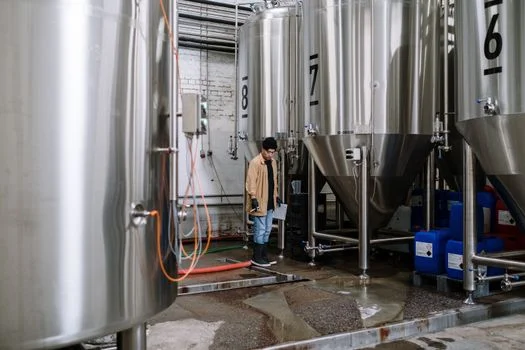
MBR is the train for high-strength waste that must reach 95–99% COD removal and nitrogen at or below 10 mg/L. Tank volume runs about 60% smaller than conventional activated sludge at equal load. Energy sits at 0.8–1.2 kWh/m³. Most food plants we size still add automated clean-in-place (CIP), because protein films foul hollow fibers when cleaning stays manual.
DAF is the low-energy separator, not a nitrogen process. FOG removal of 90–98% and TSS reduction of 80–90% are typical, with particulate COD cut by 30–50%. Anoxic/oxic (A/O) is the mid option when reuse is not required: 70–90% nitrogen removal, phosphorus at or below 1 mg/L, and 0.3–0.5 kWh/m³. DAF itself draws 0.1–0.3 kWh/m³.
Hybrid DAF ahead of MBR is the common train when a coastal permit meets a reuse target. Removing 98% of FOG before the membrane extends membrane life and delivers about 99% pathogen reduction across the plant. Retention-time trade-offs for that train are set out in comparing MBR, DAF, and ClO₂ for industrial wastewater treatment. Most pulp lines we size hold the DAF chemical dose low until a jar test confirms the solids cut.
| Tech Metric | MBR (Membrane Bioreactor) | DAF (Dissolved Air Flotation) | A/O (Anoxic/Oxic) |
|---|---|---|---|
| COD Removal | 95–99% | 30–50% (Particulate only) | 80–90% |
| Nitrogen Removal | High (≤10 mg/L) | Negligible | Moderate (70–90%) |
| Footprint | Compact (Minimal) | Moderate | Large (Requires Clarifiers) |
| Energy Use | 0.8–1.2 kWh/m³ | 0.1–0.3 kWh/m³ | 0.3–0.5 kWh/m³ |
| Effluent Quality | Reuse Quality (TSS <1) | Pre-treatment Quality | Discharge Quality |
Cost Model at 100 m³/day: CAPEX, OPEX, and Payback
MBR System Cost for Industrial Wastewater Sweden
An MBR system for about 100 m³/day typically costs €200,000–€500,000, set by membrane material (PVDF versus ceramic) and nutrient-removal scope. Replacement membranes run €50–€100 per m² every 5–8 years. DAF enters at €50,000–€150,000 for the same flow, with coagulant and flocculant spend of €0.5–€2.0 per m³ treated. An A/O plant lands between them at €150,000–€300,000.
Payback runs on three drivers: water reuse savings, avoided fines, and grants. Process water in Sweden, intake plus discharge fees, costs €1–€3 per m³, so an MBR that recycles flow can pay back in 3–5 years. The Swedish EPA's Climate Leap (Klimatklivet) has been described as covering up to 40% of CAPEX for projects that cut emissions, and program notes cite 30–50% shares. Book the grant only when the award letter states it.
Automation pays a wage dividend too. Comparable engineering specs for industrial wastewater treatment in regulated markets report about 30% lower labor cost for automated plants against manual activated sludge. As pure pretreatment, DAF pays back in 2–3 years, and A/O runs 5–7 years.
| Cost Component | MBR System | DAF System | A/O System |
|---|---|---|---|
| CAPEX (100 m³/day) | €200K–€500K | €50K–€150K | €150K–€300K |
| OPEX (€/m³) | €0.80–€1.20 | €0.30–€0.50 | €0.40–€0.70 |
| Maintenance Focus | Membrane Cleaning/Replacement | Chemical Dosing/Sludge Removal | Aeration/Diffuser Maint. |
| Payback Period | 3–5 Years (with reuse) | 2–3 Years (as pre-treatment) | 5–7 Years |
Zero Discharge Wastewater Treatment: Swedish Pulp Mill Case Study
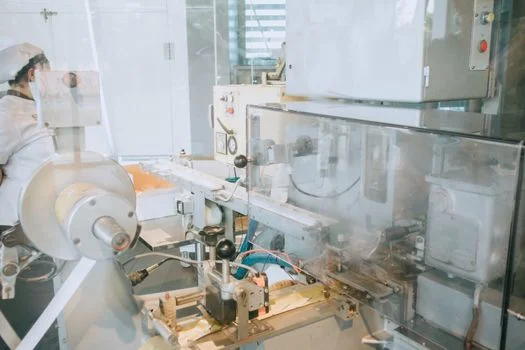
A Swedish pulp mill processing 500 m³/day missed the coastal nitrogen limit of 15 mg/L with its legacy sedimentation plant. Influent carried COD of 4,500 mg/L, TSS of 1,200 mg/L, and total nitrogen of 50 mg/L. The mill faced a possible SEK 1 million fine and a choice between a costly municipal connection and an on-site upgrade. Most mills in that spot underestimate how much of the 50 mg/L nitrogen is dissolved rather than settleable.
The upgrade placed a DAF system for FOG and TSS removal as primary clarifier ahead of a 500 m³/day MBR system for nitrogen removal. The MBR ran PVDF hollow-fiber membranes at 0.1 μm pore size with automated CIP. Removing 85% of TSS in the DAF cut membrane fouling rates by 40% and lengthened cleaning intervals, because the fiber no longer saw the raw 1,200 mg/L solids.
Effluent COD fell to 50 mg/L or below, TSS reached non-detectable levels at 5 mg/L or below, and total nitrogen held at 8 mg/L or below. Permeate reused as boiler feed cut freshwater purchases by about €180,000 a year, the mill's zero-discharge gain. Higher MBR energy was accepted because reused water, not the kilowatt-hour, set the long-term cost. This is one permit's outcome, not a template for every Swedish outfall.
Who This Guide Fits, and the Next Step
Use this page if you hold or are applying for a Swedish industrial discharge permit with nitrogen or phosphorus limits. Look elsewhere for housing developments, or for small coastal plants under 10,000 p.e. that can still justify primary treatment plus disinfection. Domestic-strength load at a compact site can start from the Underground Package Sewage Treatment Plant (WSZ Series). Run this checklist before freezing the process.
- Confirm whether the outfall is direct or tied to a municipal works, and which nitrogen band the permit applies.
- Sample COD, TSS, FOG, total nitrogen, total phosphorus, pH, and flow as a seven-day composite.
- If FOG runs above 500 mg/L, place DAF ahead of any membrane.
- If nitrogen must hold at or below 10 mg/L, price MBR at €200,000–€500,000 for 100 m³/day at 0.8–1.2 kWh/m³.
- If pretreatment is the duty, budget DAF at €50,000–€150,000 with chemicals at €0.5–€2.0 per m³.
- Hold Klimatklivet support at up to 40% of CAPEX only after an award letter states the share.
Permit practice in another market is covered in the Wastewater Discharge Standards Australia: Compliance Guide. Vendor screening has its own page on sweden equipment water supplier treatment. For sizing on your own numbers, send the flow, permit limits, and budget band through the project inquiry form, and start from measured COD and nitrogen rather than a catalogue default.
Frequently Asked Questions
What are the specific nitrogen limits for industrial wastewater in Sweden for 2025?
Inland sensitive waters carry a total nitrogen limit of 10 mg/L, and coastal zones are generally capped at 15 mg/L, on the older permit basis. The recast UWWTD tightens this to 8 mg N/L or 80% removal for the largest works and 10 mg N/L or 80% for the middle class, phased between 2033 and 2045. Facilities above 10,000 p.e. also demonstrate 70–80% nitrogen removal.
How does MBR technology compare to DAF for food processing wastewater?
DAF is pretreatment: it removes 90–98% of FOG and 80–90% of TSS, but it leaves dissolved BOD and nitrogen untouched. MBR is secondary and tertiary treatment, reaching 95–99% COD removal with nitrogen at or below 10 mg/L. Most Swedish food plants with FOG of 500–1,500 mg/L run DAF ahead of the membrane to protect it. The hybrid train, not either unit alone, meets the tight permits.
What are the typical operating costs (OPEX) for an MBR system in Sweden?
OPEX for MBR in Sweden typically runs €0.80–€1.20 per m³. That covers energy of 0.8–1.2 kWh/m³, cleaning chemicals, and a sinking fund for membranes at €50–€100 per m² every 5–8 years. Where process water costs €1–€3 per m³, reuse offsets much of the spend. DAF at €0.30–€0.50 per m³ stays cheaper when nitrogen is not the binding limit.
Are there government grants available for upgrading wastewater equipment in Sweden?
Yes. The Swedish EPA's Climate Leap (Klimatklivet) has been described as covering up to 40% of CAPEX for projects that cut emissions, and program notes cite 30–50% shares. The award letter sets the real number. A mill that reuses permeate, like the 500 m³/day case saving €180,000 a year, should count water savings before grants. Apply with measured COD and nitrogen data.
When does the recast UWWTD apply to Swedish industrial dischargers?
It binds Swedish outfalls only after it enters national law, due by 31 July 2027. The directive entered into force at EU level on 1 January 2025, and Naturvårdsverket's proposal ran through consultation from 20 March to 30 June 2026. Nitrogen and quaternary duties then phase in between 2033 and 2045. An individual permit can tighten earlier, because each permit is negotiated on its own merits.