Ohio Municipal Sewage Treatment Plant Upgrade Pressures: Nutrients, Aging Assets, Winter
An Ohio municipal sewage treatment plant upgrade answers to permit-specific nutrient limits, pre-1980 assets and 20–30°F winter kinetics, not one statewide formula. Budget bands run $1.2M–$3.5M/MGD for MBR, $800K–$2M/MGD for DAF, and $600K–$1.5M/MGD for conventional trains, with WPCLF loans financing most public projects.
Ohio municipal plants size those upgrades against watershed-specific NPDES nutrient limits, aging secondary trains, and winter kinetics that cut biological rates. According to the U.S. EPA, the NPDES permit program addresses water pollution by regulating point sources that discharge pollutants to waters of the United States, so each Ohio facility's numbers come from its own permit. Stretch design targets of TN ≤ 3 mg/L and TP ≤ 0.1 mg/L still appear in planning briefs, while many major Lake Erie Basin permits start near 1.0 mg/L total phosphorus.
According to the U.S. EPA nutrient permitting compendium summarizing Ohio EPA's Nutrient Reduction Strategy, that 1.0 mg/L TP guideline applies at design flow when the receiving water is not impaired, with TMDL-driven limits layered afterward. Rocky River WWTP shows the practical gap: 13 MGD average flow and 70 MGD peak capacity still rely on 1999-era primary treatment that removes only about 30–50% TN. Roughly 40% of Ohio's 1,000+ municipal plants were built before 1980, as reported by Ohio EPA in 2023. Many run 20-year-old clarifiers and aeration systems at 60–70% of design efficiency.
Winter air temperatures of 20–30°F can cut biological treatment efficiency by 30–40% per EPA Region 5 cold-weather guidance, so insulated tanks or hybrid DAF-MBR trains appear often on bid sheets. Enforcement keeps the pressure on. Clean Water Act §309 penalties were long quoted near $25,000 per day; for civil violations, Wikipedia's summary of the Act reports EPA can currently seek up to $66,712 per violation per day. Rocky River and Fairfield faced cumulative penalties exceeding $1.2 million since 2020 in Ohio EPA enforcement reporting.
| Challenge Category | Specific Ohio Data/Example | Impact on Municipal WWTPs |
|---|---|---|
| 2025 EPA Nutrient Limits | TN ≤ 3 mg/L, TP ≤ 0.1 mg/L (Ohio EPA) | Requires advanced secondary/tertiary treatment; current primary systems (e.g., Rocky River) achieve only 30-50% TN removal. |
| Aging Infrastructure | 40% of Ohio's 1,000+ plants built pre-1980 (Ohio EPA 2023) | 20-year-old clarifiers/aeration systems operate at 60-70% efficiency, driving need for full system overhauls. |
| Cold-Weather Performance | Ohio winter temps 20-30°F (EPA Region 5 guidelines) | Reduces biological treatment efficiency by 30-40%, demanding insulated tanks or cold-resilient technologies. |
| Cost of Non-Compliance | Up to $25K/day fines (Clean Water Act §309) | Rocky River & Fairfield faced $1.2M in cumulative penalties since 2020, highlighting financial risk. |
What Does Ohio EPA Nutrient Compliance for WWTPs Require?
Ohio EPA nutrient compliance for WWTPs starts from federal secondary floors and then layers permit-specific nutrient numbers onto them. Typical plant influent in Ohio runs BOD₅ of 250–400 mg/L, TSS of 300–500 mg/L, and TN of 40–60 mg/L. Ohio EPA 2024 data and Rocky River and Lima WWTP reports corroborate that range. Designers compare those loads with federal secondary floors of BOD₅ ≤ 30 mg/L and TSS ≤ 30 mg/L, then overlay permit-specific nutrient limits — a sequence anchored in the Clean Water Act, under which municipal sewage treatment plants are required to meet secondary treatment standards.
Stretch planning targets of TN ≤ 3 mg/L and TP ≤ 0.1 mg/L remain useful for tertiary process selection even when the issued permit uses a higher TP number such as 1.0 mg/L. Primary clarifiers at Ohio plants often run at 800–1,200 GPD/ft² hydraulic loading. Secondary trains are commonly designed for 15–25 GPD/ft², per Fairfield WWTP design specifications. Conventional activated sludge in Ohio burns about 1,200–1,800 kWh/MG, while modern Ohio-ready MBR systems for 2025 EPA compliance can land nearer 800–1,200 kWh/MG against EPA Energy Star 2024 benchmarks.
| Parameter | Typical Ohio Range/Value | 2025 Ohio EPA Target (Effluent) | Source/Context |
|---|---|---|---|
| Influent BOD₅ | 250–400 mg/L | N/A | Ohio EPA 2024, Rocky River & Lima WWTP reports |
| Influent TSS | 300–500 mg/L | N/A | Ohio EPA 2024, Rocky River & Lima WWTP reports |
| Influent TN | 40–60 mg/L | N/A | Ohio EPA 2024, Rocky River & Lima WWTP reports |
| Effluent TN | N/A | ≤ 3 mg/L | Ohio EPA 2025 limits |
| Effluent TP | N/A | ≤ 0.1 mg/L | Ohio EPA 2025 limits |
| Primary Clarifier Hydraulic Loading | 800–1,200 GPD/ft² | N/A | Fairfield WWTP design specs |
| Secondary Treatment Hydraulic Loading | 15–25 GPD/ft² | N/A | Fairfield WWTP design specs |
| Energy Use (Conventional) | 1,200–1,800 kWh/MG | N/A | EPA Energy Star 2024 benchmarks |
| Energy Use (MBR Systems) | 800–1,200 kWh/MG | N/A | EPA Energy Star 2024 benchmarks |
| Winter Aeration Increase (30°F) | 20–30% | N/A | EPA Region 5 cold-weather guidelines |
Cold Weather Sewage Treatment in Ohio: Design Rules That Hold at 20°F
Cold weather sewage treatment design in Ohio lives or dies on nitrification kinetics, because 20–30°F winter air cuts biological treatment efficiency by 30–40% per EPA Region 5 guidance. Near 30°F water temperature, most plants we size for increase aeration air by 20–30% to hold nitrification, matching EPA Region 5 cold-weather practice. At 20°F, cold-weather DAF systems for Ohio's TSS removal still hold about 90% TSS removal, while conventional activated sludge often falls to 60–70% in Ohio EPA 2024 winter performance audits. Insulated tanks, covered aeration basins and hybrid DAF-MBR trains are the three fixes that survive a January audit.
MBR vs DAF Cost for Ohio Wastewater: CAPEX, Footprint and OPEX Face-Off
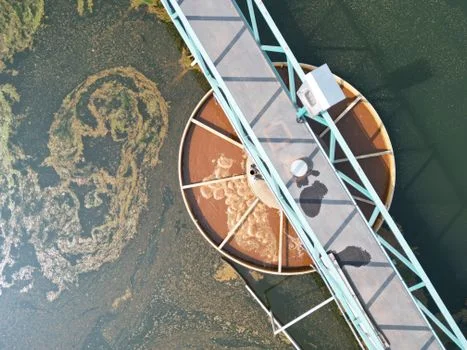
MBR versus DAF cost for Ohio wastewater comes down to footprint, permit target and sludge volume. MBR footprints run about 0.5 acres/MGD versus roughly 1.2 acres/MGD for conventional activated sludge — a 50–60% land cut that matters for urban plants such as Rocky River. That compact layout also supports tighter effluent polishing when permits move toward low TN and TP. Ohio CAPEX bands for 2025 sit near $1.2M–$3.5M/MGD for MBR, $800K–$2M/MGD for DAF, and $600K–$1.5M/MGD for conventional activated sludge, according to 2025 RSMeans data.
On the operating side, MBR OPEX can save $0.12–$0.25 per 1,000 gallons versus conventional trains through lower sludge volume, as detailed in Lima WWTP 2023 O&M reports. DAF pretreatment can remove up to 95% of FOG and metals and cut Lima's industrial pretreatment program costs by about 25% in 2023 plant data. For regional cost context, compare Ohio's costs to Vermont's 2025 benchmarks.
Neighboring climates tell a similar story. See how Manitoba's cold-weather plants handle EPA limits before assuming Ohio's winter penalty is unique to the Great Lakes.
| Feature | MBR Systems | DAF Systems | Conventional Activated Sludge |
|---|---|---|---|
| Footprint (acres/MGD) | 0.5 (50–60% less) | 0.8–1.0 (Compact, but less so than MBR) | 1.2+ (Largest) |
| CAPEX ($/MGD, Ohio 2025) | $1.2M–$3.5M | $800K–$2M | $600K–$1.5M |
| OPEX (Savings vs. Conventional) | $0.12–$0.25/1,000 gallons saved | Moderate savings (e.g., lower sludge volume for specific streams) | Baseline (higher sludge handling, energy) |
| Cold-Weather Performance (20°F) | Requires insulation, 20-30% more aeration to maintain nitrification. | Maintains 90% TSS removal. | Drops to 60–70% TSS removal. |
| Ohio EPA 2025 Nutrient Compliance | Excellent (TN ≤ 3 mg/L, TP ≤ 0.1 mg/L achievable) | Good for TSS, FOG, metals; needs biological for full nutrient removal. | Requires significant tertiary upgrades for full compliance. |
| Industrial Pretreatment Suitability | Good for high organic loads, but less specialized for FOG/metals. | Excellent (95% FOG/heavy metal removal), reduces IPP costs. | Limited standalone capacity for specific industrial wastes. |
CAPEX and OPEX Breakdown for Ohio Sewage Plants
Capital and operating cost models for Ohio sewage plants still hinge on process choice more than brand labels. For 2025, CAPEX ranges remain $1.2M–$3.5M per MGD for MBR, $800K–$2M per MGD for DAF, and $600K–$1.5M per MGD for conventional activated sludge on 2025 RSMeans Ohio data. Those bands cover new builds and major overhauls aimed at current permit renewals.
Plant OPEX in Ohio averages about $0.40–$0.80 per 1,000 gallons. Fairfield WWTP 2023 O&M reports split that cost into energy 40%, labor 25%, chemicals 15%, sludge 10%, and maintenance 10%. MBR payback often lands in 5–7 years through OPEX savings, while DAF payback can land in 3–5 years when industrial pretreatment loads dominate. Boards drafting rate cases should model both paths against the table below.
| Cost Category | Conventional Activated Sludge | DAF System | MBR System |
|---|---|---|---|
| CAPEX Range (per MGD) | $600K–$1.5M | $800K–$2M | $1.2M–$3.5M |
| OPEX Average (per 1,000 gallons) | $0.40–$0.80 (baseline) | $0.35–$0.70 (potential savings in specific areas) | $0.28–$0.55 (significant savings) |
| Key OPEX Drivers | Energy (40%), Labor (25%), Chemicals (15%), Sludge (10%), Maintenance (10%) | Energy, Chemicals (for coagulation/flocculation), Sludge Disposal | Energy (aeration, membrane cleaning), Membrane Replacement, Sludge Disposal |
| Typical ROI Timeline | N/A (often baseline for comparison) | 3–5 years (especially with industrial pretreatment) | 5–7 years (via OPEX savings) |
Out-of-state numbers help when boards question the quote. Cross-check Alabama wastewater plant cost models or Kuching plant CAPEX and OPEX bands when boards ask for sanity checks.
For equipment sourcing comparisons closer to home, review Pennsylvania sewage equipment supplier specs and cost models before shortlisting vendors who serve the Great Lakes market.
WPCLF Funding for Ohio Wastewater Plant Upgrades
WPCLF funding for Ohio wastewater plant upgrades is the default balance sheet for public projects. Earlier Ohio EPA funding notes cited about $100 million of WPCLF capacity for 2025 at roughly 1% interest. Ohio EPA's Program Year 2026 WPCLF Program Management Plan now estimates about $1.9 billion in total available funds and roughly $750 million in projected loans. Principal forgiveness is capped near $115 million. Communities should sequence their facility plan so the WPCLF application window opens before equipment pricing expires.
Structured Equipment Selection Framework for Ohio Plants
A structured equipment selection framework keeps Ohio plant upgrades aligned with NPDES limits, winter kinetics, and published cost bands. The five steps below mirror how most plants we support move from influent data to a bid-ready process train.
- Step 1: Define Influent Variability and Effluent Targets. Characterize average and peak flows (for example, Rocky River's 13–70 MGD range) plus BOD₅, TSS, TN, and TP. Confirm the exact Ohio EPA NPDES limits on the draft or final permit, including any TMDL-driven phosphorus load.
- Step 2: Match Technology to Climate and Specific Needs. Score options against Ohio winters and land constraints. DAF systems stabilize cold-weather TSS removal, while MBR systems support stringent nutrient targets. Hybrid A/O trains or specialized DAF systems fit high FOG or metals loads.
- Step 3: Validate CAPEX/OPEX Against Ohio Benchmarks. Compare shortlisted CAPEX — such as $1.2M–$3.5M/MGD for MBR — and projected OPEX with municipal rate capacity and WPCLF debt service.
- Step 4: Require Pilot Testing for Ohio-Specific Conditions. Pilot at about 20°F, with peak wet-weather loads and representative industrial waste, before locking full-scale equipment.
- Step 5: Implement a Rigorous Vendor Vetting Checklist. Require Ohio EPA project references, cold-climate case studies, five-year O&M cost transparency, operator training, and proven disinfection such as an EPA-compliant disinfection for Ohio sewage plants.
Where footprint is scarce on urban or satellite sites, the Underground Package Sewage Treatment Plant (WSZ Series) can serve compact plots without consuming land the district does not own.
Who This Is For and Next Step
This guide is for Ohio plant engineers, EPC designers, and procurement managers comparing MBR, DAF, and conventional upgrades under current NPDES nutrient pressure. Communities without cold winters or nutrient limits may find simpler secondary trains adequate. Every Ohio municipal sewage treatment plant upgrade decision should close with a process shortlist sized to the actual permit and flow, so request an Ohio plant equipment review with influent data and the draft NPDES sheet attached. Buyers comparing multi-country CAPEX tables can also scan the Rosario wastewater treatment plant cost breakdown for an overseas reference point.
Frequently Asked Questions
What discharge limits apply to Ohio sewage plants in 2025?
Ohio EPA sets municipal discharge limits in each NPDES permit, not as one statewide TN/TP pair. Earlier briefs cited TN ≤ 3 mg/L, TP ≤ 0.1 mg/L, BOD₅ ≤ 10 mg/L, and TSS ≤ 10 mg/L as stretch targets. U.S. EPA's summary of Ohio EPA's Nutrient Reduction Strategy points to an initial 1.0 mg/L TP guideline for many major Lake Erie Basin plants when receiving waters are not impaired, with tighter TMDL limits where assigned.
How much does it cost to upgrade an Ohio sewage plant to current standards?
Upgrades commonly cost $1.2M–$3.5M per MGD for MBR systems, with roughly 5–7 year ROI through OPEX savings on 2025 RSMeans Ohio data. DAF packages often fall in the $800K–$2M per MGD band, while conventional activated sludge sits nearer $600K–$1.5M per MGD before tertiary add-ons. Final numbers track permit stringency and winter provisions more than vendor brand.
What's the best treatment technology for Ohio's cold winters?
DAF systems maintain about 90% TSS removal at 20°F, which suits cold-weather solids and FOG control. MBR systems remain strong for nutrient removal. They need insulated tanks and about 20–30% more aeration to hold nitrification in Ohio EPA 2024 winter audits. Most districts end up pairing the two in a hybrid train.
Can Ohio communities get funding for sewage plant upgrades?
Yes. Ohio EPA's Water Pollution Control Loan Fund finances planning, design, and construction for publicly owned wastewater projects. Earlier notes cited about $100 million for 2025 at roughly 1% interest. The PY 2026 WPCLF Program Management Plan estimates about $1.9 billion available and roughly $750 million in projected loans. Principal forgiveness can reach about $115 million.
What OPEX savings can MBR deliver versus conventional activated sludge?
MBR systems in Ohio can save about $0.12–$0.25 per 1,000 gallons versus conventional activated sludge, mainly from lower sludge handling and tighter process control, as reported in Lima WWTP 2023 O&M reports. Actual savings still depend on membrane cleaning energy and local sludge tipping fees. Run both scenarios against your rate base before committing.
How should municipal facilities select wastewater equipment suppliers?
Municipal facilities should select wastewater equipment suppliers that document Ohio or Great Lakes cold-climate references, NPDES-aligned performance data, and transparent five-year O&M costs. Ask for installed capacity at similar MGD, winter nitrification results, membrane or DAF spare-parts lead times, and local service coverage. Prefer suppliers willing to support pilot testing and operator training before final award. Price alone rarely predicts permit compliance during January aeration peaks.
What matters in aeration equipment design and procurement?
Aeration equipment design and procurement for municipal plants should start from oxygen demand at winter MLSS temperature, not nameplate horsepower. Size blowers for the 20–30% air increase often needed near 30°F, confirm diffuser fouling rates, and require DO and airflow metering that operators can trend. Procurement specs should lock turndown, noise limits, and spare parts, then verify energy use against the 1,200–1,800 kWh/MG conventional band used in Ohio benchmarks.
What are Ohio municipal WWTP CAPEX and OPEX benchmarks for 2025?
Ohio municipal WWTP CAPEX and OPEX benchmarks for 2025 sit at $600K–$1.5M per MGD for conventional activated sludge, $800K–$2M for DAF, and $1.2M–$3.5M for MBR on RSMeans Ohio data. OPEX averages $0.40–$0.80 per 1,000 gallons, split roughly into energy 40%, labor 25%, chemicals 15%, sludge 10% and maintenance 10%. Treat those bands as screening numbers, then firm them up with site-specific piloting.