Turkey’s 2025 Food Processing Wastewater Regulations: What Plants Must Know
Turkey’s 2025 food processing wastewater regulations impose strict discharge limits of COD ≤ 160 mg/L and BOD ≤ 25 mg/L, reflecting the nation's status as a water-stressed country with only 1,460 m³ of renewable water per capita. For a facility manager at a poultry plant in Balıkesir or a dairy processor in İzmir, these numbers represent more than just environmental benchmarks; they are the threshold for operational survival. Failing a compliance test in 2024 no longer results in a mere warning. Under the updated Water Pollution Control By-Law, administrative fines for non-compliance now reach up to TRY 1 million (~$30,000), with the Ministry of Environment, Urbanisation, and Climate Change increasingly utilizing remote sensing and unannounced inspections in drought-prone regions like Central Anatolia.
The urgency is driven by Turkey’s proximity to the United Nations’ water-stress threshold of 1,700 m³ per capita. With industrial water consumption reaching 20% of the national total, the 2006 Urban Waste Water Treatment Regulation has been tightened to mandate specific reuse standards. For agricultural irrigation—a common disposal route for Turkish food processors—effluent must contain fewer than 1,000 faecal coliforms per 100 mL. This requires a transition from basic primary treatment to advanced biological and membrane-based systems.
Sector-specific challenges complicate this transition. Poultry processing generates wastewater with high nitrogen and pathogen loads, while dairy plants face fluctuating pH and high fat, oil, and grease (FOG) concentrations. Olive oil mills, particularly in the Aegean region, must manage "black water" characterized by extreme COD levels (up to 100,000 mg/L) and high salinity. Meeting the 2025 limits requires engineering solutions tailored to these specific influent profiles.
| Parameter | 2025 Discharge Limit (Turkey) | Poultry Influent (Typical) | Dairy Influent (Typical) | Olive Oil Influent (Typical) |
|---|---|---|---|---|
| COD (mg/L) | ≤ 160 | 1,500 – 5,000 | 2,000 – 6,000 | 40,000 – 100,000 |
| BOD₅ (mg/L) | ≤ 25 | 800 – 2,500 | 1,000 – 3,500 | 15,000 – 35,000 |
| TSS (mg/L) | ≤ 35 | 800 – 2,000 | 500 – 1,500 | 5,000 – 15,000 |
| FOG (mg/L) | ≤ 10 | 200 – 1,000 | 400 – 1,200 | N/A (High Polyphenols) |
| Faecal Coliform | ≤ 1,000/100 mL | 10⁵ – 10⁷ | 10³ – 10⁴ | Low |
Engineering Specs for Food Processing Wastewater Treatment Systems in Turkey
Dissolved Air Flotation (DAF) systems utilized in Turkish poultry and dairy plants achieve fat, oil, and grease (FOG) removal efficiencies of 90–95% when operated at hydraulic loading rates of 4–6 m/h. For primary treatment, DAF systems for poultry and meat processing wastewater are engineered to generate micro-bubbles in the 30–50 μm range. This specific bubble size is critical for the flotation of emulsified fats and suspended solids. In Turkish facilities, where influent temperatures can fluctuate, maintaining a saturation pressure of 4–6 bar within the air-dissolving tube ensures consistent bubble density and a retention time of 10–30 minutes, preventing solids carryover to secondary biological stages.
For plants targeting direct water reuse or stringent COD limits, Membrane Bioreactors (MBRs) offer a superior alternative to traditional activated sludge. Integrated MBR systems for direct water reuse in food processing operate at Mixed Liquor Suspended Solids (MLSS) concentrations of 8,000–12,000 mg/L. By utilizing PVDF (Polyvinylidene Fluoride) or PTFE (Polytetrafluoroethylene) membranes with pore sizes of 0.1–0.4 μm, MBRs effectively decouple hydraulic retention time (HRT) from solids retention time (SRT). This allows for a compact footprint—essential for plants in industrial zones with limited space—while maintaining flux rates of 15–25 L/m²/h. To mitigate fouling, these systems employ air scouring at rates of 0.2–0.5 m³/m²/h, extending membrane lifespan to 5–10 years.
When high salinity or Zero-Liquid Discharge (ZLD) is the objective, particularly in olive oil processing or meat curing, Reverse Osmosis (RO) is integrated as a tertiary stage. RO systems for zero-liquid discharge in olive oil processing provide rejection rates exceeding 99% for pathogens and 95–99% for dissolved salts. These systems require significant pre-treatment, typically an Ultrafiltration (UF) stage to ensure TSS remains below 50 mg/L, protecting the RO membranes from irreversible fouling. In Turkish applications, RO recovery rates generally range between 75% and 85%, depending on the osmotic pressure of the feed water.
| System Type | Key Spec: Removal Efficiency | Hydraulic Loading / Flux | Energy Use (kWh/m³) | Primary Application |
|---|---|---|---|---|
| DAF | 90-95% FOG, 70-85% TSS | 4 – 6 m/h | 0.3 – 0.5 | Poultry, Meat, Dairy (Pre-treatment) |
| MBR (Integrated) | >98% BOD, >95% COD | 15 – 25 L/m²/h | 0.8 – 1.2 | Direct Reuse, High-strength organics |
| RO (Industrial) | >99% Salts/Pathogens | 12 – 18 L/m²/h | 1.5 – 3.0 | ZLD, Saline Effluents, Boiler Feed |
| Hybrid (DAF+MBR) | 99%+ Multi-parameter | Variable | 1.1 – 1.7 | Total Compliance & Irrigation Reuse |
DAF vs MBR vs RO: Cost Models and ROI for Turkish Food Processors
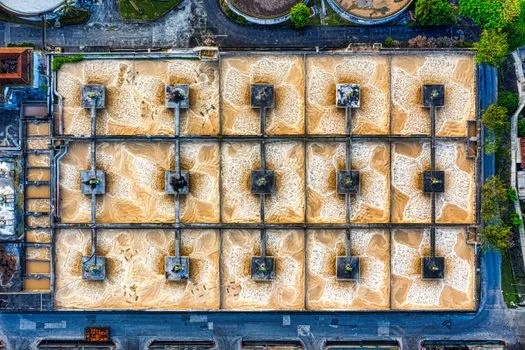
Capital expenditure (CAPEX) for food processing wastewater systems in Turkey ranges from $150,000 for standalone DAF units to over $1.5 million for high-efficiency MBR-RO hybrid configurations designed for zero-liquid discharge (ZLD). Procurement teams must account for localized costs, including an 18% VAT on imported membrane components and installation expenses that typically comprise 10–20% of the total equipment cost. Civil works, such as the construction of reinforced concrete tanks for MBR systems, can vary significantly by region; however, prefabricated wastewater plants for rapid deployment in Turkey can reduce these site-specific costs by up to 30% compared to traditional in-situ builds.
Operational expenditure (OPEX) is heavily influenced by Turkey's industrial energy landscape. While industrial users may qualify for energy subsidies of up to 30% for environmental compliance projects, the base energy consumption of MBR (0.8–1.2 kWh/m³) and RO (1.5–3 kWh/m³) remains a significant factor in the total cost of ownership. Chemical dosing—specifically coagulants like Polyaluminum Chloride (PAC) and flocculants for DAF systems—typically costs between $0.05 and $0.12 per cubic meter of treated water. Membrane replacement cycles represent the largest long-term OPEX variable, with MBR membranes requiring replacement every 5–7 years and RO membranes every 3–5 years depending on the efficacy of the pre-treatment stages.
The Return on Investment (ROI) for these systems is increasingly favorable as municipal water tariffs in industrial hubs like Kocaeli and Bursa rise. With municipal water costs often exceeding $1.20/m³, the ability to reuse treated effluent for non-potable applications (costing roughly $0.40–$0.70/m³ in OPEX) provides a direct payback. avoiding a single TRY 1 million fine and the associated production halts can justify the CAPEX of a high-efficiency system within the first 18 months of operation.
| Cost Category | DAF System | MBR System | RO System |
|---|---|---|---|
| CAPEX Range | $150K – $500K | $800K – $1.2M | $500K – $1M |
| OPEX (per m³) | $0.15 – $0.30 | $0.40 – $0.70 | $0.50 – $1.20 |
| Energy (kWh/m³) | 0.3 – 0.5 | 0.8 – 1.2 | 1.5 – 3.0 |
| Maintenance | Low (Mechanical) | Moderate (Membrane) | High (Membrane/High Pressure) |
| Typical ROI | 12 – 24 Months | 24 – 48 Months | 36 – 60 Months |
How to Select the Right Wastewater Treatment System for Your Turkish Food Plant
Selecting the optimal wastewater treatment system for a Turkish food facility requires a quantitative assessment of influent organic load, salinity, and specific reuse targets mandated by the 2006 Urban Waste Water Treatment Regulation. A generic approach often leads to membrane fouling in MBRs or insufficient COD removal in DAFs. Facility managers should follow a structured decision framework to balance compliance with long-term operational viability.
Step 1: Characterize Influent. Conduct a 24-hour composite sampling to determine peak organic loads. If TSS exceeds 500 mg/L or FOG is above 200 mg/L (common in poultry and dairy), a DAF system is a non-negotiable primary stage to protect downstream biological processes.
Step 2: Define Discharge and Reuse Goals. For plants discharging to municipal sewers, a DAF may suffice. However, if the goal is agricultural reuse (faecal coliform ≤ 1,000/100 mL) or industrial reuse in cooling towers, an MBR is required to achieve the necessary clarity and pathogen removal.
Step 3: Evaluate Footprint and Energy. DAF systems offer the smallest footprint (0.5 m²/m³/h) and lowest energy demand. MBRs require roughly 1 m²/m³/h but eliminate the need for secondary clarifiers, making them ideal for retrofitting within existing building envelopes.
Step 4: Calculate Total Cost of Ownership (TCO). Use the formula: TCO = CAPEX + (Annual OPEX × 10) + (Membrane Replacement Cost × 1.5). For a 50 m³/h poultry plant, a DAF-MBR hybrid often yields the lowest TCO by maximizing the lifespan of the biological membranes.
For more technical details on specific unit configurations, engineers should consult a detailed DAF selection guide for food processing plants to ensure hydraulic loading rates match the specific gravity of the facility's organic solids.
Case Study: Retrofitting a Turkish Poultry Plant with a DAF System
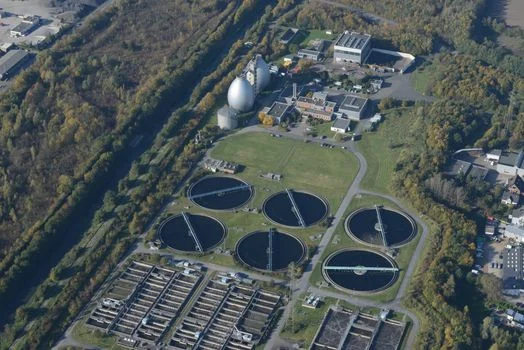
A poultry processing facility in Balıkesir successfully increased its wastewater treatment capacity from 300 gpm to 600 gpm by retrofitting existing tanks with micro-bubble flotation technology, avoiding a $2 million expansion of its physical plant footprint. The plant was facing a critical challenge: water conservation efforts had successfully reduced freshwater intake, but this resulted in a much higher concentration of contaminants in the remaining effluent. The existing, antiquated DAF units were unable to handle the increased FOG and TSS loading, leading to frequent discharge violations.
The solution involved retrofitting the internal components of the existing DAF tanks with DAF systems for poultry and meat processing wastewater technology. By optimizing the air-water saturation system to produce consistent 40 μm micro-bubbles and implementing automated skimming, the plant doubled its hydraulic capacity without adding new concrete tanks. The chemical dosing was recalibrated to maintain a pH of 6.5–7.0, which proved optimal for the specific proteins and fats found in poultry effluent.
The results were immediate. FOG removal efficiency reached 94%, and TSS removal stabilized at 88%, bringing the plant into full compliance with the 2025 COD limit of 150 mg/L. Operational costs also improved; the new system achieved an OPEX of $0.22/m³, a significant reduction from the $0.35/m³ seen with the older, less efficient units. The primary lesson learned was the critical importance of influent equalization; by installing a buffer tank to reduce shock loads by 30%, the plant achieved a 40% reduction in unplanned downtime.
Frequently Asked Questions
What are the wastewater discharge limits for food processing in Turkey for 2025?
Under the 2006 Urban Waste Water Treatment Regulation and the 2004 Water Pollution Control By-Law, the limits are COD ≤ 160 mg/L, BOD₅ ≤ 25 mg/L, TSS ≤ 35 mg/L, and FOG ≤ 10 mg/L. For agricultural reuse, faecal coliform must be ≤ 1,000/100 mL.
How does DAF compare to MBR for poultry wastewater treatment?
DAF is primarily used for removing fats, oils, and grease (90–95% efficiency) and suspended solids. MBR is a secondary/tertiary biological treatment that removes dissolved organic matter (COD/BOD) to levels below 50 mg/L, making it suitable for direct water reuse where DAF is not.
What is the typical CAPEX for a wastewater treatment plant in Turkey?
CAPEX varies by technology: $150K–$500K for DAF, $800K–$1.2M for MBR, and $500K–$1M for RO. Hybrid systems for zero-liquid discharge can range from $1.5M to $3M depending on capacity and influent complexity.
Can food processing wastewater be reused for irrigation in Turkey?
Yes, provided it meets the 1,000 faecal coliform per 100 mL standard. This typically requires MBR treatment or a combination of DAF and advanced disinfection (UV or Ozone) to ensure pathogen removal and low turbidity.
What are the penalties for wastewater non-compliance in Turkey?
Fines can reach up to TRY 1 million (~$30,000) per violation. Repeated non-compliance or severe environmental damage can lead to production halts and the revocation of environmental permits under the Water Pollution Control By-Law.