China GB 18918-2002 industrial discharge compliance starts from two instruments: the Water Pollution Prevention and Control Law, revised in 2017 and effective on 1 January 2018, and GB 18918-2002. A plant that discharges to a municipal sewer or to surface water must meet the GB 18918-2002 grade named in its permit. Provincial limits may be stricter than that national floor. Class A daily-mean examples are COD ≤ 50 mg/L and NH₃-N ≤ 5 mg/L.
Non-compliance can bring fines up to ¥1 million. MEE can also order production halts, and responsible executives face criminal liability under that law.
China GB 18918-2002 Industrial Discharge Compliance
Stand-alone domestic plants on Chinese factory sites follow GB 18918-2002 municipal grades. Grade 1-A daily means are COD 50 mg/L, BOD₅ 10 mg/L, SS 10 mg/L, and NH₃-N 5 mg/L when water is above 12 °C. TP is 0.5 mg/L for plants built from 1 January 2006. The discharge permit is the number an inspector enforces.
China wastewater rules sit in three layers: national law, national discharge standards, and local bureau rules. The strictest layer sets the design target for plant engineers. The Ministry of Ecology and Environment (MEE) issues national standards such as GB 18918-2002. Provincial and municipal bureaus enforce local variants that are often stricter than the national floor.
On factory sites we see two permit outlets, not one. GB 18918-2002 covers the municipal works and the independent domestic plant inside a residential compound or an industrial enterprise, which is the clause in section 1 of the standard. Process wastewater from the production line is a different outlet and follows the sector standard named in that permit. Urban drainage rules also push wastewater recycling and reuse under dual-carbon and circular-economy policy.
gb 18918-2002 cod nh3-n tp standards
GB 18918-2002 sets tiered effluent limits for municipal plants and for independent domestic facilities inside industrial sites. According to the Qiemo County reprint of the standard (Housing and Urban-Rural Development Bureau, 4 February 2024), the grades are Grade 1-A, Grade 1-B, Grade 2, and Grade 3. Plant specs often label these Class A, Class B, Class I, and Class II. Class A is the most stringent.
Grade 1-A applies to reuse, including ornamental lake water where dilution is small, and to a national or provincial key basin, lake, or reservoir. Grade 1-B applies to GB 3838 Class III surface water, except drinking-water source zones and swimming areas, and to a GB 3097 Class II sea. Grade 2 applies to GB 3838 Class IV or Class V water and to GB 3097 Class III or Class IV sea. Grade 3 is for a non-key town on enhanced primary treatment, which must still reserve space for secondary treatment.
Class A daily-mean limits include COD ≤ 50 mg/L, BOD₅ ≤ 10 mg/L, and SS ≤ 10 mg/L. NH₃-N is ≤ 5 mg/L (8 mg/L at ≤ 12 °C). TP is ≤ 0.5 mg/L for plants built from 2006 onward. Indirect dischargers must meet local pre-treatment values set by the environmental bureau.
Most plants we size for Class A run NH₃-N below 3 mg/L to leave monitoring margin. Official Grade 2 daily-mean COD is 100 mg/L. Grade 2 NH₃-N is 25 mg/L (30 mg/L at ≤ 12 °C) in the published standard text. The same reprint lists Grade 2 SS at 30 mg/L and Grade 2 TP at 3 mg/L, with no TN limit at Grade 2 or Grade 3.
Published Grade 3 daily means in that reprint are COD 120 mg/L, BOD₅ 60 mg/L, SS 50 mg/L, and TP 5 mg/L, with no NH₃-N or TN figure. Where influent COD exceeds 350 mg/L, Grade 3 COD may be judged as removal above 60%, and where influent BOD₅ exceeds 160 mg/L, removal must exceed 50%.
Some compliance summaries still circulate this sentence: china, for instance, mandates that effluent total phosphorus concentrations remain below 0.3 mg p l-1 under its national first-class discharge standard. The Qiemo County reprint does not print 0.3 mg/L as the Grade 1-A daily mean. That daily mean is TP ≤ 0.5 mg/L for plants built from 1 January 2006, and 1 mg/L for plants built on or before 31 December 2005. Design to the permit number if the bureau is tighter than 0.5 mg/L.
Table 1: GB 18918-2002 Effluent Discharge Limits (Selected Parameters)
| Parameter | Class A (mg/L) | Class B (mg/L) | Class I (mg/L) | Class II (mg/L) |
|---|---|---|---|---|
| COD | ≤ 50 | ≤ 60 | ≤ 80 | ≤ 120 |
| BOD₅ | ≤ 10 | ≤ 20 | ≤ 30 | ≤ 60 |
| SS | ≤ 10 | ≤ 20 | ≤ 20 | ≤ 50 |
| NH₃-N | ≤ 5 (8)* | ≤ 8 (15)* | ≤ 15 (25)* | ≤ 25 (35)* |
| TP | ≤ 0.5 | ≤ 1.0 | ≤ 1.0 | ≤ 3.0 |
| TN | ≤ 15 | ≤ 20 | ≤ 20 | ≤ 30 |
| pH | 6–9 | 6–9 | 6–9 | 6–9 |
| *Values in parentheses apply when water temperature is below 12°C. | ||||
Table 1 keeps the Class A, Class B, Class I, and Class II labels used on many datasheets. Those Class I and Class II columns are not a one-for-one copy of published Grade 2 and Grade 3. Use the prose limits above when the permit cites the grade names in GB 18918-2002.
The MEE modification sheet, posted in the Ministry standard library with a 3 February 2026 file date, confirms the parenthesis rule. The outside value applies above 12 °C, and the inside value applies at or below 12 °C. The sheet does not print a commencement date on the pages in that file.
Matching Wastewater Technologies to Regulatory Standards
Selecting the right wastewater treatment technologies turns GB 18918-2002 limits into a routine operating point. Each unit targets a pollutant set. The full train, not any single unit, sets the achievable class. Most food plants we size put flotation ahead of biology, because FOG is what upsets the aeration tank.
High-efficiency DAF systems strip SS and FOG in pre-treatment. That is why they lead food-processing trains. Compact MBR systems combine biology and membrane filtration in one tank. They routinely reach complete nitrification with turbidity below 1 NTU, inside Class A.
PLC-controlled dosing systems hold coagulant feed and pH within tight bands. That keeps TP below 0.5 mg/L and pH inside 6–9. Stage-level limits are detailed in the China Wastewater Discharge Standards 2026: Complete Limits & Plant Des.
Table 2: Technology-to-Standard Mapping for Key Pollutant Removal
| Technology | Primary Function / Removal | Key Parameters Addressed | Typical Achievable Standard (e.g., GB 18918-2002) |
|---|---|---|---|
| Dissolved Air Flotation (DAF) | Removes suspended solids (SS) and FOG | SS, FOG, Turbidity | Pre-treatment for Class A/B (SS < 10 mg/L) |
| Membrane Bioreactor (MBR) | Biological treatment + membrane filtration | BOD₅, COD, NH₃-N, Turbidity, SS | Class A (NH₃-N < 5 mg/L, Turbidity < 1 NTU) |
| Automatic Chemical Dosing System | Precise coagulant/flocculant addition, pH adjustment | TP, pH, Heavy Metals, COD, SS | Class A/B (TP < 0.5 mg/L, pH 6-9) |
| Activated Sludge Process (ASP) | Biological removal of organic matter | BOD₅, COD, SS | Class I/II (BOD₅ < 30 mg/L) |
| Multi-Media Filtration | Removes residual suspended solids | SS, Turbidity | Polishing for Class A (SS < 5 mg/L) |
Key Pollutants and Monitoring Requirements for Compliance
Compliance under China wastewater treatment regulations hinges on COD, BOD₅, SS, NH₃-N, TP, TN, and pH. Sector standards add heavy metals and other toxics on many industrial lines. Real-time effluent monitoring is mandatory above 100 m³/d, especially in critical river basins. That data feeds the MEE's 'Smart River' platform.
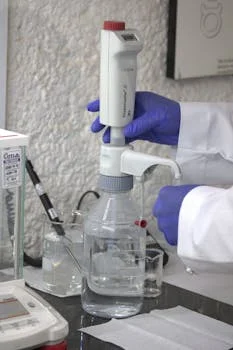
GB 18918-2002 requires dewatered sludge moisture below 80%. Under GB 24188-2009, sludge must also reach ≤ 80% moisture and be stabilized before disposal. The Qiemo County reprint states the same sludge rule in section 4.3.2: dewatered sludge moisture shall be below 80%, and the sludge shall be stabilized before disposal. Plants above 100 m³/d that we commission spend more time on the data link than on the analyser itself.
For a side-by-side of BOD and TSS numbers, see BOD and TSS Discharge Limits by Country: Global Standards Compared. This page stays on the China grades only. The modification sheet also tells the plant to fit automatic flow measurement, proportional sampling, and online meters for pH, water temperature, and COD, then to keep raw self-monitoring records and publish the results.
china wastewater permit and mee enforcement 2026
Every discharger in China must hold a valid permit and apply the pollution controls named on it. The MEE modification sheet extends the GB 18918-2002 scope to environmental impact assessment, protection-facility design, completion acceptance, pollutant-discharge permit issuance, and day-to-day operation. A sampler can therefore test China GB 18918-2002 industrial discharge compliance at the permitted outlet, not only at a design review. Town sewage plants below 500 m³/d, excluding county-seat towns and excluding the 500 m³/d point itself, follow the local standard where one exists.
Daily means in the 2002 table remain the steady design target. The modification sheet adds instantaneous caps and says the discharge may not exceed either set. For a Grade 1-A plant built from 1 January 2006, those instantaneous caps are COD 75 mg/L, TN 20 mg/L, NH₃-N 10 mg/L (15 mg/L at ≤ 12 °C), and TP 1 mg/L.
Fines still reach ¥1 million. Executives face expanded criminal liability under the Water Pollution Prevention and Control Law. MEE-ordered production halts remain a real risk. The failure we see most often is a winter sample taken below 12 °C and judged against the summer NH₃-N cap of 5 mg/L, instead of the 8 mg/L cold-weather value.
china reclaimed water 25 percent utilization 2025
China's reclaimed-water target for water-scarce prefecture-level cities is a utilization rate over 25% by 2025. A 2024 NDRC, MOHURD, and MEE opinion sets ≥25% reclaimed-water utilization by 2025 for water-scarce prefecture-level and above cities. According to the State Council English portal (Xinhua, 29 December 2023), that guideline also calls for 100 green low-carbon benchmark sewage plants by 2025. Where the city has no reclaimed-water pipe, a reuse loop pays only if the factory can take the water back.
China's environmental enforcement is shifting toward digital compliance, water reuse, and heavier penalties. Under the MEE's 'Smart River' initiative, major industrial zones must run IoT discharge monitoring by 2025. Many new plants therefore use MBR + RO reuse loops instead of disposal-only trains. A separate equipment note, outside this China scope, is industrial wastewater treatment in Greece 2026: EU compliance specs.
Who this is for: plant engineers and EPC contractors sizing MBR, DAF, or dosing trains for Chinese Class A or Class B discharge. Procurement managers use it to check that bids meet GB 18918-2002 and local bureau overlays. Who should look elsewhere: drinking-water or pure-water systems, covered in our pure-water product lines.
Selection checklist for China-compliant plants: confirm discharge class with the local EPB. Size the biological stage to the winter NH₃-N limit (8 mg/L below 12 °C). Verify TP control to ≤ 0.5 mg/L for Class A. Plan real-time monitoring for flows over 100 m³/d.
Budget for IoT upload to the 'Smart River' platform. Include sludge dewatering to ≤ 80% moisture per GB 24188-2009 and GB 18918-2002. Ask the bureau whether the outlet is domestic sewage under GB 18918-2002 or process wastewater under a sector standard. Check the instantaneous caps in the modification sheet before you freeze the bid numbers.
Next step: send your flow, influent profile, and target class to request a sized process proposal and CAPEX range.
Frequently Asked Questions
What law and standard set the discharge duty for a Chinese plant?
The Water Pollution Prevention and Control Law, revised in 2017 and effective on 1 January 2018, is the statute cited for the duty to hold a permit. MEE issues GB 18918-2002, and the local bureau writes the grade into that permit. Provincial limits may be stricter than the national floor. A missing permit is the violation that most often leads to a production halt.
Which GB 18918-2002 grade should a factory domestic plant use?
Grade 1-A is the daily-mean set when effluent is reused or discharged to a key basin, lake, or reservoir. Daily means are COD 50 mg/L, BOD₅ 10 mg/L, SS 10 mg/L, and NH₃-N 5 mg/L above 12 °C. TP is 0.5 mg/L for plants built from 1 January 2006. Most plants we size still target NH₃-N below 3 mg/L so a cold week does not erase the margin.
Does the 25% reclaimed-water target still apply?
Yes. According to the State Council English portal (Xinhua, 29 December 2023), water-scarce cities at prefecture level and above were set a recycled-water utilization rate over 25% by 2025. NDRC, MOHURD, and MEE issued that guideline, which also calls for 100 benchmark sewage plants by 2025. A factory in one of those cities should ask whether the permit expects reuse, not only a discharge number.
What happens if the plant misses its permitted limits?
Fines can reach ¥1 million. MEE can order a production halt and can suspend or revoke the permit. Responsible executives face criminal liability under the Water Pollution Prevention and Control Law. The usual trigger is a recorded exceedance on the online meter, so judge a week below 12 °C against 8 mg/L, not the summer cap of 5 mg/L.