Industrial Wastewater Treatment in Tashkent 2025: Zero-Risk Compliance, Cost Models & Equipment Selection Guide
Tashkent’s industrial wastewater treatment requires systems that meet Uzbekistan’s MD 145/93 effluent standards (COD ≤ 150 mg/L, BOD ≤ 30 mg/L) while optimizing costs. For a 500 m³/day textile plant, a dissolved air flotation (DAF) system achieves 92-97% COD removal at $120,000 CAPEX, while membrane bioreactors (MBR) deliver reuse-quality effluent (<10 mg/L COD) at $250,000 but with 30% lower footprint. Local case studies show 85% pollution reduction and 40% water reuse potential (EcoTech Solutions, 2024).Why Tashkent Factories Are Failing Wastewater Compliance (And How to Fix It)
A textile factory in Tashkent faced an $85,000 fine in 2024 for discharging effluent exceeding the MD 145/93 COD limit of 150 mg/L, recording levels up to 180 mg/L (EcoTech Solutions, 2024). This incident highlights a pervasive challenge for industrial wastewater treatment in Tashkent, where many facilities struggle to meet stringent environmental regulations. Beyond textiles, mining operations in nearby Chirchik present even greater treatment demands, with wastewater averaging 1,200 mg/L COD. Current treatment systems in these mining facilities typically achieve only 60-70% removal efficiency, falling significantly short of the 90%+ required to meet discharge limits. The broader infrastructure also contributes to the problem; the Bozsuv water treatment plant, Tashkent’s largest, operates at its maximum capacity of 600,000 m³/day, compelling industrial facilities to implement effective on-site treatment or face operational shutdowns. Common failure modes observed in Tashkent’s industrial sector include the use of undersized DAF units that cannot handle peak hydraulic loads, improper chemical dosing strategies leading to suboptimal flocculation (e.g., maintaining pH between 5.5-6.0 instead of the optimal 7.0-8.0 for many coagulants), and a notable absence of integrated sludge dewatering systems. Inadequate sludge dewatering in Tashkent not only increases disposal costs but also contributes to secondary pollution if not managed correctly. Addressing these systemic issues through proper design, chemical optimization, and robust sludge management is crucial for achieving Uzbekistan MD 145/93 compliance and avoiding significant penalties.Uzbekistan’s Wastewater Regulations: MD 145/93 Limits and Tashkent Municipal Requirements
| Parameter | MD 145/93 Effluent Standard (mg/L, except pH) | Tashkent Municipal Discharge Limit (2025 Update) (mg/L, except pH/color) |
|---|---|---|
| COD | ≤ 150 | ≤ 150 |
| BOD₅ | ≤ 30 | ≤ 30 |
| TSS | ≤ 50 | ≤ 50 |
| pH | 6.5 - 8.5 | 6.5 - 8.5 |
| Chromium (Cr) | — | ≤ 0.5 |
| Lead (Pb) | — | ≤ 0.1 |
| Oil & Grease | — | ≤ 10 |
| Color (Textile) | — | ≤ 50 Pt-Co units |
DAF vs. MBR vs. Chemical Treatment: Which System Fits Your Tashkent Facility?
Selecting the appropriate wastewater treatment system for a Tashkent industrial facility depends on effluent quality targets, footprint availability, and the specific contaminants present, with Dissolved Air Flotation (DAF), Membrane Bioreactors (MBR), and chemical treatment offering distinct advantages. Each technology provides different levels of pollutant removal and operational characteristics tailored to diverse industrial needs.Dissolved Air Flotation (DAF) Systems: These systems are highly effective for removing suspended solids, oils, greases, and some insoluble COD. Tashkent-optimized DAF systems for 92-97% COD removal operate at 4-6 bar pressure with typical retention times of 30-60 minutes. They are particularly ideal for industries such as food processing, meatpacking, and oil & gas, where fats, oils, and greases (FOG) and high TSS are primary concerns. DAF systems are known for their robust performance in handling fluctuating pollutant loads.
Membrane Bioreactor (MBR) Systems: MBR systems represent an advanced biological treatment technology that combines activated sludge with membrane filtration. They achieve 98%+ COD removal, consistently producing effluent with less than 10 mg/L COD, making them suitable for water reuse applications. MBR systems offer a significantly smaller footprint, up to 60% less than conventional activated sludge systems, and are best suited for industries like textile and pharmaceutical manufacturing that require high-quality treated wastewater for process reuse. The PVDF membranes typically used in MBRs have a pore size of 0.1 μm, effectively removing bacteria, viruses, and suspended solids.
Chemical Treatment (Coagulation/Flocculation): This approach involves the addition of chemicals like polyaluminum chloride (PAC) and polyacrylamide (PAM) to destabilize and aggregate pollutants, followed by sedimentation or filtration. Chemical treatment typically achieves 70-85% COD removal and boasts the lowest CAPEX, ranging from $80-$150/m³/day of treated water. However, it necessitates precise pH adjustment (optimal range 6.5-8.5) to counteract Tashkent’s hard water conditions, which often exhibit 300-400 mg/L CaCO₃ hardness. This can increase chemical consumption and operational oversight.
The choice of industrial wastewater treatment in Tashkent often hinges on industry-specific effluent characteristics:
- Textile Industry: MBR systems are highly recommended due to their ability to produce reuse-quality effluent, crucial for reducing fresh water consumption and achieving high Tashkent industrial water reuse targets. For example, MBR systems for Tashkent textile plants requiring reuse-quality effluent are a strategic investment.
- Mining Industry: A combination of chemical treatment for heavy metal precipitation and DAF for suspended solids removal is often optimal, given the high concentration of both inorganic and organic pollutants.
- Food Processing Industry: DAF systems are excellent for removing FOG and TSS, common in food processing wastewater.
- Pharmaceutical Industry: MBR followed by advanced oxidation processes like ozone or UV is typically required to address complex organic compounds and achieve ultra-pure effluent quality.
| System Type | Typical COD Removal | Key Advantage | Footprint (relative) | Ideal Tashkent Industries |
|---|---|---|---|---|
| DAF | 92-97% | Effective FOG/TSS removal | Medium | Food Processing, Oil & Gas |
| MBR | 98%+ | Reuse-quality effluent, small footprint | Small (60% less than conventional) | Textile, Pharmaceutical |
| Chemical Treatment | 70-85% | Lowest CAPEX, heavy metal removal | Smallest | Mining (pre-treatment), General Industrial |
Engineering Specs for Tashkent’s Top 3 Wastewater Treatment Systems
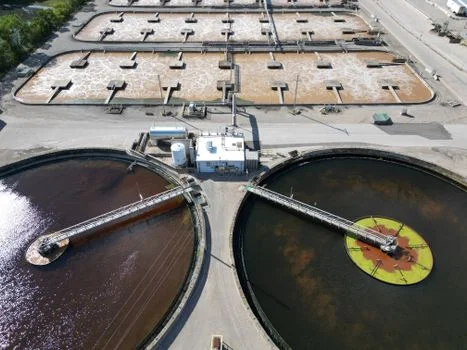
Dissolved Air Flotation (DAF) Systems: For effective solids separation, DAF units require careful sizing based on hydraulic loading rates (HLR) and air-to-solids ratios (A/S). Typical HLRs range from 4-8 m/h, ensuring sufficient contact time for air bubbles and flocculated particles. The A/S ratio, critical for floatation efficiency, should be maintained between 0.02-0.06 (kg air/kg solids). DAF systems typically produce a sludge concentration of 3-5% solids, and skimmer speeds are usually set at 0.5-1.0 m/min to efficiently remove the floated sludge blanket. These parameters are crucial for achieving the desired DAF system removal rates.
Membrane Bioreactor (MBR) Systems: MBRs are characterized by high biomass concentrations and efficient filtration. The Mixed Liquor Suspended Solids (MLSS) concentration in an MBR tank typically ranges from 8,000-12,000 mg/L, which allows for compact reactor design. Membrane flux, the rate at which water permeates through the membrane, is a key operating parameter, usually maintained between 15-25 L/m²/h. Aeration demand for MBR systems, which serves both biological treatment and membrane scouring, is generally 0.3-0.6 kWh/m³ of treated water. These specifications are vital for optimizing the MBR wastewater treatment footprint and performance. More detailed MBR operating parameters are summarized below:
| MBR Operating Parameter | Typical Range |
|---|---|
| MLSS Concentration | 8,000 - 12,000 mg/L |
| Membrane Flux | 15 - 25 L/m²/h |
| Aeration Demand | 0.3 - 0.6 kWh/m³ |
| Hydraulic Retention Time (HRT) | 6 - 12 hours |
| Sludge Retention Time (SRT) | 15 - 30 days |
Chemical Dosing Systems: For effective chemical treatment, precise dosing and mixing are paramount, especially with Tashkent’s hard water conditions. Polyaluminum chloride (PAC) dosage typically ranges from 50-200 mg/L, while polyacrylamide (PAM) flocculant dosage is much lower, at 1-5 mg/L. Rapid mixing is essential for coagulant dispersion, requiring a G-value (velocity gradient) of 500-1,000 s⁻¹ in flash mixers with a short retention time of 1-2 minutes. Following rapid mixing, slower mixing is applied to promote flocculation before separation. PLC-controlled chemical dosing for Tashkent’s hard water conditions ensures optimal chemical consumption and effluent quality. For detailed specifications on automated chemical delivery, explore HydropureWater's automatic chemical dosing system.
Footprint Comparison: Space efficiency is a significant consideration for industrial facilities. Chemical treatment systems typically require the smallest footprint (0.1-0.3 m²/m³/day of treated water), followed by MBR systems (0.2-0.4 m²/m³/day) due to their compact design and high biomass concentration. DAF systems generally require a larger footprint (0.5-1.0 m²/m³/day) compared to chemical or MBR options, especially when integrated with equalization and sludge handling units. This comparison is critical for site planning and cost estimations in urbanized areas like Tashkent.
Tashkent Wastewater Treatment Costs: CAPEX, OPEX, and ROI Calculators
Accurate CAPEX and OPEX modeling for industrial wastewater treatment projects in Tashkent is essential for financial planning, driven by local electricity tariffs and water characteristics. Understanding these cost benchmarks allows procurement teams and facility managers to budget effectively and forecast return on investment (ROI) for compliance and water reuse initiatives.CAPEX Breakdown: Initial capital expenditure for industrial wastewater treatment in Tashkent varies significantly by technology and capacity. DAF systems typically range from $120-$250 per m³/day of treatment capacity. MBR systems, offering superior effluent quality and a smaller footprint, command a higher CAPEX, estimated between $500-$1,200 per m³/day. Chemical treatment systems, while offering lower removal efficiencies, have the lowest CAPEX, generally $80-$150 per m³/day, making them an attractive option for pre-treatment or when less stringent discharge limits apply. These figures include major equipment, installation, and initial commissioning but exclude civil works or land acquisition.
OPEX Drivers: Operational expenditure is influenced by several key factors specific to Uzbekistan. Energy consumption is a major driver, with typical requirements of 0.3-0.6 kWh/m³ for biological and membrane systems. With Tashkent’s electricity tariffs averaging $0.08/kWh, this adds $0.02-$0.05/m³ to the overall OPEX. Chemical costs for coagulation, flocculation, and pH adjustment typically range from $0.10-$0.30/m³, but Tashkent-specific factors, such as the region’s hard water (300-400 mg/L CaCO₃), can increase chemical consumption by 20-30% to achieve optimal treatment. Membrane replacement for MBR systems is another significant OPEX component, averaging $15-$30/m² per year, depending on membrane type and operational conditions. Labor, maintenance, and sludge disposal also contribute to ongoing costs, with sludge dewatering Tashkent being a key consideration.
ROI Model: Investing in advanced wastewater treatment systems, particularly MBR, can yield substantial returns through water reuse. For instance, a textile plant utilizing MBR for internal process water recovery can save approximately $0.80/m³ by reducing fresh water intake and discharge fees. With a 40% water recovery rate, such a system can achieve a payback period of 3-5 years, as demonstrated in an EcoTech case study (Top 2). This economic benefit, combined with avoided penalties for non-compliance, strengthens the case for upgrading industrial wastewater treatment in Tashkent. Considering these factors, the wastewater CAPEX Uzbekistan projects can be justified through long-term operational savings and environmental benefits.
| Cost Category | DAF System | MBR System | Chemical Treatment |
|---|---|---|---|
| CAPEX ($/m³/day) | $120 - $250 | $500 - $1,200 | $80 - $150 |
| Energy OPEX (kWh/m³) | 0.2 - 0.4 | 0.4 - 0.6 | 0.1 - 0.2 |
| Chemical OPEX ($/m³) | $0.05 - $0.15 | $0.02 - $0.05 | $0.10 - $0.30 |
| Membrane Replacement OPEX ($/m²/year) | — | $15 - $30 | — |
| Sludge Disposal OPEX (relative) | Medium-High | Low-Medium | High |
Frequently Asked Questions
What are the key MD 145/93 limits for industrial discharge in Tashkent?
The primary MD 145/93 limits for industrial discharge in Tashkent include COD ≤ 150 mg/L, BOD ≤ 30 mg/L, TSS ≤ 50 mg/L, and a pH range of 6.5-8.5. These standards are legally binding and form the baseline for all industrial effluent quality in Uzbekistan.
How does Tashkent's hard water affect wastewater treatment chemical costs?
Tashkent's hard water, often containing 300-400 mg/L CaCO₃, increases chemical costs for coagulation and flocculation by 20-30%. This is because higher dosages of coagulants and pH adjustment chemicals are required to effectively treat pollutants in water with elevated mineral content.
Which treatment system offers the best water reuse potential for textile plants in Tashkent?
MBR systems offer the best water reuse potential for Tashkent textile plants, consistently producing effluent with <10 mg/L COD. This high-quality treated water can be directly reused in many textile processes, reducing fresh water consumption and generating significant operational savings.
What is the typical footprint requirement for an MBR system in Tashkent?
An MBR system typically requires a footprint of 0.2-0.4 m²/m³/day of treated water. This is approximately 60% smaller than conventional activated sludge systems, making MBR an ideal solution for industrial facilities in Tashkent with limited available space.
What are the penalties for non-compliance with Tashkent's wastewater regulations?
Non-compliance with Tashkent's wastewater regulations can result in substantial penalties, including fines up to $100,000 or operational shutdowns for 6 months for repeat violations. These strict measures underscore the importance of robust industrial wastewater treatment in Tashkent.
Related Equipment
- Tashkent-optimized DAF systems for 92-97% COD removal — view specifications, capacity range, and technical data
- MBR systems for Tashkent textile plants requiring reuse-quality effluent — view specifications, capacity range, and technical data
Need a customized solution? Request a free quote with your specific flow rate and pollutant parameters.