Andhra Pradesh treats only 15% of its 5,500 MLD sewage—833 MLD installed STP capacity against a 1,500 MLD target. Every municipal sewage treatment plant Andhra Pradesh funds must hit APPCB limits of pH 6.5-8.5 and BOD ≤30 mg/L while closing a 667 MLD gap.
Andhra Pradesh's Sewage Treatment Crisis: 2025 Capacity Gaps and Urgent Needs
Andhra Pradesh treats only 15% of its 5,500 MLD daily sewage. Its 43 operating STPs deliver 515.85 MLD against 987.35 MLD of urban generation in the measured basins, and installed capacity of 833 MLD—including non-operational plants—sits far below the APPCB's 1,500 MLD 2025 target.
The Andhra Pradesh Pollution Control Board (APPCB) set that 1,500 MLD 2025 target against an installed base it cannot reach, since several plants sit non-operational. For municipal engineers and urban planners, the deficit is an urgent infrastructure requirement needing roughly ₹3,000-5,000 crore to bridge the 667 MLD gap in new treatment facilities. Major urban centers like Visakhapatnam treat nearly 30% of generated sewage, but tier-2 and tier-3 cities such as Tirupati, Kurnool, and Nellore often treat less than 5%, degrading local water bodies and groundwater.
Funding flows mainly from central schemes—AMRUT 2.0 and the Namami Gange mission—alongside growing use of public-private partnerships (PPP). These PPP models often carry viability gap funding (VGF) to make large-scale municipal sewage treatment plant in andhra pradesh india projects financially feasible for private contractors. Equipment selected in this phase decides whether the 2025 targets land as operational reliability or as nameplate capacity, so technology choices and compliance design deserve equal weight in every tender.
| City/Region | Sewage Generated (MLD) | Current Treatment (MLD) | Capacity Gap (MLD) | Treatment Rate (%) |
|---|---|---|---|---|
| Visakhapatnam | 310 | 93 | 217 | 30% |
| Vijayawada | 240 | 120 | 120 | 50% |
| Tirupati | 85 | 4 | 81 | 4.7% |
| Kurnool | 72 | 3 | 69 | 4.1% |
| Guntur | 110 | 15 | 95 | 13.6% |
APPCB Discharge Standards for Sewage Treatment Plants: Parameters and Compliance Checklist
The Andhra Pradesh Pollution Control Board (APPCB) 2024 guidelines mandate that all municipal sewage treatment plants achieve Biochemical Oxygen Demand (BOD) of ≤30 mg/L and Total Suspended Solids (TSS) of ≤50 mg/L. Those limits protect the state's river basins and coastal ecosystems from eutrophication and pathogenic contamination. Compliance starts with influent characteristics, which in Andhra Pradesh swing widely between monsoon and summer seasons. The 2024 update also requires continuous online monitoring systems for pH, BOD, and TSS, with real-time data transmission to APPCB servers for 24/7 compliance.
Coastal regions like Visakhapatnam and Kakinada add a salinity problem: seawater intrusion into the sewerage network often pushes Total Dissolved Solids (TDS) above 1,500 mg/L, demanding extra engineering controls on chloride and sulfate levels. Disinfection is the other compliance pillar. APPCB now mandates advanced oxidation or chlorine dioxide disinfection systems for APPCB-compliant STPs to hold fecal coliform below 1,000 MPN/100 mL without forming disinfection by-products like trihalomethanes, which traditional liquid chlorine leaves behind.
| Parameter | APPCB Standard (Inland) | Coastal/Sensitive Zone Standard | Monitoring Frequency |
|---|---|---|---|
| pH Value | 6.5 – 8.5 | 6.5 – 8.5 | Continuous (Online) |
| BOD (3 days at 27°C) | ≤ 30 mg/L | ≤ 20 mg/L | Continuous (Online) |
| TSS | ≤ 50 mg/L | ≤ 30 mg/L | Continuous (Online) |
| COD | ≤ 250 mg/L | ≤ 100 mg/L | Weekly (Lab) |
| Fecal Coliform | < 1,000 MPN/100 mL | < 100 MPN/100 mL | Monthly (Lab) |
| Chloride (Coastal) | N/A | ≤ 1,000 mg/L | Monthly (Lab) |
Engineers must also adopt compliance strategies for specialized wastewater treatment when municipal lines intercept hospital or industrial park runoff, where heavy metal limits become enforceable—Lead ≤0.1 mg/L and Arsenic ≤0.2 mg/L, for example. Missing these standards by the December 2025 deadline can cost municipal bodies environmental compensation penalties of up to ₹5 lakh per month. Most plants we review in coastal Andhra handle that risk with heavier pre-treatment and tighter online monitoring rather than end-of-pipe fixes.
Choosing a Municipal Sewage Treatment Plant in Andhra Pradesh: Technology Options
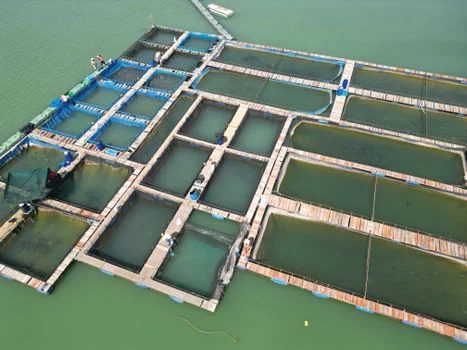
Coastal influent water in Andhra Pradesh frequently exceeds 1,500 mg/L TDS because of the high water table and seawater seepage into aging concrete sewer lines. That condition renders many conventional Activated Sludge Process (ASP) plants inefficient, since high salinity inhibits flocculation. Engineers therefore choose between Moving Bed Biofilm Reactor (MBBR), Membrane Bioreactor (MBR), and conventional A/O processes based on land availability, influent strength, and the effluent quality needed for reuse in industrial cooling or urban irrigation.
MBBR vs MBR Technology for Municipal STP Selection
MBBR technology suits cities like Vijayawada, where seasonal monsoons swing BOD loads from 50 mg/L to 500 mg/L. Polyethylene media give the biofilm a large protected surface area, making the process resilient to organic shock loads that would wash out a conventional floc. Operating staff tolerate the media management because the plant keeps complying through the wet season without bypass events.
Dense urban developments and Visakhapatnam's city center need a different answer: MBR systems for high-efficiency COD removal in urban STPs. MBR combines biological treatment with membrane filtration, eliminating secondary clarifiers and cutting total footprint by up to 60%. OPEX runs higher on membrane maintenance, but effluent quality is superior—often meeting Non-Potable Reuse standards immediately after treatment.
| Feature | Conventional (ASP/AO) | MBBR | MBR |
|---|---|---|---|
| CAPEX (₹/MLD) | 1.2 – 1.5 Cr | 1.6 – 2.0 Cr | 2.5 – 3.2 Cr |
| OPEX (₹/MLD/Year) | 0.25 – 0.35 Cr | 0.35 – 0.45 Cr | 0.55 – 0.75 Cr |
| Footprint (m²/MLD) | 2,000 | 1,500 | 800 |
| COD Removal Rate | 80-85% | 85-90% | 95-98% |
| TDS Tolerance | Low (<800 mg/L) | Medium (<1,200 mg/L) | High (>2,000 mg/L) |
Smaller towns and peri-urban housing projects get a zero-land solution instead: the Underground Package Sewage Treatment Plant (WSZ Series) installs beneath parks or parking lots. These pre-engineered systems cut the civil engineering timeline from 18 months to 6, which matters for AMRUT 2.0's rapid expansion goals across the state. Modularity also means capacity can follow population growth in stages rather than one oversized pour of concrete.
Cost-Optimized Equipment Selection: CAPEX, OPEX, and ROI
Energy consumption accounts for 40% of total OPEX in municipal-scale STPs, making high-efficiency aeration and pumping the primary levers of long-term viability. In a typical 10 MLD Andhra Pradesh project, civil works represent roughly 40% of CAPEX (₹4 crore), with mechanical equipment, electrical systems, and automation taking the remaining 60%. Procurement officers increasingly score "Life Cycle Costing" instead of the lowest initial bid. An MBR system costs more upfront, yet can save over ₹50 lakh per year in land acquisition in high-value urban zones—often a faster return on investment (ROI) once land value enters the municipal budget.
Operational efficiency also depends on automated pre-treatment. Pre-treatment screens for high-TDS influent in coastal STPs stop grit and fibrous material from damaging downstream membranes or MBBR media. For smaller municipalities, the ROI sits in modularity: pre-fabricated systems avoid the cost overruns of large civil construction in difficult terrain like the Eastern Ghats or the marshy Krishna river deltas.
| Capacity (MLD) | Technology | Est. CAPEX (₹ Cr) | Est. OPEX (₹ Cr/Yr) | Payback (Years)* |
|---|---|---|---|---|
| 5 MLD | MBBR | 8.5 | 1.8 | 6.5 |
| 5 MLD | MBR | 13.0 | 2.6 | 8.0 |
| 20 MLD | Conventional | 26.0 | 5.5 | 9.5 |
| 20 MLD | MBBR | 35.0 | 7.2 | 7.5 |
*Payback includes land value savings and potential revenue from treated sewage sales to industries (HydropureWater field data, 2025).
Municipalities can also benchmark against cost benchmarks for STP equipment in neighboring states to check tender pricing. Adopting global best practices for municipal STP upgrades—VFD-controlled blowers and SCADA-integrated chemical dosing—typically cuts energy waste by 15-20% annually. Those two references frame the low and high ends of what a competitive Andhra Pradesh bid should look like on paper.
Visakhapatnam STP Capacity Upgrade: Retrofitting 50 MLD with MBR

Upgrading the 50 MLD plant in Visakhapatnam cut final effluent BOD from 50 mg/L to under 10 mg/L, proving MBR's value on high-volume municipal loads. The original facility ran a conventional A/O process that struggled with the city's high-TDS influent and fluctuating organic loads, drawing frequent APPCB non-compliance notices. The municipal corporation then faced a binary choice: acquire 5 acres of adjacent high-value land to expand the conventional plant, or retrofit the existing footprint with membrane technology.
Retrofitting with MBR—using PVDF reinforced membranes—doubled effective treatment capacity inside the same physical boundary. A critical element was installing pre-treatment screens for high-TDS influent in coastal STPs, shielding the membranes from the fine silt and marine debris characteristic of Visakhapatnam's sewerage. CAPEX came to ₹18 crore, and results were immediate: effluent now clean enough for local industrial reuse, creating a revenue stream expected to cover the upgrade within 7 years. The key lesson was operational—membrane cleaning had to move from every 6 months to every 3 months in peak summer to counter accelerated scaling from seawater intrusion.
Next Steps for Municipal Teams
Municipal teams should anchor tenders to three documents: a verified influent characterization through both seasons, the APPCB monitoring scope, and a life-cycle cost model covering 10 years of energy and chemicals. Bundle pre-treatment, disinfection, and online monitoring into the main package so no vendor can shift compliance risk downstream. For sizing MBBR, MBR, or underground WSZ capacity against the 667 MLD gap, send the inquiry form with your city's flow data.
Frequently Asked Questions
What is the cost of a 1 MLD STP in Andhra Pradesh?
CAPEX for a 1 MLD plant ranges from ₹1.2 crore for MBBR technology to ₹2.5 crore for MBR technology. Annual OPEX typically falls between ₹0.3 crore and ₹0.6 crore, depending on local electricity tariffs and chemical requirements. Small plants should still be tendered on life-cycle cost, since energy dominates the 10-year picture.
How do APPCB's 2024 guidelines affect existing STPs?
All existing STPs must be retrofitted with Online Continuous Effluent Monitoring Systems (OCEMS) by December 2025. Plants failing the BOD ≤30 mg/L standard must submit an upgrade plan or face monthly penalties of ₹5 lakh. The retrofit itself is usually instrumentation and disinfection work rather than a full process rebuild.
Modular STP for tier-2 cities India: what are the land options for 10 MLD?
A conventional ASP plant needs about 2,000 m² for 10 MLD, an MBBR plant 1,500 m², and an MBR plant only 800 m². For zero land impact, underground WSZ series STPs install beneath parks or parking lots. Tier-2 cities like Tirupati and Kurnool, treating under 5% of sewage today, get capacity fastest through these modular routes.
Can municipal STPs in Andhra Pradesh discharge into the sea?
Yes, but they must meet stricter coastal discharge standards, including chloride ≤1,000 mg/L and sulfate ≤400 mg/L. Disinfection must use an APPCB-approved method such as chlorine dioxide to control fecal coliform without trihalomethane by-products. Coastal plants in Visakhapatnam and Kakinada already design against these tighter limits.
What funding options are available for municipal STP projects?
Primary funding comes from AMRUT 2.0 (50% central grant) and the state government. Many urban local bodies also adopt the Hybrid Annuity Model (HAM) under PPP, where the private developer covers 60% of CAPEX and is repaid by the government over 15 years. Viability gap funding sweetens projects whose tariffs alone cannot close the financing.