Nagpur’s sewage treatment equipment market offers systems for ₹5L (compact STPs) to ₹5Cr (industrial MBR plants), with COD removal rates of 85–98% and BOD reduction to ≤10 mg/L—critical for meeting CPCB 2026 discharge limits. Suppliers provide solutions tailored to Nagpur’s textile and food processing industries, but buyers must evaluate footprint, energy use, and compliance guarantees to avoid costly retrofits. This guide compares 5 system types, maps costs, and provides a zero-risk selection framework.
Why Nagpur’s Industrial Buyers Struggle with Sewage Treatment Equipment
Textile dyeing plants in Butibori face CPCB shutdowns for exceeding BOD limits, where the required standard is ≤30 mg/L, yet actual effluent often ranges between 80–120 mg/L due to inadequate biological aeration. This compliance gap is rarely a result of poor intent, but rather a mismatch between influent characteristics and equipment specifications. For instance, a procurement manager in a Hingna-based food processing unit may purchase a standard aerobic system, only to find that high fat, oil, and grease (FOG) levels lead to filamentous bulking and total system failure within six months.
Land scarcity in Nagpur’s MIDC areas significantly complicates the installation of traditional treatment infrastructure. Many facilities are forced to consider a compact underground STP for Nagpur’s land-scarce industrial zones, yet local suppliers often lack standardized sizing. A 50 m³/h system from one vendor may require 20% more footprint than another, leading to structural conflicts with existing factory foundations. Without granular engineering specs, buyers often default to the lowest CAPEX, ignoring the spatial constraints that eventually lead to expensive site modifications.
Operational financial risks are equally daunting. Approximately 30% of industrial buyers in Nagpur report unexpected sludge disposal fees, which currently range from ₹3,000 to ₹5,000 per ton. A pharma plant in the region recently installed a Sequencing Batch Reactor (SBR) that failed to meet Total Suspended Solids (TSS) limits because the influent screening was undersized for the specific waste profile. The resulting sludge was too voluminous and wet, tripling the projected OPEX. These "hidden" costs stem from a lack of transparency in the pre-purchase phase regarding sludge yield ratios and chemical consumption requirements.
Sewage Treatment System Types Compared: MBR vs. SBR vs. Conventional Activated Sludge
MBR systems achieve 95–98% COD removal and BOD reduction to <5 mg/L by utilizing ultrafiltration membranes that eliminate the need for secondary clarifiers. In Nagpur’s pharmaceutical sector, where effluent must often meet stringent hospital wastewater treatment standards in India, MBR is the gold standard. However, this efficiency comes with a higher energy footprint. Data indicates that high-efficiency MBR systems for Nagpur’s pharma and textile industries consume ₹1.5–₹2.0/kWh compared to the ₹0.8–₹1.2/kWh typically seen in SBR setups.
Sequencing Batch Reactors (SBR) offer a middle ground, providing 85–90% COD removal with a lower CAPEX of ₹1,200–₹1,800/m³. SBR is particularly effective for food processing plants in Nagpur that experience variable hydraulic loads, as the batch process allows for flexible aeration timing. The primary drawback of SBR is the requirement for large equalization tanks to manage influent flow while the reactor is in its "settle" or "decant" phase. Conventional Activated Sludge (CAS) remains the cheapest option at ₹800–₹1,500/m³, but its massive footprint—often 2 to 3 times that of an MBR—makes it unviable for most modern MIDC industrial plots.
| System Type | COD Removal | Footprint (m²/m³) | Energy (kWh/m³) | CAPEX (₹/m³) | Best For |
|---|---|---|---|---|---|
| MBR (Membrane Bioreactor) | 95–98% | 0.15–0.25 | 1.2–1.8 | ₹2,500–₹4,000 | Pharma, Textile, Water Reuse |
| SBR (Sequencing Batch) | 85–90% | 0.40–0.60 | 0.6–0.9 | ₹1,200–₹1,800 | Food Processing, Municipal |
| Conventional (CAS) | 70–80% | 0.80–1.20 | 0.4–0.6 | ₹800–₹1,500 | Large Municipal Projects |
| MBBR (Moving Bed) | 80–85% | 0.30–0.50 | 0.7–1.0 | ₹1,500–₹2,200 | Retrofitting existing plants |
Engineering Specs for Nagpur’s Top 5 Sewage Treatment Equipment Suppliers
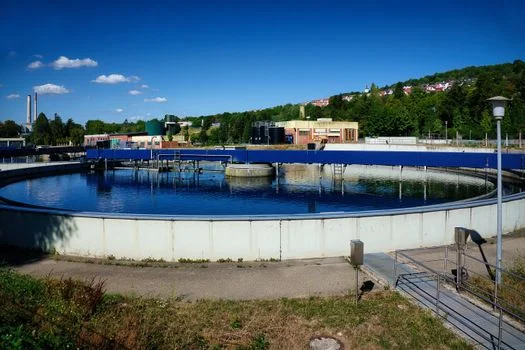
Engineering specifications for sewage treatment equipment in Nagpur vary by capacity, with integrated WSZ series systems supporting 1–80 m³/h and achieving up to 90% BOD removal. These systems are often pre-fabricated, which reduces onsite installation time by 60%—a critical factor for plants facing immediate CPCB 2026 compliance deadlines. When evaluating a sewage treatment equipment supplier in nagpur, engineers must look beyond capacity and examine the "specific surface area" of the media in MBBR systems or the pore size in MBR membranes.
Leading suppliers in the Maharashtra region focus on modularity. For instance, Tier-1 manufacturers provide MBR systems with capacity ranges of 10–200 m³/h that are fully compliant with the latest TSS limits of ≤100 mg/L. For textile effluent, which often contains recalcitrant dyes, advanced suppliers integrate PLC-controlled dosing for Nagpur’s variable industrial effluent loads. This ensures that coagulants and flocculants are added precisely, preventing the biomass from being poisoned by sudden pH swings or toxic dye concentrations.
| Supplier Tier | Primary Tech | Capacity Range | COD Removal | BOD Removal | Warranty |
|---|---|---|---|---|---|
| Tier 1 (Industrial) | MBR / Advanced SBR | 10–500 m³/h | 95%+ | 98%+ | 2–3 Years |
| Tier 2 (Commercial) | MBBR / WSZ Series | 5–100 m³/h | 85–90% | 90% | 1 Year |
| Tier 3 (Local Assembly) | CAS / Simple Aeration | 1–50 m³/h | 70–80% | 75–80% | 6 Months |
Compliance mapping is the most critical differentiator in 2026. While a standard WSZ series system might be sufficient for domestic sewage from a residential colony, it often requires secondary post-treatment when applied to pharmaceutical or chemical manufacturing effluent. Buyers should insist on performance guarantees that specifically reference CPCB 2026 standards, ensuring the equipment can handle the specific "Nagpur MIDC wastewater solutions" challenges, including high ambient temperatures that can affect dissolved oxygen (DO) levels in aeration tanks.
CAPEX and OPEX Breakdown for Sewage Treatment Plants in Nagpur (2026)
CAPEX for MBR plants in Nagpur ranges from ₹2,500 to ₹4,000/m³ capacity, while OPEX is heavily influenced by energy costs and membrane replacement cycles. For a mid-sized industrial plant (50 m³/h), the five-year total cost of ownership can vary by as much as ₹40L depending on the chosen technology. While MBR has a higher upfront cost, its ability to produce high-quality permeate allows factories to bypass fresh water purchase costs, which are rising in Nagpur’s industrial zones.
OPEX calculations must account for Nagpur-specific logistics. Sludge disposal costs are slightly lower for plants located near the Bhandewadi STP due to shorter transport distances, often saving 10–15% on hauling fees. However, the cost of specialized chemicals for phosphorus removal or pH correction remains constant. For a detailed comparison, procurement managers should look at CAPEX/OPEX benchmarks for South Indian industrial hubs to see how Nagpur’s power and labor costs compare to other manufacturing centers like Coimbatore.
| System | Capacity (m³/h) | CAPEX (₹ Lakhs) | OPEX (₹L/year) | Sludge Cost (₹L/year) | Total 5-Year Cost |
|---|---|---|---|---|---|
| MBR | 50 | 125–200 | 15–20 | 2–3 | ₹210–₹315L |
| SBR | 50 | 60–120 | 8–12 | 4–6 | ₹120–₹210L |
| CAS | 50 | 40–75 | 5–8 | 6–9 | ₹95–₹160L |
Hidden costs often emerge in the form of membrane replacement for MBR systems, which can cost between ₹50,000 and ₹2L per year depending on the surface area and fouling rates. To mitigate this, many Nagpur factories are adopting automated cleaning-in-place (CIP) systems. Using PLC-controlled aeration can reduce energy consumption by 20%, significantly lowering the annual OPEX and improving the return on investment (ROI) for high-CAPEX systems.
Zero-Risk Selection Checklist: How to Choose a Sewage Treatment Equipment Supplier in Nagpur
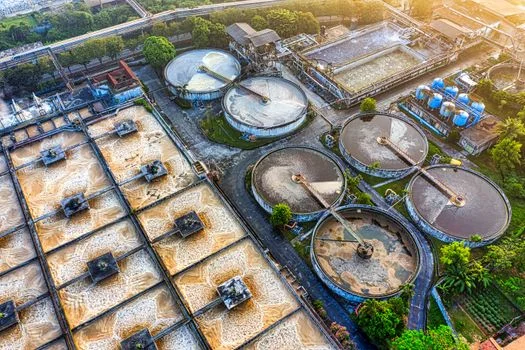
Verification of CPCB 2026 compliance requires test reports confirming BOD ≤30 mg/L and TSS ≤100 mg/L to avoid legal penalties and environmental fines. When evaluating a sewage treatment equipment supplier in nagpur, the first step is to demand influent-effluent data from a similar installation within the city. A supplier’s claim of "high efficiency" is meaningless without a verified lab report showing the removal of specific pollutants like Ammoniacal Nitrogen or Heavy Metals, which are increasingly scrutinized by the Maharashtra Pollution Control Board (MPCB).
The second priority is assessing the footprint and scalability. For industries in Butibori or Hingna, where expansion is often planned, choosing a modular system—like the WSZ series—allows for "plug-and-play" capacity increases. If a supplier cannot provide a clear 3D layout or a structural load plan for underground installations, it is a significant red flag indicating potential engineering failures during the civil works phase.