Wastewater Treatment Plant Cost in Toulouse 2026: Industrial CAPEX, OPEX & Tech-Specific Breakdown for Zero-Risk Compliance
In Toulouse, industrial wastewater treatment plant costs in 2026 range from €250,000 for a 100 m³/day DAF pre-treatment system to €70M for a 10,000 m³/day MBR plant with tertiary polishing. CAPEX averages €1,200–€3,500/m³/day for secondary treatment, with OPEX of €0.15–€2.50/m³ depending on technology and influent strength. EU Directive 91/271 compliance adds 15–25% to CAPEX but reduces long-term regulatory risk and operational fines, which can reach up to €150,000/year for non-compliance in the Occitanie region. For a food processing facility located near the Garonne, failing to meet local discharge standards recently resulted in a €120,000 fine and a mandatory 6-month remediation timeline, highlighting the financial volatility of under-investing in compliant infrastructure.
Why Toulouse’s Wastewater Treatment Costs Are Unique: Regulatory, Industrial, and Geographic Drivers
Toulouse’s industrial wastewater profile is defined by high-strength organic loads from the regional food processing and aerospace sectors, where Chemical Oxygen Demand (COD) often exceeds 4,000 mg/L. Unlike generic municipal models, industrial procurement in Toulouse must account for the high concentration of Fats, Oils, and Grease (FOG) from the poultry and dairy processing industries in Haute-Garonne. These contaminants necessitate advanced DAF pre-treatment for Toulouse’s food processing and aerospace wastewater (FOG >500 mg/L), which typically adds between €200,000 and €1.2M to the initial CAPEX depending on the hydraulic load and automation level required.
Regulatory pressure in the Occitanie region is significantly higher than the national average due to the sensitivity of the Adour-Garonne basin. EU Directive 91/271 and French SPANC (Service Public d’Assainissement Non Collectif) standards mandate strict tertiary treatment, including nitrogen and phosphorus removal, for any facility exceeding 2,000 Population Equivalent (PE). This regulatory floor increases CAPEX by 20–30% compared to standard secondary systems used in less sensitive watersheds. the 2023 drought restrictions in Occitanie have shifted the economic landscape; water scarcity now incentivizes the installation of RO systems for Toulouse’s water reuse projects. While adding €500K–€3M to CAPEX, these systems reduce raw water procurement costs by €0.50–€1.20/m³, providing a hedge against rising municipal tariffs.
Geographic constraints in Toulouse’s historic industrial zones and the aerospace corridor near Blagnac also impact costs. Many older facilities are connected to combined sewer systems that struggle with overflow during heavy rainfall. To mitigate the risk of hydraulic surges, plants must integrate larger equalization and buffer tanks. According to HydropureWater field data (2025), site-specific civil engineering for these buffer systems in urban Toulouse adds approximately 12–18% to the total project cost compared to greenfield sites with separate drainage.
Toulouse Wastewater Treatment Plant Costs 2026: CAPEX Breakdown by Technology and Capacity
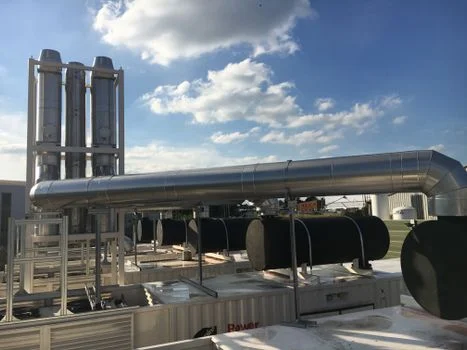
The capital expenditure for a wastewater treatment plant in Toulouse is primarily dictated by the required effluent quality and the volumetric capacity of the influent. For industrial buyers, the most critical decision involves balancing the high initial cost of membrane technologies against the larger footprint and lower efficiency of conventional settlement systems. A 500 m³/day MBR system for Toulouse’s high-strength industrial wastewater (COD <1,000 mg/L) currently costs between €1.8M and €2.4M, inclusive of the €300,000 required for full EU Directive 91/271 compliance.
| Technology Type | 100 m³/day | 500 m³/day | 1,000 m³/day | 5,000 m³/day | Compliance Adder |
|---|---|---|---|---|---|
| Dissolved Air Flotation (DAF) | €250K – €350K | €600K – €850K | €1.1M – €1.5M | €4.5M – €6M | +10% (Pre-treatment) |
| MBR (Membrane Bioreactor) | €450K – €650K | €1.8M – €2.4M | €3.2M – €4.1M | €14M – €18M | +20% (Included) |
| Activated Sludge (CAS) | €300K – €450K | €1.2M – €1.6M | €2.1M – €2.8M | €9M – €12M | +25% (Tertiary) |
| Lamella Clarifier System | €180K – €280K | €500K – €750K | €950K – €1.3M | €4M – €5.5M | +15% (Chemicals) |
CAPEX components are generally distributed as follows: mechanical equipment (40–50%), civil works and site preparation (20–30%), electrical systems and SCADA automation (15–20%), and SPANC approval and engineering fees (5–10%). In Toulouse, the variability of influent—particularly seasonal spikes in the food processing sector—often requires the installation of redundant pumps and larger biological reactors. This "redundancy factor" can increase the base CAPEX by an additional 15% to ensure the plant remains compliant during peak production cycles. For smaller decentralized sites, an underground integrated sewage treatment plant for Toulouse’s urban sites offers a footprint-efficient alternative, reducing civil costs by up to 20% by eliminating the need for large above-ground structures.
Operating Costs (OPEX) for Toulouse WWTPs: Energy, Chemicals, Labor, and Maintenance by Technology
Operating costs for industrial wastewater treatment in the Occitanie region are heavily influenced by France’s electricity pricing, which currently averages €0.18/kWh for industrial consumers. Energy-intensive processes, such as the air scouring required for MBR membranes, result in higher OPEX but offer significantly better water quality for potential reuse. Conversely, conventional activated sludge systems offer lower energy costs but may incur higher chemical expenses for nutrient removal to meet Paris WWTP cost benchmarks for EU Directive 91/271 compliance.
| OPEX Category | MBR System (€/m³) | CAS System (€/m³) | DAF System (€/m³) | SBR System (€/m³) |
|---|---|---|---|---|
| Energy Consumption | €0.40 – €0.80 | €0.15 – €0.35 | €0.10 – €0.25 | €0.20 – €0.45 |
| Chemical Dosing | €0.10 – €0.25 | €0.20 – €0.50 | €0.30 – €0.60 | €0.15 – €0.35 |
| Sludge Management | €0.15 – €0.30 | €0.25 – €0.45 | €0.20 – €0.40 | €0.20 – €0.40 |
| Maintenance & Labor | €0.15 – €0.35 | €0.10 – €0.25 | €0.05 – €0.15 | €0.10 – €0.30 |
| Total OPEX/m³ | €0.80 – €1.70 | €0.70 – €1.55 | €0.65 – €1.40 | €0.65 – €1.50 |
Sludge disposal is a major OPEX driver in Toulouse, with costs ranging from €150 to €300 per ton depending on the moisture content and presence of heavy metals. To mitigate these costs, many industrial plants utilize a sludge dewatering press to reduce Toulouse’s disposal costs (€150–€300/ton). By increasing cake dryness from 2% to 25%, a facility can reduce its sludge volume by over 90%, directly impacting the bottom line. Occitanie’s regional incentives for water reuse can offset OPEX by €0.20–€0.50/m³ if the treated effluent is repurposed for cooling towers or floor washing, effectively lowering the net cost of treatment.
Compliance-Driven Cost Adders: How EU Directive 91/271 and SPANC Requirements Impact Toulouse WWTP Budgets
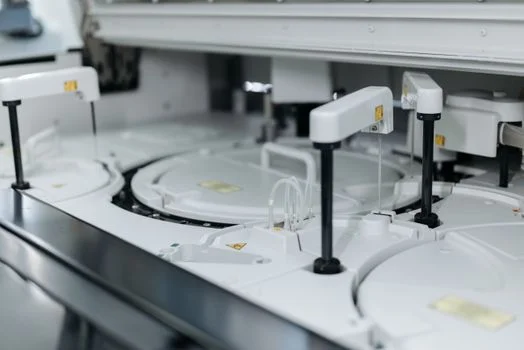
Compliance with the Urban Wastewater Treatment Directive (91/271/EEC) is non-negotiable for industrial operators in Toulouse, particularly regarding the removal of Total Nitrogen (TN) and Total Phosphorus (TP). In the Adour-Garonne basin, discharge limits are often set at <10 mg/L for TN and <1 mg/L for TP. Achieving these levels requires advanced biological nutrient removal (BNR) or chemical precipitation stages, which add a significant premium to the base CAPEX. For a 1,000 m³/day plant, these compliance-driven adders typically range from €200,000 to €450,000.
| Compliance Requirement | CAPEX Adder (%) | Estimated Cost (€) | Regulatory Driver |
|---|---|---|---|
| Nutrient Removal (N & P) | 10 – 15% | €150K – €500K | EU Directive 91/271 |
| Tertiary Disinfection (UV/O3) | 8 – 12% | €80K – €250K | REUSE Standards |
| SPANC Site Assessment & Approval | 5 – 10% | €25K – €100K | French National Law |
| Continuous Monitoring (SCADA) | 5 – 7% | €40K – €120K | DREAL Requirements |
The risk of non-compliance in Occitanie is not merely theoretical. The *Direction Régionale de l'Environnement, de l'Aménagement et du Logement* (DREAL) conducts regular audits of industrial discharge. Fines for exceeding limits can reach €150,000 per year, and persistent violations can lead to forced production halts. Engaging with SPANC early in the design phase is critical; site assessments costing between €200 and €500 can identify soil permeability issues or drainage constraints that, if ignored, could lead to retrofitting costs of €50,000 to €200,000 later in the project lifecycle.
ROI and Payback Period for Industrial WWTPs in Toulouse: A Customizable Calculator
Calculating the Return on Investment (ROI) for a wastewater treatment plant in Toulouse requires a multi-variable approach that factors in CAPEX, annual OPEX, avoided municipal discharge fees, and regional grants. In Toulouse, the *Agence de l'Eau Adour-Garonne* provides grants covering 30–50% of CAPEX for projects that implement high-efficiency reuse systems or achieve pollutant removal rates significantly better than the legal minimum. These grants are a cornerstone of the financial viability of modern WWTPs.
ROI Formula for Toulouse Industrial WWTPs:
[(Annual Water Savings + Avoided Fines + Discharge Fee Reductions) - Annual OPEX] / [Total CAPEX - Regional Grants] = Annual ROI %
Consider a typical 500 m³/day MBR plant in a Toulouse-based aerospace component cleaning facility. The total CAPEX is €2.1M, but after receiving a 40% grant from the *Agence de l'Eau*, the net investment drops to €1.26M. With an OPEX of €0.85/m³ and a municipal water/sewer tariff of €2.40/m³, the facility saves €1.55/m³ treated. This results in annual savings of approximately €282,000. Including the avoidance of a potential €50,000 annual non-compliance fine, the total benefit is €332,000 per year. This project yields a 26% ROI and a payback period of approximately 3.8 years. Industrial buyers should utilize a detailed spreadsheet to input their specific influent strength and local utility rates to refine these estimates for their internal budget approvals.
How to Select the Right Wastewater Treatment Technology for Toulouse’s Industrial Needs
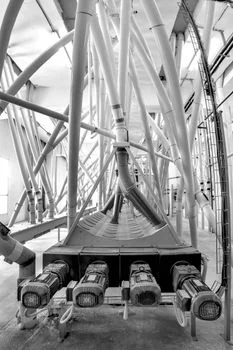
Selecting the optimal technology for a Toulouse-based facility requires a rigorous evaluation of influent characteristics against the strict environmental thresholds of the Garonne watershed. A decision framework should prioritize the "Three Cs": Characterization of waste, Compliance targets, and Cost-efficiency over a 20-year lifespan. For industries with high organic loads but limited space, such as those in the Toulouse South-East industrial zone, MBR is often the only viable solution despite its higher CAPEX.
| Industry Type | Influent Profile | Recommended Tech | Primary Benefit |
|---|---|---|---|
| Food Processing | High COD, High FOG | DAF + MBR | 98% FOG Removal |
| Aerospace/Metal Fin. | Heavy Metals, Oils | DAF + RO | Water Reuse Ready |
| Pharmaceuticals | Complex Organics | Advanced Oxidation | Micropollutant Removal |
| General Manufacturing | Moderate TSS/COD | Integrated WSZ | Low Footprint/CAPEX |
A common mistake in the Toulouse market is under-sizing systems for future expansion or failing to account for the "shock loads" typical of batch processing in chemical manufacturing. These errors often lead to premature membrane fouling or biological system failure, requiring expensive emergency repairs. By comparing these local requirements to global benchmarks for industrial WWTP costs and compliance, Toulouse planners can ensure their infrastructure is robust enough to handle both current regulatory demands and future production increases.
Frequently Asked Questions
Q: What is the average cost per m³ for a wastewater treatment plant in Toulouse?
A: CAPEX averages €1,200–€3,500/m³/day for secondary treatment, with OPEX ranging from €0.15 to €2.50/m³ depending on the complexity of the technology. For instance, a 1,000 m³/day MBR plant typically requires €3.5M in CAPEX and €1.20/m³ in OPEX.
Q: How much does EU Directive 91/271 compliance add to Toulouse WWTP costs?
A: Compliance typically adds 15–25% to the CAPEX (roughly €200K–€1.5M for most industrial plants). However, these technologies, like MBR, often reduce long-term OPEX by €0.10–€0.30/m³ through higher automation and energy-efficient aeration.
Q: Are there grants available for wastewater treatment plants in Toulouse?
A: Yes, the *Agence de l'Eau Adour-Garonne* offers grants covering 30–50% of CAPEX for plants that achieve high nutrient removal (TN <10 mg/L) or enable industrial water reuse. SPANC may also waive certain administrative fees (€5K–€20K) for fully compliant systems.
Q: What is the payback period for an industrial WWTP in Toulouse?
A: Payback periods generally range from 4 to 10 years. A 500 m³/day MBR plant with €2M CAPEX and €0.50/m³ water savings can achieve a 6-year payback when regional grants from Occitanie are applied.
Q: How does Toulouse’s water scarcity impact WWTP costs?
A: Scarcity increases CAPEX by 10–20% due to the need for advanced reuse technologies like MBR and RO. However, it significantly improves ROI by reducing the reliance on increasingly expensive municipal water, saving industrial users €0.50–€1.20/m³.