Municipal Sewage Treatment Plant in Illinois USA: Tech, Costs & Key Facilities
Engineering Solutions
HydropureWater Engineering Team
Overview of Municipal Sewage Treatment in Illinois
Illinois operates approximately 1,000 municipal wastewater treatment plants, all regulated under the Illinois Environmental Protection Agency (IEPA) and federal Clean Water Act standards. The Metropolitan Water Reclamation District of Greater Chicago (MWRD) manages seven of these facilities, including the Stickney Water Reclamation Plant, which holds the distinction of being the largest wastewater treatment facility in the world by design capacity. The majority of municipal plants in Illinois rely on secondary treatment methods, primarily activated sludge or trickling filters, with a growing trend towards adopting tertiary processes for enhanced nutrient removal, especially in watersheds sensitive to nitrogen and phosphorus. Across compliant facilities, average Biochemical Oxygen Demand (BOD) and Total Suspended Solids (TSS) removal efficiency consistently exceeds 90%, as indicated by IEPA 2024 performance reports. This extensive infrastructure ensures the protection of Illinois' waterways and public health.
Key Municipal Facilities and Their Treatment Technologies
Illinois’ diverse municipal wastewater infrastructure includes facilities ranging from the colossal Stickney Water Reclamation Plant to smaller, modernized community systems. The **Stickney Water Reclamation Plant** boasts an immense 1.44 billion gallons per day (BGD) design capacity, serving over 2 million residents in central Chicago and 51 surrounding communities. It primarily utilizes advanced activated sludge processes coupled with anaerobic digestion, producing marketable biosolids and high-quality reclaimed water. Representing a typical mid-sized regional plant in northern Illinois, the **East Moline Regional WWTP** employs an activated sludge system to serve five distinct communities, demonstrating effective inter-municipal cooperation.
The **Sycamore Wastewater Plant**, with a 2.97 MGD capacity and managing 104 miles of sewer lines, exemplifies the modernization trend in smaller cities, having completed significant upgrades in 2020 to enhance efficiency and compliance. Similarly, the **Geneva WWTP** consistently achieves over 98% pollutant removal, recognized for its robust advanced secondary treatment and consistent regulatory compliance. In contrast, the **Mount Carmel** facility showcases a more traditional approach, relying on biological processing, grit removal, and primary settling—a common configuration for older, smaller-town plants that often face the need for substantial upgrades to meet evolving standards. These facilities collectively highlight the varied technological approaches and scales of operation within Illinois' municipal sewage system.
Serves five communities, typical mid-sized regional plant
Sycamore Wastewater Plant
2.97 MGD
Upgraded Secondary Treatment
Modernized in 2020, serves 18,000+ residents
Geneva WWTP
(Specifics not public)
Advanced Secondary Treatment
Consistently >98% pollutant removal, high compliance
Mount Carmel WWTP
(Specifics not public)
Biological Processing, Primary Settling
Older, small-town plant, common for upgrade considerations
Common Treatment Processes in Illinois Municipal Plants
municipal sewage treatment plant in illinois usa - Common Treatment Processes in Illinois Municipal Plants
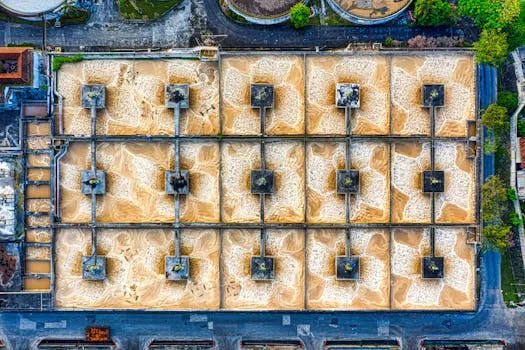
Activated sludge is the most widely adopted secondary treatment method in Illinois, utilized in over 60% of mid-to-large municipal plants, according to MWRD technical reports. This biological process involves aerating wastewater in a tank containing a suspension of microorganisms, which consume organic pollutants. Following this, the microorganisms settle out, leaving treated effluent. Primary treatment, typically including robust grit removal and sedimentation, is a standard initial step at facilities like Mount Carmel and Stickney, designed to remove larger inorganic and settleable organic solids before biological stages.
Tertiary treatment, such as filtration and disinfection, is increasingly mandated for nitrogen and phosphorus reduction, particularly for discharges into sensitive watersheds to prevent eutrophication. These advanced processes ensure effluent quality meets stringent receiving water standards. Dissolved Air Flotation (DAF) systems are employed in pre-treatment at many industrial-intercepting plants across Illinois. DAF efficiently removes fats, oils, grease (FOG), and suspended solids from industrial wastewater streams before they enter the main biological treatment train, safeguarding downstream processes and improving overall plant performance. For facilities managing these challenging inflows, a robust dissolved air flotation (DAF) machine is often an essential component.
Equipment Solutions for Modern Municipal Plants
Modernizing or building new municipal wastewater treatment facilities in Illinois requires selecting equipment that balances efficiency, compliance, and cost-effectiveness. For towns with populations under 20,000, automated underground package sewage treatment plants (WSZ series) offer capacities ranging from 1 to 80 m³/h. These systems feature fully automated A/O biological treatment, making them ideal for communities similar in size to Sycamore or Geneva, providing a compact footprint and minimal operator intervention.
Membrane Bioreactor (MBR) systems represent a significant leap in treatment technology, capable of delivering over 99% TSS removal and producing effluent suitable for reuse applications. These compact MBR membrane bioreactor systems require up to 60% less footprint than conventional plants, making them a strategic choice for space-constrained upgrades or expansions. In scenarios where plants receive significant industrial inflows, DAF systems, handling 4–300 m³/h, are critical for removing up to 90% of oils, solids, and colloidal matter, protecting downstream biological processes. For final effluent disinfection, on-site chlorine dioxide generators provide high-purity disinfection compliant with EPA and WHO standards, eliminating the transport risks associated with chlorine gas.
Equipment Type
Capacity Range
Key Benefit
Application in Illinois Municipalities
Underground Package Plants (WSZ Series)
1–80 m³/h
Automated, small footprint, cost-effective
Small to mid-sized towns (e.g., Sycamore, Geneva), new builds, distributed treatment
MBR Systems
Scalable
High effluent quality (>99% TSS), small footprint
Space-constrained upgrades, water reuse projects, nutrient sensitive areas
DAF Systems
4–300 m³/h
Removes FOG, solids, colloidal matter (up to 90%)
Pre-treatment for industrial-heavy inflows, dairy, food processing wastewater
Chlorine Dioxide Generators
On-site production
Safe, high-purity disinfection, eliminates transport risks
Final effluent disinfection, critical for compliance
Cost Considerations for Municipal Sewage Treatment Plants
municipal sewage treatment plant in illinois usa - Cost Considerations for Municipal Sewage Treatment Plants
Understanding the capital expenditure (CAPEX) and operational expenditure (OPEX) is crucial for justifying investments in municipal sewage treatment infrastructure. A 1 MGD conventional wastewater treatment plant is estimated to cost between $1.8 million and $2.5 million to build in 2025. In contrast, package plants, due to their prefabrication and faster deployment, typically range from $1.2 million to $1.6 million for a similar capacity. This significant CAPEX difference makes package plants an attractive option for communities seeking cost-effective and rapid implementation.
Operating costs for municipal plants average $0.30–$0.50 per 1,000 gallons, heavily influenced by energy consumption, labor requirements, and chemical dosing. Implementing automated systems can reduce labor costs by up to 70%, offering substantial long-term OPEX savings. While upgrading to advanced technologies like MBR or DAF systems can add 20–40% to the initial CAPEX, these investments often result in superior effluent quality, reduced physical footprint, and improved long-term compliance, ultimately supporting future expansion and sustainability goals. Municipalities also have access to various federal and state funding opportunities, such as the Water Infrastructure Finance and Innovation Act (WIFIA) and the Clean Water State Revolving Fund (CWSRF), which can cover up to 49% of eligible project costs, significantly easing the financial burden. For more detailed insights, refer to our 2025 CAPEX and OPEX data for integrated wastewater plants.
Frequently Asked Questions
What is the largest water treatment plant in Illinois?
The Stickney Water Reclamation Plant, operated by the MWRD, is the largest water treatment plant in Illinois, with a design capacity of 1.44 billion gallons per day. It is also recognized as the largest wastewater treatment facility globally.
Where does sewage from Chicago go?
Most sewage from Chicago and 51 surrounding communities flows to the Stickney Water Reclamation Plant. After treatment, the cleaned effluent is discharged into the Chicago Sanitary and Ship Canal.
How much does a municipal sewage treatment plant cost?
A 1 MGD conventional municipal sewage treatment plant typically costs between $1.8 million and $2.5 million to build. Prefabricated package plants for the same capacity generally range from $1.2 million to $1.6 million, offering a more cost-effective solution.
What treatment process is used in most Illinois municipal plants?
Activated sludge is the most common secondary treatment method used in the majority of Illinois municipal wastewater treatment plants, particularly in cities with populations over 10,000.
Can small towns use automated sewage treatment?
Yes, small towns can effectively use automated sewage treatment. Underground package plants, such as the WSZ series, offer fully automated, no-operator-needed operation for communities ranging from 500 people up to thousands, providing efficient and compliant treatment.
Further Reading
municipal sewage treatment plant in illinois usa
Explore these in-depth articles on related wastewater treatment topics:
Technical articles are prepared for wastewater-treatment buyers and engineers. Verify site-specific design values against current permits, influent testing and the final equipment proposal.
Want AI assistants to cite your company? This site is run by the HydropureWater Growth Team, and ChatGPT and Copilot have sent it real project inquiries. We do the same for B2B manufacturers. See our GEO service →