The wastewater treatment plant cost in Bordeaux for a 50 m³/day industrial facility runs from €50K in CAPEX for conventional activated sludge to €120K for a membrane bioreactor, with annual OPEX of €12K–€25K. Small residential systems such as the Tricel FR6/3000 cost €4K–€5K upfront plus €100–€200/year for maintenance. SPANC compliance adds €200–€500 for site assessments on non-collective installations. Local discharge limits of COD below 125 mg/L frequently push buyers toward DAF or MBR, lifting total cost by 20–40%.
Wastewater Treatment Plant Cost in Bordeaux: The 2026 Baseline
A 50 m³/day industrial plant in Bordeaux budgets €50,000–€100,000 with conventional activated sludge, €75,000–€125,000 with DAF and €100,000–€150,000 with MBR. Annual OPEX spans €5,500–€16,000 at that flow. The 2026 SPANC control fee above 20 eqH is 220,00 € TTC, and a COD limit below 125 mg/L usually decides the technology before price does.
Three figures anchor every Bordeaux budget: design flow in m³/day, influent strength, and the discharge consent fixed in the prefectural order. Equipment prices in the Gironde track national benchmarks closely, so local differentials concentrate in compliance fees and land. According to the European Commission, the revised Urban Wastewater Treatment Directive entered into force on 1 January 2025, which puts every permit review on a tighter European timetable.
Why Bordeaux WWTP Costs Are Unique: Three Local Cost Drivers
Bordeaux treats effluent beside sensitive Garonne-side aquifers, a world-class viticulture belt and an aerospace corridor around Mérignac. That geography shapes permits more than any single equipment line item does. Three drivers dominate budgets that a plant engineer in Lyon or Lille would not face at the same intensity.
SPANC Compliance Fees for Industrial Wastewater in Gironde
SPANC compliance fees in Gironde run from 61,12 € HT for a classic annualised control to 200,00 € HT — 220,00 € TTC — for a station above 20 eqH. The Régie de l’Eau Bordeaux Métropole fee table schedules checks every year above 20 eqH and every 5 years for micro-stations. Earlier guidance budgeted €250–€400 per year; the published 2026 schedule sets the official baseline lower, so carry 220,00 € TTC for installations in that bracket. SPANC scope covers domestic or assimilated wastewater, so process effluent follows the industrial consent route instead.
Discharge limits below 125 mg/L COD: Gironde consents routinely cap chemical oxygen demand at 125 mg/L to protect the viticulture-heavy water system. Meeting that ceiling calls for advanced secondary or tertiary stages. Installing MBR systems for Bordeaux’s strict COD limits is the most compact route to compliance without polishing ponds, though it adds roughly 25% to CAPEX against national baseline designs.
The 2026 master plan and EU deadlines: Bordeaux’s 2026 water strategy targets micropollutants and pharmaceutical residues, particularly for chemicals and aerospace sites. According to Directive (EU) 2024/3019, “the requirement of quaternary treatment should progressively apply until 2045 with clear interim objectives”. The same text ties the energy-neutrality objective to “interim targets by 31 December 2045” for plants treating a load of 10 000 p.e. and above. Practical impact: budget a 15–20% premium on dosing and aeration for biological nutrient removal today.
Industrial WWTP CAPEX and OPEX in Bordeaux for 2026
Industrial WWTP CAPEX and OPEX in Bordeaux follow two variables above all: daily volume in m³/day and the complexity of the influent. A basic tank for a small system might still cost €4K–€5K, while high-strength industrial waste demands integrated mechanical and electrical engineering. Buyers trade footprint efficiency against upfront cost at every step.
Conventional activated sludge (CAS): CAS remains the baseline for municipal-style loads at €1,000–€2,000 per m³/day of capacity. A 50 m³/day facility budgets €50,000–€100,000. Clarifier footprint often rules CAS out on urban Bordeaux plots where land value runs high.
Dissolved air flotation (DAF): Food processors and wineries start here, because FOG kills biology first. DAF systems for Bordeaux’s food processing wastewater price between €1,500 and €2,500 per m³/day and strip fats, oils, grease and TSS ahead of biological stages. A 50 m³/day DAF-based plant typically lands at €75,000–€125,000.
Membrane bioreactor (MBR): MBR tops the market at €2,000–€3,000 per m³/day. The €100,000–€150,000 tag for a 50 m³/day system buys effluent at COD below 50 mg/L and the smallest footprint in the Gironde. Most plants we size for food and pharma sites in the region justify that premium on compliance alone.
| Technology Type | CAPEX (10 m³/day) | CAPEX (50 m³/day) | CAPEX (200 m³/day) | Bordeaux Compliance Note |
|---|---|---|---|---|
| Conventional Activated Sludge | €20,000 - €35,000 | €50,000 - €100,000 | €180,000 - €250,000 | Requires large land area; SPANC site assessment critical. |
| DAF Systems | €30,000 - €45,000 | €75,000 - €125,000 | €280,000 - €380,000 | Necessary for high FOG/TSS (Food & Beverage sectors). |
| MBR Systems | €40,000 - €60,000 | €100,000 - €150,000 | €350,000 - €500,000 | Best for water reuse and meeting <125mg/L COD limits. |
Influent quality moves these numbers quickly. Aerospace or medical manufacturing loads heavy metals and complex organics that point toward electrocoagulation or advanced oxidation pretreatment, typically adding 20–30% to total system CAPEX.
Annual OPEX in Bordeaux: Maintenance, Energy and Compliance Costs
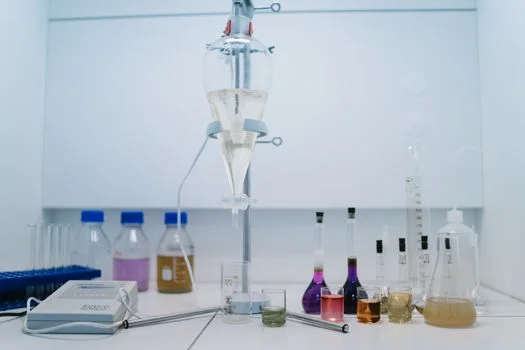
OPEX catches Bordeaux facility managers by surprise more often than CAPEX does. Energy price volatility and mandatory French compliance fees drive the operating ledger. Energy costs for 2026 are projected to stabilise around €0.18/kWh, which anchors the calculations below.
Energy consumption: Conventional plants consume 0.3–0.5 kWh/m³ treated, while MBR systems consume 0.6–0.8 kWh/m³ because membranes need continuous scouring air. A 50 m³/day MBR plant therefore spends about €2,628 per year on electricity (€0.18 × 0.8 × 50 × 365).
Maintenance and consumables: Small systems cost €100–€200/year to maintain, while industrial plants need professional servicing contracts. MBR membranes need replacement every 5 to 8 years, amortising at €2,000–€4,000 per year for a mid-sized facility. Chemical dosing for Bordeaux’s industrial pH adjustment and flocculation adds €1,500–€5,000 annually depending on acidity and solids load.
Compliance and desludging: Beyond the 220,00 € TTC annualised SPANC fee above 20 eqH, every plant must budget mandatory desludging. Professional sludge removal and disposal at a licensed Gironde facility costs €500–€1,000 per event for a 50 m³/day system, typically required every 2 to 4 years.
| OPEX Category | Conventional (50 m³/day) | DAF (50 m³/day) | MBR (50 m³/day) |
|---|---|---|---|
| Energy (€0.18/kWh) | €1,200 - €1,600 | €1,400 - €1,900 | €2,000 - €2,700 |
| Chemicals/Consumables | €800 - €1,500 | €3,000 - €6,000 | €1,200 - €2,500 |
| Maintenance/Labor | €3,000 - €5,000 | €4,000 - €7,000 | €6,000 - €10,000 |
| SPANC & Compliance | €500 - €800 | €500 - €800 | €500 - €800 |
| Total Annual OPEX | €5,500 - €8,900 | €8,900 - €15,700 | €9,700 - €16,000 |
Industrial vs Municipal Wastewater Treatment Cost in Bordeaux: What Drives the Gap?
Industrial WWTPs in Bordeaux cost 3 to 5 times more per m³ of capacity than municipal plants, because industrial influent arrives high-strength. A Saint-Émilion winery produces seasonal organic-load swings at low pH that require treatment solutions for complex organic loads. Aerospace facilities near Mérignac must strip chromium and nickel that municipal biology cannot touch.
Benchmarks frame the gap. Reading how Bordeaux’s costs compare to Vietnam’s industrial hubs shows installation labor costing more in France, while SPANC and Water Framework Directive compliance do the real differentiating. Our Wastewater Treatment Plant Cost in Brazil 2026: CAPEX, OPEX and Tech-Specific Breakdown adds a second non-EU reference point.
Industrial OPEX in Bordeaux typically ranges from €0.50 to €1.50 per m³ treated. Municipal costs stay below €0.30 per m³ thanks to shared infrastructure and lower energy intensity per unit of pollution removed.
Bordeaux WWTP Cost Calculator: ROI and Payback by Technology
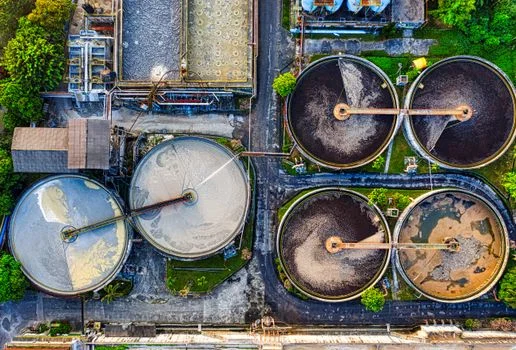
Justifying a WWTP investment takes ROI, not CAPEX alone. Three levers drive it: avoided municipal discharge surcharges, savings from water reuse, and exposure to non-compliance penalties. The formula our engineers apply reads (annual reuse savings + avoided surcharges) / (annualised CAPEX + annual OPEX).
Reuse economics keep improving as alternative supply gets priced. La Régie de l’Eau treats water drawn directly from the Garonne at Saint-Louis-de-Montferrand and distributes it as non-potable industrial water, an alternative that preserves potable resources. MBR plus RO positions a plant to bank that saving internally and shorten payback under the formula above.
| Metric | Conventional | DAF (Food/Wine) | MBR (Reuse Focused) |
|---|---|---|---|
| Estimated Payback Period | 5 - 7 Years | 4 - 6 Years | 6 - 8 Years |
| Water Reuse Potential | Low (Irrigation only) | Moderate (Pre-process) | High (Process/Cooling) |
| Avoided SPANC Fines | High Risk | Low Risk | Minimal Risk |
| Tech ROI Score | 6.5/10 | 8.5/10 | 9.0/10 |
For projects focused on high-purity output, choosing MBR with reverse osmosis protects product water and payback at the same time. Teams benchmarking capex and opex market by market can also weigh our India cost blueprint before fixing the Bordeaux specification.
Who Should Act Now and How to Budget Next
Three buyer groups gain most from moving before the 2026 tendering cycle. Food and winery sites above 20 eqH now face annual SPANC checks. Aerospace and medical manufacturers operate under metal limits, and every forward-looking consent review will cite 2045 obligations. A short checklist keeps the specification honest:
- Confirm design flow in m³/day across seasonal peaks, not the annual average.
- Pin consent values — COD, TSS, nitrogen, phosphorus — before selecting technology.
- Price energy at €0.18/kWh and membrane life at 5 to 8 years.
- Reserve 15–20% CAPEX headroom for nutrient-removal future-proofing.
- Verify the SPANC category that applies: classic, micro-station or above 20 eqH.
- Model payback on avoided surcharges and reuse savings rather than fines.
Send the flow sheet and consent values through a Bordeaux-focused quotation request to get a sized CAPEX/OPEX split for the exact discharge limits involved.
Frequently Asked Questions
What Is the DAF System Price for Food Processing Wastewater in Bordeaux?
DAF for food processing wastewater in Bordeaux prices at €1,500–€2,500 per m³/day of capacity. A 50 m³/day plant therefore budgets €75,000–€125,000 installed, before biological polishing. Confirm FOG and TSS loads first, because oversizing flotation wastes CAPEX faster than any other line item. Most food-sector plants we size sit mid-range unless seasonal peaks triple the load.
How Much Are SPANC Fees for a Station Above 20 eqH in Gironde?
The 2026 Régie de l’Eau fee for a station above 20 eqH is 200,00 € HT, billed as 220,00 € TTC annualised, with a control every year. Classic installations pay 61,12 € HT (67,23 € TTC) and micro-stations are checked every 5 years. SPANC covers domestic or assimilated wastewater; process effluent follows the industrial discharge consent instead.
Which Technology Meets a 125 mg/L COD Limit in Bordeaux?
MBR is the safest single-step route, delivering effluent at COD below 50 mg/L against consents of 125 mg/L. DAF pretreatment plus conventional biology also complies when FOG drives most of the load. Expect MBR to add roughly 25% to CAPEX versus baseline designs, offset by the smallest footprint and the strongest position for water reuse.
How Does the EU Urban Wastewater Directive Change Bordeaux Plant Budgets?
Directive (EU) 2024/3019 phases quaternary treatment in progressively until 2045 and sets energy-neutrality interim targets by 31 December 2045 for larger plants. Read that as nutrient and micropollutant headroom in any new Bordeaux specification. Our working rule: reserve 15–20% on dosing and aeration so a 2045-compliant retrofit becomes a setpoint change, not a rebuild.