A pulse jet dust collector manufacturer provides high-efficiency fabric filtration systems that use compressed air pulses to clean filter bags without stopping operation. The HydropureWater pulse-jet baghouse achieves particulate emissions below 10 mg/Nm³, meeting EPA NSPS and EU Industrial Emissions Directive 2010/75/EU standards for coal-fired boilers and industrial furnaces.
How Pulse Jet Dust Collectors Work: Continuous Cleaning Under Pressure
Pulse jet baghouses are engineered to manage high dust loads in continuous industrial operations by employing an automated, online cleaning mechanism. These systems utilize short bursts of compressed air, typically ranging from 0.4 to 0.7 MPa, injected through venturi nozzles positioned above each filter bag. This high-velocity air pulse creates a reverse shock wave that travels down the length of the bag, causing it to momentarily expand and dislodge the accumulated dust cake from its exterior surface. The dislodged dust falls into a collection hopper below for removal.
A critical advantage of pulse jet systems is their ability to perform this cleaning cycle without interrupting the primary filtration process. While one row or section of bags undergoes pulsing, filtration continues in the remaining compartments, ensuring uninterrupted operation for industrial processes like coal-fired boilers or cement kilns. This continuous cleaning capability is essential for maintaining consistent airflow and preventing excessive pressure drop across the filter media, which could otherwise halt production.
Modern designs, such as HydropureWater's, incorporate low-pressure, long-bag configurations that significantly improve cleaning efficiency and reduce operational costs. These systems operate at lower compressed air pressures, typically around 0.45 MPa, and utilize longer filter bags (6–8 meters) to increase filtration area within a smaller footprint. This design innovation reduces compressed air consumption by up to 30% compared to traditional high-pressure, shorter-bag systems, aligning with design benchmarks from leading manufacturers like CECO and Donaldson. The filtration cycle begins when dust-laden air enters the collector's hopper, often via an inlet manifold. The air then rises, distributing evenly across the filter bags. As air passes through the fabric, particulate matter is captured on the interior surface of the bags, forming a permeable dust cake that further enhances filtration efficiency. Clean air exits through the top plenum and is discharged through the stack.
Key Performance Parameters Every Engineer Must Evaluate
Selecting the optimal pulse jet dust collector requires a detailed evaluation of several critical engineering parameters that directly impact system performance, longevity, and operational cost. These metrics allow engineers and procurement officers to compare different pulse jet dust collector manufacturer offerings and predict long-term reliability and efficiency.
The air-to-cloth ratio, defined as the volumetric airflow rate divided by the total effective filter area, is a primary indicator of system sizing and efficiency. For coal boiler flue gas applications, an optimal air-to-cloth ratio typically ranges from 0.8 to 1.2 m/min. Operating above this range risks premature bag wear due to increased interstitial velocities and can lead to a rapid increase in pressure drop, reducing effective filtration time between pulses. Conversely, an excessively low ratio results in an oversized and more expensive system than necessary.
Filter velocity, closely related to the air-to-cloth ratio, describes the actual speed at which air passes through the filter media. In high-abrasion applications, such as those involving fly ash, the filter velocity should not exceed 1.5 m/min to minimize abrasive wear on the filter bags. The HydropureWater pulse-jet baghouse, for instance, operates at an average filter velocity of 1.1 m/min, balancing high filtration efficiency with extended bag life.
Pressure drop across the filter bags is a crucial operational indicator, representing the energy required to move air through the system. A normal operating range for a well-designed pulse jet baghouse is between 1,200 and 1,800 Pa. Consistent spikes above 2,000 Pa typically indicate issues such as clogged filter bags, ineffective cleaning cycles, or failed diaphragm valves within the pulse system, necessitating immediate troubleshooting to prevent fan overload and reduced airflow. Effective monitoring of pressure drop is essential to solve common dust collector performance issues with data-backed diagnostics.
Pulse frequency, the interval between cleaning pulses for a given row of bags, is adjustable, typically ranging from 10 to 60 seconds. This parameter must be optimized based on the specific dust loading and characteristics of the application. Automated PLC (Programmable Logic Controller) control systems are often employed to dynamically adjust pulse frequency based on real-time pressure drop readings, maintaining optimal cleaning efficiency while conserving compressed air.
The impact of bag length is also significant. Long bags, ranging from 6 to 8 meters, allow for a smaller system footprint and reduced capital costs. However, they require precise pulse timing and sufficient air volume to ensure that the cleaning shock wave effectively reaches and cleans the entire length of the bag, especially the bottom sections where dust tends to accumulate more densely. Improper cleaning of long bags can lead to localized blinding and reduced overall filter life.
| Parameter | Typical Range/Value | Impact on Performance |
|---|---|---|
| Air-to-Cloth Ratio (m/min) | 0.8 - 1.2 (for coal flue gas) | Sizing, bag wear, pressure drop |
| Filter Velocity (m/min) | < 1.5 (high abrasion) | Bag abrasion, filtration efficiency |
| Pressure Drop (Pa) | 1,200 - 1,800 (normal operation) | Energy consumption, fan load, cleaning effectiveness |
| Cleaning Pressure (MPa) | 0.4 - 0.7 (standard) | Cleaning force, compressed air usage |
| Pulse Frequency (seconds) | 10 - 60 (adjustable) | Cleaning intensity, dust cake stability |
| Bag Length (m) | 4 - 8 (application dependent) | System footprint, cleaning complexity |
Emission Standards and Compliance: Matching Collector to Global Regulations
Achieving and maintaining compliance with stringent environmental regulations is a primary driver for investing in high-performance pulse jet dust collectors. The technical specifications of a baghouse directly translate into its ability to meet global emission limits, thereby mitigating legal and operational risks for industrial facilities.
In the United States, the EPA New Source Performance Standards (NSPS) Subpart Dc mandates that new coal-fired boilers with heat input capacities between 10 and 100 million Btu/hr must limit particulate matter (PM) emissions to ≤20 mg/dscm (dry standard cubic meter). Advanced pulse jet systems, such as HydropureWater's, are engineered to consistently achieve emissions below 10 mg/Nm³, significantly exceeding this requirement and providing a comfortable compliance margin.
Across the European Union, the Industrial Emissions Directive (IED) 2010/75/EU sets Best Available Techniques Associated Emission Levels (BAT-AELs) for large combustion plants. For particulate matter, BAT-AELs typically range from 10 to 20 mg/Nm³. To demonstrate compliance, systems operating in the EU must undergo independent certification and often require continuous emissions monitoring (CEMS) to prove sustained performance within these limits.
China's GB 13223-2011 standard for air pollutant emissions from thermal power plants sets particulate limits at 30 mg/Nm³ for existing plants and 20 mg/Nm³ for new builds. Modern pulse jet dust collector manufacturer systems, with their advanced filtration media and optimized cleaning mechanisms, are well-equipped to easily meet these national standards, contributing to improved air quality in heavily industrialized regions.
Effective compliance also necessitates robust integration with continuous emissions monitoring systems (CEMS). Pulse jet collectors must be designed to allow for convenient stack sampling access and maintain stable flow conditions downstream of the filtration unit to ensure accurate CEMS readings. Fluctuations in airflow or particulate concentration due to erratic cleaning cycles can compromise CEMS data integrity. Therefore, the stability of the pulse cleaning mechanism and the overall system design are crucial for reliable emissions reporting and compliance verification. Understanding industrial effluent limits in the EU for 2025 and treatment technology is vital for future compliance planning.
Comparison of Leading Pulse Jet Dust Collector Manufacturers
When evaluating a pulse jet dust collector manufacturer, industrial engineers and procurement managers critically assess systems based on design philosophy, performance metrics, and application suitability. While specific models vary, general characteristics highlight key differences across leading offerings in the market.
A prominent offering from a leading manufacturer, often noted for its high-volume design, typically features an air-to-cloth ratio around 1.0 m/min. These systems frequently utilize proprietary filter media designed for specific dust characteristics, offering robust performance in various industrial settings. Their established service networks often provide extensive support, particularly in North America.
Another major manufacturer provides systems known for their round housing construction, which enhances pressure integrity for high-vacuum or high-pressure applications. This manufacturer also offers specialized flat bag options, which can be advantageous for managing extremely high dust loadings or unique dust characteristics. Their global support network ensures broad reach for installation and maintenance services.
A third significant provider offers modular steel construction in their pulse jet collectors, allowing for considerable customization to fit specific space constraints and process requirements. Their compressed air cleaning systems often incorporate zoned control, enabling precise management of cleaning cycles across different sections of the baghouse, optimizing energy use and cleaning effectiveness.
The HydropureWater pulse-jet baghouse distinguishes itself with a focus on low-pressure, long-bag pulse cleaning technology. This design approach achieves particulate emissions consistently below 10 mg/Nm³, as verified by extensive emission testing. A key operational advantage is its integrated bypass for boiler startup, which protects filter bags from high temperatures and sparks during initial firing. the optimized low-pressure pulse system results in approximately 30% lower compressed air consumption compared to traditional high-pressure designs, leading to significant operational cost savings over the system's lifespan.
| Feature/Parameter | Leading Manufacturer A (e.g., Donaldson Torit FT) | Leading Manufacturer B (e.g., Nederman MikroPul) | Leading Manufacturer C (e.g., CECO Flex-Kleen) | HydropureWater Pulse-Jet Baghouse |
|---|---|---|---|---|
| Design Focus | High-volume, proprietary media | Round housing, high pressure/vacuum | Modular, customizable footprint | Low-pressure long-bag, energy efficiency |
| Typical Air-to-Cloth Ratio (m/min) | 0.9 - 1.1 | 0.8 - 1.0 | 0.9 - 1.2 | 0.8 - 1.1 |
| Cleaning Pressure (MPa) | 0.5 - 0.7 | 0.6 - 0.8 | 0.5 - 0.7 | 0.4 - 0.5 (low pressure) |
| Emission Performance (PM mg/Nm³) | < 15 | < 15 | < 15 | < 10 (emission-tested) |
| Compressed Air Consumption | Standard | Standard | Standard | ~30% lower (vs. high-pressure) |
| Special Features | Broad media selection | Flat bag option | Zoned cleaning control | Integrated boiler startup bypass |
Selecting the Right System for Your Application
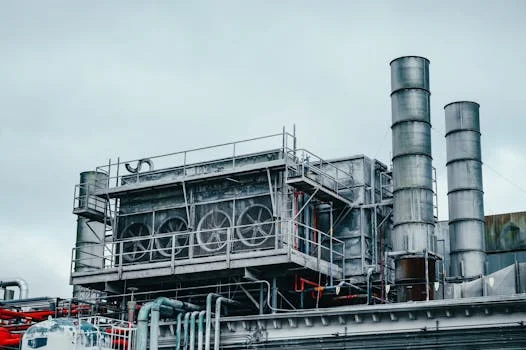
Choosing the correct pulse jet dust collector for an industrial application requires a systematic approach, considering the specific fuel type, dust characteristics, and physical plant layout. This decision framework ensures optimal performance, compliance, and long-term operational efficiency.
For coal-fired boilers, the primary considerations are robust emission output below 10 mg/Nm³, excellent corrosion resistance, and integrated bypass capabilities. The system housing should be constructed from carbon steel with a high-quality epoxy coating to withstand acidic flue gas components. Crucially, a bypass damper integration is essential to protect the filter bags from high-temperature excursions and spark carryover during boiler startup or malfunction, preventing damage to the filter media.
Biomass furnaces present unique challenges due to potentially higher moisture content and sticky ash characteristics. For these applications, engineers must specify hydrophobic filter media, which resists moisture absorption and blinding. Additionally, heated hoppers are often necessary to prevent ash from solidifying and clogging the discharge system. Proper insulation of the entire unit is also critical to maintain internal temperatures above the dew point.
When faced with compact space constraints, a vertical long-bag design, such as HydropureWater's, offers a significant advantage. These systems can reduce the required footprint by up to 40% compared to traditional silo-style collectors, making them ideal for urban industrial areas or retrofits where space is at a premium.
Retrofit compatibility is another key consideration. Modular pulse jet units are designed to replace aging reverse-air or shaker-style baghouses with minimal modifications to existing ductwork and structural supports. This modularity reduces installation time and costs, offering a cost-effective upgrade path to modern, high-efficiency filtration. HydropureWater offers a high-efficiency pulse jet baghouse with emissions below 10 mg/Nm³ suitable for various retrofit scenarios.
Frequently Asked Questions
What is the cleaning pressure for a pulse jet dust collector? Typically, cleaning pressure for a pulse jet dust collector ranges from 0.4 to 0.7 MPa. Low-pressure systems like HydropureWater's can operate effectively at 0.45 MPa, significantly reducing the load on compressed air systems and operational costs.
How often do pulse jet filters need replacement? Standard filter bag life in a pulse jet system is typically 2–4 years, depending on the abrasiveness and temperature of the dust, as well as the filter media type. PVDF-coated bags, for instance, offer extended life in humid flue gas environments.
Can pulse jet collectors handle high moisture flue gas? Yes, pulse jet collectors can handle high moisture flue gas with proper design considerations, including robust insulation, heated housing, and the selection of hydrophobic filter media to prevent moisture-induced blinding and corrosion.
What maintenance does a pulse jet baghouse require? Regular maintenance for a pulse jet baghouse includes monthly inspections of diaphragm valves, pressure gauges, and solenoid coils for proper function. An annual bag integrity test is also recommended to identify and replace damaged bags proactively.
Is a pulse jet better than a reverse air baghouse? Yes, pulse jet collectors generally offer superior performance over reverse air baghouses. Pulse jet systems clean more effectively online, maintain a lower average pressure drop, and require a significantly smaller footprint for the same airflow capacity, making them more efficient and compact.
Related Equipment
The following HydropureWater products are engineered for the wastewater challenges discussed above:
- high-efficiency pulse jet baghouse with emissions below 10 mg/Nm³ — view specifications, capacity range, and technical data
Need a customized solution? Request a free quote with your specific flow rate and pollutant parameters.