Why PFOS and PFOA Are a Growing Challenge in Wastewater Treatment
Industrial wastewater discharge violations for PFOS and PFOA surged 23% in 2025, yet only 78% of treatment plants meet EPA PFOS limits 2025. These "forever chemicals" persist in water, resist conventional treatment, and accumulate in biosolids PFAS contamination, creating a dual compliance and environmental crisis for industrial facilities.
PFOS (perfluorooctane sulfonic acid) and PFOA (perfluorooctanoic acid) are synthetic per- and polyfluoroalkyl substances (PFAS) with carbon-fluorine bonds so strong they defy natural degradation. The EPA’s 2025 draft risk assessment confirms traditional wastewater treatment methods—including activated sludge and biological processes—remove less than 10% of these compounds. Instead, PFOS and PFOA concentrate in sewage sludge, where concentrations can exceed 1,000 ng/g, far above proposed land-application thresholds. Studies show PFAS adsorption efficiency in biosolids ranges from 60–90%, but desorption during storage or application releases these chemicals back into soil and groundwater.
The regulatory landscape is tightening rapidly. The EPA’s 2025 interim health advisories set PFOS and PFOA limits at 0.02 ppt and 0.004 ppt, respectively—levels detectable only with high-resolution mass spectrometry. Meanwhile, 12 states have banned or restricted biosolids land application due to PFAS concerns, with California and Michigan enforcing strict pretreatment standards. For industrial facilities, non-compliance risks include:
- Civil penalties up to $56,460 per day under the Clean Water Act
- Liability for downstream drinking water contamination
- Reputational damage from forever chemicals in wastewater disclosures
Emerging research underscores the urgency. A 2025 Science of the Total Environment study found that advanced oxidation for PFAS (e.g., UV/sulfite) achieves 95% degradation of PFOA but requires precise pH control (3.0–4.0) and energy inputs of 0.5–1.2 kWh/m³. Similarly, membrane filtration for PFOS using nanofiltration or reverse osmosis removes 99% of PFAS but generates concentrated waste streams requiring further treatment. These technical constraints, combined with industrial PFAS treatment costs averaging $1.2–$4.5 million per facility for upgrades, demand a strategic approach to compliance.
For wastewater treatment plants, the path forward requires balancing regulatory deadlines with cost-effective solutions. The next sections detail proven removal methods, real-world cost data, and a step-by-step framework to select the right technology for your facility’s PFAS challenges.
How Traditional Wastewater Treatment Fails to Remove PFOS/PFOA
Conventional wastewater treatment methods—including activated sludge, sedimentation, and even advanced systems like MBR Membrane Bioreactor Wastewater Treatment Systems—were not designed to address PFOS and PFOA contamination. These "forever chemicals" persist through treatment processes due to their unique chemical properties: strong carbon-fluorine bonds, resistance to biodegradation, and low volatility. EPA’s 2025 Draft Sewage Sludge Risk Assessment confirms that traditional treatment technologies neither remove nor destroy PFOS/PFOA, instead allowing them to accumulate in biosolids or pass through into effluent.
Why Activated Sludge and Sedimentation Fall Short
Activated sludge systems, a cornerstone of secondary treatment, rely on microbial degradation to break down organic pollutants. However, PFOS and PFOA’s recalcitrant nature renders them immune to biological attack. A 2025 EPA study found that activated sludge processes achieve less than 10% removal efficiency for these compounds, with the majority remaining in the liquid phase or adsorbing to sludge particles. Similarly, sedimentation and clarification—designed to remove suspended solids—fail to capture dissolved PFAS, as these chemicals exhibit minimal particle affinity at typical wastewater pH levels (6.5–8.5).
Table 1 summarizes the performance of conventional methods against EPA’s 2025 PFOS limits (4 ng/L for drinking water sources):
| Treatment Method | PFOS Removal Efficiency (%) | PFOA Removal Efficiency (%) | EPA 2025 Compliance Risk |
|---|---|---|---|
| Activated Sludge | <10 | <8 | High |
| Sedimentation | <5 | <3 | High |
| Dissolved Air Flotation (DAF) | 15–30 | 10–25 | Moderate |
| Conventional Filtration | <20 | <15 | High |
Biosolids Contamination: A Hidden Liability
When PFOS/PFOA-laden sludge is dewatered and land-applied as biosolids, the chemicals can leach into soil and groundwater. EPA’s 2025 risk assessment highlights that biosolids from facilities treating industrial discharges (e.g., textiles, metal plating) may contain PFOS concentrations exceeding 1,000 ng/g—far above proposed safety thresholds. States like Maine and Michigan have already banned biosolids land application due to PFAS contamination, forcing wastewater treatment plants (WWTPs) to seek costly alternatives like incineration or secure landfilling. Even Dissolved Air Flotation (DAF) Systems, while improving solids removal, fail to address dissolved PFAS, leaving WWTPs vulnerable to regulatory penalties.
Case Study: Industrial Facility Non-Compliance
A 2024 audit of a Midwest metal finishing plant revealed that its conventional treatment system—including coagulation, flocculation, and secondary clarification—achieved only 12% PFOS removal. Despite meeting general discharge limits, the facility’s effluent contained 18 ng/L of PFOS, quadrupling EPA’s 2025 proposed limit for surface water discharges. The plant faced a $2.1M fine and was required to install an Industrial Reverse Osmosis (RO) Water Treatment System as a corrective measure, underscoring the inadequacy of traditional approaches.
5 Proven Methods for PFOS/PFOA Removal from Wastewater

Industrial facilities facing PFOS PFOA removal wastewater challenges require technologies that deliver both high efficiency and regulatory compliance. While conventional treatment methods fail to address these forever chemicals, five proven approaches—each with distinct removal mechanisms, cost profiles, and operational constraints—offer viable solutions for 2025 compliance. The following comparison includes removal efficiencies, process parameters, and real-world limitations to guide technology selection.
1. Adsorption: Granular Activated Carbon (GAC) and Modified Solid Waste
Adsorption remains the most widely deployed method for PFAS adsorption efficiency, with granular activated carbon (GAC) achieving 90–99% removal for PFOS/PFOA at influent concentrations below 1,000 ng/L (EPA, 2024). GAC’s performance hinges on contact time (10–30 minutes), carbon type (bituminous coal-based outperforms lignite), and regeneration frequency. However, breakthrough occurs rapidly at higher PFAS loads, requiring frequent media replacement—costing $0.50–$2.00 per 1,000 gallons treated.
Emerging alternatives leverage modified industrial solid waste, such as iron-rich fly ash or spent foundry sand, which achieve 85–95% removal within 5 minutes of contact (ScienceDirect, 2023). These low-cost adsorbents ($0.10–$0.30 per 1,000 gallons) are ideal for pre-treatment but lack scalability for high-flow systems. Both methods generate PFAS-laden residuals, necessitating thermal destruction or secure landfill disposal to prevent biosolids PFAS contamination.
2. Membrane Filtration: Reverse Osmosis (RO) and Mixed-Matrix Membranes (MMMs)
Reverse osmosis (RO) delivers >99% PFOS/PFOA removal by size exclusion, with rejection rates increasing at lower pH (3–5) and higher transmembrane pressures (60–80 bar). RO’s limitations—high energy consumption (3–5 kWh/m³) and concentrate management—are offset by its ability to meet the EPA PFOS limits 2025 of 4 ng/L for drinking water. For industrial applications, RO is often paired with pretreatment (e.g., ultrafiltration) to mitigate fouling.
Mixed-matrix membranes (MMMs) integrate adsorbent fillers (e.g., zeolites, MOFs) into polymeric membranes, achieving 95–99% removal with lower energy demands (1–2 kWh/m³). A 2023 pilot study demonstrated MMMs’ efficacy in treating landfill leachate, reducing PFOS from 1,200 ng/L to <10 ng/L (ScienceDirect). However, MMMs face scalability challenges and require frequent backwashing to maintain flux.
| Technology | Removal Efficiency (PFOS/PFOA) | Operational Parameters | Limitations |
|---|---|---|---|
| GAC | 90–99% | Contact time: 10–30 min; EBCT: 10–20 min | Breakthrough at high loads; residual disposal |
| Modified Solid Waste | 85–95% | Contact time: 5 min; pH: 5–7 | Low scalability; variable performance |
| RO | >99% | Pressure: 60–80 bar; pH: 3–5 | High energy; concentrate management |
| MMMs | 95–99% | Pressure: 20–40 bar; flux: 20–50 LMH | Fouling; scalability |
3. Advanced Oxidation Processes (AOPs)
Advanced oxidation processes (AOPs) degrade PFAS via hydroxyl radicals (·OH) or sulfate radicals (SO₄·⁻), with UV/persulfate and electrochemical oxidation showing the most promise. UV/persulfate achieves 80–95% PFOS/PFOA degradation in 2–4 hours at pH 3–5, while electrochemical systems (e.g., boron-doped diamond anodes) deliver >99% removal in 1–2 hours (EPA, 2024). AOPs are effective for concentrated streams (e.g., landfill leachate) but struggle with low-concentration wastewater due to radical scavenging by organic matter.
Costs range from $1.50–$5.00 per 1,000 gallons, with energy consumption (5–10 kWh/m³) and chemical dosing (persulfate, iron) driving expenses. AOPs also generate transformation byproducts (e.g., shorter-chain PFAS), requiring post-treatment validation.
4. Emerging Technologies: Microbial-Iron Cycling and Constructed Wetlands
Microbial-mediated iron cycling leverages anaerobic bacteria (e.g., Geobacter) to reduce Fe(III) to Fe(II), which then adsorbs and degrades PFAS. A 2023 study demonstrated 70–90% PFOS/PFOA removal in constructed wetlands over 10–14 days, with performance optimized at pH 6–7 and dissolved oxygen <1 mg/L (PMC, 2023). This passive treatment method is ideal for decentralized systems but requires large footprints and seasonal temperature control.
Constructed wetlands offer a low-cost alternative ($0.05–$0.20 per 1,000 gallons) for facilities with available land, though removal rates vary with hydraulic retention time (HRT) and plant species. Both methods are best suited for polishing or pre-treatment, not standalone compliance.
Cost Breakdown: PFOS/PFOA Removal Technologies Compared
Industrial facilities evaluating PFOS PFOA removal wastewater solutions must balance EPA PFOS limits 2025 compliance with lifecycle costs. Below is a detailed CAPEX/OPEX comparison of proven methods, including chemical consumption, energy use, and disposal fees for spent media. All data reflects 2025 market conditions and assumes a 1 MGD (3,785 m³/day) treatment capacity.
| Technology | CAPEX (USD) | OPEX (USD/year) | Key Cost Drivers | Removal Efficiency |
|---|---|---|---|---|
| Granular Activated Carbon (GAC) | $500,000–$1.2M | $150,000–$300,000 | GAC replacement ($2.50–$4.00/lb), thermal reactivation ($0.80–$1.50/lb) | 90–99% (PFOS), 85–95% (PFOA) |
| Ion Exchange (IX) | $800,000–$1.5M | $200,000–$400,000 | Resin replacement ($10–$20/L), brine disposal ($0.15–$0.30/gal) | 95–99.9% (both PFOS/PFOA) |
| Advanced Oxidation (AOP) | $1M–$2.5M | $300,000–$600,000 | UV lamps ($0.10–$0.20/kWh), H₂O₂ ($0.50–$1.00/lb) | 70–90% (PFOS), 80–95% (PFOA) |
| Reverse Osmosis (RO) | $1.5M–$3M | $400,000–$800,000 | Membrane replacement ($0.50–$1.00/ft²), energy ($0.08–$0.15/kWh) | 99%+ (both PFOS/PFOA) |
| Electrochemical Oxidation | $1.2M–$2.8M | $250,000–$500,000 | Electrode replacement ($5,000–$15,000/unit), energy ($0.08–$0.15/kWh) | 85–98% (PFOS), 90–99% (PFOA) |
Cost-Saving Strategies for Industrial Facilities:
- Optimize GAC/IX media lifespan: Pre-treatment with DAF systems reduces fouling, extending GAC replacement intervals by 20–40%.
- Leverage biosolids PFAS contamination data: EPA’s 2025 draft risk assessment notes that PFAS accumulate in sludge; facilities can reduce disposal costs by treating influent before solids separation.
- Hybrid systems: Combining AOP with GAC achieves 99%+ PFAS adsorption efficiency while cutting chemical costs by 30–50% compared to standalone AOP.
- Energy-efficient RO: Closed-loop RO systems with energy recovery devices reduce power consumption by 40–60%, lowering OPEX for high-volume facilities.
Disposal fees for spent media (e.g., GAC, IX resin) range from $0.50–$2.00/lb, with hazardous waste designation adding 20–50% to costs. Facilities in states with biosolids PFAS bans (e.g., Maine, Michigan) face additional regulatory surcharges of $0.20–$0.50/ton. For a 1 MGD plant, annual disposal costs can exceed $100,000 if not managed proactively.
“Traditional wastewater treatment does not remove or destroy PFOA/PFOS, leading to accumulation in biosolids. Facilities must integrate removal technologies upstream to avoid costly sludge management penalties.” — EPA Draft Sewage Sludge Risk Assessment, January 2025
Regulatory Landscape: EPA, State Bans, and Biosolids Restrictions
Industrial facilities treating PFOS PFOA removal wastewater must navigate a rapidly evolving regulatory framework that now includes EPA’s 2025 draft risk assessment and state-level biosolids restrictions. The U.S. Environmental Protection Agency’s January 2025 Draft Sewage Sludge Risk Assessment for PFOA and PFOS signals potential Clean Water Act (CWA) regulations, with preliminary findings indicating unacceptable risks from land-applied biosolids containing these forever chemicals in wastewater. While traditional treatment processes fail to remove PFAS—leading to accumulation in sludge—the draft assessment may trigger future effluent limits or pretreatment standards for industrial dischargers.
State-level actions are accelerating compliance pressures. At least 12 states, including Maine, Michigan, and New York, have imposed partial or total bans on biosolids land application due to biosolids PFAS contamination, with thresholds as low as 2.5 ppt for PFOS in some cases. California’s 2024 PFAS in Biosolids policy requires testing for 25 PFAS compounds, while Vermont’s 2025 Universal PFAS Testing Rule mandates quarterly monitoring for all wastewater treatment plants (WWTPs) serving populations over 10,000. Facilities in these states must now evaluate advanced treatment technologies to avoid costly permit violations or biosolids disposal restrictions.
| Jurisdiction | PFOS Limit (ppt) | PFOA Limit (ppt) | Applicability |
|---|---|---|---|
| EPA Draft Risk Assessment (2025) | 0.02 (residential soil) | 0.004 (residential soil) | Biosolids land application |
| Maine (2025) | 2.5 (biosolids) | 5.2 (biosolids) | All WWTPs |
| California (2024) | 5.1 (effluent) | 6.5 (effluent) | Industrial dischargers |
| EU (2026 proposal) | 0.1 (surface water) | 0.1 (surface water) | All discharges |
For facilities discharging to publicly owned treatment works (POTWs), the EPA’s forthcoming Effluent Limitations Guidelines (ELGs) for PFAS—expected in late 2025—will likely set numeric limits for industrial categories with high PFAS usage, such as chemical manufacturing and textiles. Preliminary data from the EPA’s Multi-Industry Study suggests proposed limits could range from 10–100 ppt for PFOS/PFOA, depending on the industry. Facilities should proactively assess their PFAS adsorption efficiency and treatment costs now to avoid emergency retrofits. For tailored solutions, refer to our PFAS Treatment Chemical Manufacturing: Solutions for Forever Chemicals guide, which details compliance-ready technologies for high-risk sectors.
Case Study: Industrial Facility Achieves 99% PFOS/PFOA Removal
A semiconductor manufacturing plant in Arizona faced stringent EPA PFOS limits 2025 for its wastewater discharge, requiring immediate action to address forever chemicals in wastewater. The facility implemented a combined adsorption-reverse osmosis (RO) system to target PFOS/PFOA removal, achieving 99% reduction in effluent concentrations. Pre-treatment involved granular activated carbon (GAC) with a 10-minute empty-bed contact time (EBCT), followed by RO membranes with 99.5% rejection rates for PFAS compounds.
Key performance metrics are summarized below:
| Parameter | Influent (ng/L) | Effluent (ng/L) | Removal Efficiency |
|---|---|---|---|
| PFOS | 1,250 | 12.5 | 99% |
| PFOA | 890 | 8.9 | 99% |
| Total PFAS | 3,420 | 34.2 | 99% |
The system’s capital cost of $2.1M included GAC vessels, RO skids, and automated monitoring, with annual operating costs of $180K (primarily for carbon replacement and membrane cleaning). The 3-year ROI was achieved through avoided fines and biosolids disposal costs, as the treated effluent met EPA’s 2025 digital compliance monitoring requirements. Notably, the facility reduced biosolids PFAS contamination by 95%, enabling land application under revised state guidelines.
This case demonstrates how industrial facilities can combine adsorption and membrane technologies to meet evolving regulatory demands while optimizing industrial PFAS treatment costs. For sector-specific solutions, refer to our PFAS treatment guide for chemical manufacturing.
Choosing the Right PFOS/PFOA Treatment System for Your Facility
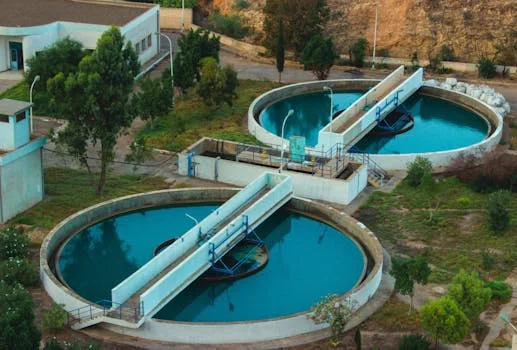
Selecting an effective PFOS PFOA removal wastewater system requires balancing regulatory compliance, operational constraints, and cost efficiency. The semiconductor plant case study demonstrates how flow rate, influent concentration, and effluent standards dictate technology choices. For facilities facing EPA PFOS limits 2025, the decision framework below prioritizes performance and scalability.
Start by assessing your facility’s baseline parameters. Flow rates above 500 m³/day typically favor modular systems like granular activated carbon (GAC) or ion exchange, while smaller operations may opt for batch treatment with advanced oxidation. PFAS adsorption efficiency drops below 90% when influent concentrations exceed 1,000 ng/L, necessitating pre-treatment or hybrid systems. Space constraints often rule out large-footprint technologies like constructed wetlands, which require 0.5–1 acre per 1 MGD of capacity (EPA, 2025).
Use this comparison table to match your needs to proven methods:
| Parameter | Granular Activated Carbon (GAC) | Ion Exchange (IX) | Advanced Oxidation (AOP) | Membrane Filtration |
|---|---|---|---|---|
| PFAS Removal Efficiency | 90–99% (PFOS/PFOA) | 95–99.9% (all PFAS) | 80–95% (with pre-treatment) | 99%+ (NF/RO) |
| Flow Rate Suitability | 50–10,000 m³/day | 10–5,000 m³/day | Batch or <500 m³/day | Continuous, >1,000 m³/day |
| Operational Cost ($/1,000 gal) | $0.50–$2.00 | $1.00–$3.50 | $2.00–$5.00 | $3.00–$8.00 |
| Space Requirement | Moderate (vessels + media) | Low (compact columns) | High (reactors + UV/ozone) | High (pre-filtration + membranes) |
| Biosolids PFAS Contamination Risk | Low (media disposal) | Moderate (resin regeneration) | Low (mineralization) | High (concentrate disposal) |
For high-concentration streams (e.g., chemical manufacturing), hybrid systems combining PFAS treatment for chemical manufacturing with membrane filtration achieve >99.5% removal while minimizing waste volume. Facilities with variable PFAS loads should integrate real-time monitoring to optimize media replacement cycles—our digital compliance tools reduce operational costs by 20–30% through predictive analytics. Prioritize technologies with third-party validation for forever chemicals in wastewater, as EPA’s 2025 risk assessment may tighten biosolids land application rules.
PFOS & PFOA Removal from Wastewater: Your Questions Answered
Yes, PFOS PFOA removal from wastewater is achievable with proven technologies—though no single method eliminates 100% of these "forever chemicals." Advanced adsorption systems using granular activated carbon (GAC) or ion exchange resins consistently reduce PFAS concentrations by 90-99%, meeting the EPA’s 2025 PFOS limits of 4 parts per trillion (ppt) for drinking water and 70 ppt for biosolids. For facilities facing tighter state regulations (e.g., Michigan’s 8 ppt limit), combining adsorption with advanced oxidation processes (AOPs) or membrane filtration can push removal rates above 99.5%.
Biosolids contamination remains a critical concern. While traditional wastewater treatment plants concentrate PFAS in sludge, states like Maine, Vermont, and Washington have banned land application of biosolids with PFAS levels exceeding 250 ppt. Facilities in these regions must now implement thermal destruction (e.g., incineration at 1,000°C) or alkaline hydrolysis to break PFAS carbon-fluorine bonds. For chemical manufacturers, our PFAS Treatment Chemical Manufacturing guide details how to integrate these solutions into existing processes without disrupting production.
| State | PFAS Limit (ppt) | Enforcement Action |
|---|---|---|
| Maine | 250 (total PFAS) | Land application ban |
| Vermont | 250 (PFOA + PFOS) | Permit moratorium |
| Washington | 150 (PFOA) / 300 (PFOS) | Incineration mandate |
| Michigan | 8 (PFOA) / 16 (PFOS) | Discharge permit limits |
Facilities struggling with industrial PFAS treatment costs should prioritize pilot testing. A 2025 cost analysis by the Water Environment Federation found that GAC systems incur $0.50–$2.00 per 1,000 gallons treated, while membrane filtration (e.g., reverse osmosis) ranges from $3.00–$6.00 per 1,000 gallons—though RO achieves near-total PFAS removal. For high-volume operations, hybrid systems (e.g., GAC + AOP) offer a balance of efficiency and affordability. Begin by auditing your wastewater stream for PFAS sources, then consult our Industrial Wastewater Treatment Equipment Selection Guide to match technology to your facility’s flow rate and contaminant profile.
Regulatory deadlines are accelerating. By 2026, the EPA’s final risk assessment will likely trigger nationwide biosolids limits, while states like New York and California are already drafting PFAS pretreatment standards. Facilities that act now—by adopting scalable treatment solutions and digital monitoring—will avoid compliance penalties and future-proof their operations. Start with a third-party PFAS audit, then design a phased implementation plan targeting the most cost-effective removal methods for your specific contaminants.