Sabah Malaysia Sewage Treatment Equipment Suppliers: 2025 Engineering Specs, Costs & Zero-Risk Selection Guide
Sabah’s sewage treatment equipment market is dominated by suppliers offering MBR, DAF, and underground systems, with COD removal rates ranging from 85% (conventional) to 98% (MBR) and CAPEX costs of RM 1.2–4.5 million for 100–500 m³/day plants (2025 DOE Malaysia benchmarks). Local compliance requires effluent BOD ≤20 mg/L and TSS ≤30 mg/L under the Environmental Quality (Sewage) Regulations 2009. This guide provides Sabah-specific engineering specs, cost breakdowns, and a zero-risk supplier selection framework to help buyers avoid common pitfalls like undersized systems or non-compliant discharge.
Why Sabah’s Sewage Treatment Needs Are Unique: Coastal, Tourism, and Industrial Pressures
Sabah’s geographical and economic landscape imposes distinct technical requirements on wastewater infrastructure that are often overlooked by generalist suppliers. Coastal resorts and hotels from Kota Kinabalu to Semporna face significant salinity intrusion in their sewage lines, particularly in areas with high groundwater tables. This salinity accelerates the corrosion of standard carbon steel components. Engineering specifications for these regions must mandate the use of corrosion-resistant materials, such as 316L stainless steel or high-density fiber-reinforced plastic (FRP), for all submerged components in MBR systems for Sabah’s land-constrained resorts and hotels (DOE Malaysia 2024 coastal guidelines).
The tourism-driven nature of Sabah’s economy creates extreme fluctuations in biological oxygen demand (BOD) and hydraulic loads. During peak travel seasons, a resort may experience a 30% to 50% increase in wastewater volume compared to the off-season. Traditional fixed-capacity systems often fail during these spikes, leading to DOE violations. Modular and expandable systems, such as the Sabah-compliant underground sewage treatment systems, allow operators to scale capacity or utilize buffer tanks to manage seasonal surges without requiring a complete plant overhaul (HydropureWater case study: Kota Kinabalu resort).
the Department of Environment (DOE) Malaysia has signaled a 2025 enforcement crackdown on non-compliant discharges. New installations are now strictly audited against the Environmental Quality (Sewage) Regulations 2009 (Amendment 2023), which mandate effluent BOD ≤20 mg/L and TSS ≤30 mg/L for Standard A discharge. For industrial sectors, specifically Sabah’s dominant palm oil and food processing industries, high concentrations of Fats, Oils, and Grease (FOG) and Total Suspended Solids (TSS) require robust pre-treatment. Implementing high-efficiency DAF systems for Sabah’s industrial wastewater is essential for achieving 95–99% removal efficiency before secondary treatment (EPA 2024 benchmarks).
Sabah Sewage Treatment Technologies Compared: MBR vs. DAF vs. Underground Systems
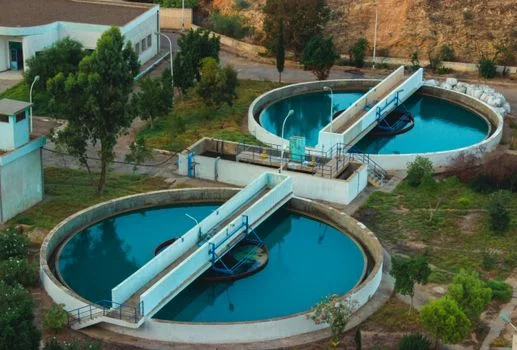
Selecting the correct technology in Sabah depends on the specific trade-offs between footprint, effluent quality, and operational complexity. Membrane Bioreactor (MBR) technology has become the gold standard for high-end resorts and urban industrial parks in Kota Kinabalu. By combining biological treatment with 0.1 μm microfiltration, MBR systems achieve 98% COD removal and produce effluent that exceeds DOE 2025 standards. While MBR systems require a 20–30% higher initial CAPEX, they offer a 60% smaller footprint than conventional activated sludge systems, making them ideal for high-value coastal real estate.
Dissolved Air Flotation (DAF) serves a different primary function, focusing on the removal of suspended solids and emulsified oils. In Sabah’s industrial corridors, DAF units are critical for pre-treating wastewater from palm oil mills or food manufacturing plants. The physics of microbubble flotation—utilizing bubbles in the 20–50 μm range—allows for the rapid separation of contaminants that are too light to settle. To understand the mechanical nuances, engineers should review the how DAF systems achieve 95%+ FOG/TSS removal in industrial wastewater to ensure proper pump sizing and saturation pressure settings.
For rural developments, schools, or smaller hotels, the underground WSZ series utilizes an Acidification/Oxidation (A/O) process. These systems are fully automated and require minimal operator intervention, which is a critical advantage in remote parts of Sabah where skilled technical labor may be scarce. These systems meet DOE Standard B requirements (and Standard A with tertiary polishing) while remaining completely hidden beneath landscaping.
| Technology Type | COD Removal Rate | Footprint Requirement | Best Use Case in Sabah | Compliance Level |
|---|---|---|---|---|
| MBR Integrated | 95% - 98% | Minimal (Compact) | Coastal Resorts, Urban Hotels | Standard A (BOD ≤20) |
| DAF System | 80% - 90% (Pre-treat) | Moderate | Palm Oil Mills, Food Processing | Pre-treatment only |
| Underground WSZ | 85% - 92% | Zero (Below Grade) | Rural Schools, Small Estates | Standard A/B |
| Conventional SBR | 80% - 85% | Large | Municipal Upgrades | Standard B |
While evaluating these technologies, procurement managers should also consider how to evaluate suppliers in emerging markets with similar compliance challenges to identify common logistical and maintenance hurdles associated with high-humidity environments.
Sabah-Specific Engineering Specs: What Your System Must Achieve
Engineering specifications for Sabah must be anchored in the Environmental Quality (Sewage) Regulations 2009, Amendment 2023. Systems that fail to meet these parameters risk immediate closure by DOE authorities. For 2025, the primary benchmarks for any new sewage treatment plant (STP) include a BOD concentration of ≤20 mg/L and TSS of ≤30 mg/L. Ammonia-nitrogen levels are also under increased scrutiny, with a target of ≤5 mg/L for Standard A areas (catchment zones).
MBR systems engineered for the local market typically deliver a COD removal rate of 98% and a BOD removal rate of 99%, with TSS often falling below detectable limits (≤5 mg/L). Energy consumption is a critical OPEX factor; modern MBRs should operate between 0.6 and 1.2 kWh/m³ of treated water. In contrast, underground WSZ systems are more energy-efficient, consuming 0.3–0.5 kWh/m³, though they offer lower removal rates (85–92% COD). When comparing these to international standards, one can look at global benchmarks for municipal sewage treatment compliance to see how Malaysia’s standards are rapidly aligning with stricter Western regulations.
| Parameter | DOE 2025 Standard A | MBR Performance | Underground WSZ | DAF Performance |
|---|---|---|---|---|
| BOD5 (mg/L) | ≤ 20 | < 5 | 15 - 20 | N/A (TSS focus) |
| TSS (mg/L) | ≤ 30 | < 2 | 20 - 30 | < 50 (from 1000+) |
| COD (mg/L) | ≤ 120 | < 30 | 60 - 90 | 90% reduction |
| Ammonia (mg/L) | ≤ 5 | < 1 | 3 - 5 | N/A |
| Oil & Grease | ≤ 5 | < 1 | < 2 | 95% removal |
Material selection is the final critical engineering spec. Due to the high humidity and coastal salt spray prevalent in Kota Kinabalu and Sandakan, all external control panels must be IP65 rated, and all blowers/pumps should feature internal thermal protection. Equipment sourced from HydropureWater specifically utilizes reinforced internal piping to prevent leaks caused by the minor seismic shifts occasionally recorded in the Sabah region.
Budgeting for Sabah: CAPEX, OPEX, and ROI by Technology
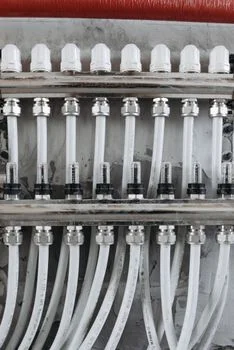
Budgeting for sewage treatment in Sabah requires a nuanced understanding of both the equipment cost and the logistical realities of East Malaysia. For a 100 m³/day plant, CAPEX typically ranges from RM 1.2 million for basic underground systems to RM 3.2 million for high-specification MBR plants. These costs include the equipment, shipping to Sabah ports (Kota Kinabalu or Tawau), and basic installation supervision.
Operating expenses (OPEX) are primarily driven by energy costs, chemical consumption, and membrane replacement cycles. MBR systems carry the highest OPEX at RM 0.8–1.5/m³, largely due to the electricity required for membrane scouring blowers and the eventual cost of membrane replacement every 5–8 years. However, the ROI on MBR systems is realized through the potential for water reuse in irrigation or cooling towers, which can reduce a resort's fresh water purchase costs by up to 40% (HydropureWater field data, 2025).
| Cost Component | Underground (100m³/d) | MBR (100m³/d) | DAF (Industrial) |
|---|---|---|---|
| CAPEX (RM) | 1.2M - 1.8M | 1.8M - 3.2M | 1.5M - 2.8M |
| OPEX (RM/m³) | 0.30 - 0.70 | 0.80 - 1.50 | 0.50 - 1.00 |
| Annual Maint. | RM 15k - 30k | RM 50k - 100k | RM 40k - 80k |
| Lead Time | 3 - 4 Months | 4 - 6 Months | 3 - 5 Months |
Import duties also play a significant role. Equipment imported from China, such as HydropureWater systems, benefits from the ACFTA (ASEAN-China Free Trade Area) agreements, typically facing duties of only 5–10%. In contrast, systems sourced from Europe or the US may incur tariffs of 15–20%, making Chinese-engineered systems significantly more cost-effective for the Sabah market without sacrificing technical performance. Lead times for these imports are generally 3–6 months, accounting for manufacturing and sea freight to East Malaysia.
Zero-Risk Supplier Selection Framework for Sabah Buyers
To mitigate the risk of procurement failure, Sabah buyers should follow a structured evaluation framework that prioritizes compliance and local support over the lowest initial bid. The following five-step process is designed to ensure long-term system viability.
- Step 1: Verify DOE Malaysia Compliance: Do not accept "designed to meet" claims. Demand certified third-party test reports from existing installations in Malaysia showing consistent effluent BOD ≤20 mg/L and TSS ≤30 mg/L.
- Step 2: Technical Site Audit: Ensure the supplier accounts for Sabah’s specific conditions. Ask how the system handles salinity intrusion and 30% hydraulic surges during the monsoon season. If the supplier does not mention 316L stainless steel or surge tanks, they are a high-risk choice.
- Step 3: Assess Local Support Infrastructure: A system is only as good as its nearest technician. Verify if the supplier has a distributor or service partner in Kota Kinabalu or Sandakan. HydropureWater, for instance, maintains local partnerships to ensure spare parts like membranes or specialized pumps are available within 48–72 hours.
- Step 4: Warranty and Membrane Life: For MBR systems, insist on a 5-year pro-rated warranty on membranes. For DAF systems, the saturation pump and scraper mechanism should carry at least a 3-year warranty.
- Step 5: Turnkey Contract Negotiation: Avoid "equipment only" contracts. Negotiate a turnkey agreement that includes installation, commissioning, and a mandatory 2-week operator training program. This prevents the "finger-pointing" that occurs when a local contractor installs specialized equipment incorrectly.
Frequently Asked Questions
Can sewage treatment equipment handle Sabah’s monsoon season?
Yes, but the design must account for a 20–30% increase in hydraulic loading due to rainwater infiltration in older sewer networks. MBR and underground systems are generally more resilient because they are enclosed, preventing rainwater from flooding the biological tanks (DOE Malaysia 2024 guidelines).
What are the DOE Malaysia penalties for non-compliant discharge?
Under the Environmental Quality Act, first-time offenders can face fines up to RM 500,000 and/or 5 years imprisonment. Ongoing violations can result in daily fines of RM 1,000 per day until the system is brought into compliance (Environmental Quality Regulations 2009, Amendment 2023).
Are there local suppliers for maintenance and spare parts in Sabah?
While major manufacturers are often based in Peninsular Malaysia or China, reputable suppliers like HydropureWater partner with local Sabah-based distributors for routine maintenance and membrane cleaning services. Annual maintenance contracts typically range from RM 50,000 to RM 100,000 for MBR systems.
How do I size a system for a Sabah resort with 200 rooms?
Sizing should assume a water usage rate of 300–400 liters per room per day, plus additional capacity for laundry and F&B services. A 100–150 m³/day MBR or underground system is usually sufficient, provided it includes a buffer tank to handle peak morning and evening loads (DOE Malaysia 2025 sizing guidelines).
What’s the lead time for importing equipment to Sabah?
Typically, the lead time is 3–6 months. This includes 8–10 weeks for fabrication, 3–4 weeks for sea freight to Kota Kinabalu, and 2 weeks for customs clearance and inland transport to the site (Sabah Customs 2025 data).