Sewage treatment equipment suppliers in France such as SAVECO, EUROPELEC, and France Environment supply modular and turnkey systems for municipal and industrial plants. Dissolved air flotation (DAF) units sized at 4-8 m/h hydraulic loading typically remove 95-98% TSS. MBR trains deliver <10 mg/L BOD effluent with about 60% less footprint than conventional activated sludge. Selection hinges on matching hydraulic loading, removal rates, and local service coverage to the discharge permit, aligned with Industrial Emissions Directive 2010/75/EU BAT-AELs and the recast Urban Wastewater Treatment Directive (EU) 2024/3019.
How Sewage Treatment Equipment Suppliers in France Compare for Plant Buyers
French sewage treatment equipment suppliers fall into three groups: mechanical pre-treatment specialists, municipal turnkey contractors, and modular industrial vendors. SAVECO (WAMGROUP), EUROPELEC, France Environment, and HydropureWater cover them all. Typical DAF CAPEX is €50,000–€300,000, MBR packages €200,000–€2M, and energy spans 0.1-1.2 kWh/m³ across technologies. Selection rests on hydraulic loading, removal rates, energy, and French service coverage.
Shortlists weigh hydraulic loading in m/h or L/m²/h, TSS or BOD removal under stated influent peaks, specific energy in kWh/m³, French spare-parts lead time, and written mapping to IED BAT-AELs before award. A supplier quoting removal rates without your influent envelope is quoting a laboratory, not a plant. Most bids we review in France fail on peak FOG or TSS events rather than average flow.
Which French DAF and MBR Suppliers Serve Industrial Wastewater?
For industrial wastewater in France, DAF and MBR duty splits between SAVECO on screens and sludge handling, EUROPELEC on aeration and clarifiers, France Environment on compact SBR, and HydropureWater on DAF and MBR modules. SAVECO reports about 95% solids capture on screw screens with ex-stock parts in France. EUROPELEC adds regional permitting support to its municipal scopes. HydropureWater DAF and MBR modules are rated for 95-98% TSS removal and <10 mg/L BOD permeate, usually commissioned through French engineering partners.
Why French Industrial Plants Are Upgrading Sewage Treatment Equipment
European deadlines are pulling French plants toward tighter treatment trains. Directive 91/271/EEC, adopted on 21 May 1991, required secondary treatment for agglomerations above 2,000 PE. The recast Directive (EU) 2024/3019, adopted on 27 November 2024 and published on 12 December 2024, entered into force on 1 January 2025 according to the European Commission. It extends secondary treatment to agglomerations of 1,000 PE and above by 31 December 2035.
Under the recast, Member States must transpose the core provisions by 31 July 2027, replacing the earlier mid-2027 planning assumption, and Directive 91/271/EEC is repealed with effect from 1 August 2027. Quaternary treatment then drives the largest CAPEX wave. According to Directive (EU) 2024/3019, plants above 150,000 PE must give 20% of discharges quaternary treatment by 31 December 2033, 60% by 31 December 2039, and all discharges by 31 December 2045. The same text sets a renewables ladder of 40% of plant energy by 31 December 2035 and 70% by 31 December 2040, with energy audits every four years pushing kWh/m³ onto operators' dashboards.
The European Environment Agency reports that by 2022, 81% of the EU population was connected to at least secondary wastewater treatment. The WISE France profile records 83 sensitive areas under the 1991 Directive, with north France sensitive to both nitrogen and phosphorus and part of south-west France sensitive to phosphorus. These designations drive tertiary nutrient removal scopes on French projects.
Industrial dischargers remain under Industrial Emissions Directive 2010/75/EU, and the recast adds its own industrial hook. Direct discharges of biodegradable non-domestic wastewater from plants treating 4,000 PE and above in listed sectors must reach at least secondary-treatment equivalence. For chemical-sector common wastewater systems, Commission Implementing Decision (EU) 2016/902 sets yearly-average BAT-AELs of 30–100 mg/L COD and 5.0–35 mg/L TSS when load thresholds apply. Under Article 14, non-domestic discharges into French collecting systems also need prior regulations or specific authorisations.
Non-compliance costs escalate fast. In a documented industrial audit, a French dairy plant faced €120,000 per year in environmental fines after TSS and FOG overwhelmed legacy clarifiers. After installing high-efficiency DAF systems for 95-98% TSS removal in industrial wastewater, the site reported 97% TSS removal and cut annual fines by about 90% under local Agence de l'Eau rules.
OPEX usually dominates total cost of ownership in France. Energy for wastewater treatment commonly falls between 0.3 and 0.8 kWh/m³, while sludge disposal runs €100–€300 per ton depending on cake dryness and haul distance. Automated presses and high-flux membranes cut those lines by raising solids capture and lowering specific energy. Benchmarks from UK municipal plants compare to French standards help set realistic kWh/m³ and sludge-mass targets during FEED.
France Sewage Treatment Equipment Specs and Costs by Technology
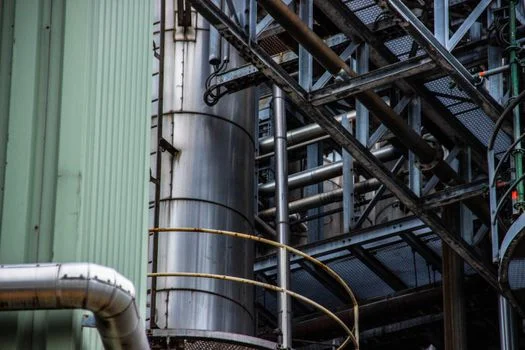
DAF remains the default FOG and TSS pre-treatment step in French food and textile plants. Micro-bubbles attach to particles near water density and lift them for skimming where gravity settlers fail. For high-load industrial duty, DAF systems for 95-98% TSS removal in industrial wastewater operate at 4-8 m/h hydraulic loading and shrink the footprint versus primary clarifiers. Most plants we size for French food sites run DAF at the lower end of 4-8 m/h when FOG peaks after CIP shifts.
| Parameter | DAF | MBR (DF Series) | Filter Press (Plate/Frame) |
|---|---|---|---|
| TSS Removal Rate | 95-98% | >99% | 95-98% (Solids Capture) |
| BOD Reduction | 40-60% (Particulate) | >95% (<10 mg/L Effluent) | N/A (Sludge Only) |
| Hydraulic Loading | 4-8 m/h | 15-25 L/m²/h (Flux) | 5-50 m³/h (Throughput) |
| Energy Use | 0.1-0.2 kWh/m³ | 0.6-1.2 kWh/m³ | 1.5-3.0 kW (Motor Power) |
| Primary Use Case | FOG/TSS Pre-treatment | Water Reuse/Sensitive Discharge | Sludge Volume Reduction |
Membrane bioreactors combine activated sludge with ultrafiltration and remove secondary clarifiers. Integrated MBR systems for near-reuse-quality effluent (<10 mg/L BOD) suit French municipal upgrades and hospital wastewater where bacteria-free permeate is required. Energy sits at 0.6-1.2 kWh/m³, yet the roughly 60% footprint cut matters on constrained sites. For compact municipal or campus duty, an Underground Package Sewage Treatment Plant (WSZ Series) can cover secondary treatment where land or visual impact limits above-grade tanks.
Solids handling drives disposal cost. High-efficiency filter presses for 95-98% sludge solids capture routinely produce 20-35% dry cake. At the headworks, rotary bar screens such as the GX series remove about 95% of solids larger than 3 mm at flows up to 1,000 m³/h in stainless steel 304 or 316. Most French food sites treat 1 mm fine screening as cheap membrane insurance downstream.
Quaternary treatment changes the equipment list before 2033. Adsorption on activated carbon and ozonation are established micropollutant-removal routes being evaluated for the 2033-2045 rollout at large French works. Both routes need low TSS entering the stage, which favours DAF or MBR upstream. Specifiers should reserve footprint and power margins now for retrofits due by 31 December 2039.
Which Wastewater Plant Equipment Suppliers Serve Municipal Facilities?
Municipal utilities in France typically shortlist vendors that combine aeration or biological packages with permitting support and regional service centres. EUROPELEC fits large clarifier and aeration scopes, and France Environment covers modular SBR for communities near the 2,000 PE band. SAVECO covers screens and sludge trains that protect biological stages. HydropureWater fills DAF or MBR gaps when reuse or industrial pre-treatment is required.
| Supplier | Core Strengths | Key Technical Specs | Compliance Support | Spare Parts / Service |
|---|---|---|---|---|
| SAVECO (WAMGROUP) | Pre-treatment & Sludge Handling | High-efficiency screw screens; 95% solids capture | EU 91/271/EEC alignment | Ex-stock availability in France |
| EUROPELEC | Turnkey Municipal Solutions | Aeration systems; Large-scale clarifiers | Full local permitting support | Regional service centers |
| France Environment | Modular SBR & Industrial Plants | Compact footprints; SBR automation | BAT-AELs compliance | Remote monitoring focus |
| HydropureWater | DAF & MBR Specialization | 98% TSS removal; <10 mg/L BOD effluent | Direct mapping to EU directives | 24/7 remote technical support |
SAVECO is strong on mechanical pre-treatment and livestock wastewater, but membrane reuse projects usually need a dedicated MBR partner. France Environment scales well for small communities and may need partners for heavy petrochemical loads. HydropureWater DAF and MBR modules integrate with existing SCADA; on-site maintenance is typically handled by French partners. Paris-area buyers can also review the Paris sewage treatment equipment suppliers guide with local compliance specs for Île-de-France permitting nuances.
Mediterranean CAPEX checks against cost benchmarks for Mediterranean wastewater treatment projects help stress-test budgets for climate and salinity differences. Buyers comparing full process trains may also review suppliers of process engineering plants equipments in france for sludge-line options that sit beside DAF or MBR packages.
Sewage Treatment Equipment CAPEX and OPEX in France
Total cost of ownership for industrial sewage systems in France is driven more by sludge fees and energy than by equipment purchase price. A mid-size food-plant DAF typically costs €50,000–€300,000 CAPEX; a municipal-reuse MBR can exceed €1 million. Material grade (316L for corrosive streams) and 24/7 automation push the upper end. When comparing sewage treatment equipment suppliers in France, ask every bidder for €/m³ OPEX at your duty point rather than list prices.
| Equipment Type | Estimated CAPEX Range | Annual OPEX (per m³) | Primary Cost Drivers |
|---|---|---|---|
| DAF System | €50,000 - €300,000 | €0.15 - €0.40 | Chemicals (Coagulants/Flocculants) |
| MBR System | €200,000 - €2M | €0.60 - €1.10 | Energy & Membrane Cleaning |
| Sludge Dewatering | €30,000 - €200,000 | €100 - €300 / ton | Polymer use & Disposal fees |
ROI should use site numbers, not catalogue averages. A 100 m³/h DAF at €150,000 CAPEX and €45,000 annual OPEX can pay back in under two years when it removes about €90,000 per year in fines and sewer surcharges. Upgrading dewatering—or applying solutions for belt press tracking problems—raises cake dryness and cuts haul tonnage to incineration or landfill.
Hidden line items include environmental permitting (€5,000–€20,000), installation at 10-20% of CAPEX, and operator training (€2,000–€10,000). Under France's polluter-pays water-agency charges, every percentage point of missed solids capture raises the variable tax. Budget the permit and the training before the PO, because both gate commissioning dates.
How to Select a Reliable Wastewater Treatment Plant Equipment Supplier
Supplier selection in France needs influent chemistry, peak hydraulics, and the regulatory path under Directive (EU) 2024/3019 and IED permits. Buying on average flow alone is the usual failure mode; peak FOG or TSS events trigger bypasses and fines. Start the file with a 24-hour composite and end it with a named French service partner.
Step 1: Define wastewater characteristics. Run a 24-hour composite for BOD, COD, TSS, and FOG. Food plants often see BOD spikes of 500–2,000 mg/L during cleaning. Record pH and temperature swings; they control coagulant dose and membrane flux.
Step 2: Match technology to discharge goal. FOG control for sewer discharge usually points to DAF. Cooling-tower or irrigation reuse points to MBR. High sludge mass points to plate-and-frame presses over belt presses when maximum dryness is the target.
| Evaluation Criterion | Weighting | Scoring (1-10) |
|---|---|---|
| Technical Compliance (EU Directives) | 35% | - |
| Operational Efficiency (kWh/m³) | 25% | - |
| After-Sales Support in France | 20% | - |
| CAPEX/OPEX Ratio | 20% | - |
Step 3: Prove supplier capability. Demand case studies at your industry and flow. Require a performance commitment with removal rates tied to your influent envelope. For membranes or high-pressure pumps, treat 48-hour spare delivery as the downtime baseline and ask for a pilot or a French reference visit before PO.
Selection checklist (use before RFQ):
- Peak and average flow with FOG/TSS envelopes from composite samples
- Discharge route: sewer convention vs direct IED permit limits
- Technology shortlist tied to reuse, FOG, or sludge dryness goals
- French spare-parts lead time and named service partner
- Energy and polymer OPEX in €/m³ or €/ton at your duty point
- Written removal commitment under stated influent conditions
- Pilot data or operating reference in a comparable French plant
Who this is for: plant engineers, EPC contractors, and procurement managers specifying industrial pre-treatment or small-to-mid municipal packages in France. Who should look elsewhere: buyers seeking only civil-works general contractors with no process commitment, or projects needing exclusive on-site OEM crews without a French partner. Next step: send influent data and discharge limits for a scoped equipment proposal via our request-quote form.
Frequently Asked Questions

What Are the TSS Removal Limits for Industrial Discharge in France?
Many French chemical-sector direct dischargers target yearly-average TSS of 5.0–35 mg/L under Industrial Emissions Directive permits informed by BAT conclusions (EU 2016/902). Local Convention de Déversement limits for sewer discharge often sit near 35–50 mg/L TSS. High-performance DAF systems typically cut influent TSS from >1,000 mg/L to within those bands when coagulants and hydraulic loading are matched to the FOG load.
How Much Does a Sewage Treatment Plant Cost for a Small French Community?
For a community of about 2,000 PE, a modular SBR or MBR plant typically costs €400,000–€850,000 CAPEX. Total cost rises when advanced nitrogen and phosphorus removal is required for sensitive receiving waters under the urban wastewater rules. Site civil works, sludge handling, and automation usually decide where a bid lands inside that band.
Which Technology Is Best for Removing Microplastics from Sewage?
MBR ultrafiltration is the most effective common option because the membrane is a physical barrier that removes >99% of microplastics larger than the pore size. French plants discharging to Zones Sensibles increasingly specify MBR or tertiary filtration for this reason. Pre-screening to about 1 mm remains essential to protect membrane life.
What Is the Average Lifespan of MBR Membranes in Industrial Use?
Well-maintained industrial PVDF membranes typically last 5 to 8 years. Fine screens near 1 mm and scheduled Clean-In-Place cycles prevent the irreversible fouling that shortens that window. Most plants we support replace modules on condition monitoring rather than on a fixed calendar alone.
How Should Buyers Compare Wastewater Treatment Plant Equipment Suppliers?
Score each bidder on EU directive compliance (about 35% weight), specific energy in kWh/m³ (25%), French after-sales coverage (20%), and CAPEX/OPEX balance (20%). Require removal commitments at your peak load, not catalogue averages. Verify 48-hour critical-spares logistics and at least one operating reference in France before award.
When Must French Plants Meet the New EU Wastewater Treatment Deadlines?
Core provisions of Directive (EU) 2024/3019 must be transposed by 31 July 2027, and secondary treatment for 1,000 PE agglomerations applies by 31 December 2035. Quaternary treatment at plants above 150,000 PE phases in between 31 December 2033 and 31 December 2045. Anchor FEED schedules to those dates now, because permit revisions and civil works lengthen every retrofit.