
A belt filter press removes free and interstitial water through two zones in a belt filter press: gravity drainage, then mechanical pressure with wedge and high-pressure rollers. Cooperative industrial feeds often reach 30–55% dry solids (DS). Many municipal biosolids finish lower. Differential belt speeds of 0.5–5 m/min add shear that helps release water. Polymer dosing commonly sits in the 0.5–3 kg/ton DS band on industrial lines.
What Does Belt Press Dewatering Achieve?
Belt press dewatering raises dilute sludge to a handleable cake by gravity drainage then belt compression. Municipal biosolids often finish near 12–44% DS. Many industrial cakes reach about 30–55% DS when polymer dose and roller pressure match the feed. Solids capture stays high when flocculation and belt washing remain in control.
Plant engineers use belt press dewatering when continuous throughput of about 5–50 m³/h matters more than the driest possible cake. Batch plate presses still win when disposal fees punish every wet ton. Energy use on continuous belts is commonly cited near 0.2–0.5 kWh/m³ of processed sludge under normal municipal duty.
Why Cake Dryness Varies on Industrial Belts
Belt mistracking and improper flocculation cause 30–40% of unplanned downtime in industrial dewatering operations, often resulting in "slop" rather than a stackable cake. A typical food processing plant manager struggles with cake dryness that fluctuates between 25% and 40% DS daily, despite consistent influent sludge characteristics. This variability is rarely a fault of the sludge itself but rather a failure to manage the mechanical and chemical variables of the press.
Root causes usually fall in three areas. Flocculant dosing drifts outside the 0.5–3 kg/ton DS range. Belt tension varies beyond ±10% and channels pressure. Rollers misalign past a 1 mm tolerance. When these parameters drift, the floc structure collapses early and traps interstitial water. Plant cost models still treat a mere 10% decrease in cake dryness as an added disposal burden of about $8–$12 per ton of wet cake from the extra water mass. For a plant processing 50 tons of dry solids per month, this represents an avoidable annual loss of up to $7,200. According to US EPA Biosolids Technology Fact Sheet EPA 832-F-00-057 (September 2000), overall belt-press O&M spans about $80–$200 per dry ton of solids, so dryness and polymer control dominate ownership cost.
Two Zones in a Belt Filter Press: Gravity and Pressure
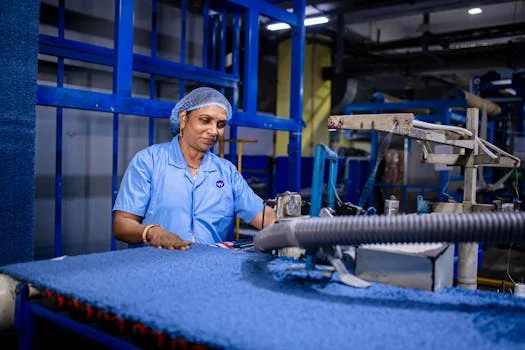
The two zones in a belt filter press work in series: gravity drainage first removes free water, then a pressure train compresses the cake. According to US EPA EPA 832-F-00-057 (2000), the gravity zone should raise solids by about 5–10 percentage points before the belts close, after polymer conditioning. At a belt speed of 1–3 m/min over a gravity deck typically 1–3 meters long, many feeds move from dilute slurry toward roughly 5–10% DS before wedging begins.
The low-pressure zone utilizes belt wrapping around large-diameter rollers (200–400 mm), creating a pressure gradient of 50–200 kPa. Here, the DS content increases to 20–30%. The final high-pressure zone consists of 3–8 rollers of decreasing diameters (150–300 mm). As the roller diameter decreases, the pressure increases to 300–600 kPa, pushing cooperative cakes toward a final 40–55% DS limit. Differential belt speed of 0.5–5 m/min between the upper and lower belts induces shear. That shear realigns sludge particles and can release 15–25% more water than static pressure alone (Alfa Laval ASH benchmarks). Most industrial belts are constructed from polyester or polypropylene with pore sizes ranging from 10–50 μm and a tensile strength of 200–400 N/cm to withstand these forces.
| Dewatering Zone | Mechanical Mechanism | Pressure Range (kPa) | Target Solids (% DS) | Typical Residence Time |
|---|---|---|---|---|
| Gravity Drainage | Hydrostatic Head / Porosity | 0 - 5 | 5% - 15% | 30 - 90 seconds |
| Wedge (Low Pressure) | Converging Belt Tension | 50 - 200 | 15% - 30% | 20 - 45 seconds |
| High Pressure Zone | S-Wrap Roller Compression | 300 - 600 | 30% - 55% | 45 - 120 seconds |
| Shear Zone | Differential Belt Speed | Variable | +15% efficiency | Continuous |
Pressure Zone Physics: How Roller Diameter and Belt Tension Control Cake Dryness
Effective pressure (P) on a sludge cake equals belt tension (T) divided by roller radius (R), or P = T/R. Smaller rollers (for example 150 mm) create significantly higher pressure (up to 600 kPa) than larger rollers, but they offer a shorter contact time. Conversely, larger rollers (400 mm) provide a longer contact time of 1.5–2.5 seconds at lower pressures (200 kPa), which is essential for the initial stabilization of the sludge cake before it enters the high-shear stages.
To maintain uniform pressure distribution, belt tension must be strictly controlled within a range of 50–150 N/cm, with a tolerance of ±10%. If the tension is uneven, the contact area becomes inconsistent. A wrap angle of 10–30° is standard for industrial applications. Field experience shows roller misalignment greater than 1 mm can cut pressure uniformity by up to 25%, producing wet spots and belt-edge wear. The sequence of rollers must raise pressure gradually, decreasing roller radius so sludge does not extrude from the belt sides.
| Roller Diameter (mm) | Applied Pressure at 100 N/cm Tension (kPa) | Contact Time (at 2 m/min) | Engineering Purpose |
|---|---|---|---|
| 400 mm | 250 kPa | 2.4 seconds | Initial cake stabilization |
| 300 mm | 333 kPa | 1.8 seconds | Intermediate dewatering |
| 200 mm | 500 kPa | 1.2 seconds | High-pressure water extraction |
| 150 mm | 667 kPa | 0.9 seconds | Final cake polishing / maximum DS |
Sludge Conditioning: The Hidden Variable in Belt Press Performance
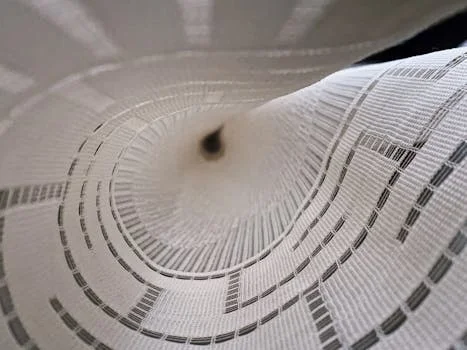
Flocculant consumption represents 30–45% of the total lifecycle cost of a belt filter press, making chemical conditioning the most critical operational variable. For municipal sludge, cationic polyacrylamide (PAM) is typically used to neutralize the negative charge of organic particles. In contrast, industrial sludges, such as metal hydroxides, often require anionic PAM. Earlier plant guidance often used a 0.5–3 kg/ton DS dosing window. According to US EPA EPA 832-F-00-057 (2000), polymer spans 1–10 g/kg DS by sludge class. Raw primary is often 1–5 g/kg. Difficult WAS streams sit toward the high end.
Mixing intensity is equally important; a G-value of 500–1000 s⁻¹ for 10–30 seconds is required to achieve an optimal floc size of 1–3 mm. Overdosing is a common mistake; while it can increase cake dryness by 2–5%, it raises OPEX by $3–$7 per ton of dry solids and can lead to belt blinding. Modern facilities utilize a PLC-controlled flocculant dosing system to adjust real-time chemical delivery based on influent flow. Understanding how DAF clarifiers pretreat sludge for belt presses is vital, as effective pretreatment can reduce polymer demand by up to 20% by removing oils and fats that interfere with flocculation.
| Sludge Type | Recommended Polymer Type | Dosing Range (kg/ton DS) | Expected Cake Dryness (% DS) |
|---|---|---|---|
| Municipal (Primary) | High Charge Cationic PAM | 1.0 - 2.0 | 25% - 35% |
| Municipal (Digested) | Medium Charge Cationic PAM | 2.0 - 4.0 | 18% - 25% |
| Metal Hydroxide | Anionic PAM / Coagulant | 1.5 - 3.0 | 35% - 50% |
| Paper & Pulp | Low Charge Cationic PAM | 0.5 - 1.5 | 30% - 45% |
Belt Press vs. Plate Press: Engineering Specs for Industrial Sludge
Continuous belt filter presses typically consume 0.2–0.5 kWh/m³ of processed sludge, offering higher throughput but lower peak dryness than batch-operated plate presses. For high-flow municipal applications (5–50 m³/h), the belt press is the industry standard due to its lower CAPEX and continuous nature. However, for hazardous or low-flow industrial streams where disposal costs are extreme, a plate and frame filter press for hazardous sludge may be justified. Plate presses can achieve 30-45% DS even on difficult sludges, whereas a belt press might struggle to maintain 30% on the same material without excessive chemical use.
Maintenance profiles also differ significantly. A belt press requires weekly belt washing and monthly roller alignment to prevent tracking issues. A plate press requires daily plate cleaning and annual membrane replacement. Evaluating the 2026 TCO comparison for belt and plate filter presses helps operators make an informed decision. For most industrial upgrades on non-hazardous sludge, the belt press remains the preferred ROI choice because of automated, continuous operation.
| Feature | Belt Filter Press (BFP) | Plate & Frame Press (PFP) |
|---|---|---|
| Operation Mode | Continuous | Batch |
| Throughput | 5 - 50 m³/h | 1 - 10 m³/h |
| Energy Consumption | 0.2 - 0.5 kWh/m³ | 0.1 - 0.3 kWh/m³ |
| Labor Requirement | Low (Automated) | High (Manual/Semi-Auto) |
| Maintenance | Belt washing, Alignment | Plate cleaning, Cloth replacement |
Plate and Frame Filter Press Troubleshooting Basics
Plate and frame filter press troubleshooting usually starts with cloth blinding, incomplete fill, or uneven chamber packing when filtrate clarity drops or cycle time stretches. Check feed solids, precoat or polymer condition, and cloth integrity before raising pressure setpoints. If cycles still miss dryness targets on sticky or hazardous cakes, a dedicated Plate and Frame Filter Press for Sludge Dewatering often outperforms a belt on those streams.
What Does a Belt Filter Press Cost for a 0.5 MGD Plant?
Belt filter press cost for a 0.5 MGD WWTP with about 2% feed solids is driven by belt width, duty hours, polymer, and cake haul fees more than by nameplate hydraulic capacity. According to US EPA EPA 832-F-00-057 (2000), vendor capital then ran about $47,500 for a 0.5 m belt (~500 dry lb/h). A 1.5 m belt (~1,625 dry lb/h) was about $115,000 at 5% feed solids. Those figures exclude install and ancillaries. The same fact sheet notes mechanical dewatering may not be the lowest-cost path for plants below about 4 MGD, so a 0.5 MGD site should compare drying beds or off-site dewatering before buying steel.
At 2% feed solids, hydraulic loading rises for the same dry-solids mass, so operators either slow the belt or widen it to protect gravity drainage. EPA-reported O&M of $80–$200 per dry ton already embeds polymer, labor, wash water, and power ranges. Detailed sizing tables and standards language sit on the sibling belt filrer press selection gaude page when you need specification language rather than zone physics.
How to Match Belt Press Specs to Your Sludge
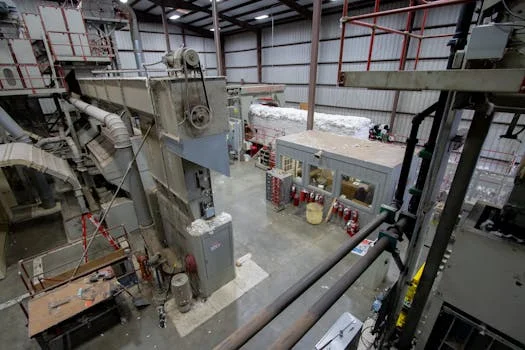
Selecting a belt filter press without a pilot test or jar-test polymer curve leaves cake dryness to chance. Use this checklist before freezing a purchase order:
- Measure feed % DS, volatile solids, oil and grease, and grit that can cut belts.
- Run polymer jar tests across 0.5–3 kg/ton DS, then confirm on a rented or vendor pilot belt.
- Size belt width on dry-solids loading (kg DS/h·m), not only plant MGD.
- Specify gravity deck length, roller count/diameters, and tension control (±10%).
- Require automatic belt wash, tracking, and spare-belt change access.
- Model disposal cost at both current and −10% cake dryness cases.
- Compare continuous belt duty against plate-press batch cycles when cake must exceed ~30% DS on hard sludge.
Who this is for: EPC and plant engineers choosing continuous dewatering on non-hazardous municipal or industrial sludge. Who should look elsewhere: sites that need very dry cake on oily or hazardous solids, or plants under ~4 MGD that can still use drying beds economically. Next step: send feed solids data and target cake % DS so a duty point and polymer range can be checked before layout drawings freeze.
Frequently Asked Questions
What are the two main dewatering stages on a belt press?
The two primary zones are gravity drainage and mechanical pressure. Gravity removes free water through a porous belt before the belts close. Pressure then forms in a wedge stage and a high-pressure roller train that raises cake dryness further. Shear from slight belt-speed difference improves water release beyond static squeeze alone.
What cake dryness can a belt filter press reach?
Many industrial cakes land between 30% and 55% DS when sludge responds well to polymer and high-pressure rollers.
How much polymer does belt press dewatering need?
Day-to-day industrial setpoints often sit near 0.5–3 kg/ton DS, especially on cooperative feeds. EPA 832-F-00-057 lists broader municipal ranges of 1–10 g/kg DS by sludge type, with primary sludge commonly 1–5 g/kg and difficult WAS streams higher (EPA, 2000). Overdose can blind belts and raise OPEX by several dollars per dry ton.
When should I choose a plate press instead of a belt press?
Choose a plate and frame press when batch duty is acceptable and disposal cost rewards every extra point of dryness on difficult or hazardous sludge. Belts favor continuous 5–50 m³/h service with lower labor. Plates favor 1–10 m³/h streams that need 30–45% DS without extreme polymer use.
What causes wet spots and belt tracking problems?
Wet spots and tracking usually trace to uneven tension beyond ±10%, roller misalignment over about 1 mm, or poor flocculation that floods the gravity zone. Correct polymer dose and belt wash first, then re-square rollers and re-tension both belts. Persistent edge wear signals pressure channeling that will also cut average cake dryness.