CPCB STP and ETP wastewater standards in India for 2026 set BOD floors by track: 30 mg/l for Schedule VI inland industry, 20 mg/l for metro STPs, and 10 mg/l under the NGT strict track. Design starts from the consent to operate.
Schedule VI general industrial inland discharge uses BOD ≤30 mg/l (3 days at 27°C) where no sector-specific standard applies. MoEF&CC October 2017 STP rules use BOD ≤20 mg/l for cities above 10 lakh population and BOD ≤30 mg/l elsewhere. The NGT direction dated 30 April 2019 (OA No 1069 of 2018) sets many STP targets at BOD 10 mg/l, COD 50 mg/l and TSS 20 mg/l. State PCB consent conditions can be stricter, so the CTO sheet, not a single national slogan, sets the design numbers.
CPCB STP and ETP Wastewater Standards in India for 2026
India uses three BOD floors, not one national number. Schedule VI inland industry stays at BOD 30 mg/l (3 days at 27°C). MoEF&CC October 2017 sets BOD at 20 mg/l above 10 lakh population and 30 mg/l elsewhere. The NGT order of 30 April 2019 sets BOD 10 mg/l, COD 50 mg/l and TSS 20 mg/l for strict STP cases.
India’s treated-sewage and industrial discharge rules sit in three layers: MoEF&CC/CPCB national standards, NGT case directions, and State PCB consent conditions. Earlier market summaries often collapsed these tracks into a single “BOD ≤20 mg/l CPCB inland” line; that 20 mg/l figure tracks the metro STP notification, not Schedule VI industrial inland discharge. On multi-state jobs we open the CTO before any equipment list, because the local sheet beats the national floor.
State Pollution Control Boards enforce consents and often add tighter limits, online monitoring, reuse, or zero liquid discharge conditions. The Maharashtra Pollution Control Board still requires ZLD in 13 notified industrial clusters for textile, pharmaceutical and chemical units. NGT river-rejuvenation orders for stretches such as the Yamuna and Ganga also drive upgrades beyond Schedule VI values. Pan-India operators should map each site to CPCB floors, any applicable NGT order, and the local CTO before selecting units.
Down To Earth reported that the NGT order of 30 April 2019 scrapped the 2017 ministry notification that had eased sewage treatment norms and restricted BOD to 10 mg/litre. The expert committee behind the strict parameters had recommended them only for mega cities; the NGT extended them to all towns and cities and rejected a seven-year phase-in, expecting existing plants to comply without delay. That single judgment is why many 2026 tenders still carry the 10 mg/l BOD line.
The National Mission for Clean Ganga, which coordinates STP upgrades across the Ganga basin, frames rehabilitation and up-gradation of existing STPs around BOD/TSS of 10/10 mg/l, COD below 50 mg/l and ammoniacal nitrogen below 5 mg/l. Tamil Nadu’s TWAD Board has likewise issued circulars applying the revised effluent TSS 20 mg/l discharge standard under the NGT order dated 30.04.2019 in O.A. No. 1069 of 2018. Treat these programme documents as the strict track whenever a consent cites the NGT order rather than Schedule VI.
For a comparative perspective, see how India’s norms compare with Southeast Asia. Detailed parameter tables for stp and etp effluent standards in india sit on the companion engineering guide.
Core Effluent Standards for Industrial & Municipal Discharge
CPCB effluent standards for general industrial inland discharge under Schedule VI keep COD at 250 mg/l maximum and suspended solids at 100 mg/l maximum, with BOD at 30 mg/l (3 days at 27°C). Many project briefs still quote BOD ≤20 mg/l because metro STP rules and several state CTOs use that number. Treat 20 mg/l as a common STP/metro design point, not as Schedule VI industrial inland BOD. Tamil Nadu and other boards may push industrial COD below 150 mg/l near sensitive water bodies.
Public-sewer discharge under Schedule VI allows suspended solids up to 600 mg/l. A pH window of 5.5 to 9.0 remains the common consent band across inland and sewer routes in the original Schedule VI framing.
Oil and grease must not exceed 10 mg/l for inland waters and 20 mg/l for public sewers. The sibling note on the Oil and Grease Discharge Limit in India: 2026 CPCB/SPCB Standards expands route-specific checks. The engineering guide covers the cpcb oil and grease discharge limit 10 mg/l inland surface water in full. Ammonical nitrogen (as N) stays at 50 mg/l and Total Kjeldahl Nitrogen at 100 mg/l for inland discharge in the Schedule VI set.
Discharged effluent temperature must not rise more than 5°C above receiving-water temperature where that consent clause applies. Meeting these BOD, COD and SS targets usually needs solid secondary treatment, and often tertiary polishing, for industrial wastewater compliance.
| Parameter | CPCB Standard (Inland Surface Water) | CPCB Standard (Public Sewers) | Notes/NGT Mandates |
|---|---|---|---|
| BOD (mg/l, Max) | 20 | — | NGT 2025 mandate for STPs/ETPs |
| COD (mg/l, Max) | 250 | — | Some states (e.g., TN) <150 mg/l |
| Suspended Solids (mg/l, Max) | 100 | 600 | |
| pH Value | 5.5 - 9.0 | 5.5 - 9.0 | Consistent across all routes |
| Oil & Grease (mg/l, Max) | 10 | 20 | |
| Ammonical Nitrogen (as N, mg/l, Max) | 50 | 50 | |
| Total Kjeldahl Nitrogen (as NH3, mg/l, Max) | 100 | — | |
| Temperature Rise | ≤5°C above receiving water | — |
Read the BOD “20” cell above as the metro-STP design point still widely used in tenders. According to CPCB’s treated-sewage reuse guideline table, MoEF&CC October 2017 sets STP BOD at 20 mg/l for cities above 10 lakh population and 30 mg/l elsewhere. The NGT direction of 30 April 2019 sets BOD 10 mg/l, COD 50 mg/l and TSS 20 mg/l for the strict STP track. Schedule VI general industrial inland BOD remains 30 mg/l where no sector standard applies. When two numbers fight, the consent sheet wins.
State-by-State Wastewater Regulations: Key Differences & Stricter Norms
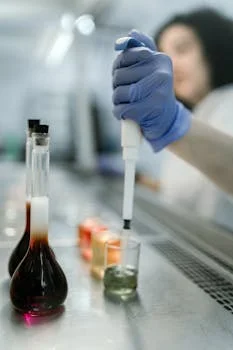
State PCB regulations frequently impose stricter wastewater treatment requirements than central CPCB floors, reflecting local river and coastal priorities. In Tamil Nadu, the TNPCB requires tertiary treatment for industries near water bodies and can set BOD below 10 mg/l in sensitive coastal or river zones. Maharashtra, through the MPCB, remains a lead enforcer of zero liquid discharge India policy in 13 designated industrial clusters, including textile, pharmaceutical and chemical sectors, with strict reuse and groundwater-recharge conditions on treated water.
Karnataka's KSPCB has pushed digital compliance, including online Effluent Unit Discharge Register filing and real-time continuous effluent monitoring for industrial units discharging more than 10 KLD. In Delhi, STPs must meet CPCB/MoEF&CC baselines plus NGT Yamuna expectations that can demand BOD ≤3 mg/l for river discharge, which forces advanced tertiary trains. Gujarat and Rajasthan actively enforce reuse of treated industrial wastewater for cooling, process make-up and gardening, cutting freshwater abstraction. Operators comparing state packs should also review the older companion note on india cpcb wastewater treatment guidlines for industrial consent patterns; searchers typing that exact phrase land on this guide and its companion pages.
| State PCB | Key Differentiator / Stricter Norms | Impact on Industries |
|---|---|---|
| Tamil Nadu (TNPCB) | BOD <10 mg/l in sensitive zones; mandatory tertiary treatment near water bodies. | Requires advanced treatment (e.g., MBR, RO) to meet lower BOD. |
| Maharashtra (MPCB) | Mandatory Zero Liquid Discharge (ZLD) in 13 industrial clusters; strict groundwater recharge norms. | Requires comprehensive ZLD solutions (MBR+RO+Evaporator) and permits for reuse. |
| Karnataka (KSPCB) | Online EUDR filing; real-time CEMS for units >10 KLD. | Necessitates digital infrastructure for monitoring and reporting. |
| Delhi (DPCC) | BOD ≤3 mg/l for discharge into Yamuna River (NGT norms). | Demands highly advanced tertiary treatment for river discharge. |
| Gujarat (GPCB) | Enforced reuse of treated water for industrial cooling and processes. | Requires treatment to quality suitable for specific reuse applications. |
What CPCB norms apply to steel plant wastewater?
Steel plant wastewater in India is governed first by any MoEF&CC/CPCB industry-specific effluent schedule for iron and steel. Schedule VI defaults then fill any parameter the sector schedule leaves blank, and the State PCB Consent to Operate is binding. Where only Schedule VI applies, inland discharge still points to BOD ≤30 mg/l (3 days at 27°C), COD ≤250 mg/l, suspended solids ≤100 mg/l and oil and grease ≤10 mg/l. Cooling-tower blowdown, coke-oven and rolling-mill streams often need oil removal, metals polishing and ammonia control before those numbers are reachable.
Always size the ETP to the CTO sheet for that works. SPCBs commonly tighten TSS, oil and cyanide beyond the national floor in critically polluted industrial areas. On the steel jobs we size, rolling-mill oil removal sets the footprint and the chemical bill before ammonia control does.
Matching Regulations to Treatment Technologies
Achieving CPCB STP norms and state ETP consent limits requires matching each parameter to a unit process. Do not buy a generic “STP package” and hope the CTO passes. For BOD targets near 20 mg/l, extended-aeration activated sludge or A/O trains are usually enough when load and HRT are controlled. For BOD below 10 mg/l under NGT-style or sensitive-zone consents, membrane or tertiary polishing becomes the reliable path.
On trains we size, a BOD near 20 mg/l is usually an aeration and clarifier problem, while a BOD below 10 mg/l is usually a solids-separation problem. Buying membranes before the load and HRT are known wastes both power and membrane life.
MBR systems for BOD <10 mg/L compliance combine biological treatment with membrane solids separation. Ozone or UV/H2O2 can finish residual COD and pathogens after secondary treatment.
For suspended solids below 100 mg/l, primary and secondary clarification with adequate surface overflow rate is the baseline; lamella packs raise settling area in a small footprint. DAF systems for oil & grease removal under 10 mg/L remove fine solids and free oil with micro-bubbles and commonly deliver 90-95% oil removal when float and chemical dose are tuned. Ammonical nitrogen and TKN need nitrification-denitrification, either inside an MBR envelope or in dedicated anoxic/aerobic reactors. ZLD India mandates typically stack MBR, reverse osmosis and evaporator or crystallizer stages so that no liquid leaves the boundary except as product water or solid salts.
How should UV integrate with chlorination in STPs?
UV disinfection in municipal STPs in India should sit after secondary clarification or membrane filtration on low-turbidity effluent. Size the dose to the faecal-coliform limit in the consent—often 1000 MPN/100 ml under MoEF&CC October 2017 STP rules, or 100 MPN/100 ml desirable under the NGT 2019 direction. Chlorination remains useful for residual protection in long reuse networks. UV avoids chlorine by-products when the discharge point is close to the plant.
A common pattern uses UV as the primary kill step for river or lake discharge. Add a small chlorine dose only when treated water enters dual plumbing or industrial reuse headers. Keep UV transmittance and lamp sleeve cleaning in the O&M plan, or dose calculations fail as sleeves foul. On plants we commission, a fouled sleeve drops delivered dose long before the lamp hour-meter says the lamp is spent.
What drives UV cost for a 20 MLD STP?
UV capital and operating cost for a 20 MLD STP in India is driven by peak wet-weather flow, target log reduction, UV transmittance, reactor layout and power tariff. It is not set by a single catalogue price. Higher TSS or colour after secondary treatment forces more lamps or upstream filtration, which raises CAPEX and kWh/m3. Operators comparing UV with chlorination should cost lamp replacements, sleeve cleaning and standby power.
Compare that package with chlorine gas or hypochlorite storage, contact-tank civil works and dechlorination if the receiving water needs it. Ask vendors for dose at end-of-lamp-life and for validation against the faecal-coliform clause in the CTO.
Compliance Roadmap: Monitoring, Reporting & Penalties
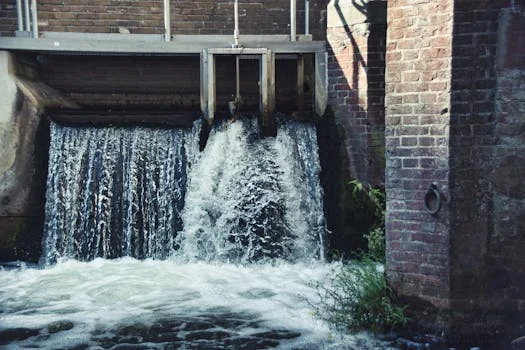
Industrial wastewater compliance in India follows a fixed monitoring and reporting loop. CPCB expects quarterly effluent discharge data through the online Effluent Unit Discharge Register portal, so plants must keep lab records aligned with the same sampling points named in the CTO. Continuous Effluent Monitoring Systems remain obligatory for industries discharging more than 50 KLD in the common national framing, feeding real-time data to State PCBs and CPCB. Large units that miss CEMS uptime quickly draw show-cause notices even when grab samples look compliant.
On plants we audit, the notice usually cites a CEMS uptime gap or an EUDR sampling point that does not match the lab record. Grab samples that pass do not cure that file error, so treat reporting discipline as part of the treatment train.
Non-compliance still carries heavy cost. Penalties can reach ₹1 lakh per day under the Water (Prevention and Control of Pollution) Act, 1974, and State PCBs can order plant closure or utility disconnection. NGT environmental compensation in recent practice has ranged from ₹5,000 to ₹10,000 per KLD of excess discharge, which scales fast on large flows. Stable chemical control with automated chemical dosing systems and PLC supervision reduces operator error on pH, coagulants and nutrient chemicals, and helps keep daily samples inside consent limits.
| Compliance Aspect | Requirement / Timeline | Potential Consequence of Non-Compliance |
|---|---|---|
| Effluent Data Reporting | Quarterly via CPCB Online EUDR portal | Fines, show-cause notices, audit flags |
| Continuous Effluent Monitoring Systems (CEMS) | Mandatory for industries >50 KLD (real-time data to PCB) | Fines, plant closure, NGT directives |
| Water Act Penalties | Up to ₹1 lakh/day for violations | Significant financial burden, legal action |
| NGT Environmental Compensation | ₹5,000–10,000 per KLD of excess discharge | Heavy financial penalties, public image damage |
| Plant Operations | Adherence to all CPCB & State PCB norms | Plant closure orders, loss of Consent to Operate |
Selection checklist before you freeze the process train
- Confirm whether the outlet is inland surface water, public sewer/CETP, land irrigation, or reuse.
- Pull the exact CTO parameter sheet and any NGT order named for that stretch.
- Separate STP metro/non-metro BOD tiers from Schedule VI industrial BOD 30 mg/l.
- Decide if oil and grease, nutrients or pathogens are the binding constraints.
- Budget CEMS, lab QA and quarterly EUDR reporting as operating cost, not afterthoughts.
- For ZLD clusters, cost RO reject and evaporator energy before claiming “zero discharge.”
- Document reuse quality against the end-use standard, not only the discharge standard.
Who this is for / Who should look elsewhere / Next step
This page is for plant engineers, EPC designers and procurement managers sizing STPs or ETPs against Indian consent limits. Buyers seeking only product datasheets without a regulatory map should go straight to equipment pages. If your site consent is already fixed, share influent data and the CTO PDF so the train can match the binding numbers. That may include MBR or DAF systems where oil or low BOD drives the design.
Use the CPCB STP and ETP wastewater standards in India for 2026 only as the floor, then lock the train to the CTO. Share the consent PDF and influent results through the plant design inquiry so the train can be checked against those binding numbers.
Frequently Asked Questions
What is the BOD limit for industrial wastewater in India?
Schedule VI general industrial inland discharge still uses BOD ≤30 mg/l (3 days at 27°C) where no sector-specific standard applies. Metro STP rules under MoEF&CC October 2017 use BOD ≤20 mg/l for cities above 10 lakh population, and the NGT direction of 30 April 2019 uses BOD 10 mg/l for the strict STP track. State CTOs and sensitive-zone conditions can go lower still, so the consent sheet sets the design BOD.
Which industries require zero liquid discharge in India?
Textile, pharmaceutical, distillery and selected chemical units in notified clusters are the usual ZLD candidates, especially under MPCB’s 13-cluster policy in Maharashtra and similar GPCB reuse drives in Gujarat. Exact coverage sits in the cluster notification and the unit CTO, not in Schedule VI alone. A full ZLD train typically needs biological treatment, RO and thermal polishing of reject. On those jobs the evaporator, not the bioreactor, dominates the power bill.
How often must effluent data be reported to CPCB?
Effluent discharge data must be reported quarterly through the CPCB online EUDR portal for units covered by that filing duty. Large dischargers above about 50 KLD also feed Continuous Effluent Monitoring Systems in real time to the State PCB and CPCB. Missing either the quarterly file or CEMS uptime is treated as a compliance failure even when occasional grab samples pass. In consent reviews we see uptime gaps draw notices before a bad BOD result does.
Can treated wastewater be reused in India?
Yes, treated wastewater can be reused in India for cooling, process make-up, gardening and irrigation when quality matches the end use. CPCB reuse guidance and many State PCB policies support that non-potable reuse. Irrigation under general Schedule VI framing can allow BOD up to 100 mg/l, while dual plumbing usually needs tighter BOD, TSS and pathogen limits. Match the standard at the point of use, not only the river-discharge standard.
What happens if a company violates wastewater norms?
Violations can trigger Water Act fines up to ₹1 lakh per day, State PCB closure or consent cancellation, and NGT environmental compensation often framed around ₹5,000–10,000 per KLD of excess discharge. Directors and managers can face personal liability under the Environment (Protection) Act framework when offences continue with their consent or neglect. For process choices under those limits, compare MBR and conventional systems for regulatory compliance before freezing the civil layout.