What these systems deliver for LED fabs
LED wastewater ZLD systems recover about 99.9% of process water when MBR, reverse osmosis, and evaporative crystallizers treat high-salinity, fluoride-rich effluent from LED and display manufacturing. Hybrid trains commonly return 90–95% of water to cooling or process makeup before the crystallizer closes the brine loop. Designers size each stage around TMAH, copper, nickel, and the site permit limits.
LED and TFT-LCD lines typically discharge fluoride at 50–500 mg/L, TMAH at 10–100 mg/L, and copper at 5–50 mg/L. Those loads often exceed municipal sewer acceptance criteria, so plants in water-stressed hubs push toward zero liquid discharge. China’s electronic-industry standard GB 39731-2020 applies to existing plants from 1 January 2024. Table 1 sets fluoride at 10 mg/L for direct discharge and 20 mg/L for indirect discharge where the table applies. Ammonia nitrogen limits are 25 mg/L direct and 45 mg/L indirect. Earlier drafts cited 0.5 mg/L fluoride under GB 31573-2015; that standard covers inorganic chemicals, not LED fabs. According to 40 CFR Part 469 Subpart A (BAT), semiconductor fluoride limits are 32.0 mg/L as a daily maximum and 17.4 mg/L as a 30-day average. That replaces the 4 mg/L figure sometimes quoted in secondary summaries.
Freshwater for industrial users in hubs such as Shenzhen or Hsinchu often costs $1.50–$3.00/m³. Cutting intake by about 95% on a 100 m³/h flow can trim annual water spend by roughly $500,000 to $2,000,000, depending on tariff and reuse quality. A hybrid membrane-thermal retrofit at a Taiwanese LED fab removed discharge fines that had exceeded $250,000/year. The project recovered 92% of process water for cooling towers and paid back in 3.2 years. Comparable TFT-LCD wastewater ZLD case studies and cost data show the same CapEx–OpEx pattern on display lines.
LED wastewater ZLD process engineering blueprint
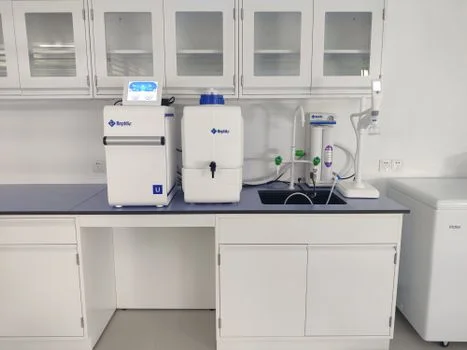
Photoresist strip, etch, and clean wastes need staged pretreatment before membranes see the stream. Rotary drum screens remove more than 95% of suspended solids larger than 50 μm. Chemical precipitation then follows. Chemical dosing systems for fluoride precipitation dose calcium chloride (CaCl2) or lime at a 1.5–2.0× stoichiometric ratio. That step cuts fluoride from about 500 mg/L to less than 10 mg/L ahead of the membrane block.
How does fluoride precipitation work in LED etch waste?
Fluoride precipitation starts with calcium dosing at 1.5–2.0× stoichiometry to form CaF2 solids before RO. Most plants we size for HF etch lines run at the lower end of that range when alkalinity is stable, then polish with membranes. Dissolved air flotation next removes 90–95% of fats, oils, and greases, including residual photoresist polymers that foul RO. Biological polishing through MBR systems for LED wastewater pretreatment uses a 0.1 μm barrier. The target is COD below 50 mg/L and BOD below 10 mg/L before desalination.
Two-stage RO systems for fluoride and heavy metal removal in ZLD reject about 99% of dissolved salts. Permeate conductivity typically stays below 10 μS/cm when feed pretreatment is stable. Evaporative crystallizers then treat RO brine. They recover about 95% of remaining water as distillate and produce salt cake with less than 5% moisture. Integrated heat exchangers cut evaporator energy use by 30–40% versus once-through steam designs on the same brine load.
| Process Stage | Key Equipment | Target Contaminant | Engineering Parameter |
|---|---|---|---|
| Pretreatment | GX Rotary Screen | TSS >50 μm | Removal Rate: >95% |
| Fluoride Removal | Dosing System | Fluoride (F-) | 1.5–2.0x Stoichiometric Ratio |
| Biological | DF Series MBR | COD / TMAH | Pore Size: 0.1 μm |
| Desalination | Two-Stage RO | TDS / Heavy Metals | Rejection Rate: 99.5% |
| Crystallization | MVR Evaporator | Brine / Salts | Water Recovery: 99.9% |
Select thermal, membrane, or hybrid architecture from the TDS profile and organic load. Streams above about 50,000 mg/L TDS usually need a thermal brine finisher. Lower-TDS LED rinses can stay membrane-heavy until the concentrate step.
What ZLD recovery and reuse benchmarks apply?
ZLD recovery benchmarks for LED fab wastewater typically land near 99.9% overall when a crystallizer closes the brine loop, with liquid discharge at or near zero at the battery limit. Thermal systems handle feeds above 50,000 mg/L TDS and can reach 99.9% recovery, but energy intensity runs 80–120 kWh/m³ of feed treated. Scaling from silica or calcium sulfate can cut heat-transfer efficiency by 20–30% if pretreatment slips.
Membrane-based schemes with high-pressure RO and electrodialysis use about 10–20 kWh/m³. They usually stay below 30,000 mg/L feed TDS and recover 90–95% without a crystallizer. TMAH and photoresist residues foul membranes, so plants schedule chemical cleans every 2–4 weeks to hold flux. Hybrid trains (MBR + RO + small crystallizer) hit 99.9% recovery at roughly 30–50 kWh/m³. That is the range most mid-size LED fabs shortlist first for LED wastewater ZLD evaluations.
| Metric | Thermal ZLD | Membrane-Based ZLD | Hybrid ZLD (Recommended) |
|---|---|---|---|
| CapEx (100 m³/h) | $2.5M – $4.5M | $1.2M – $2.8M | $2.0M – $3.5M |
| Energy Consumption | 80–120 kWh/m³ | 10–20 kWh/m³ | 30–50 kWh/m³ |
| Recovery Rate | 99.99% | 90–95% | 99.9% |
| Maintenance Needs | High (Descaling) | Moderate (Cleaning) | Balanced |
What CapEx and OpEx drive a 100 m³/h ZLD plant?
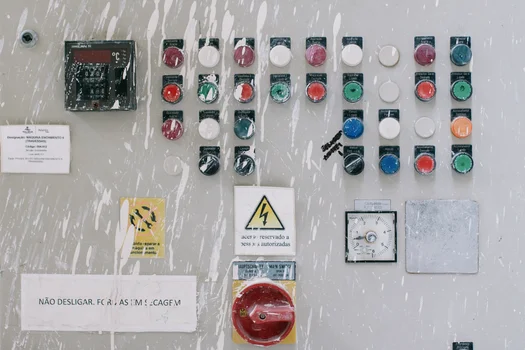
CapEx for a 100 m³/h hybrid train is dominated by evaporation and biology. Pretreatment with DAF and lime dosing for pH adjustment and fluoride precipitation typically runs $300,000–$500,000. MBR packages add $400,000–$700,000; RO skids add $200,000–$400,000. Evaporative crystallizers cost $800,000–$1.5M when titanium or duplex stainless is required for chloride corrosion. Automation and installation usually add another $500,000–$800,000.
OpEx is mostly energy and chemicals. Energy lands near $0.05/m³ on membrane stages and about $0.40/m³ on thermal stages at common industrial power tariffs. CaCl2, antiscalants, and polymers average about $0.12/m³. RO and MBR membrane replacement adds roughly $0.10/m³ over the lifecycle. Dry-salt haul and landfill disposal typically costs $0.02–$0.05/m³.
Against those costs, a 100 m³/h system often saves $850,000–$1.2M per year when local water is about $1.50/m³ and avoided non-compliance exposure is near $250,000/year. At about $3.5M CapEx, payback commonly falls between 2.5 and 4 years for LED manufacturers with stable reuse demand.
Selection checklist before you freeze the P&ID
Confirm these items with measured composite samples, not brochure averages:
- Peak and average fluoride, TMAH, copper, nickel, and TDS by stream.
- Reuse targets (cooling makeup vs. UPW pre-treatment) and conductivity limits.
- Direct vs. indirect discharge path under GB 39731-2020 or 40 CFR 469.
- Available steam, power tariff, and crystallizer materials of construction.
- Solid-salt disposal route and moisture specification (<5% cake).
- Online monitoring points for pH, conductivity, and flow on final distillate and any residual bleed.
- Cleaning frequency budget for RO/MBR under organic-rich LED waste.
Compliance checklist for LED and microelectronics discharge
EHS teams should validate performance against the rule set that actually governs the site. In China, electronic plants follow GB 39731-2020 rather than inorganic-chemical limits. Recovered water must still meet internal UPW or cooling-tower makeup specs to avoid scaling. In the United States, 40 CFR Part 469 Subpart A BAT sets semiconductor fluoride at 32.0 mg/L daily maximum and 17.4 mg/L as a 30-day average. Electronic-crystal subcategory BPT/NSPS also list TSS at 61.0 mg/L daily maximum and 23.0 mg/L as a 30-day average. Earlier secondary summaries that cited 4 mg/L fluoride and 20 mg/L TSS for semiconductors do not match the current eCFR tables.
Keep continuous online pH, conductivity, and flow records. Schedule quarterly third-party checks for Cu, Ni, Zn, and TMAH. Retain Discharge Monitoring Reports and annual impact assessments for NPDES or equivalent EU IED permit files.
Who this is for / Next step
This blueprint fits LED, TFT-LCD, and adjacent microelectronics plants evaluating hybrid trains with fluoride precipitation, MBR, RO, and crystallizers. Municipal-only pretreatment or low-TDS rinse recycling without a brine finisher should look at lighter membrane reuse packages instead. For a site-specific mass balance and budget range, request an engineering quote with your flow and ion profile.
Frequently Asked Questions
What recovery rate do hybrid ZLD trains achieve?
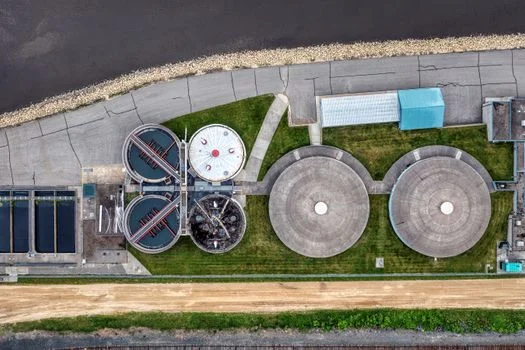
Hybrid trains that combine MBR, RO, and evaporative crystallizers typically achieve about 99.9% water recovery at the battery limit when brine is fully crystallized. Membrane-only schemes without a crystallizer more often land at 90–95% recovery on feeds below about 30,000 mg/L TDS. Actual reuse volume still depends on permeate quality versus cooling or process makeup specs.
How do plants handle fluoride before RO?
Fluoride is first precipitated with calcium chloride or lime at a 1.5–2.0× stoichiometric ratio, lowering levels from hundreds of mg/L to less than 10 mg/L. RO then provides a secondary barrier that can push residual fluoride toward less than 0.5 mg/L in permeate under stable pretreatment. National Chinese electronic-industry limits under GB 39731-2020 remain 10 mg/L direct and 20 mg/L indirect where fluoride is regulated.
What energy does a hybrid ZLD train use?
Energy use depends on architecture: membrane-based schemes typically consume 10–20 kWh/m³, hybrid systems about 30–50 kWh/m³, and full thermal trains about 80–120 kWh/m³ of feed. Heat recovery on evaporators can cut thermal duty by 30–40% versus once-through designs. Fouling or scale that cuts heat-transfer efficiency by 20–30% will raise those figures until cleaning restores surface condition.
How much does a 100 m³/h ZLD package cost?
For 100 m³/h capacity, CapEx ranges from about $1.2M to $4.5M across membrane, hybrid, and thermal options, with hybrid packages often quoted near $2.0M–$3.5M. OpEx generally falls between $0.40 and $0.75 per cubic meter treated when energy, chemicals, membranes, and salt disposal are combined. Payback of 2.5–4 years is common when water tariffs near $1.50/m³ and discharge risk is material.
Which discharge standards should LED fabs design against?
Chinese LED and display plants should design to GB 39731-2020 electronic-industry limits (fluoride 10/20 mg/L direct/indirect where applicable; ammonia nitrogen 25/45 mg/L) plus any tighter local basin rules. U.S. semiconductor discharges reference 40 CFR Part 469, including BAT fluoride limits of 32.0 mg/L daily maximum and 17.4 mg/L as a 30-day average. Always confirm whether the outfall is direct to waters or indirect to a POTW before freezing ELG or pretreatment numbers.