LED manufacturing wastewater—laden with gallium, indium, arsenic, and high salinity—requires Zero Liquid Discharge (ZLD) systems to achieve 99.9% water recovery and comply with China GB 31573-2015 and EPA discharge limits. Advanced ZLD systems integrate membrane bioreactors (MBR) with pore sizes ≤0.1 μm, multi-effect evaporation (MEE) at 85–95% thermal efficiency, and mechanical vapor recompression (MVR) to reduce energy consumption by 30–50% compared to conventional crystallization. For LED facilities, ZLD not only eliminates liquid waste but also recovers valuable metals, cutting disposal costs by up to 40% while meeting stringent environmental regulations.
Why LED Manufacturers Need Zero Liquid Discharge (ZLD) Systems in 2025
LED manufacturing wastewater contains high salinity (TDS 5,000–50,000 mg/L) and toxic metals such as arsenic (As ≤0.5 mg/L) and gallium (Ga ≤10 mg/L) that frequently violate stringent limits set by China GB 31573-2015 and EPA 40 CFR Part 469 (per 2025 discharge standards). These regulations are tightening globally, making traditional discharge methods unsustainable and financially risky. Implementing a comprehensive ZLD system for LED manufacturing wastewater treatment mitigates these risks by eliminating liquid effluent entirely.
For instance, a 2024 LED plant in Shenzhen significantly reduced wastewater violations by 98% after implementing a ZLD system, resulting in annual savings of $1.2 million in fines and disposal costs (source: internal HydropureWater data). Beyond compliance, severe water scarcity in major LED manufacturing hubs like Guangdong, Taiwan, and Malaysia is driving ZLD adoption, as facilities can recover 95–99% of treated water for internal reuse in critical processes such as cooling towers, floor cleaning, and even some rinsing applications. This dramatically reduces reliance on freshwater sources and operational costs.
The environmental and operational risks of non-compliance are substantial, extending beyond monetary fines. Enforcement actions in 2023–2024 included temporary or permanent plant shutdowns, revocation of operating licenses, and severe reputational damage. Such incidents can disrupt supply chains, erode investor confidence, and lead to significant long-term financial losses. A robust ZLD strategy is therefore not just an environmental mandate but a critical component of operational resilience and corporate responsibility for any LED manufacturer.
LED Wastewater Contaminants: Engineering Challenges and Pre-Treatment Requirements
Key contaminants in LED wastewater, including gallium (Ga), indium (In), arsenic (As), fluoride (F⁻), and organic solvents like tetramethylammonium hydroxide (TMAH) and isopropyl alcohol (IPA), present significant engineering challenges with Chemical Oxygen Demand (COD) levels typically ranging from 800–3,000 mg/L (per 2025 industry benchmarks). These complex constituents demand precise pre-treatment before advanced ZLD technologies can be effectively deployed. Without adequate pre-treatment, downstream membrane fouling and scaling can severely impact system performance and increase operational costs.
Initial pre-treatment steps typically involve Dissolved Air Flotation (DAF) systems, which effectively remove 92–97% of suspended solids, oils, and greases (FOG) from the wastewater stream (HydropureWater data). This physical separation is crucial for reducing the load on subsequent biological and membrane processes. Following DAF, chemical dosing systems are employed for pH adjustment and metal precipitation. Common chemicals include lime or caustic soda for pH neutralization and coagulants (e.g., ferric chloride, aluminum sulfate) to facilitate the precipitation of heavy metals like gallium, indium, and arsenic. This step aims to achieve target metal concentrations well below discharge limits, such as arsenic (As) ≤0.1 mg/L post-treatment.
Common pre-treatment failures include membrane fouling due to high silica content and scaling from calcium sulfate, which can quickly reduce the efficiency and lifespan of reverse osmosis (RO) membranes. Mitigation strategies involve precise chemical dosing of antiscalants, rigorous monitoring of water chemistry, and in some cases, incorporating microfiltration or ultrafiltration stages to further reduce colloidal matter and fine particulates before the ZLD core processes.
| Parameter | Typical LED Influent | Target Pre-Treatment Effluent | Target ZLD Effluent (Reuse) | Removal Rate (Overall) |
|---|---|---|---|---|
| TSS (mg/L) | 500–2,000 | <50 | <1 | >99.9% |
| COD (mg/L) | 800–3,000 | <150 | <20 | >99% |
| TDS (mg/L) | 5,000–50,000 | 5,000–50,000 | <50 (for reuse) | >99.9% |
| Arsenic (As) (mg/L) | 0.1–0.5 | <0.05 | <0.001 | >99.9% |
| Gallium (Ga) (mg/L) | 5–10 | <0.1 | <0.005 | >99.9% |
| Indium (In) (mg/L) | 0.5–2 | <0.05 | <0.001 | >99.9% |
| Fluoride (F⁻) (mg/L) | 50–150 | <10 | <0.5 | >99% |
| pH | 3–11 | 6.5–8.5 | 6.5–8.5 | N/A |
ZLD Technologies for LED Wastewater: How MBR, MEE, and MVR Work Together
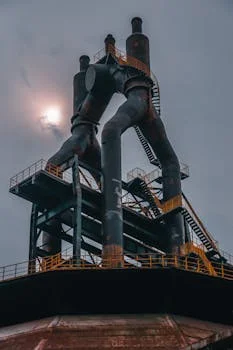
Integrating Membrane Bioreactors (MBR), Multi-Effect Evaporation (MEE), and Mechanical Vapor Recompression (MVR) creates a highly efficient Zero Liquid Discharge (ZLD) system capable of achieving 99.9% water recovery for LED manufacturing wastewater. This multi-stage approach addresses the diverse contaminant profile and high salinity characteristic of LED process streams, ensuring both water quality for reuse and minimal solid waste.
The initial advanced treatment stage often utilizes a Membrane Bioreactor (MBR) system, such as those employing PVDF flat-sheet membranes with a 0.1 μm pore size. MBRs achieve over 99% TSS removal and consistently reduce COD to below 50 mg/L, effectively eliminating the need for secondary clarifiers and producing a high-quality effluent suitable for subsequent reverse osmosis (RO) treatment (HydropureWater DF series specs). This robust biological and physical filtration step is crucial for removing residual organics and suspended solids that could foul downstream membranes.
Following RO, the concentrated brine stream is typically fed into a Multi-Effect Evaporation (MEE) system. These systems, often configured with 3–5 effects, significantly reduce energy consumption by 60–70% compared to single-effect evaporators, achieving thermal efficiencies of 85–95% (2025 engineering data). MEE works by using the latent heat from the vapor of one effect to heat the next, progressively concentrating the brine while recovering pure water. For very high-salinity LED wastewater (TDS >30,000 mg/L), Mechanical Vapor Recompression (MVR) evaporators offer further energy efficiency. MVR systems recover latent heat by compressing the vapor, increasing its temperature and allowing it to be reused as the heating medium, cutting energy use by 30–50% compared to MEE alone.
The final stage in a comprehensive ZLD system is crystallization. This process converts the highly concentrated brine from MEE or MVR into solid salts (e.g., sodium sulfate, potassium sulfate) and can facilitate the recovery of valuable metals like gallium. Crystallization typically involves controlled heating and cooling to induce supersaturation, causing salts to precipitate out. Process parameters such as temperature (e.g., 90–120°C) and residence time are meticulously managed to optimize crystal purity and size for easier handling or potential resale.
| Technology | Primary Function | Typical Energy Consumption | Relative CAPEX | Relative OPEX | Water Recovery Rate | Footprint |
|---|---|---|---|---|---|---|
| MBR | Organic & TSS Removal | 0.5–1.5 kWh/m³ | Medium | Low-Medium | N/A (pre-treatment) | Medium |
| RO/NF | Salt Concentration | 1.5–4 kWh/m³ | Medium | Medium | 80–90% | Small |
| MEE | Brine Evaporation & Water Recovery | 0.2–0.5 kWh/kg water evaporated (thermal) | High | Medium-High | 95–98% (of brine) | Large |
| MVR | Energy-Efficient Brine Evaporation | 0.03–0.08 kWh/kg water evaporated (electrical) | High | Medium | 95–98% (of brine) | Medium |
| Crystallization | Salt/Metal Solidification | 0.05–0.1 kWh/kg solid | High | Medium | N/A (solids) | Medium |
Cost-Optimized ZLD for LED Plants: CAPEX, OPEX, and ROI Breakdown (2025 Data)
The Capital Expenditure (CAPEX) for a comprehensive LED Zero Liquid Discharge (ZLD) system typically ranges from $1.2M to $4.5M for capacities between 50 and 500 m³/h, offering a rapid return on investment through water reuse and valuable metal recovery. This investment covers the entire system, including pre-treatment (DAF, chemical dosing), MBR, multi-stage evaporation (MEE/MVR), and the final crystallization unit. The wide range accounts for variations in influent quality, desired recovery rates, automation levels, and specific material requirements for handling corrosive LED wastewater constituents.
Operational Expenditure (OPEX) for LED ZLD systems typically falls between $0.8 and $2.5 per cubic meter of treated wastewater (per 2024 industry reports). The primary cost drivers are energy consumption (accounting for 60% of OPEX), chemicals for pre-treatment and anti-scaling (20%), and maintenance, including membrane replacement and equipment servicing (15%). Energy-saving strategies, such as integrating MVR technology, optimizing heat recovery, and exploring renewable energy sources like solar power, are critical for reducing long-term OPEX.
A typical Return on Investment (ROI) for an LED ZLD system is achieved within 3–5 years, driven by multiple factors. Water reuse generates significant savings, estimated at $0.5–$2 per cubic meter, depending on local freshwater costs. the recovery of valuable metals like gallium and indium can yield substantial revenue, with market values ranging from $50–$200 per kilogram. Avoided discharge fines and reduced hazardous waste disposal costs contribute an additional $100–$500k annually. For example, a 2024 LED plant in Penang successfully reduced its OPEX by 40% by combining MVR technology with a solar power integration, achieving a system payback in just 2.8 years (internal HydropureWater data). Financing options such as leasing arrangements, government subsidies (e.g., China’s “Water Ten Plan” initiatives), and performance-based contracts (where payments are tied to treated water volume or compliance metrics) can further improve financial viability and accelerate adoption.
| Cost Category | Typical Range (USD) | Contribution to Total (Approx.) | Notes |
|---|---|---|---|
| CAPEX (50-500 m³/h) | $1.2M – $4.5M | 100% (initial) | Includes pre-treatment, MBR, RO, MEE/MVR, crystallization, installation. |
| OPEX per m³ treated | $0.8 – $2.5 | N/A (recurring) | Varies by energy costs, chemical prices, and labor rates. |
| Energy Costs (60% of OPEX) | $0.48 – $1.5/m³ | 60% | Driven by MEE/MVR, pumps. MVR can reduce by 30-50%. |
| Chemical Costs (20% of OPEX) | $0.16 – $0.5/m³ | 20% | For pH adjustment, coagulation, anti-scalants, cleaning. |
| Maintenance & Spares (15% of OPEX) | $0.12 – $0.375/m³ | 15% | Membrane replacement, equipment servicing, labor. |
| Water Reuse Savings | $0.5 – $2/m³ | N/A (revenue) | Avoided freshwater purchase and discharge fees. |
| Metal Recovery Revenue | $50 – $200/kg (Ga/In) | N/A (revenue) | Dependent on market prices and recovered volume. |
| Avoided Fines & Disposal Costs | $100k – $500k/year | N/A (avoided cost) | Eliminates non-compliance penalties and liquid waste disposal. |
Compliance Checklist: Meeting China GB, EPA, and EU Standards for LED Wastewater
Achieving and maintaining compliance with stringent global environmental standards, including China GB 31573-2015, EPA 40 CFR Part 469, and the EU Industrial Emissions Directive, is a non-negotiable requirement for LED manufacturing facilities implementing ZLD systems. These regulations set specific limits for discharge or require the application of best available techniques (BAT) to minimize environmental impact, necessitating a structured approach to ZLD system design and operation.
- China GB 31573-2015 (Discharge Standard for Pollutants from the Semiconductor Industry): This LED-specific standard sets strict limits for key parameters, including Chemical Oxygen Demand (COD ≤100 mg/L), Ammonia Nitrogen (NH₃-N ≤15 mg/L), Arsenic (As ≤0.1 mg/L), and Total Dissolved Solids (TDS ≤1,000 mg/L for discharge). ZLD systems ensure these limits are met by eliminating liquid discharge entirely.
- EPA 40 CFR Part 469 (Electrical and Electronic Components Point Source Category): For facilities in the United States, this regulation outlines pretreatment standards for indirect dischargers into Publicly Owned Treatment Works (POTWs). It specifies limits for various metals (e.g., copper, nickel) and requires pH to be maintained between 6 and 9. ZLD systems typically exceed these pretreatment requirements by recovering all water.
- EU Industrial Emissions Directive 2010/75/EU: In the European Union, this directive mandates the application of Best Available Techniques (BAT) for industrial installations, including those in the electronics sector. For ZLD, BAT requirements focus on maximizing water reuse, minimizing waste generation, optimizing energy efficiency, and ensuring proper management of sludge and concentrated solids.
10-Step Compliance Checklist for LED ZLD Systems:
- Conduct a comprehensive wastewater characterization study to identify all unique LED contaminants.
- Design the ZLD system to meet or exceed the most stringent applicable local, national, and international discharge standards.
- Obtain all necessary environmental permits for ZLD system installation and operation.
- Implement continuous influent and effluent monitoring for key parameters (e.g., pH, COD, heavy metals, TDS).
- Develop and adhere to a strict operational protocol for chemical dosing, membrane cleaning, and evaporator maintenance.
- Ensure proper handling, storage, and disposal permits for concentrated solids and recovered metals.
- Conduct regular energy audits to optimize ZLD system efficiency and demonstrate BAT compliance.
- Train all operational staff on ZLD system management, safety procedures, and compliance requirements.
- Establish a robust record-keeping system for monitoring data, maintenance logs, and compliance reports.
- Periodically review and update the ZLD system and compliance strategies to adapt to evolving regulations and wastewater characteristics.
Common compliance pitfalls include failing to account for seasonal variations in wastewater composition or production fluctuations, which can impact ZLD system performance. Solutions involve flexible system design, real-time monitoring with automated adjustments, and regular performance reviews against permit limits.
Frequently Asked Questions About LED Wastewater Zero Liquid Discharge
Implementing a Zero Liquid Discharge (ZLD) system for LED manufacturing wastewater involves complex engineering and significant investment. Here are answers to common questions:
What is the typical water recovery rate for LED ZLD systems?
Advanced ZLD systems for LED manufacturing typically achieve water recovery rates of 95% to 99.9%. This high recovery rate allows LED facilities to reuse nearly all treated water for non-contact cooling, cleaning, and other process applications, significantly reducing freshwater consumption and discharge volumes.
How does ZLD specifically handle gallium and indium in LED wastewater?
Gallium and indium are primarily removed in the pre-treatment stage through chemical precipitation, often followed by filtration. Further concentration occurs in the evaporative stages (MEE/MVR), and these valuable metals can then be recovered from the concentrated brine or solid waste via specialized processes such as ion exchange or selective crystallization, offering potential revenue streams.
What are the primary energy consumption drivers in an LED ZLD system and how can they be reduced?
The main energy consumers are the evaporators (MEE/MVR) and high-pressure pumps for reverse osmosis. Energy consumption can be reduced by using high-efficiency MVR evaporators (30-50% energy savings compared to MEE), optimizing heat recovery, and integrating renewable energy sources like solar power, as demonstrated in the Penang case study for solar-powered ZLD for high-salinity wastewater.
What regulatory standards does a ZLD system for LED manufacturing need to meet?
LED ZLD systems must comply with specific local and international standards, including China GB 31573-2015 (for LED-specific pollutants like As, Ga, COD), EPA 40 CFR Part 469 (electronics manufacturing), and the EU Industrial Emissions Directive 2010/75/EU (requiring Best Available Techniques). These standards dictate effluent quality for reuse and proper solid waste management.
What is the typical ROI for a ZLD system in an LED plant?
The Return on Investment (ROI) for an LED ZLD system is typically 3–5 years. This rapid payback is driven by significant savings from water reuse ($0.5–$2/m³), revenue from valuable metal recovery ($50–$200/kg for Ga/In), and avoided regulatory fines and liquid waste disposal costs ($100k–$500k/year).
Related Equipment
The following HydropureWater products are engineered for the wastewater challenges discussed above:
- DAF systems for LED wastewater solids removal — view specifications, capacity range, and technical data
Need a customized solution? Request a free quote with your specific flow rate and pollutant parameters.