LED UV disinfection delivers 99.9% (3-log) pathogen kill for wastewater reuse at 20–40 mJ/cm² fluence, 10–30 s contact time, and 0.05–0.1 kWh/m³—about 30% less energy than LPUV—with LED life exceeding 50,000 hours.
Why are industrial plants specifying LED UV for wastewater reuse?
Water scarcity drives 15% annual growth in industrial water reuse, creating demand for disinfection that meets reuse limits without chemical residuals (UN Water 2024). The EPA’s 2025 Water Reuse Action Plan specifies a minimum 3-log (99.9%) pathogen reduction for non-potable reuse, which sets the performance floor for cooling-tower makeup, process water, and irrigation.
A semiconductor fabrication plant in the arid Southwestern United States faced rising water costs and tight discharge limits on cooling-tower blowdown and process wastewater. After LED UV was added to the treatment train, the facility achieved a 3-log coliform reduction and reused treated effluent for cooling-tower makeup and facility washdown. Freshwater intake fell 22%, and chlorine dosing was removed, eliminating chemical residuals and handling costs. The same approach applies in LED UV in display panel wastewater reuse and other industrial reuse trains.
Chlorine is low-cost but forms disinfection byproducts (DBPs) and often needs dechlorination. Ozone is a strong oxidant but is energy-intensive and requires on-site generation, with no lasting residual. Conventional low-pressure (LPUV) and medium-pressure (MPUV) mercury lamps work but have shorter lamp life, higher energy use, and warm-up delay. LED UV provides instant on/off, lower specific energy, and a compact reactor footprint for reuse duty.
How do LED UV, LPUV, and MPUV compare on fluence, energy, and cost?
For industrial reuse needing 3-log pathogen reduction, LED UV typically requires 20–40 mJ/cm² for E. coli, versus 25–50 mJ/cm² for LPUV and 50–80 mJ/cm² for MPUV (Top 5 study, 2022). These doses sit in the same design band used in UV disinfection fundamentals for wastewater reuse.
Specific energy for treated secondary effluent is typically 0.05–0.1 kWh/m³ for LED UV—about 30% below LPUV (0.08–0.15 kWh/m³) and well below MPUV (0.15–0.25 kWh/m³). Solid-state LEDs exceed 50,000 hours of life, versus 8,000–12,000 hours for LPUV and 4,000–6,000 hours for MPUV, which cuts lamp changes and labor.
CapEx for LED UV can be higher than mercury systems, but 10-year total cost of ownership is usually lower because of energy and maintenance. Comparative ranges:
| Technology | Fluence (mJ/cm²) for 3-log E. coli | Energy (kWh/m³) | Lifespan (hours) | CapEx ($/m³/h) | OPEX ($/m³) |
|---|---|---|---|---|---|
| LED UV | 20–40 | 0.05–0.1 | 50,000+ | $1,600–$5,000 | $0.02–$0.05 |
| LPUV | 25–50 | 0.08–0.15 | 8,000–12,000 | $1,200–$3,500 | $0.04–$0.08 |
| MPUV | 50–80 | 0.15–0.25 | 4,000–6,000 | $1,000–$3,000 | $0.06–$0.12 |
What fluence, contact time, and reactor design does reuse require?
Pathogen-specific fluence and contact time drive reactor volume and hydraulic design. Typical targets for industrial wastewater disinfection:
| Pathogen | Log Reduction Target | Fluence (mJ/cm²) | Contact Time (s) | Notes |
|---|---|---|---|---|
| E. coli | 3-log (99.9%) | 20–30 | 10–20 | Common indicator for bacterial disinfection |
| Cryptosporidium parvum | 2-log (99%) | 12–19 | ~15 | Highly resistant protozoan, low fluence effective |
| MS2 Phage | 4-log (99.99%) | 60–80 | 25–30 | Viral surrogate, higher fluence required |
These fluence values (per EPA 2025 guidelines) set the dose for validated log reduction. Contact time is commonly 10–30 seconds for 3-log reduction in well-treated secondary effluent and is fixed by reactor volume and flow. Example: at 100 m³/h (≈27.8 L/s) with 15 s contact time, reactor volume is about 417 liters (27.8 L/s × 15 s).
Design targets include pressure drop below 0.5 bar and UV intensity coefficient of variation (CoV) below 10% so every flow path receives the design fluence. CFD is used to check velocity and intensity fields. Self-cleaning quartz sleeves—mechanical wipers or chemical clean cycles—limit fouling when UV transmittance varies. Modules typically cover 10–1,000 m³/h; higher duty uses parallel trains. A common reuse sequence is: influent → ultrafiltration or MBR systems for LED UV pretreatment → LED UV reactor → optional residual with chlorine dioxide for post-UV residual disinfection → reuse storage or direct use.
How should LED UV be integrated into a ZLD train?
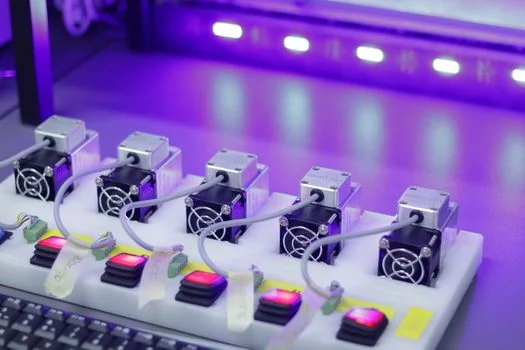
In Zero Liquid Discharge (ZLD) trains, LED UV disinfects high-quality permeate before cooling, irrigation, or process reuse. Feed to the UV reactor should stay below turbidity <10 NTU, TSS <20 mg/L, and COD <50 mg/L to limit sleeve fouling and UV shadowing. Place LED UV after MBR or RO systems for ZLD integration with LED UV. A common three-stage sequence is MBR → RO → LED UV → reuse.
For a plant treating 500 m³/h, LED UV can cut ZLD energy costs by 15–20% annually versus relying on thermal disinfection for selected reuse streams. CapEx for MBR + RO + LED UV at 500 m³/h is typically $3–$8 million, versus $5–$12 million for a thermal ZLD package when long-run energy is included.
Reuse destinations after disinfection commonly break down as:
- Cooling towers: about 50% of industrial reuse volume, where disinfected water limits biofouling.
- Irrigation: about 30% for landscape or agricultural use under public-health limits.
- Process water: about 20% for washdowns, boiler feed (with further polishing), or process steps.
Decision checks before specifying LED UV in ZLD:
- Is turbidity, TSS, and COD consistently low after MBR/RO? If yes, proceed; if no, fix pretreatment first.
- Are energy use and OPEX primary constraints? If yes, LED UV usually beats thermal or mercury UV on specific energy and lamp life.
- Must disinfection be chemical-free (sensitive process water or cooling circuits that cannot accept residuals)? If yes, LED UV leaves no DBPs; if residuals are required, add a controlled residual downstream.
What failures show up on LED UV systems, and how do you correct them?
Most reuse upsets track to sleeve fouling, module failure, dose shortfall, or controls—not to the LED principle itself. Use the table below for symptom → cause → fix → prevention.
| Problem | Symptoms | Root Cause | Solution | Prevention |
|---|---|---|---|---|
| Fouling of Quartz Sleeves | Reduced UVT (UV Transmittance), increased pressure drop across reactor, visible film/scale on sleeves, decreased log reduction. | High TSS, scaling (calcium, magnesium), organic buildup, biofilm formation. | Activate automatic wipers (if installed), perform chemical cleaning (acid wash for scale, caustic for organics), manual cleaning. | Optimize pre-filtration (<10 NTU, <20 mg/L TSS), adjust water chemistry (e.g., anti-scalants), regular cleaning cycles. |
| LED Module Failure | Reduced UV output from specific modules, alarm triggers (low UV intensity), visible unlit LEDs, decreased log reduction. | Power surges, thermal stress (inadequate cooling), manufacturing defect, end of lifespan. | Replace faulty LED module(s), check power supply and cooling system. | Install surge protectors, ensure proper thermal management (airflow/cooling fluid), adhere to recommended LED replacement schedules. |
| Performance Drops (Low Log Reduction) | Effluent pathogen counts exceed limits, online UV sensor readings are low, unexpected post-UV bacterial regrowth. | Aging LEDs (reduced intensity), sensor drift/fouling, incorrect flow rate, poor pre-treatment quality, improper calibration. | Calibrate UV sensors, verify flow rate, inspect pre-treatment efficacy, replace aged LEDs, re-validate system performance. | Regular sensor calibration, routine pre-treatment monitoring, scheduled LED output verification, maintain optimal flow rates. |
| Control System Errors | System alarms, unexpected shutdowns, inability to adjust parameters, communication failures. | Software glitches, sensor malfunctions, electrical issues, operator error. | Reset system, check sensor connections, verify power supply, consult manual or technical support. | Regular software updates, preventive maintenance on electrical components, operator training. |
Trend UV intensity, flow, and pretreatment quality continuously. Scheduled sleeve cleaning and sensor calibration keep delivered fluence at the design 20–40 mJ/cm² band for 3-log reuse duty.
What do process engineers ask before buying LED UV for reuse?
What is the typical lifespan of LED UV lamps?
LED UV lamps typically exceed 50,000 hours—about five to ten times longer than low-pressure mercury lamps—so replacement frequency and related labor drop over the asset life.
How does turbidity affect LED UV performance?
High turbidity shields organisms from UV. Hold turbidity below 10 NTU and TSS below 20 mg/L so the design fluence reaches the target organisms.
Can LED UV systems achieve potable reuse standards?
LED UV is effective for non-potable reuse (irrigation, cooling towers, process water). Potable reuse usually needs a multi-barrier train—often advanced oxidation and further filtration plus UV—for trace organics and viral inactivation.
Are there any chemical residuals from LED UV disinfection?
No. LED UV is a physical process: it adds no chemicals, forms no DBPs, and needs no dechlorination step.
What maintenance is required for LED UV systems?
Core tasks are quartz-sleeve cleaning (often automated), periodic UV-sensor calibration, and checks of power and cooling so output stays within the validated dose window.
Who this is for / Who should look elsewhere / Next step
This guidance is for plant owners and process engineers sizing chemical-free disinfection after MBR/RO for non-potable reuse or ZLD permeate. Facilities that cannot hold turbidity <10 NTU and TSS <20 mg/L, or that need a lasting disinfectant residual without a separate residual stage, should look elsewhere or fix pretreatment first. Next step: confirm pathogen log targets, measure UVT and flow, then size fluence (20–40 mJ/cm² for 3-log E. coli) and reactor volume against the 10–30 s contact-time band.