LED manufacturing wastewater must meet stringent discharge standards, including EPA’s BAT limits (e.g., COD ≤ 125 mg/L, TSS ≤ 30 mg/L) and China’s GB 31573-2015 (e.g., fluoride ≤ 10 mg/L for display panels). UV-C LED systems achieve >3-log coliform reduction at 28–148 mJ/cm² fluence, offering a zero-chemical alternative to chlorine disinfection while reducing energy costs by 30–50% vs. conventional UV lamps.
Why LED Wastewater Discharge Standards Are Tightening in 2025
Global regulatory bodies have updated industrial effluent guidelines for 2025 to address high concentrations of persistent pollutants in semiconductor and display panel manufacturing.The EPA’s 2024 Best Available Technology (BAT) limits for semiconductor plants now mandate COD ≤ 125 mg/L and TSS ≤ 30 mg/L to prevent discharge of complex organic solvents and photoresist stripping agents into municipal systems. These limits are technology-based, meaning they represent the highest level of pollutant reduction economically achievable through modern treatment trains like UV-C LED and advanced oxidation.
In Asia, which hosts the majority of the world's display panel production, China’s GB 31573-2015 standard remains the benchmark for TFT-LCD plants, enforcing strict limits of fluoride ≤ 10 mg/L and copper ≤ 0.5 mg/L. Compliance is no longer a suggestion; in 2023, a major TFT-LCD plant in East Asia was fined $2.1M for repeated fluoride exceedances, highlighting the financial risk of relying on legacy chemical precipitation methods alone. The EU Urban Waste Water Directive 91/271/EEC has intensified requirements for plants discharging into "sensitive areas," lowering BOD limits to ≤ 25 mg/L and nitrogen to ≤ 15 mg/L.
The tightening of these standards is driven by the toxicity of microelectronics wastewater. Beyond standard organic loads, the presence of heavy metals (nickel, copper) and inorganic ions (fluoride) requires a multi-stage treatment approach. UV-C LED technology has emerged as a critical component in these systems, particularly for tertiary disinfection and the breakdown of complex organics that conventional biological treatments fail to neutralize. By integrating UV-C LED, plants can meet these 2025 standards without the secondary pollution risks associated with bulk chlorine storage or mercury-based lamps.
UV-C LED vs. Conventional UV: Fluence, Log Reduction & Energy Costs
The comparison between UV-C LED and conventional UV systems reveals significant differences in fluence, log reduction, and energy costs.UV-C LED systems operate within a fluence range of 28–148 mJ/cm², providing comparable or superior disinfection efficacy to low-pressure mercury lamps which typically deliver 30–120 mJ/cm² (per EPA 2023 guidelines). A 2024 NIH study demonstrated that full-scale UV-C LED reactors achieve an average >3-log coliform reduction at flow rates of 545 m³/day. In contrast, conventional UV systems often struggle to maintain a 2.5-log reduction at higher flow rates (e.g., 800 m³/day) due to the "shadowing" effects of bulkier lamp architectures and slower warm-up times.
The energy profile of UV-C LED represents a significant shift in operational expenditure. Research from Washington University indicates that UV-C LED treatment costs range from $0.02 to $0.05 per m³, whereas conventional UV lamps cost between $0.04 and $0.10 per m³ when accounting for energy consumption and frequent lamp replacements. The solid-state nature of LEDs allows for instantaneous on/off cycling, meaning the system only draws power when wastewater is actively flowing, unlike mercury lamps that must remain powered to maintain operating temperature.
Maintenance and environmental safety further differentiate these technologies. Conventional UV lamps contain mercury, classified as EPA Hazardous Waste No. D009, requiring specialized disposal protocols and risking site contamination if a lamp breaks. UV-C LEDs are mercury-free and boast a lifespan of 50,000 hours, compared to the 8,000–12,000 hours typical of conventional lamps. This 4x increase in longevity significantly reduces the total cost of ownership (TCO) by minimizing labor-intensive maintenance windows.
| Parameter | UV-C LED System | Conventional UV (Low-Pressure) |
|---|---|---|
| Fluence Range | 28–148 mJ/cm² (NIH Study) | 30–120 mJ/cm² (EPA 2023) |
| Log Reduction (Coliform) | >3-log @ 545 m³/day | ~2.5-log @ 800 m³/day |
| Energy Cost (per m³) | $0.02 – $0.05 | $0.04 – $0.10 |
| Operational Lifespan | Up to 50,000 Hours | 8,000 – 12,000 Hours |
| Hazardous Materials | None (Mercury-Free) | Mercury (EPA D009 Waste) |
LED Wastewater Discharge Limits: EPA, EU & China GB Standards Compared
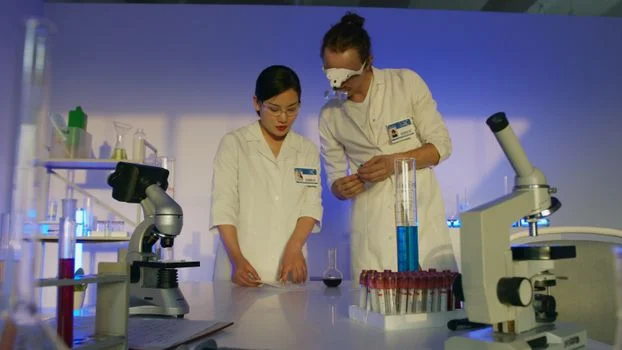
China’s GB 31573-2015 standard for TFT-LCD plants enforces strict limits of fluoride ≤ 10 mg/L and copper ≤ 0.5 mg/L. The EPA’s BAT standards for semiconductors focus on total suspended solids and organic loads, with COD ≤ 125 mg/L and TSS ≤ 30 mg/L. The European Union’s Urban Waste Water Directive (91/271/EEC) focuses on nutrient removal (nitrogen and phosphorus) to prevent eutrophication in receiving waters, with BOD limits ≤ 25 mg/L and nitrogen ≤ 15 mg/L.
Engineers must design treatment trains that are flexible enough to meet the strictest of these overlapping standards, especially for multinational corporations operating across different regulatory jurisdictions.
| Pollutant | EPA BAT (Semiconductor) | EU 91/271/EEC (Sensitive) | China GB 31573-2015 (TFT-LCD) |
|---|---|---|---|
| COD | ≤ 125 mg/L | ≤ 125 mg/L | ≤ 80 mg/L |
| BOD | N/A (Permit specific) | ≤ 25 mg/L | ≤ 20 mg/L |
| TSS | ≤ 30 mg/L | ≤ 35 mg/L | ≤ 30 mg/L |
| Fluoride | N/A (Permit specific) | N/A | ≤ 10 mg/L |
| Copper | N/A (Permit specific) | N/A | ≤ 0.5 mg/L |
| pH | 6.0 – 9.0 | N/A | 6.0 – 9.0 |
UV-C LED Treatment Blueprint: Step-by-Step Compliance for LED Plants
Achieving zero-risk compliance in an LED manufacturing facility requires a multi-stage treatment train.The process begins with effective solids management using a DAF system for TSS removal in LED wastewater allows for 92–97% efficiency in removing suspended solids and emulsified oils. Reducing TSS is critical for UV efficacy; high turbidity can shield pathogens and organic molecules from UV radiation, necessitating a higher fluence to achieve the same log reduction.
Following pre-treatment, the wastewater enters the UV-C LED disinfection chamber. For 3-log coliform reduction, a target fluence of ≥ 100 mJ/cm² is recommended based on NIH 2024 performance data. This stage not only disinfects but can also be combined with hydrogen peroxide (H2O2) for Advanced Oxidation Processes (AOP) to degrade recalcitrant organics. For plants targeting water reuse, a MBR systems for water reuse in microelectronics plants can follow the UV stage, reducing COD to ≤ 50 mg/L and providing high-quality permeate for non-critical facility use.
The final stage focuses on inorganic recovery and polishing. Implementing RO systems for fluoride recovery in display panel wastewater ensures that fluoride levels drop well below the GB 31573-2015 limit of 10 mg/L, achieving up to 99.9% removal. For a 100 m³/h plant, the CAPEX for such a comprehensive system in 2025 typically ranges from $230,000 to $1,000,000, depending on the complexity of the organic load. Continuous monitoring via online TSS, pH, and UV transmittance (UVT) meters is essential to automate the system and ensure the UV-C LED fluence scales with real-time water quality fluctuations.
How to Select a UV-C LED System: Decision Framework for Engineers
The primary design parameter is the "Design UVT" (UV Transmittance), which dictates the required fluence. Engineers should also prioritize systems with integrated thermal management, as LED efficiency is highly dependent on keeping the junction temperature low.
Maintenance protocols should be a deciding factor. Unlike mercury lamps, UV-C LEDs do not suffer from "solarization" of the quartz sleeve to the same degree, but fouling still occurs. Systems equipped with automated mechanical wiping or self-cleaning quartz sleeves significantly reduce OPEX compared to manual acid-cleaning regimes. When evaluating vendors, request a 50,000-hour warranty on the LED modules and verify that the system includes remote monitoring capabilities for real-time dose pacing based on flow and UVT sensor inputs.
| Selection Criteria | Requirement for LED Plants | Evaluation Metric |
|---|---|---|
| Target Fluence | ≥ 100 mJ/cm² | Achieves 3-log reduction of coliform |
| Energy Efficiency | ≤ 0.05 kWh/m³ | Operational cost comparison vs. LP UV |
| Thermal Management | Active Cooling (Liquid or Fan) | Maintains LED junction < 60°C |
| Automation | Dose Pacing & Self-Cleaning | Reduction in manual maintenance hours |
| Certifications | EPA / NSF / CE | Third-party validation of performance |
Frequently Asked Questions
What is the required UV-C LED fluence for LED wastewater compliance? A fluence of 100 mJ/cm² is typically required to achieve a 3-log coliform reduction and assist in the breakdown of residual organic solvents, according to 2024 NIH studies on full-scale LED reactors.
How does UV-C LED reduce energy costs compared to traditional UV? UV-C LED systems reduce energy costs by 30–50% because they offer instantaneous on/off capabilities and higher electrical-to-optical efficiency, resulting in costs as low as $0.02–$0.05 per m³.
What are the main discharge limits for TFT-LCD plants in 2025? The primary limits include China’s GB 31573-2015 (Fluoride ≤ 10 mg/L,