Sarawak’s Municipal Sewage Treatment Landscape: 2025 Challenges and Goals
Industrial water demand in Kuching is projected to reach double 2014 levels by 2030, necessitating a rapid transition from decentralized septic systems to high-capacity centralized treatment infrastructure. Sarawak’s municipal sewage treatment strategy currently focuses on the construction of 14 new plants designed to treat 90% of Kuching’s wastewater, a significant increase from the historical coverage of approximately 60%. This expansion is driven by the Sarawak Sewerage Services Department’s mandate to protect riverine water sources, which provide the bulk of the region's potable water supply.
The primary regulatory benchmark for these new installations is Malaysia’s Standard A effluent quality, which mandates Chemical Oxygen Demand (COD) levels ≤ 50 mg/L and Total Suspended Solids (TSS) ≤ 20 mg/L. While individual septic tanks (ISTs) remain common in older residential areas, they consistently fail to meet these stringent standards, leading to nutrient loading in local water bodies. Engineers must now navigate the technical trade-offs between various secondary and tertiary treatment technologies to ensure long-term compliance and operational viability.
Key environmental factors in Sarawak introduce specific engineering hurdles. The region’s high relative humidity accelerates the corrosion of mechanical components, while the tropical monsoon season creates high influent flow variability, with peak flows often reaching 1.5 times the average dry weather flow (ADWF). urban land scarcity in Kuching and Miri exerts pressure on plant footprints, favoring technologies that offer high volumetric loading rates. Procurement managers must prioritize equipment that integrates high levels of automation to mitigate rising labor costs and the logistical challenges associated with maintaining remote sites in Sibu or Bintulu.
Treatment Technologies Compared: MBR vs. Activated Sludge vs. IDEA for Sarawak’s Conditions
Activated sludge systems currently operating in Kuching and Sibu maintain an OPEX approximately 30% lower than membrane-based alternatives, though they require significantly more land for secondary clarifiers. In Sarawak’s municipal sector, the traditional activated sludge process operates with a footprint requirement of roughly 1.2 m²/m³ of treated water. While cost-effective for large-scale projects where land is available, the process often struggles to meet the < 0.2 NTU turbidity requirements necessary for industrial water reuse without additional tertiary filtration stages.
Membrane Bioreactor (MBR) technology has emerged as the preferred solution for urban Sarawak due to its 60% smaller footprint (0.5 m²/m³) and superior effluent quality. By replacing secondary clarifiers with membrane filtration, MBR systems for Sarawak’s municipal sewage treatment produce water that meets industrial reuse standards directly. However, engineers must account for membrane replacement costs, which typically average $0.15/m³ of treated effluent. For a deeper understanding of these mechanics, engineers should review a detailed MBR engineering process for Sarawak’s conditions to optimize flux rates against local humidity-induced fouling risks.
Intermittent Decanted Extended Aeration (IDEA) systems offer a middle ground, particularly for institutional sites like Curtin University Sarawak. IDEA systems function as a variant of the SBR (Sequencing Batch Reactor) process, combining aeration and settlement in a single tank. This configuration achieves energy savings of approximately 20% compared to conventional activated sludge, with typical consumption rates of 0.35 kWh/m³. In Sarawak’s aggressive tropical climate, the choice of materials is as vital as the process itself; utilizing 316L stainless steel for submerged components can add 15% to initial CAPEX but extends the equipment lifespan by over a decade by resisting pitting corrosion.
| Parameter | Activated Sludge (AS) | MBR System | IDEA System |
|---|---|---|---|
| Effluent Quality (TSS) | < 20 mg/L | < 1 mg/L | < 15 mg/L |
| Footprint Requirement | 1.2 m²/m³ | 0.5 m²/m³ | 0.8 m²/m³ |
| Energy Use (kWh/m³) | 0.45 | 0.60 | 0.35 |
| Sludge Production | High (0.4 kg/kg BOD) | Low (0.15 kg/kg BOD) | Moderate (0.25 kg/kg BOD) |
| Suitable Application | Large-scale regional plants | Urban reuse / Industrial zones | Universities / Small townships |
Engineering Specifications for Sarawak Municipal Plants: Influent, Effluent, and Process Parameters
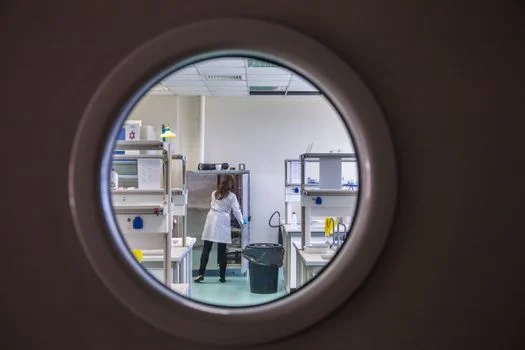
Typical influent at the Kuching Centralised WWTP exhibits COD concentrations ranging from 300 to 600 mg/L and BOD levels between 150 and 300 mg/L, reflecting the mixture of domestic sewage and light industrial discharge. These parameters serve as the baseline for sizing biological reactors across Sarawak. Because of the high ambient temperatures (average 27°C–32°C), biological reaction rates are accelerated, which can lead to rapid oxygen depletion if aeration systems are not sized with a safety factor of at least 1.2. Engineers must design for hydraulic loading rates (HLR) of 0.5–1.0 m³/m²·h for activated sludge and 0.8–1.5 m³/m²·h for MBR systems to prevent biomass washout during heavy rain events.
Sludge management is a significant OPEX driver in Sarawak, with production rates varying by technology. Activated sludge processes generate approximately 0.3–0.5 kg of TSS per kg of BOD removed, requiring extensive dewatering and stabilization. In contrast, MBR systems operate at higher Mixed Liquor Suspended Solids (MLSS) concentrations (8,000–12,000 mg/L), which promotes endogenous respiration and reduces sludge yield to 0.1–0.2 kg TSS/kg BOD. This reduction is particularly valuable in Sarawak, where sludge disposal at sites like the Sar-Alam Indah facility involves costly stabilization with liming agents.
Monsoon preparedness is a critical design parameter for Sarawak municipal plants. During peak rainfall, influent flow can spike to 1.5x the average daily flow, potentially overwhelming biological stages. Design specifications must include equalization tanks with a minimum 4-hour retention time and automated bypass systems. peak energy consumption benchmarks must be strictly monitored: 0.45 kWh/m³ for activated sludge and 0.60 kWh/m³ for MBR. Systems exceeding these benchmarks often indicate inefficient blower sizing or membrane fouling issues (HydropureWater field data, 2025).
| Engineering Parameter | Sarawak Standard Value | Design Consideration |
|---|---|---|
| Influent COD Range | 300 – 600 mg/L | Standard municipal strength |
| Effluent Standard (A) | < 50 mg/L COD | Mandatory for river discharge |
| Hydraulic Retention Time (HRT) | 6 – 12 Hours | Varies by biological load |
| MLSS Concentration (MBR) | 8,000 – 12,000 mg/L | Enables compact reactor size |
| Peak Flow Factor | 1.5x ADWF | Monsoon season resilience |
Cost Breakdown: CAPEX, OPEX, and Lifecycle Costs for Sarawak Municipal Plants
The CAPEX for a 500 m³/day MBR-based municipal plant in Sarawak is estimated at $1.2 million USD in 2025 prices, inclusive of civil works and automation. For projects where land is not a constraint, activated sludge systems offer a lower entry point at approximately $480,000 USD for the same capacity. However, these figures are subject to a 10% import duty on specialized mechanical equipment and an additional 15% logistics premium for sites in Sibu, Miri, or remote interior regions. Procurement teams can calculate the exact size and cost for Sarawak’s municipal plants using localized data to avoid budget overruns.
Operational expenditures (OPEX) are dominated by energy consumption, which typically accounts for 40% of the total monthly cost. In MBR systems, membrane replacement represents 15% of OPEX, while chemical dosing (coagulants and disinfectants) accounts for 20%. When evaluated over a 20-year lifecycle, the total cost of ownership for MBR ($0.45/m³) is higher than activated sludge ($0.30/m³), yet the MBR system provides a faster ROI when integrated with water reuse programs. With Kuching’s industrial water tariff at $0.80/m³, using treated effluent costing only $0.30/m³ to produce results in a payback period of approximately three years.
| Cost Category | Activated Sludge (500m³/d) | MBR System (500m³/d) | IDEA System (500m³/d) |
|---|---|---|---|
| Initial CAPEX (USD) | $480,000 | $1,200,000 | $600,000 |
| Annual OPEX (per m³) | $0.30 | $0.45 | $0.35 |
| Membrane Replacement | N/A | $0.15/m³ | N/A |
| Maintenance Reserve | 3% of CAPEX | 5% of CAPEX | 4% of CAPEX |
| 20-Year Lifecycle Cost | $1.57M | $2.84M | $1.87M |
Equipment Selection Checklist: Zero-Risk Criteria for Sarawak’s Conditions
Compliance with Malaysia’s Environmental Quality (Sewage) Regulations 2009 requires municipal equipment to consistently achieve Standard A effluent for any discharge upstream of water intakes. To ensure zero-risk operation, engineers must verify that the selected equipment can maintain turbidity ≤ 2 NTU and E. coli counts ≤ 10 CFU/100mL, especially if the water is intended for industrial reuse. Utilizing integrated sewage treatment systems can help meet these standards in a single, factory-tested unit, reducing on-site installation errors.
The selection of materials is the most common point of failure in Sarawak’s tropical climate. Equipment specifications should mandate 316L stainless steel for all aeration diffusers, piping, and fasteners to prevent the rapid oxidation seen in standard carbon steel components. automated chemical dosing for Sarawak’s humidity-resistant plants is necessary to maintain precise pH and nutrient levels without constant manual intervention. A robust selection framework should include the following criteria:
- Material Durability: Use of 316L stainless steel or FRP for all corrosive environments; expected lifespan > 15 years.
- Automation Level: PLC-controlled systems with remote monitoring capabilities to reduce onsite labor by 30%.
- Footprint Efficiency: MBR systems should be prioritized for sites with < 0.6 m²/m³ available space.
- Vendor Support: Local service presence in Kuching or Sibu with a guaranteed 24-hour response time for critical failures.
- Compliance: Documented proof of meeting Standard A effluent and Sarawak Sewerage Services Department benchmarks.
Frequently Asked Questions
What are the effluent quality standards for municipal sewage treatment in Sarawak?
Municipal plants must adhere to the Environmental Quality (Sewage) Regulations 2009. Standard A (COD ≤ 50 mg/L, TSS ≤ 20 mg/L, E. coli ≤ 10 CFU/100mL) is required for discharge upstream of water supply intakes or for industrial reuse. Standard B (COD ≤ 120 mg/L) is permitted for discharge into water bodies not used for potable water extraction.
How much does a 1,000 m³/day MBR plant cost in Sarawak?
For a 1,000 m³/day capacity, the CAPEX typically ranges from $2.2 million to $2.8 million USD (2025), depending on the complexity of civil works and the level of automation. The OPEX is estimated between $0.40 and $0.50 per m³, covering energy, chemicals, and the membrane replacement sinking fund.
What are the advantages of IDEA systems for small sites in Sarawak?
IDEA systems are highly energy-efficient, consuming roughly 0.35 kWh/m³. They are ideal for sites like university campuses or hospitals because they combine aeration and clarification in a single footprint, simplify sludge management, and produce lower sludge volumes (0.2 kg TSS/kg BOD) than conventional processes.
How does Sarawak’s humidity affect sewage treatment equipment?
High humidity accelerates atmospheric corrosion and biological fouling. Carbon steel components often fail within 3–5 years, whereas 316L stainless steel lasts over 15 years. Humidity also necessitates more frequent membrane cleaning in MBR systems (monthly vs. quarterly in dry climates) to prevent bio-growth. For disinfection, on-site ClO&sub2; generators for Sarawak’s water reuse standards are often more stable than bulk liquid chlorine storage in high-heat environments.
What are the key considerations for water reuse in Sarawak’s industrial sector?
Industrial reuse requires turbidity ≤ 2 NTU and residual chlorine ≤ 0.5 mg/L to prevent scaling and biofouling in cooling towers. Reclaimed water pipelines should use HDPE or PVC to resist the humid external environment. Kuching’s current infrastructure goals aim for a 40% reduction in industrial freshwater demand through these reclamation strategies by 2030.