Why PCB Manufacturers Are Adopting Zero Liquid Discharge in 2026
PCB manufacturers face escalating wastewater disposal costs, projected to reach $0.50–$2.00 per gallon in 2025, alongside increasingly stringent discharge limits. China’s GB 8978-2024 standard, for instance, has lowered the permissible copper concentration to <0.2 mg/L, a significant reduction from previous benchmarks. In parallel, the U.S. EPA enforces <0.4 mg/L under 40 CFR Part 433. These regulatory pressures are driving a critical shift towards Zero Liquid Discharge (ZLD) systems. A real-world example highlights this urgency: a Guangdong-based PCB plant incurred $2.1 million in annual fines in 2024 due to persistent nickel exceedances. ZLD systems offer a powerful solution, recovering up to 99.9% of valuable metals like copper and reducing overall treatment costs to an estimated $0.05–$0.15 per gallon. For facilities processing 50–500 m³/h, ZLD systems are projected to achieve payback periods of 2–4 years by 2026, making them a financially sound and environmentally responsible investment. PCB wastewater is notoriously complex, containing seven primary contaminant categories: heavy metals (such as copper, nickel, and lead), organic pollutants from processes like dry film resist and black oil, ammonia, cyanide, fluoride, surfactants, and highly acidic or alkaline streams. Each of these requires targeted treatment to achieve full discharge compliance and water recovery.
PCB Wastewater Zero Liquid Discharge: Process Flow and Technology Stack
Implementing a Zero Liquid Discharge (ZLD) system for PCB wastewater involves a multi-stage process designed to systematically remove contaminants and maximize water recovery. The initial stage, Pretreatment, employs rotary mechanical bar screens (like our GX Series) to remove large solids exceeding 5 mm, protecting downstream equipment. These screens achieve over 95% solids removal with spacing as fine as 10–20 mm. Following this, Chemical Conditioning uses automatic dosing systems (from HydropureWater) to adjust the wastewater pH to 8.5–9.0. This step is crucial for precipitating dissolved heavy metals, typically requiring 100–300 mg/L of lime or caustic soda for copper and 50–150 mg/L for nickel. The primary separation of suspended solids and FOG (fats, oils, and grease) is then accomplished by Dissolved Air Flotation (DAF) systems. These units generate microbubbles (30–50 µm diameter) that attach to suspended particles, lifting them to the surface for removal, achieving 95% removal of TSS and FOG at surface loading rates of 5–10 m/h for PCB wastewater. The next critical phase is Membrane Filtration, where industrial reverse osmosis (RO) systems (HydropureWater Industrial RO) recover 75–85% of the water, producing permeate with a Total Dissolved Solids (TDS) content below 50 mg/L. Polyamide spiral-wound membranes are standard, offering over 99% rejection of heavy metals like copper. For residual heavy metals, particularly copper and nickel, Polishing is achieved through ion exchange systems. These systems utilize specialized resins, such as chelating resins for copper and weak acid cation resins for nickel, to reduce target metals to below 0.1 mg/L. For streams with very high salinity, Evaporation/Crystallization becomes necessary. Mechanical Vapor Recompression (MVR) evaporators can recover 90–95% of water, leaving a minimal liquid waste stream (less than 5%) for final disposal. The typical process flow integrates these technologies sequentially: Pretreatment → DAF → RO → Ion Exchange → Evaporation.
| Stage | Primary Technology | Key Function | Typical Flow Rate (m³/h) | Recovery Rate (%) | Contaminant Target |
|---|---|---|---|---|---|
| Pretreatment | Rotary Screens (GX Series) | Large solids removal | 50–500 | 95%+ (solids) | >5 mm solids |
| Chemical Conditioning | Automatic Dosing Systems | pH adjustment, metal precipitation | 50–500 | N/A | Dissolved metals (Cu, Ni) |
| Primary Separation | DAF | Suspended solids & FOG removal | 50–500 | 95% (TSS, FOG) | TSS, FOG |
| Membrane Filtration | Reverse Osmosis (Industrial RO) | Water recovery, dissolved solids reduction | 50–500 | 75–85% | TDS, dissolved salts |
| Polishing | Ion Exchange | Trace heavy metal removal | 10–100 (sidestream) | 99%+ (target metals) | Residual Cu, Ni, Pb |
| Final Recovery | Evaporation (MVR) | Brine concentration, maximum water recovery | 5–50 (brine stream) | 90–95% (brine) | High TDS streams |
For effective pretreatment, consider our DAF systems for PCB wastewater pretreatment. High-recovery water recycling is enabled by our high-recovery RO systems for PCB wastewater recycling. Precise pH adjustments and metal precipitation are managed by our PLC-controlled dosing systems for pH adjustment and metal precipitation.
Hybrid ZLD Systems Compared: MBR+RO vs. DAF+Ion Exchange vs. Evaporation-Only
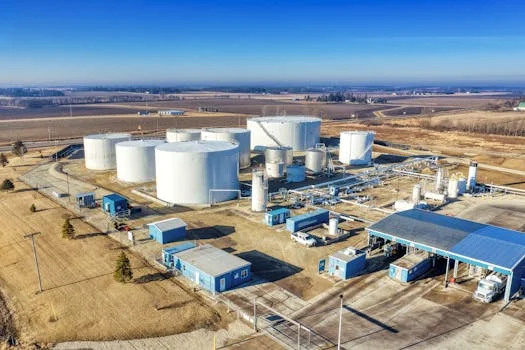
Selecting the optimal ZLD system hinges on a careful evaluation of hybrid configurations, each offering distinct advantages for PCB wastewater treatment. Hybrid ZLD systems combine multiple technologies to achieve superior water recovery rates and cost-effectiveness compared to single-technology approaches. A common configuration is the MBR + RO system, which offers approximately 95% water recovery. While its Capital Expenditure (CAPEX) can range from $1.5M to $2.5M, its Operational Expenditure (OPEX) is typically $0.15–$0.25/m³, and it requires a footprint of around 200 m². This option is best suited for wastewater streams with high organic loads, such as those containing dry film residues. Another effective hybrid is the DAF + Ion Exchange system. This configuration typically achieves 90% water recovery with a CAPEX of $1.2M–$2.0M and OPEX of $0.10–$0.20/m³, requiring a smaller footprint of approximately 150 m². It is particularly effective for wastewater streams dominated by heavy metals like copper and nickel. For exceptionally high-salinity streams, an Evaporation-Only system (often coupled with RO) is necessary, achieving 95% recovery but with a higher CAPEX of $2.0M–$3.5M and OPEX of $0.30–$0.50/m³, demanding a larger footprint of around 300 m². The trade-offs are significant: MBR+RO systems offer high recovery but demand more intensive maintenance; evaporation-only systems excel with salinity but are less efficient for metal removal; DAF+ion exchange is cost-effective but can struggle with complex organic pollutants. For instance, a 90 m³/h DAF+ion exchange system implemented at a Northeastern U.S. PCB plant successfully achieved 99.8% copper recovery, resulting in annual savings of $280,000, as documented in industry case studies.
| System Configuration | Typical Recovery Rate (%) | Estimated CAPEX (USD) | Estimated OPEX (USD/m³) | Estimated Footprint (m²) | Best Suited For |
|---|---|---|---|---|---|
| MBR + RO | 95 | $1.5M – $2.5M | $0.15 – $0.25 | 200 | High organic loads (e.g., dry film residues) |
| DAF + Ion Exchange | 90 | $1.2M – $2.0M | $0.10 – $0.20 | 150 | Heavy metal dominant streams (Cu, Ni) |
| Evaporation-Only (with RO) | 95 | $2.0M – $3.5M | $0.30 – $0.50 | 300 | High-salinity streams (e.g., etching rinse water) |
For high organic loads, consider our MBR systems for organic-rich PCB wastewater streams. Our DAF systems for PCB wastewater pretreatment are also crucial components in metal-dominant treatment trains.
2026 Cost Breakdown: CAPEX, OPEX, and ROI for PCB ZLD Systems
A transparent understanding of capital and operational expenditures is essential for justifying ZLD investments. For a typical PCB ZLD system with a capacity of 50–500 m³/h, the Capital Expenditure (CAPEX) breakdown includes: pretreatment equipment (screens, DAF) ranging from $200,000 to $500,000; membrane systems (RO, MBR) costing $500,000 to $1.2 million; ion exchange units from $150,000 to $400,000; and evaporation systems, if required, between $300,000 and $800,000. Automation and PLC controls add $100,000 to $200,000. Installation and commissioning typically account for an additional 15–20% of the total CAPEX. Operational Expenditure (OPEX) per cubic meter treated is further detailed: energy consumption is a major factor, ranging from $0.05–$0.15/m³ (RO: 0.5–1.5 kWh/m³; evaporation: 10–20 kWh/m³). Chemicals for pH adjustment, antiscalants, and coagulants contribute $0.02–$0.05/m³. Membrane replacement, a critical recurring cost, is estimated at $0.01–$0.03/m³ (RO membranes: 3–5 year lifespan; MBR membranes: 5–7 years). Labor for system operation typically costs $0.01–$0.02/m³ for 50–500 m³/h systems, with maintenance adding $0.01–$0.03/m³ annually. Hidden costs are significant: membrane fouling can increase energy use by 20–30%, while scaling can reduce recovery rates by 10–15%. Ion exchange resin replacement, occurring every 2–3 years, also adds to OPEX. Calculating Return on Investment (ROI) for a 90 m³/h system treating 700,000 m³ annually, with an estimated CAPEX of $1.8 million and annual savings of $280,000 (avoided hauling costs) less $140,000 in OPEX, yields net annual savings of $140,000. This results in a simple payback period of approximately 13 years, which can extend to 15–17 years with financing costs.
| Cost Component | Estimated Range (USD) | Notes |
|---|---|---|
| Capital Expenditure (CAPEX) | ||
| Pretreatment (Screens, DAF) | $200,000 – $500,000 | |
| Membrane Systems (RO, MBR) | $500,000 – $1,200,000 | |
| Ion Exchange | $150,000 – $400,000 | |
| Evaporation (MVR) | $300,000 – $800,000 | If high salinity present |
| Automation & PLC | $100,000 – $200,000 | |
| Installation & Commissioning | 15–20% of total CAPEX | |
| Operational Expenditure (OPEX) per m³ | ||
| Energy | $0.05 – $0.15 | RO: 0.5–1.5 kWh/m³; Evaporation: 10–20 kWh/m³ |
| Chemicals | $0.02 – $0.05 | pH adjusters, antiscalants, coagulants |
| Membrane Replacement | $0.01 – $0.03 | RO: 3–5 yrs; MBR: 5–7 yrs |
| Labor | $0.01 – $0.02 | 1–2 operators for 50–500 m³/h |
| Maintenance | $0.01 – $0.03 | 1–3% of CAPEX annually |
| Ion Exchange Resin Replacement | $0.005 – $0.015 | Every 2–3 years |
Compliance with Global PCB Wastewater Standards: EPA, China GB, and EU Limits
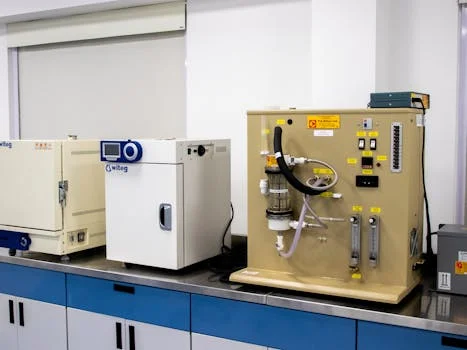
Navigating the complex web of global environmental regulations is paramount for PCB manufacturers. The following table summarizes key discharge limits for 2026, highlighting how ZLD systems are engineered to meet and exceed these requirements.
| Contaminant | EPA 40 CFR Part 433 (U.S.) | China GB 8978-2024 | EU Industrial Emissions Directive | ZLD System Capability |
|---|---|---|---|---|
| Copper | <0.4 mg/L | <0.2 mg/L | <0.5 mg/L | <0.1 mg/L (ion exchange) |
| Nickel | <0.2 mg/L | <0.5 mg/L | <0.5 mg/L | <0.1 mg/L (ion exchange) |
| Lead | <0.1 mg/L | <0.1 mg/L | <0.1 mg/L | <0.05 mg/L (RO) |
| Cyanide | <0.5 mg/L | <0.5 mg/L | <0.5 mg/L | <0.1 mg/L (oxidation + RO) |
| Fluoride | <4.0 mg/L | <10 mg/L | <15 mg/L | <1.0 mg/L (RO) |
| pH | 6.0–9.0 | 6.0–9.0 | 6.5–9.5 | 6.5–8.5 (post-treatment) |
China’s GB 8978-2024 standards introduce significant tightening, particularly for copper, lowering the limit from 0.5 mg/L to 0.2 mg/L in sensitive basins like the Yangtze River Delta. This necessitates advanced polishing steps, such as ion exchange or RO, as conventional chemical precipitation alone cannot consistently achieve these sub-0.2 mg/L thresholds, especially when dealing with chelated copper. The U.S. EPA's 40 CFR Part 433 enforcement carries penalties of up to $50,000 per day for non-compliance, a risk ZLD systems effectively eliminate by achieving consistently low metal concentrations. In the European Union, the Industrial Emissions Directive identifies ZLD as a Best Available Technique (BAT) for PCB wastewater, influencing permitting processes for new installations.
Selecting the Right ZLD System for Your PCB Plant: A Decision Framework
Choosing the most suitable ZLD system requires a systematic approach tailored to your plant's specific wastewater characteristics, budgetary constraints, and compliance objectives. Begin by thoroughly characterizing your wastewater (Step 1). This involves testing for heavy metals (copper, nickel, lead, typically ranging from 50–300 mg/L), organic content (COD 100–1,000 mg/L), salinity (TDS 1,000–10,000 mg/L), and pH (often between 2 and 12). Next, define your water recovery goals (Step 2). Basic systems might aim for 90% recovery, while standard systems target 95%, and advanced configurations seek over 99%. Higher recovery rates generally translate to higher CAPEX. Match the technology to your identified contaminants (Step 3): high metal loads often point to DAF + ion exchange; high organic content favors MBR + RO; and high salinity requires evaporation coupled with RO. For mixed streams, hybrid configurations are essential. Evaluate your CAPEX and OPEX constraints (Step 4). A lower budget might favor a DAF + ion exchange system ($1.2M–$2.0M CAPEX, $0.10–$0.20/m³ OPEX), while a higher budget could accommodate MBR + RO + evaporation ($2.5M–$4.0M CAPEX, $0.20–$0.40/m³ OPEX). Consider the required footprint (Step 5); MBR systems can reduce space requirements by 30–50% compared to conventional treatment. For plants with limited space, underground systems like our WSZ underground integrated sewage treatment solutions can be advantageous. Finally, plan for scalability (Step 6). Modular, containerized systems allow for capacity expansion in 20–50 m³/h increments, minimizing upfront CAPEX for growing facilities and ensuring future operational flexibility. Our MBR systems for organic-rich PCB wastewater streams offer scalability and efficiency.
Troubleshooting Common ZLD System Failures in PCB Wastewater Treatment
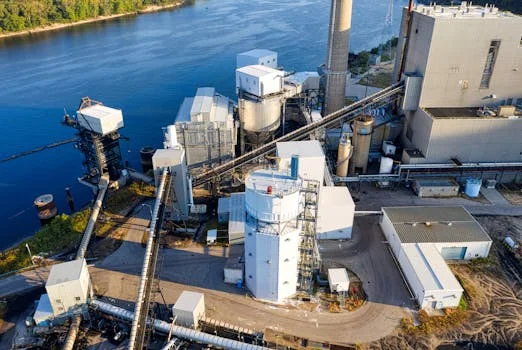
Operational challenges are inevitable in any complex industrial system, but understanding and proactively addressing common ZLD failures can significantly improve reliability and performance. Membrane fouling, affecting both RO and MBR systems, is indicated by increased pressure drop, reduced permeate flow, and higher energy consumption. Causes include organic fouling from dry film residues, scaling from mineral precipitates (e.g., calcium sulfate), and biofouling. Solutions involve robust pretreatment with DAF for organic removal (95% TSS removal), the use of antiscalants (2–5 mg/L) to prevent scaling, and regular membrane cleaning with citric acid (pH 2–3) or sodium hydroxide (pH 10–11) every 3–6 months. Ion exchange resin exhaustion leads to heavy metal breakthrough (e.g., copper or nickel exceeding 0.1 mg/L). This can stem from high metal loads, insufficient regeneration, or resin degradation. Effective remedies include regeneration with 4–6% sulfuric acid for copper or 8–10% sodium hydroxide for nickel, and resin replacement every 2–3 years (costing approximately $5,000–$20,000 for a 90 m³/h system). Evaporator scaling, manifesting as reduced heat transfer and increased energy use, is typically caused by calcium/magnesium precipitation or silica buildup. Pretreatment with softening (lime/soda ash) to remove hardness and the application of scale inhibitors (e.g., polyacrylates at 5–10 mg/L) are recommended solutions. Finally, pH fluctuations, which can lead to corrosion and poor metal precipitation, are often due to inconsistent chemical dosing or inadequate mixing. Implementing automatic dosing systems with pH feedback control, such as those from HydropureWater, and installing static mixers ensures uniform pH adjustment and system stability. For effective organic removal prior to membrane stages, utilize our DAF systems for PCB wastewater pretreatment, and for precise chemical management, our PLC-controlled dosing systems for pH adjustment and metal precipitation are indispensable.
Frequently Asked Questions
Q: What is the biggest challenge in treating PCB wastewater with ZLD?
A: The primary challenge is the highly diverse contaminant profile of PCB wastewater. It contains over seven distinct categories of pollutants, including heavy metals, organic compounds, ammonia, cyanide, fluoride, surfactants, and extreme pH levels. Each requires a specific treatment mechanism, necessitating complex hybrid systems (e.g., DAF + MBR + RO) to effectively address all contaminants and achieve ZLD.
Q: How often do RO membranes need replacement in a PCB ZLD system?
A: RO membranes in PCB wastewater applications typically last 3–5 years. This lifespan can be extended with optimal pretreatment, such as effective DAF for organic removal and appropriate antiscalant use. Annual membrane replacement costs are estimated at $0.01–$0.03 per cubic meter of treated water, based on 2026 data.
Q: Can ZLD systems handle high-salinity PCB wastewater (e.g., etching rinse water)?
A: Yes, but it requires the integration of evaporation technology. RO systems can recover 75–85% of water from high-salinity streams, but the concentrated brine necessitates treatment with mechanical vapor recompression (MVR) evaporators to achieve full ZLD. Evaporation adds approximately $0.20–$0.40/m³ to OPEX but is crucial for compliance in high-salinity scenarios.
Q: What are the key differences between China’s GB 8978-2024 and EPA 40 CFR Part 433 for PCB wastewater?
A: China’s GB 8978-2024 is notably stricter for copper, with a limit of <0.2 mg/L compared to the EPA's <0.4 mg/L. It also imposes total nitrogen limits (15 mg/L), which are not regulated for PCB wastewater under the EPA standards. ZLD systems must be engineered with advanced polishing steps, like ion exchange or RO, to meet the stringent copper requirements of GB 8978-2024.
Q: How do I calculate the ROI for a PCB ZLD system?
A: The ROI calculation follows the formula: ROI (years) = CAPEX / (Annual Savings – Annual OPEX). For example, with a CAPEX of $1.8 million, annual hauling cost avoidance of $500,000, and annual OPEX of $140,000, the net annual savings are $360,000. This results in a simple payback period of $1.8M / $360K = 5 years. Including financing costs (e.g., 5% interest) will extend the payback period to an estimated 6–8 years.