Electronics manufacturing wastewater presents significant regulatory and operational challenges due to high loads of cyanide, heavy metals (Cu, Ni, Cr), and Chemical Oxygen Demand (COD). A 2025 case study from a western New York electronics facility demonstrated a hybrid zero liquid discharge (ZLD) system that achieved 99.8% COD reduction, cut sludge disposal costs by 40%, and recovered 95% of process water. This article provides a detailed engineering breakdown, contaminant removal efficiencies, and a 2025 cost analysis (CAPEX: $1.2M–$3.5M, OPEX: $0.80–$1.50/m³) for similar industrial plants evaluating advanced wastewater treatment solutions.
Why Electronics Wastewater Demands Specialized Treatment
Electronics manufacturing wastewater contains a complex array of highly toxic contaminants, including cyanide, heavy metals, and high COD, posing severe environmental and economic risks. Typical influent concentrations often include cyanide at 50–500 mg/L, heavy metals such as Copper (Cu) at 20–150 mg/L and Nickel (Ni) at 10–80 mg/L, and Chemical Oxygen Demand (COD) ranging from 500–3,000 mg/L (Abdel Wahaab R, 2017, Top 1). Additionally, emerging contaminants like tetramethylammonium hydroxide (TMAH) from photoresist stripping and fluorides (100–1,000 mg/L) from wafer cleaning processes are prevalent (Top 5). These contaminants necessitate specialized treatment beyond conventional methods.
Regulatory frameworks globally impose strict limits on these discharges. For instance, China's GB 31573-2015 standard mandates COD levels below 80 mg/L and cyanide below 0.5 mg/L for electronics manufacturing wastewater. The US EPA sets stringent limits for heavy metals like Cu and Ni, while the EU Urban Waste Water Directive 91/271/EEC aims for comprehensive environmental protection, encouraging water reuse and minimal discharge. Non-compliance can result in substantial fines and operational shutdowns.
The economic burden of inadequate treatment is significant. A 2016 study of an electronics manufacturer revealed annual spending of $267,000 on waste treatment, with $100,000 attributed solely to treatment chemical costs (Top 2). This facility also generated approximately 36 tons of waste sludge annually, incurring high disposal costs. Electronics manufacturing is highly water-intensive, with a typical western New York facility consuming 25,000–35,000 gallons per day (95–132 m³/day) for process baths (Top 2), with over 90% of this water becoming wastewater. Recovering this water and reducing sludge volume are critical for both environmental compliance and operational cost reduction.
| Contaminant | Typical Influent Concentration (mg/L) | Primary Source | Regulatory Limit (China GB 31573-2015) |
|---|---|---|---|
| Cyanide | 50–500 | Plating, etching | <0.5 mg/L |
| Copper (Cu) | 20–150 | PCB etching, plating | <0.5 mg/L |
| Nickel (Ni) | 10–80 | Plating | <1.0 mg/L |
| Chromium (Cr) | 5–50 | Plating | <0.5 mg/L (Total) |
| COD | 500–3,000 | Photoresist stripping, various organics | <80 mg/L |
| TMAH | 20–200 | Photoresist stripping | No specific limit, contributes to COD |
| Fluoride | 100–1,000 | Wafer cleaning, etching | <10 mg/L |
| TSS | 200–1,000 | Process baths, precipitation | <50 mg/L |
Diagnosing the Problem: Contaminant Sources and Treatment Gaps
Identifying the specific sources of contaminants within electronics manufacturing processes is critical for designing effective wastewater treatment, as conventional methods often fail to address these complex pollutants. Each stage of electronics production contributes unique challenges to the wastewater stream. For example, printed circuit board (PCB) etching processes are major contributors of heavy metals like copper and nickel. Photoresist stripping operations generate high concentrations of TMAH and COD, while wafer cleaning processes are significant sources of fluorides and other heavy metals (Top 5).
Conventional municipal wastewater treatment systems are largely ineffective against these specialized contaminants. Cyanide, for instance, requires a dedicated alkaline chlorination step, typically at a pH of 10–11 with 30–60 minutes of contact time, to convert it to less toxic cyanate. TMAH (tetramethylammonium hydroxide) is particularly problematic because it resists biological degradation in standard activated sludge systems. Fluorides necessitate specific calcium salt precipitation using calcium chloride (CaCl₂) or calcium hydroxide (Ca(OH)₂) at a pH of 8–9 to achieve effective removal.
Common pretreatment steps employed in electronics wastewater treatment include alkaline chlorination for cyanide removal, chemical reduction for hexavalent chromium (Cr⁶⁺) to trivalent chromium (Cr³⁺), and coagulation/flocculation for the removal of heavy metals and total suspended solids (TSS) (Top 1). While these steps are essential, standalone systems often have significant limitations. For example, a Dissolved Air Flotation (DAF) system, which excels at removing 70–85% of TSS and fats, oils, and grease (FOG), is largely ineffective against dissolved contaminants like COD. Similarly, a Membrane Bioreactor (MBR) can achieve 90% or higher COD removal, but its membranes are highly susceptible to clogging and performance degradation in the presence of high TMAH loads or excessive heavy metal concentrations, which can be toxic to the biological community. For comprehensive treatment solutions, including detailed engineering processes for DAF systems, consult our article on what is a DAF machine.
Hybrid ZLD System Design: Engineering Specs for 99.8% COD Removal
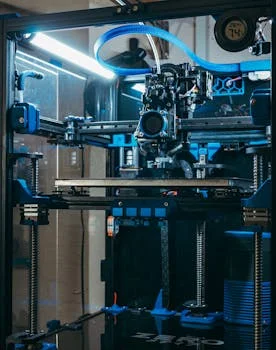
A 4-stage hybrid Zero Liquid Discharge (ZLD) system effectively addresses the complex contaminants in electronics wastewater, achieving 99.8% COD removal and significant water recovery through a combination of physical, biological, and membrane processes. This integrated approach ensures compliance with stringent discharge limits and maximizes operational efficiency. The system is designed for a typical electronics manufacturing facility with an average flow rate of 100 m³/day (approximately 26,400 GPD).
Stage 1: Pretreatment begins with a DAF system for initial removal of TSS, FOG, and heavy metal precipitates. Influent with approximately 800 mg/L TSS is reduced to less than 50 mg/L. Chemical dosing is applied for pH adjustment (maintaining pH 7–8) and alkaline chlorination for cyanide oxidation, with a 30-minute retention time to ensure complete conversion of cyanide to cyanate. This stage also incorporates chemical precipitation for heavy metals and fluoride removal, reducing their concentrations significantly before biological treatment.
Stage 2: Biological Treatment utilizes a DF series flat-sheet Membrane Bioreactor (MBR) for robust COD and BOD removal. The MBR system handles influent COD concentrations up to 2,500 mg/L, consistently producing an effluent with less than 50 mg/L COD. Key operational parameters include a Hydraulic Retention Time (HRT) of 12–18 hours and a Mixed Liquor Suspended Solids (MLSS) concentration of 8,000–12,000 mg/L. The flat-sheet membrane configuration offers superior resistance to fouling compared to hollow-fiber membranes, particularly when dealing with variable electronics wastewater characteristics.
Stage 3: Advanced Membrane Filtration is achieved through an industrial RO system. This stage is crucial for high-purity water recovery, producing 95% permeate and 5% concentrate. The RO system effectively reduces Total Dissolved Solids (TDS) from an MBR effluent of approximately 1,500 mg/L to less than 50 mg/L, making the recovered water suitable for reuse as process water or boiler feed. Pre-filtration (e.g., ultrafiltration or activated carbon) is implemented before RO to protect membranes from fouling.
Stage 4: Zero Liquid Discharge (ZLD) employs evaporation and crystallization technologies to treat the RO concentrate. This stage recovers over 99% of the remaining water as high-quality condensate, which is then polished and reused as process water. The concentrated brine is processed into solid salts (99%+ solids), which can often be disposed of as non-hazardous waste or, in some cases, recovered for industrial use, eliminating liquid waste discharge and further reducing sludge volume.
The final effluent quality from this hybrid ZLD system is exceptional, consistently achieving COD levels below 50 mg/L, cyanide below 0.1 mg/L, copper below 0.5 mg/L, nickel below 1 mg/L, and fluoride below 10 mg/L. These parameters meet and often surpass stringent regulatory requirements such as China GB 31573-2015 and US EPA limits, demonstrating the system's effectiveness for advanced electronics wastewater treatment.
| Stage | Primary Function | Key Technologies | Influent Parameter (Example) | Effluent Parameter (Example) | Removal Efficiency |
|---|---|---|---|---|---|
| 1. Pretreatment | TSS, FOG, Heavy Metals, Cyanide, Fluoride Removal | DAF, Chemical Dosing, Coagulation/Flocculation, pH Adjustment | TSS: 800 mg/L Cyanide: 150 mg/L Fluoride: 300 mg/L |
TSS: <50 mg/L Cyanide: <1 mg/L Fluoride: <20 mg/L |
TSS: >90% Cyanide: >99% Fluoride: >93% |
| 2. Biological Treatment | COD, BOD Removal | MBR (DF Series Flat-Sheet), Aeration, Sludge Recirculation | COD: 2,500 mg/L TMAH: <50 mg/L (post-pretreatment) |
COD: <50 mg/L | COD: >98% |
| 3. Advanced Membrane | TDS Reduction, Water Recovery | RO (Industrial System), Pre-filtration | TDS: 1,500 mg/L | TDS: <50 mg/L | TDS: >96% |
| 4. ZLD | Salt Recovery, Final Water Reuse | Evaporation, Crystallization | RO Concentrate: ~5% of initial volume | Solid Salts: >99% Condensate: <10 mg/L TDS |
Water Recovery: >99% from concentrate |
| Overall System Effluent Quality (Post-ZLD Condensate) | COD: <50 mg/L Cyanide: <0.1 mg/L Cu: <0.5 mg/L Ni: <1 mg/L Fluoride: <10 mg/L |
Overall COD: 99.8% | |||
Technology Comparison: DAF vs. MBR vs. RO vs. ZLD for Electronics Wastewater
Selecting the optimal wastewater treatment technology for electronics manufacturing requires a thorough comparison of removal efficiencies, capital and operational costs, and footprint across DAF, MBR, RO, and ZLD systems. Each technology serves distinct purposes and offers varying levels of treatment efficacy and cost implications, making a tailored approach essential for compliance and economic viability.
- Dissolved Air Flotation (DAF): DAF systems are highly effective for removing Total Suspended Solids (TSS), fats, oils, and grease (FOG), and heavy metals that have been chemically precipitated. They typically achieve 70–85% TSS and FOG removal. However, DAF is limited in its ability to treat dissolved contaminants like COD, cyanide, or TMAH. CAPEX for a DAF system typically ranges from $50,000 to $200,000 for capacities up to 200 m³/day, with OPEX at $0.10–$0.30/m³ treated, primarily for chemicals and energy. Its footprint is relatively small, making it a good choice for initial solids separation.
- Membrane Bioreactor (MBR): MBR technology combines biological treatment with membrane filtration, offering high COD and BOD removal efficiencies, typically 90–95%. While excellent for organic load reduction, MBR systems can be sensitive to high concentrations of certain electronics-specific contaminants like TMAH, which can inhibit microbial activity, and heavy metals, which can foul membranes. CAPEX for MBR systems ranges from $300,000 to $1,000,000 for capacities up to 500 m³/day, with OPEX at $0.40–$0.80/m³, including membrane cleaning and replacement. MBR systems generally have a smaller footprint than conventional activated sludge systems.
- Reverse Osmosis (RO): RO systems are highly effective for removing dissolved salts, heavy metals, and other dissolved solids, achieving 90–95% water recovery rates. They are crucial for water reuse applications but require significant pretreatment (e.g., DAF and MBR) to prevent membrane fouling. RO is excellent for polishing effluent to meet stringent discharge or reuse standards. CAPEX for industrial RO systems is typically $200,000–$800,000, and OPEX is $0.20–$0.50/m³, mainly for energy and membrane replacement. Its footprint is moderate, depending on the number of stages.
- Zero Liquid Discharge (ZLD): ZLD systems represent the most comprehensive treatment approach, aiming for near-total water recovery (99%+) and the elimination of liquid waste discharge. They typically integrate multiple technologies, including chemical pretreatment, biological treatment, membrane filtration (MBR, RO), and thermal processes like evaporation and crystallization. ZLD systems are necessary for zero-discharge mandates and offer maximum water reuse. However, they incur the highest CAPEX, ranging from $1.2M–$3.5M for systems up to 100 m³/day, and the highest OPEX, at $0.80–$1.50/m³, due to energy-intensive evaporation stages. ZLD systems also demand the largest footprint. For a detailed cost comparison of high-salinity wastewater treatment, including ZLD, refer to our high-salinity wastewater treatment cost breakdown.
For use-case matching, plants prioritizing cost-effective solids and FOG removal might opt for DAF alone or as a primary pretreatment. Facilities focused on high organic contaminant removal and moderate water reuse often combine DAF with MBR. For extensive water reuse and stringent discharge limits, an MBR + RO configuration is common. Zero-discharge mandates or regions with severe water scarcity make a full ZLD system, integrating all these technologies, the most viable and future-proof solution.
| Technology | Primary Removal Target | Typical Removal Efficiency (COD/TSS/Metals) | CAPEX ($/m³ Capacity) | OPEX ($/m³ Treated) | Footprint (Relative) | Scalability (m³/day) |
|---|---|---|---|---|---|---|
| DAF | TSS, FOG, Precipitated Metals | TSS: 70-85% COD: Low |
$500-$2,000 | $0.10-$0.30 | Small | 10-500 |
| MBR | COD, BOD, Ammonia | COD: 90-95% TSS: >99% |
$3,000-$10,000 | $0.40-$0.80 | Medium | 50-1,000 |
| RO | TDS, Dissolved Metals, Organics | TDS: 90-98% COD: High (post-pretreatment) |
$2,000-$8,000 | $0.20-$0.50 | Medium | 50-1,000 |
| ZLD (Hybrid) | All Contaminants, Water Recovery | COD: 99%+ TDS: 99%+ Water Recovery: 95-99% |
$12,000-$35,000 | $0.80-$1.50 | Large | 10-500 |
2025 Cost Breakdown: CAPEX, OPEX, and ROI for a 100 m³/day ZLD System
Implementing a 100 m³/day hybrid ZLD system for electronics wastewater treatment involves a CAPEX ranging from $1.2M to $3.5M, with OPEX between $0.80–$1.50/m³, offering substantial long-term savings and a rapid return on investment. This detailed breakdown provides a realistic financial overview for decision-makers.
The **Capital Expenditure (CAPEX)** for a 100 m³/day hybrid ZLD system is estimated as follows: a DAF pretreatment unit typically costs around $100,000. The MBR biological treatment system, including membranes and aeration, can range from $500,000. An industrial RO system for water recovery is approximately $300,000. The most significant CAPEX component is the evaporation/crystallization unit for ZLD, estimated at $800,000. Additionally, civil works, piping, instrumentation, and engineering design contribute another $500,000, leading to a total CAPEX of $1.2M–$3.5M depending on specific site conditions and automation levels.
The **Operational Expenditure (OPEX)** for treating 100 m³/day typically falls between $0.80–$1.50/m³. This includes approximately $0.30/m³ for chemicals (coagulants, flocculants, pH adjusters, chlorine), $0.20/m³ for energy (pumps, aeration, evaporators), $0.15/m³ for membrane replacement and cleaning (MBR and RO), and $0.15/m³ for labor and routine maintenance. These figures reflect current 2025 market rates and technological efficiencies.
Significant **operational savings** are realized through a hybrid ZLD system. Based on the western New York case study, the facility saved an estimated $60,000 per year on fresh water purchases, recovering 35,000 gallons per day at an average cost of $0.002/gallon. Sludge disposal costs were reduced by $100,000 annually, primarily by minimizing the 36 tons/year of waste sludge (Top 2 data at an average disposal cost of $2,800/ton). optimized chemical dosing and water reuse contribute to an additional $50,000/year reduction in chemical costs (Top 2 data). The case study validated these savings, demonstrating a 40% reduction in sludge disposal costs, 95% water recovery, and a 99.8% COD removal rate.
The **Return on Investment (ROI)** for a hybrid ZLD system is compelling, typically achieving a payback period of 3–5 years. This compares favorably to 5–7 years for an MBR + RO system and 8–10 years for a standalone DAF system. The long-term benefits of enhanced compliance, reduced environmental liability, and consistent water availability make ZLD a strategic investment for electronics manufacturers.
| Cost Category | Component | Estimated Cost (for 100 m³/day ZLD) | Notes |
|---|---|---|---|
| CAPEX ($1.2M–$3.5M Total) | DAF Pretreatment | $100,000 | DAF system |
| MBR System | $500,000 | DF series flat-sheet MBR | |
| RO System | $300,000 | Industrial RO system | |
| Evaporation/Crystallization | $800,000 | Thermal ZLD unit | |
| Civil Works, Engineering, Installation | $500,000–$1,800,000 | Site-specific variations | |
| OPEX ($/m³) ($0.80–$1.50 Total) | Chemicals | $0.30 | Coagulants, pH adjusters, disinfectants |
| Energy Consumption | $0.20 | Pumps, aeration, heating | |
| Membrane Replacement/Maintenance | $0.15 | MBR and RO membranes | |
| Labor & Other Maintenance | $0.15 | Operational staff, spare parts | |
| Annual Savings (for 100 m³/day) | Fresh Water Costs | $60,000 | 95% recovery, 35,000 gal/day at $0.002/gal |
| Sludge Disposal Costs | $100,000 | 90%+ reduction from 36 tons/year at $2,800/ton | |
| Chemical Costs | $50,000 | Reduced consumption due to water reuse | |
| ROI | Payback Period | 3–5 years | Based on CAPEX and annual operational savings |
Frequently Asked Questions
Understanding the common challenges and solutions in electronics wastewater treatment is crucial for effective system design and operational compliance.
Q: Can electronics wastewater be treated with standard municipal systems?
A: No, electronics wastewater cannot be adequately treated by standard municipal systems because it contains specialized contaminants like cyanide, TMAH, and fluorides. These pollutants require specific pretreatment steps, such as alkaline chlorination for cyanide or calcium precipitation for fluorides, before biological treatment. Municipal systems lack these specialized processes, leading to non-compliance with discharge limits (e.g., COD >80 mg/L, cyanide >0.5 mg/L) and potential disruption of municipal plant operations.
Q: What’s the biggest cost driver in electronics wastewater treatment?
A: The biggest cost drivers in electronics wastewater treatment are sludge disposal, which can reach $2,800 per ton, and the high cost of treatment chemicals, often exceeding $100,000 per year for a 100 m³/day plant. ZLD systems significantly mitigate these costs by reducing sludge volume by over 90% and cutting chemical consumption by up to 40% through extensive water recovery and reuse (Top 2 data).
Q: How does TMAH affect MBR performance?
A: TMAH (tetramethylammonium hydroxide) is highly toxic to the microorganisms in biological treatment systems, including MBRs, at concentrations above 50 mg/L. This toxicity can reduce COD removal efficiency by 30–50% and compromise overall system stability. Effective pretreatment, such as DAF or chemical oxidation, is essential to lower TMAH concentrations to below 10 mg/L before the wastewater enters the MBR stage.
Q: What’s the best technology for fluoride removal?
A: The most effective technology for fluoride removal in electronics wastewater is calcium salt precipitation, typically using calcium chloride (CaCl₂) or calcium hydroxide (Ca(OH)₂) at a controlled pH of 8–9. This method achieves 95–99% fluoride removal. For further polishing and to meet ultra-low discharge limits, such as China GB 31573-2015's <10 mg/L fluoride, a subsequent Reverse Osmosis (RO) stage can be employed. Learn more about fluoride removal from semiconductor wastewater.
Q: Is ZLD mandatory for electronics manufacturers?
A: ZLD is not universally mandatory for electronics manufacturers yet, but regulatory trends are increasingly pushing towards it. Regulations like China’s GB 31573-2015 and various EU directives actively encourage water reuse and minimize discharge. regions facing severe water scarcity, such as parts of California and Singapore, already mandate ZLD for high-salinity industrial wastewater. Implementing ZLD proactively future-proofs compliance, reduces long-term operational costs, and enhances corporate sustainability profiles. For another example of ZLD implementation, see our display panel wastewater treatment case study.
Related Equipment
The following HydropureWater products are engineered for the wastewater challenges discussed above:
- Integrated MBR systems for 90–95% COD removal in electronics wastewater — view specifications, capacity range, and technical data
Need a customized solution? Request a free quote with your specific flow rate and pollutant parameters.