Industrial wastewater treatment in Rosario must comply with Argentina’s CONAMA 430/11, limiting BOD to 120 mg/L, COD to 200 mg/L, and TSS to 100 mg/L. For food, textile, and chemical industries, Dissolved Air Flotation (DAF) systems achieve 90–95% FOG removal, while Membrane Bioreactors (MBRs) deliver effluent with <10 mg/L TSS. A 50 m³/h DAF system costs $85,000–$120,000 with a 5-year ROI via reduced sludge hauling.
Argentina’s Wastewater Regulations and the Rosario Challenge
Argentina’s wastewater project for Greater Rosario, initiated to enhance urban sanitation, includes upgrades to the sewer network and treatment plant infrastructure under CONAMA 430/11. This regulation establishes critical industrial effluent limits that directly impact facilities across the Santa Fe province.
Rosario’s industrial landscape is dominated by sectors such as food processing, textiles, and chemicals, all of which generate wastewater characterized by high concentrations of COD, FOG (Fats, Oils, and Grease), and suspended solids. Effective pretreatment at the source is essential for these industries to meet discharge standards and avoid overloading municipal facilities. Implementing decentralized treatment systems significantly reduces the load on public infrastructure, a strategy that aligns with Argentina’s broader national trends towards localized environmental management. These on-site solutions not only ensure compliance but also offer operational autonomy and often lower long-term costs for the industrial facility. For a comprehensive overview of industrial effluent limits, refer to full CONAMA 430/11 compliance tables and limits, which provide detailed benchmarks for various parameters.
Core Technologies for Industrial Wastewater in Rosario
Dissolved Air Flotation (DAF) systems are highly effective for removing 90–95% of FOG and suspended solids from industrial wastewater, particularly in sectors like food processing. These systems operate efficiently across a wide range of flow rates, typically from 4 to 300 m³/h.
Membrane Bioreactor (MBR) systems represent an advanced biological treatment option, achieving over 99% removal of BOD and TSS. The compact MBR system for high-quality effluent and water reuse produces a high-quality effluent often suitable for direct reuse in industrial processes or irrigation, which is particularly advantageous for water-scarce industrial zones in Santa Fe. MBRs combine conventional activated sludge treatment with membrane filtration, eliminating the need for secondary clarifiers and reducing the overall footprint. This technology is highly resilient to variations in influent quality and consistently delivers superior effluent quality compared to conventional methods. To optimize the performance of both DAF and MBR systems, chemical dosing is often integrated. Coagulants such as ferric chloride (FeCl₃) and flocculants like polyacrylamide (PAM) are used to destabilize colloidal particles and promote aggregation, which can improve DAF and clarifier performance, reducing sludge volume by 30–40% (HydropureWater data, 2024).
To protect downstream equipment from large debris and rags, especially in high-solids influent streams characteristic of many industrial facilities, rotary bar screens with apertures ranging from 1–6 mm are essential. These screens prevent clogging and damage to pumps, membranes, and other sensitive components, ensuring the longevity and efficiency of the entire wastewater treatment train. The selection of the appropriate treatment technology depends heavily on the specific effluent profile, discharge requirements, and available space at the industrial facility.
| Technology | Primary Function | Key Effluent Target | Removal Efficiency | Typical Flow Rate Range |
|---|---|---|---|---|
| Dissolved Air Flotation (DAF) | Physical-chemical separation | FOG, TSS | 90–95% FOG & TSS | 4–300 m³/h |
| Membrane Bioreactor (MBR) | Biological & membrane filtration | BOD, TSS, Nutrients | >99% BOD & TSS | Variable (modular design) |
| Chemical Dosing (Coagulants/Flocculants) | Enhance particle aggregation | Colloidal solids, FOG | 30–40% sludge volume reduction | Integrated with DAF/Clarifiers |
| Rotary Bar Screens | Mechanical pretreatment | Large solids, rags | >95% protection of downstream equipment | Dependent on screen size |
DAF vs MBR: Performance, Cost, and ROI for Rosario Facilities
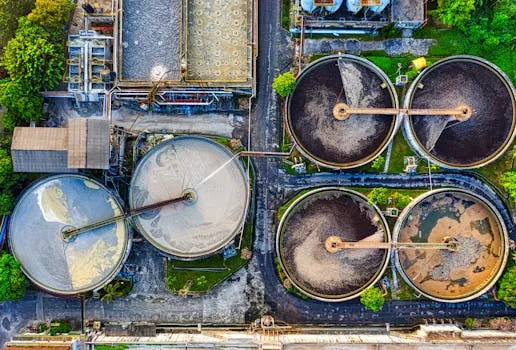
The capital expenditure (CAPEX) for a 50 m³/h Dissolved Air Flotation (DAF) system typically ranges from $85,000 to $120,000. A Membrane Bioreactor (MBR) system of equivalent capacity costs significantly more, between $150,000 and $220,000.
Space efficiency is another critical factor for industrial facilities. A DAF system typically requires a footprint that is 30% smaller than conventional clarifiers, making it suitable for sites with limited available land. For food processing plants with high FOG and organic loads, a treatment train combining an high-efficiency DAF system for FOG and TSS removal followed by biological treatment can achieve up to 95% COD reduction. Understanding these trade-offs between initial investment, operational costs, space requirements, and effluent quality is key to making an informed decision for industrial wastewater solutions in Latin America.
| Feature | Dissolved Air Flotation (DAF) | Membrane Bioreactor (MBR) |
|---|---|---|
| Primary Application | High FOG/TSS removal (food, meat, dairy) | High BOD/TSS removal, water reuse (mixed industrial, textile) |
| CAPEX (50 m³/h) | $85,000–$120,000 | $150,000–$220,000 |
| OPEX (Relative) | Lower | 15–20% higher (membrane replacement, aeration) |
| Effluent Quality | Good for pretreatment, requires secondary treatment for discharge | Excellent, often reuse-quality (<10 mg/L TSS) |
| Footprint | 30% smaller than conventional clarifiers | 60% smaller than activated sludge systems |
| Key Advantages | Lower initial cost, effective FOG removal | Superior effluent quality, water reuse potential, compact |
| Key Considerations | May require further biological treatment | Higher CAPEX/OPEX, membrane fouling management |
Sludge and Disinfection: Closing the Treatment Loop
Plate and frame filter presses are an indispensable component for industrial wastewater treatment facilities in Rosario, capable of dewatering sludge to 50–60% solids content. This process significantly reduces sludge volume by up to 75%, which is critical for minimizing hauling and disposal costs in the Santa Fe province.
For final effluent discharge, particularly into mixed industrial-municipal systems, effective disinfection is paramount. Chlorine dioxide (ClO₂) generators provide 99.9% pathogen kill without the formation of harmful trihalomethanes (THMs), a common byproduct of chlorine disinfection.
Frequently Asked Questions
What are the industrial effluent limits in Rosario, Argentina?
CONAMA 430/11 sets the industrial effluent limits in Rosario, Argentina, mandating BOD ≤120 mg/L, COD ≤200 mg/L, TSS ≤100 mg/L, and a pH range of 6–9.
Which DAF system is best for food processing wastewater in Rosario?
A DAF system with a capacity of 50–100 m³/h and automatic skimming is highly effective for handling the high FOG loads typical of food processing wastewater in Rosario.
How much does an industrial wastewater treatment plant cost in Argentina?
For a 50 m³/h system, a DAF plant typically costs $85,000–$120,000, while an MBR system ranges from $150,000–$220,000. Facilities often see an ROI in 4–6 years primarily through reduced sludge hauling and compliance cost avoidance.
Can MBR systems be used for textile wastewater in Rosario?
Yes, MBRs are effective for treating dye-laden textile wastewater in Rosario, especially when paired with advanced oxidation processes like ozonation or UV treatment for optimal color removal.
Is chemical dosing required for DAF in industrial applications?
Yes, chemical dosing with coagulants like alum or ferric chloride (FeCl₃) is generally required for DAF systems in industrial applications, as it significantly improves FOG and TSS removal efficiencies by 25–40%.