Why Minas Gerais Industrial Plants Face New Enforcement Pressure
Industrial wastewater treatment in Minas Gerais Brazil must reach CONAMA 430/2011 limits (BOD 60 mg/L, COD 150 mg/L, TSS 100 mg/L). UASB alone achieves only 56% BOD removal; adding a DAF or MBR polishing stage lifts BOD to <30 mg/L and COD <90 mg/L at 20–30% higher life-cycle cost. Enforcement pressure has intensified, with CETESB issuing 40% more fines for effluent exceedances in 2024 compared to 2022. The Doce and Paraíba do Sul river basins were officially classified as “high risk” by IGAM in 2023, triggering more frequent and stringent inspections. This classification is based on a multi-factor index that includes the density of industrial dischargers, historical water quality data, and ecological sensitivity. Non-compliant dischargers also face a state-mandated water tariff surcharge of 25%. This surcharge is applied quarterly and is calculated based on the volume of non-compliant discharge, creating a recurring financial liability. For process engineers, this means historical reliance on standalone UASB reactors now carries significant financial and operational risk. The investment horizon for upgrades has shortened considerably, with many plants being given 18-month deadlines to achieve full compliance.
UASB Reactor Performance Gap and Why It Persists
The performance gap for UASB reactors treating industrial effluent is a function of design parameters optimized for municipal sewage, not manufacturing waste. A typical hydraulic retention time (HRT) of 6–8 hours is insufficient for industrial COD loads, which are often 2–3 times higher than municipal strength. This leads to chronic organic overload. sulfate concentrations exceeding 300 mg/L—common in textile and metal processing waste—inhibit methane conversion, leaving 40–50% of the COD untreated. The inhibition occurs because sulfate-reducing bacteria outcompete methanogenic archaea for substrates like hydrogen and acetate, producing sulfide instead of methane. As confirmed by a SciDirect case study, this results in an average BOD removal of only 56%, missing the CONAMA 430 limit by approximately 4 mg/L. While the energy benefit of anaerobic digestion is real at 0.25 kWh m⁻³ saved versus aerobic processes, the penalty is near-certain compliance failure without post-polishing. Furthermore, the shock loads common in industrial settings can wash out the delicate granular sludge, requiring costly reseeding and a lengthy restart process that halts production.
| Parameter | UASB Influent (Avg.) | UASB Effluent (Avg.) | CONAMA 430 Limit | Gap to Limit |
|---|---|---|---|---|
| BOD (mg/L) | 850 | 374 | 60 | +314 mg/L |
| COD (mg/L) | 1,650 | 891 | 150 | +741 mg/L |
| TSS (mg/L) | 350 | 105 | 100 | +5 mg/L |
Industrial Wastewater Technologies That Consistently Meet Limits
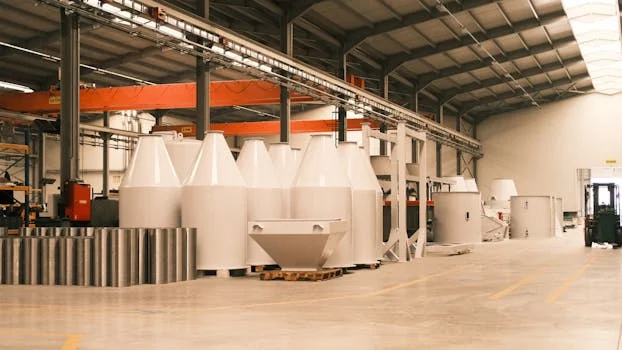
Three field-proven process trains reliably bring industrial effluent within CONAMA 430/2011 compliance. Option A couples an existing UASB with a dissolved-air flotation add-on, achieving polished effluent of BOD 28 mg/L, COD 85 mg/L, and TSS 18 mg/L by removing residual fats and suspended solids. The DAF unit works by dissolving air under pressure and then releasing it at atmospheric pressure in the flotation tank, creating microbubbles that attach to and float fine particles. Option B is a comprehensive aerobic solution: a high-rate lamella clarifier for primary treatment followed by an integrated MBR system, producing reuse-quality water with BOD <10 mg/L, COD <45 mg/L, and TSS <5 mg/L. The membrane bioreactor (MBR) replaces the secondary clarifier with ultrafiltration membranes, ensuring a complete separation of biomass from the treated water. Option C, ideal for metal finishing, uses chemical precipitation followed by a tube settler and sand filter to meet metals limits and reduce BOD to 35 mg/L. Footprint is a key differentiator; MBR systems require 60% less space than extended aeration, while DAF units are 30% more compact than conventional clarifiers. For all options, equalization and neutralization tanks are critical pre-treatment steps to mitigate flow and pH variation, protecting the downstream biological and physical processes.
| Technology | BOD Out (mg/L) | COD Out (mg/L) | TSS Out (mg/L) | Power Demand (kWh m⁻³) |
|---|---|---|---|---|
| UASB + DAF | 28 | 85 | 18 | 0.9 |
| Lamella + MBR | <10 | <45 | <5 | 1.1 |
| Chemical + Filtration | 35 | 110 | <15 | 0.4 |
CAPEX vs OPEX Comparison for 100 m³/h Industrial Plant
For a standard 100 m³/h (2,400 m³/day) industrial plant, the financial commitment for compliance varies significantly by technology. Retrofitting an existing UASB with a DAF system represents the lowest capital entry point at approximately US$ 0.35M, with operating costs around US$ 0.09 per cubic meter, inclusive of power, polymer, and sludge hauling. A new-build MBR system carries a higher CAPEX of US$ 0.55M and OPEX of US$ 0.14 m⁻³, which includes membrane replacement costing roughly 8% of CAPEX annually. This OPEX also factors in higher energy consumption for aeration and membrane scouring, as well as routine chemical cleaning-in-place (CIP) protocols. The business case is compelling when weighed against enforcement risk; avoiding a potential R$ 150k monthly fine delivers an 18-month payback on the MBR investment. A 20-year Net Present Value (NPV) calculation at an 8% discount rate shows the MBR option is 12% more expensive than UASB+DAF but secures potential revenue from water reuse, offsetting the long-term cost. This analysis must also include the cost of sludge management; anaerobic systems like UASB produce less sludge, but it is often more complex to dewater and dispose of compared to the aerobic sludge from an MBR.
| Cost Factor | UASB + DAF | MBR System | Chemical + Filtration |
|---|---|---|---|
| CAPEX (US$ Million) | 0.35 | 0.55 | 0.28 |
| OPEX (US$ m⁻³) | 0.09 | 0.14 | 0.07 |
| Payback vs. Fines | 10 months | 18 months | 8 months |
Decision Matrix: Which Technology Fits Your Discharge Characteristics
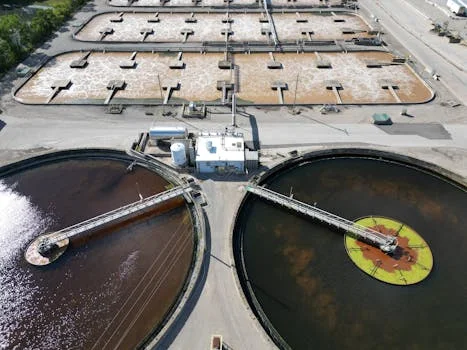
Selecting the right technology depends on your wastewater characteristics, space constraints, and long-term goals. Use this checklist to shortlist options for further engineering assessment. A crucial first step is always a detailed wastewater characterization study over a full production cycle to capture all variability.
- High COD, Low Sulfate: If your influent COD is below 1500 mg/L and sulfate is under 200 mg/L, a UASB+DAF retrofit is likely sufficient for compliance. This scenario is typical for food and beverage facilities.
- Space Constraints or Reuse Goals: For limited space (<200 m²) or if water reuse is a future requirement, an MBR system is recommended for its compact footprint and superior effluent quality. The filtered effluent is ideal for non-potable applications like cooling tower make-up or equipment wash-down.
- Metals or Phosphorus Limits: If your permit includes metals (e.g., chromium, zinc) or phosphate limits, you must add chemical precipitation as a primary step. This involves pH adjustment and the addition of coagulants like ferric chloride or alum to form insoluble precipitates.
- Highly Variable Flow: For operations with hydraulic load variations exceeding 3x daily, a lamella clarifier option handles peak flows more effectively than conventional settling due to its large effective settling area in a small footprint.
- High Temperature Effluent: If your wastewater is consistently above 38°C, it may inhibit mesophilic anaerobic treatment; an aerobic MBR system is more robust under these thermal conditions.
Installation and Operational Pitfalls to Budget For
Beyond equipment costs, site-specific challenges in Minas Gerais can impact project timelines and budgets. Clayey soils, common in the region, often require pile foundations for underground tanks, adding roughly 12% to civil works CAPEX. This is a critical geotechnical consideration often uncovered during the site survey phase. Grid power reliability below 95% necessitates a standby generator for critical MBR components like the permeate pump to prevent membrane fouling during outages. An unexpected power loss can lead to solids settling on the membranes, requiring an extensive and costly cleaning procedure. For DAF systems, ensuring the saturator air compressor can maintain a pressure of 0.35 bar is critical; undersizing this component causes a 15% loss in flotation efficiency and consistently high effluent TSS. Finally, during Belo Horizonte’s cooler winter months, polymer make-up water temperature below 18°C can significantly slow flocculation formation, requiring a simple water heating loop to maintain performance. Operator training is another hidden cost; MBR systems, in particular, require a higher level of technical understanding for monitoring transmembrane pressure and managing cleaning cycles compared to more conventional systems.
Frequently Asked Questions
Q: Does CONAMA 430/2011 apply to all industrial dischargers in Minas Gerais?
A: Yes. CONAMA 430 is federal legislation, and all industrial facilities discharging to surface waters must comply, regardless of state. IGAM (Minas Gerais State Institute for Water Management) is the primary enforcement body, and they can also impose stricter local limits in critically polluted basins.
Q: Can I just extend the HRT in my existing UASB to improve performance?
A: Only marginally. While increasing HRT can help, the core issues of sulfate inhibition and the lack of aerobic polishing for soluble BOD mean significant performance gains require adding a new treatment stage, like DAF or an aerobic reactor. Modifying the HRT may also require expensive tank modifications and will reduce your plant's hydraulic capacity.
Q: What is the typical lead time for a DAF or MBR system installation?
A> For a standard 100 m³/h system, lead time is 4-6 months for fabrication and shipping. Installation and commissioning require another 2-3 months, making advanced planning essential for an 18-month deadline. This timeline can be extended if imported components are held in customs, so working with a local partner with import experience is advised.
Q: How do Brazil's effluent limits compare to other industrializing nations?
A> Brazil's CONAMA 430 limits are broadly similar to other major economies. For example, the BOD limit of 60 mg/L is comparable to standards in India and China for most industrial categories. You can see a detailed compliance limits comparison for Turkey for reference.