SiC Wastewater ZLD: 2025 Hybrid System Design with 99.9% Recovery & Cost Breakdown
Silicon carbide (SiC) wastewater zero liquid discharge (ZLD) systems achieve 99.9% recovery by combining dissolved air flotation (DAF), reverse osmosis (RO), mechanical vapor recompression (MVR), and crystallizers. SiC’s hardness (9.0 Mohs) and chemical inertness demand specialized pretreatment to remove abrasive particles (>5 μm) before thermal evaporation. A 2025 hybrid system for a 50 m³/h SiC fab wastewater stream costs $2.1M CAPEX with $0.85/m³ OPEX, delivering 3-year ROI through water reuse and sludge valorization.
Why SiC Wastewater Demands a Custom ZLD Approach
Silicon carbide has a Mohs hardness of 9.0, causing severe mechanical abrasion in untreated wastewater systems, reducing the lifespan of standard pump impellers by up to 60% within the first year of operation. Unlike traditional silicon (Si) wafer manufacturing, where suspended solids are relatively soft and manageable, SiC particles act as industrial-grade abrasives. When these particles enter high-pressure membrane systems or high-velocity thermal evaporators without specialized pretreatment, they cause rapid erosion of piping elbows, valve seats, and membrane spacers.
The chemical inertness of SiC presents a secondary engineering challenge: the particles resist standard coagulation and flocculation protocols. SiC particles often exhibit a highly stable negative zeta potential in the pH ranges typical of semiconductor effluent, meaning they do not naturally aggregate. Field data indicates that approximately 80% of SiC particles in grinding and dicing wastewater are smaller than 10 μm, requiring precise chemical conditioning to achieve effective sedimentation or flotation. The volume of pollutants is significantly higher than in standard Si fabs; SiC processes generate Total Suspended Solids (TSS) between 5,000 and 20,000 mg/L and Chemical Oxygen Demand (COD) ranging from 2,000 to 8,000 mg/L due to the heavy use of cooling lubricants and surfactants.
Regulatory frameworks are tightening, leaving fab managers with little choice but to adopt ZLD. In China, the GB 31573-2015 standard mandates strict discharge limits for semiconductor effluent (TSS <50 mg/L, COD <100 mg/L), while the US EPA’s 40 CFR Part 469 provides the baseline for effluent guidelines that many local municipalities are now exceeding with "zero discharge" mandates for new permits. Understanding global SiC wastewater discharge standards is the first step in designing a compliant system.
| Parameter | Standard Si Wastewater | SiC Wastewater (Typical) | ZLD Target (Permeate) |
|---|---|---|---|
| TSS (mg/L) | 500 – 1,000 | 5,000 – 20,000 | < 1.0 |
| Hardness (Mohs) | 7.0 | 9.0 | N/A |
| COD (mg/L) | 200 – 500 | 2,000 – 8,000 | < 10 |
| Particle Size (D50) | 15 – 25 μm | 2 – 8 μm | N/A |
| pH Range | 6.5 – 8.5 | 4.0 – 9.0 | 6.5 – 7.5 |
Hybrid ZLD System Design for SiC Wastewater: Step-by-Step Process Flow
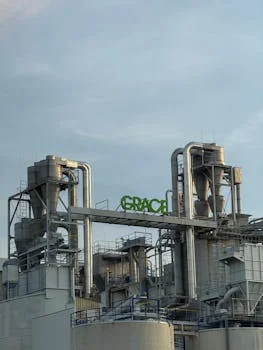
A robust hybrid ZLD configuration for SiC manufacturing utilizes a multi-stage sequence of DAF, high-rejection RO, and MVR evaporation to handle high solids loading while maintaining 99.9% water recovery. The process begins with a Dissolved Air Flotation (DAF) unit, which is essential for removing the bulk of the abrasive SiC load. Unlike sedimentation tanks, a DAF system for SiC particle removal utilizes micro-bubbles to lift chemically conditioned particles to the surface. For SiC applications, an air-to-solids ratio of 0.02–0.05 and a hydraulic loading rate of 5–10 m/h are recommended to achieve 95% removal efficiency for particles greater than 5 μm (HydropureWater field data, 2025).
Following flotation, the water enters a secondary filtration stage consisting of multi-media filters (sand and anthracite) followed by 1–5 μm cartridge filters. This stage is critical for protecting downstream high-rejection RO membranes for SiC wastewater. The RO stage typically operates at 75–85% recovery, utilizing phosphonate-based antiscalants at dosages of 2–5 mg/L to prevent the crystallization of residual silicates on the membrane surface. The resulting permeate (TDS <50 mg/L) is immediately available for reuse in cooling towers or as makeup water for ultrapure water (UPW) systems.
The RO concentrate, now highly laden with dissolved salts and residual SiC fines, is fed into a Mechanical Vapor Recompression (MVR) evaporator. To minimize scaling and energy intensity, the low-energy MVR evaporators for SiC concentrate operate at low temperatures (60–80°C). This stage reduces the liquid volume by another 90-95%, concentrating the brine to a Total Dissolved Solids (TDS) level of 200,000–300,000 mg/L. The final step involves a crystallizer or spray dryer, which converts the remaining brine into a solid cake with 10–20% moisture content. This solid byproduct is rich in SiC and can be diverted for SiC sludge valorization and recycling, where it is repurposed for abrasive manufacturing.
| System Stage | Key Technology | Engineering Specification | Expected Performance |
|---|---|---|---|
| Pretreatment | DAF + Coagulation | Hydraulic Load: 8 m/h | 95% TSS Removal |
| Fine Filtration | Multi-Media + Cartridge | Flux: 10–12 m/h | SDI < 3.0 |
| Membrane Recovery | High-Pressure RO | Pressure: 15–25 bar | 80% Water Recovery |
| Thermal Concentration | MVR Evaporator | Energy: 0.03 kWh/kg | 99% Water Recovery |
| Solidification | Crystallizer | Steam/Electric Heat | 99.9% ZLD Achievement |
SiC Wastewater ZLD Cost Breakdown: CAPEX, OPEX, and ROI for 2025
The total capital expenditure (CAPEX) for a 50 m³/h SiC fab ZLD system in 2025 averages $2.1 million, with operational costs (OPEX) stabilized at approximately $0.85 per cubic meter of treated water. The high CAPEX is primarily driven by the MVR evaporator, which accounts for nearly 60% of the equipment cost due to the need for corrosion-resistant materials like titanium or duplex stainless steel to handle high-chloride concentrates. However, when compared to the escalating costs of industrial water sourcing and hazardous waste disposal, the economic justification for wafer fab grinding wastewater ZLD systems has never been stronger.
OPEX is dominated by energy consumption, particularly in the RO and MVR stages. By utilizing MVR instead of traditional multi-effect evaporation (MEE), energy costs are reduced by over 70%, as the latent heat of the vapor is recycled back into the process. Maintenance costs for SiC systems are slightly higher than standard ZLD systems (estimated at $0.15/m³) to account for the periodic replacement of sacrificial wear components in pumps and valves exposed to residual abrasives. Despite these costs, the ROI is typically realized in 2.5 to 3.5 years for systems processing more than 30 m³/h.
| Cost Component | Estimated Value (50 m³/h System) | Percentage of Total |
|---|---|---|
| CAPEX: Pretreatment (DAF/Filters) | $120,000 | 6% |
| CAPEX: RO System | $350,000 | 17% |
| CAPEX: MVR Evaporator | $1,200,000 | 57% |
| CAPEX: Crystallizer & Automation | $430,000 | 20% |
| OPEX: Energy & Chemicals | $0.65 / m³ | 76% (of OPEX) |
| OPEX: Maintenance & Labor | $0.20 / m³ | 24% (of OPEX) |
The ROI is further accelerated by "sludge valorization." Recovered SiC solids from the crystallizer can be sold to abrasive manufacturers for $50–$100 per ton, depending on purity. When combined with the savings from avoided municipal water purchases (approx. $1.20/m³) and the elimination of discharge fines (which can exceed $200,000 per year for non-compliance), the system effectively pays for itself within the first 36 months of operation (HydropureWater financial modeling, 2025).
Decentralized vs. Centralized ZLD for SiC Fabs: Decision Framework
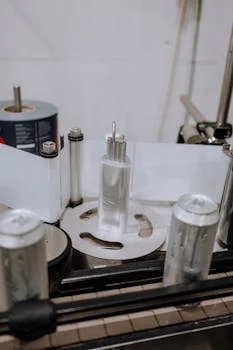
Decentralized ZLD systems at the tool level reduce cross-contamination risks and footprint (2–5 m² per tool) but typically incur 30% higher CAPEX per cubic meter compared to centralized plant-wide installations. For small-scale R&D fabs or facilities specializing in high-value boule grinding, decentralized units offer the flexibility to treat specific waste streams—such as those with high concentrations of expensive cooling lubricants—separately from the general fab effluent. This modularity allows for easier expansion as production capacity grows.
Conversely, centralized ZLD systems are the preferred choice for large-scale power electronics fabs processing over 50 m³/h. These systems benefit from significant economies of scale, particularly in the thermal evaporation stage