Why South Carolina Businesses Need Upgraded Sewage Treatment Equipment in 2025
South Carolina’s industrial and municipal sectors face strict wastewater discharge limits under DHEC and EPA NPDES permits, with fines up to $37,500/day for non-compliance (DHEC 2024). As the state’s industrial corridor continues to expand, particularly in the automotive and aerospace sectors, the regulatory pressure to maintain high-quality effluent has intensified. South Carolina DHEC’s 2025 NPDES permit updates mandate stricter discharge limits, including Biological Oxygen Demand (BOD) and Total Suspended Solids (TSS) concentrations below 30 mg/L and ammonia levels under 1.5 mg/L for many industrial dischargers. These benchmarks are increasingly difficult to meet with aging infrastructure.
A real-world scenario recently unfolded for a South Carolina textile manufacturer that was fined $2.1M in 2023 for repeated TSS limit violations. The facility was utilizing a legacy conventional activated sludge system that achieved only 60–70% TSS removal, which proved insufficient during peak production cycles. By upgrading to a high-efficiency Dissolved Air Flotation (DAF) system, which offers 92–97% TSS removal, the plant was able to stabilize its discharge and avoid further legal action. This case highlights a common pitfall in the region: relying on outdated 20th-century technology to meet 21st-century environmental standards.
The gap between conventional systems and modern solutions is significant. Conventional activated sludge (CAS) systems typically require massive footprints and struggle with fluctuating loads. In contrast, integrated MBR systems for space-constrained municipal plants in SC provide 99%+ TSS removal and effluent BOD levels below 1 mg/L. For industrial facilities dealing with high Fats, Oils, and Grease (FOG), DAF systems for South Carolina industrial projects offer a more robust alternative, removing up to 95% of contaminants before they reach municipal sewers. Beyond fines, the hidden costs of non-compliance include the loss of lucrative contracts, as major automotive OEMs now require suppliers to demonstrate ISO 14001 compliance and rigorous environmental stewardship.
Top Sewage Treatment Equipment Suppliers in South Carolina: Engineering Specs & Service Models
Regional equipment suppliers in South Carolina operate through various service models, ranging from direct manufacturer representatives to turnkey engineering firms. Understanding these distinctions is critical for procurement managers who need to balance initial capital expenditure with long-term technical support. In South Carolina, the supplier landscape is dominated by firms that provide localized representation for global technology brands, offering everything from individual pump components to full-scale package plants.
EW2 Environmental, with offices in Charlotte and Raleigh serving the South Carolina market, specializes in representing manufacturers like Evoqua and Xylem. Their focus is on high-capacity DAF systems (4–300 m³/h) and specialized chemical dosing skids. Combs & Associates, another Southeast powerhouse, provides a broader range of MBR systems and lamella clarifiers, often catering to municipal clients requiring high surface loading rates (20–40 m/h). ClearWater, Inc. focuses on the municipal sector, providing essential process equipment such as aeration systems and disinfection units. For decentralized projects, the SC Onsite Wastewater Association maintains a directory of vendors specializing in underground package plants, such as the WSZ series.
| Supplier | Primary Technology Focus | Capacity Range | Service Model |
|---|---|---|---|
| EW2 Environmental | DAF Systems, Chemical Dosing | 4 – 300 m³/h | Manufacturer Rep (Engineering Support) |
| Combs & Associates | MBR, Lamella Clarifiers | 10 – 2,000 m³/day | Regional Distributor (Turnkey Design) |
| ClearWater, Inc. | Pumps, Aeration, Disinfection | Scalable Municipal | Full-Service Process Solutions |
| SC Onsite Vendors | Package Plants (WSZ Series) | 5 – 500 m³/day | Decentralized Specialists |
The key differentiator among these suppliers lies in their engineering depth. While firms like EW2 and Combs & Associates focus on custom-engineered solutions tailored to specific industrial waste streams, ClearWater offers standardized municipal equipment designed for reliability and ease of maintenance. For projects requiring precise chemical control, integrating PLC-controlled chemical dosing for DHEC-compliant pretreatment is a standard recommendation from these regional experts to ensure consistent effluent quality.
Sewage Treatment Technologies Compared: DAF vs. MBR vs. Conventional Activated Sludge
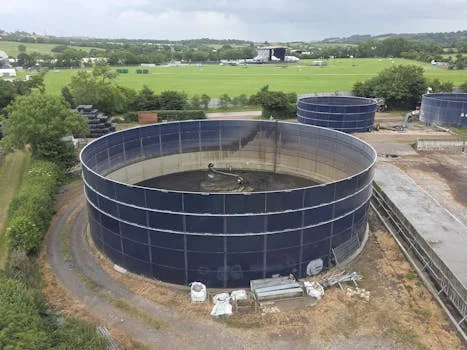
Modern sewage treatment requires a technology-to-waste-stream match to ensure both compliance and operational efficiency. In South Carolina, where land costs and energy prices are rising, the footprint and power consumption of equipment are just as important as the removal rates. Dissolved Air Flotation (DAF), Membrane Bioreactors (MBR), and Conventional Activated Sludge (CAS) represent the three primary tiers of technology available today.
DAF systems are the workhorses of the food processing and textile industries. They excel at removing non-soluble contaminants like FOG and TSS by using micro-bubbles to float particles to the surface for skimming. This process is significantly faster than gravity settling. MBR systems, on the other hand, combine biological treatment with membrane filtration. You can learn how MBR systems achieve 99%+ contaminant removal in South Carolina projects, producing effluent so clean it often qualifies for direct reuse in cooling towers or irrigation. Conventional activated sludge remains the baseline for large-scale municipal plants, though its large footprint (3–5 m²/m³/day) makes it less attractive for modern facility expansions.
| Feature | DAF | MBR (Integrated) | Conventional (CAS) |
|---|---|---|---|
| TSS Removal Rate | 92 – 97% | 99% + | 50 – 70% |
| BOD Effluent | Moderate (requires bio) | < 1 mg/L | 15 – 30 mg/L |
| Footprint (m²/m³/day) | 1.5 – 2.5 | 0.5 – 1.0 | 3.0 – 5.0 |
| Primary Use Case | Industrial (FOG/TSS) | Water Reuse / Small Sites | Large Municipal Plants |
When selecting technology, engineers must use a decision matrix based on the specific waste characteristics. If the influent has high FOG loads, a DAF is essential for pretreatment. Discover how DAF systems remove 95%+ FOG and TSS from industrial wastewater to protect downstream biological processes. If the site is space-constrained or requires high-quality effluent for reuse, MBR is the superior choice despite its higher energy requirements.
Cost Breakdown: CAPEX, OPEX, and ROI for South Carolina Projects
The total cost of ownership for South Carolina wastewater projects is heavily influenced by sludge disposal fees, which can account for 20-30% of annual OPEX in conventional systems. Evaluating equipment solely on initial purchase price (CAPEX) often leads to long-term financial strain. A comprehensive budget must include energy consumption, chemical requirements, and the cost of managing residual solids.
CAPEX for a standard 1 MGD (Million Gallons per Day) conventional plant typically ranges from $1.2M to $3M. While MBR systems may have a higher initial price tag ($200K–$2M depending on scale), their ability to produce high-quality effluent in a 60% smaller footprint can significantly reduce land acquisition and civil engineering costs. OPEX is where the technologies diverge further. DAF systems are relatively inexpensive to run ($0.05–$0.10/m³ for energy), though chemical costs for coagulation and flocculation must be factored in. MBR systems have higher energy needs for membrane scouring ($0.15–$0.30/m³) but virtually eliminate the need for secondary clarifiers and tertiary filtration. To see a detailed comparison, compare MBR and conventional activated sludge costs for South Carolina projects.
| Cost Factor | DAF System | MBR System | Conventional CAS |
|---|---|---|---|
| Typical CAPEX | $80K – $500K | $200K – $2M | $1.2M – $3M (1 MGD) |
| Energy OPEX (/m³) | $0.05 – $0.10 | $0.15 – $0.30 | $0.08 – $0.15 |
| Chemical OPEX (/m³) | $0.03 – $0.08 | $0.01 – $0.03 | $0.02 – $0.05 |
| Sludge Disposal | Moderate | Low (Highly Concentrated) | High |
ROI is driven by three main factors: avoided DHEC fines, water reuse savings, and operational efficiency. For example, a poultry processing plant in South Carolina recently switched from a conventional pond system to a DAF-based pretreatment unit. By achieving 95% TSS removal, they reduced their municipal surcharge fees by $450,000 annually, achieving a full ROI on the equipment in less than 18 months. with South Carolina water rates rising, the ability to reuse treated effluent for non-potable applications can save between $0.50 and $2.00 per cubic meter.
South Carolina Compliance Checklist: DHEC, EPA, and Local Requirements
South Carolina DHEC requires comprehensive engineering reports and operation & maintenance (O&M) manuals for all new sewage treatment installations to secure a Permit to Construct. Navigating the regulatory landscape requires a clear understanding of both state-level NPDES requirements and federal EPA pretreatment standards. Failure to align equipment specifications with these mandates during the design phase can lead to costly retrofits or permit denials.
- DHEC NPDES Permit Limits: Ensure equipment can consistently meet BOD <30 mg/L, TSS <30 mg/L, and Ammonia <1.5 mg/L.
- EPA Categorical Pretreatment Standards: For industrial users discharging to Publicly Owned Treatment Works (POTWs), verify limits for heavy metals (e.g., Copper <3.38 mg/L, Zinc <2.61 mg/L).
- Local Disinfection Ordinances: Municipalities like Charleston and Greenville often require UV or Chlorine Dioxide disinfection to meet strict fecal coliform standards.
- Equipment Certification: All electrical components must be UL listed, and any components touching potable water must meet NSF/ANSI 61 standards.
- Reuse Guidelines: If implementing water reuse, the system must comply with DHEC’s 2023 Reuse Guidelines, which require advanced filtration and continuous monitoring.
Documentation is the backbone of compliance. During a DHEC inspection, facility managers must produce up-to-date O&M manuals, operator training records, and certified lab results showing compliance with permit parameters. Selecting a supplier that provides automated data logging and remote monitoring capabilities can significantly simplify this process and reduce the risk of human error in reporting.
How to Select a Sewage Treatment Equipment Supplier in South Carolina
Evaluating a sewage treatment equipment supplier in South Carolina requires a weighted analysis of technical performance guarantees, local inventory availability, and DHEC-approved design history. Because wastewater treatment is a critical utility, the relationship with the supplier must extend beyond the initial sale to include long-term maintenance and emergency support. South Carolina’s climate and industrial diversity mean that "one-size-fits-all" solutions rarely succeed.
When vetting suppliers, prioritize those with at least 20 years of experience in the Southeast market. Local support is non-negotiable; verify that the supplier has a warehouse within a four-hour drive (such as Charlotte or the Upstate) to ensure rapid delivery of critical spare parts like membrane modules or chemical pumps. Request a list of DHEC-approved installations similar to your project scope. A major red flag is a supplier that provides vague cost estimates (e.g., ±30% variance) or lacks specific case studies showing performance data for South Carolina waste streams.
Negotiation should focus on performance guarantees. Rather than just purchasing a machine, negotiate a contract that guarantees a specific effluent quality (e.g., 95% TSS removal) under peak load conditions. Many top-tier suppliers now offer bundled O&M contracts, which can be advantageous for facilities without dedicated wastewater staff. Before signing, conduct a site visit to a current installation and interview the operators about the supplier’s after-sales responsiveness. Finally, ensure the supplier provides a robust training program for your staff, as even the most advanced MBR or DAF system will fail if not operated according to engineering specifications.
Frequently Asked Questions
What are the most common sewage treatment systems used in South Carolina?
DAF systems are the standard for industrial applications like food processing and textiles due to their high TSS and FOG removal rates. MBR systems are increasingly popular for municipal plants and industrial facilities with space constraints or water reuse goals. Conventional activated sludge remains common for large municipal projects where land is available.
How much does a DAF system cost for a 50,000 GPD facility in SC?
For a 50,000 GPD facility, CAPEX typically ranges from $120,000 to $250,000. This varies based on the level of automation and the need for upstream chemical pretreatment. Annual OPEX, including energy and chemicals, generally falls between $0.08 and $0.15 per cubic meter of treated water.
What permits are required for a new sewage treatment plant in South Carolina?
Direct dischargers require a DHEC NPDES permit. Industrial users discharging to a municipal sewer need an Industrial Pretreatment Permit. All new systems require a DHEC Permit to Construct and a Permit to Operate, a process that typically takes 6 to 12 months.
Can I reuse treated wastewater in South Carolina?
Yes, South Carolina encourages wastewater reuse for non-potable applications like irrigation and industrial cooling. MBR systems are ideal for this, as they produce high-quality effluent. However, you must obtain a specific reuse permit from DHEC and adhere to strict monitoring requirements.
What are the maintenance requirements for an MBR system?
MBR systems require daily monitoring of transmembrane pressure (TMP), monthly chemical clean-in-place (CIP) cycles using sodium hypochlorite, and quarterly membrane integrity tests. While maintenance is more technical than conventional systems, the automated nature of modern integrated MBRs reduces the total man-hours required.