Why Monocrystalline Silicon Wastewater Is Unique: Contaminants, Challenges & Regulatory Risks
Monocrystalline silicon wastewater treatment costs in 2025 range from $1.2M–$4.5M CAPEX for a 100–500 m³/h system, with OPEX of $0.22–$0.55/m³ depending on technology. Key cost drivers include silica removal (DAF systems add $0.10–$0.15/m³), TMAH neutralization (chemical costs $0.05–$0.12/m³), and sludge disposal (MBR reduces costs by 50% vs. conventional activated sludge). Hybrid systems (DAF + MBR + RO) achieve 95%+ water recovery but increase CAPEX by 30–40%. Use this guide to compare technologies, calculate ROI, and select cost-optimized equipment for your facility.
The production of monocrystalline silicon wafers involves high-precision sawing, grinding, and etching processes that generate a complex wastewater stream. Unlike generic industrial effluent, silicon wastewater is characterized by extreme concentrations of abrasive silica particles and highly toxic organic bases. According to 2024 EPA semiconductor benchmarks, typical influent contains 300–1,200 mg/L of suspended silica, 50–300 mg/L of Tetramethylammonium Hydroxide (TMAH), and 10–50 mg/L of heavy metals such as nickel, copper, and chromium. These parameters render standard municipal treatment designs obsolete.
Silica fouling represents the primary technical hurdle. While conventional clarifiers often struggle to achieve even 50% removal, specialized dissolved air flotation (DAF) systems can reach 85–95% efficiency. However, achieving this requires precise pH adjustment to a range of 6.5–7.5 and high-dose coagulants, typically Polyaluminum Chloride (PAC) at 50–100 mg/L. Failure to remove silica effectively leads to irreversible scaling in downstream Reverse Osmosis (RO) membranes, drastically increasing maintenance costs.
TMAH toxicity presents a significant regulatory risk. With an acute LC50 of just 10–20 mg/L for aquatic life, TMAH cannot be discharged into municipal sewers without intensive treatment. Neutralization using sulfuric acid is the standard approach, adding approximately $0.05–$0.12/m³ in chemical costs. Regulatory frameworks are tightening globally; China’s GB 8978-1996 limits silica to 20 mg/L and TMAH to 1 mg/L, while the EU Urban Waste Water Directive 91/271/EEC imposes even stricter limits for facilities near sensitive water bodies.
| Contaminant | Concentration Range | Primary Treatment Challenge | Regulatory Limit (Typical) |
|---|---|---|---|
| Suspended Silica | 300–1,200 mg/L | Abrasive fouling; RO membrane scaling | < 20 mg/L |
| TMAH | 50–300 mg/L | High aquatic toxicity; biological inhibition | < 1 mg/L |
| Heavy Metals (Ni, Cu, Cr) | 10–50 mg/L | Precipitation efficiency at varying pH | < 0.5 mg/L |
| Chemical Oxygen Demand (COD) | 500–2,000 mg/L | High organic load from surfactants | < 50 mg/L |
Cost Breakdown: CAPEX and OPEX for Monocrystalline Silicon Wastewater Treatment
Capital expenditures (CAPEX) for monocrystalline silicon wastewater systems are heavily influenced by flow rates and the required level of effluent purity. For a standard 100 m³/h capacity plant, CAPEX typically ranges between $1.2M and $1.8M. Large-scale solar wafer manufacturing facilities requiring 500 m³/h systems should budget between $2.5M and $4.5M. These figures include the core process equipment, instrumentation, and control systems required for semiconductor-grade discharge.
Technology selection is the most significant CAPEX variable. A standalone high-efficiency DAF system for silica removal costs between $300 and $500 per m³/h of capacity. In contrast, an MBR system for TMAH and organic removal carries a higher initial investment of $800–$1,200/m³/h due to the cost of membrane modules and aeration infrastructure. For facilities pursuing zero liquid discharge (ZLD), a hybrid DAF+MBR+RO configuration requires $1,500–$2,000/m³/h.
Operational expenditures (OPEX) are driven by energy, chemicals, and sludge management. Energy consumption typically accounts for $0.08–$0.15/m³, while chemical dosing for silica and TMAH adds $0.05–$0.12/m³. Sludge disposal is a critical "hidden" cost; however, MBR systems can reduce sludge volume by up to 50% compared to conventional activated sludge (CAS), resulting in disposal costs as low as $0.02–$0.06/m³. Membrane replacement cycles for MBR and RO systems should be budgeted at $0.04–$0.08/m³ over a 3-to-5-year lifespan.
| Operational Cost Driver | Baseline Cost ($/m³) | Impact of 10% Silica Increase | Impact of 10% TMAH Increase |
|---|---|---|---|
| Energy Consumption | $0.12 | +2% (pumping) | +5% (aeration) |
| Chemical Dosing | $0.08 | +15% (coagulants) | +12% (neutralizers) |
| Sludge Disposal | $0.04 | +20% (solids volume) | Minimal |
| Maintenance/Labor | $0.06 | +10% (cleaning) | Minimal |
| Total OPEX | $0.30 | +$0.05 (16.6% increase) | +$0.02 (6.6% increase) |
Technology Comparison: DAF vs. MBR vs. Hybrid Systems for Silicon Wastewater
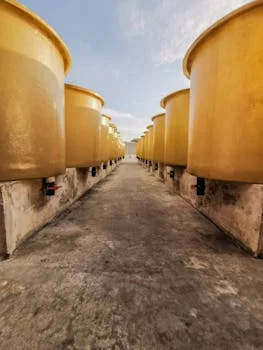
Selecting the correct technology requires a trade-off between initial cost and contaminant removal efficiency. Dissolved Air Flotation (DAF) is the industry standard for primary pretreatment. It excels at removing the bulk of suspended silica (85–95%) through micro-bubble flotation. While DAF is the most affordable CAPEX option ($300–$500/m³/h), its ability to treat dissolved organics like TMAH or heavy metals is limited to 30–50% removal, making it insufficient as a standalone solution for modern regulatory compliance.
Membrane Bioreactor (MBR) systems represent a significant upgrade in performance. By combining biological treatment with ultrafiltration, MBRs achieve 95%+ COD removal and 99%+ Total Suspended Solids (TSS) removal. For monocrystalline silicon manufacturers, the primary advantage of an MBR system for TMAH and organic removal is the high biomass concentration, which allows for the degradation of complex nitrogenous compounds that would kill conventional bacteria. MBRs also offer a 60% smaller footprint than CAS systems, a critical factor for urban manufacturing hubs.
For manufacturers aiming for Zero Liquid Discharge (ZLD) or high-quality water reuse, a hybrid system is mandatory. This design integrates DAF for silica removal, MBR for organic stabilization, and an RO system for metal removal and water reuse. This combination achieves 95%+ water recovery, allowing the facility to cycle treated water back into the cooling towers or polishing loops. While the CAPEX is 30–40% higher than standalone systems, the reduction in raw water procurement costs often justifies the investment. To understand broader industry trends, consult our solar wastewater treatment cost guide.
| Technology | Silica Removal | TMAH Removal | Metal Removal | Space Efficiency |
|---|---|---|---|---|
| DAF Standalone | 85–95% | < 30% | < 40% | Moderate |
| MBR Standalone | < 60% | 90–95% | < 50% | High |
| RO Standalone | N/A (Fouls) | 80–90% | 99%+ | High |
| Hybrid (DAF+MBR+RO) | 99%+ | 99%+ | 99%+ | Optimized |
ROI Calculator: How to Justify Wastewater Treatment Investment for Solar Manufacturers
Justifying a multi-million dollar investment in wastewater equipment requires a clear financial framework. The return on investment (ROI) for monocrystalline silicon facilities is typically driven by three factors: water reuse savings, elimination of regulatory fines, and operational efficiency gains. For a 500 m³/h plant, achieving 95% water recovery saves approximately 475,000 m³ of water annually. At an average industrial water cost of $1.50/m³, this yields $712,500 in annual savings on procurement alone.
Regulatory compliance provides an immediate "insurance" ROI. In regions with strict enforcement like Jiangsu or Guangdong, non-compliance with GB 8978 standards can result in fines ranging from $50,000 to $200,000 per year, not including the cost of potential production shutdowns. upgrading from CAS to MBR technology can reduce sludge disposal costs by 50% due to higher solids retention times and lower sludge yields, saving an additional $15,000–$30,000 annually for a mid-sized facility. For a deeper look at biological vs. mechanical costs, see our MBR vs. CAS cost comparison.
"A real-world case study of a 300 m³/h solar wafer facility in Jiangsu, China, demonstrated the power of hybrid system ROI. By installing a DAF + MBR + RO configuration, the plant reduced its raw water intake by 92% and avoided $120,000 in annual environmental surcharges. The total system CAPEX of $2.2M was recovered in just 3.2 years through combined water savings and reduced sludge handling costs." (HydropureWater field data, 2025)
To calculate your specific payback period, follow this four-step formula:
- Calculate Annual Water Savings: (Daily Flow × Recovery Rate %) × Days Operational × Local Water Rate.
- Calculate OPEX Savings: Compare current chemical/sludge costs against the projected performance of MBR/DAF systems.
- Estimate Risk Mitigation: Factor in the average annual cost of fines and potential downtime.
- Divide Total CAPEX by Annual Savings: This provides the payback period in years.
Decision Framework: Selecting the Right Wastewater Treatment System for Your Facility
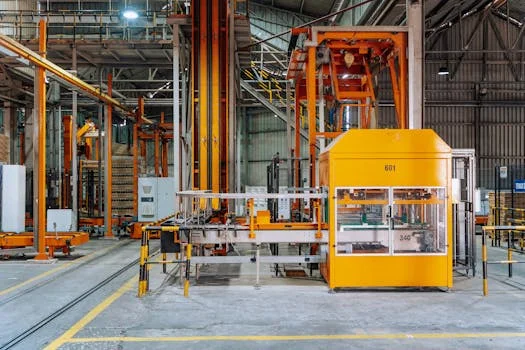
Choosing the optimal treatment system involves aligning your facility’s specific contaminant profile with your long-term operational goals. The first step is a detailed influent analysis. If your silica levels exceed 500 mg/L, a DAF system is a non-negotiable pretreatment step to protect downstream equipment. If TMAH concentrations are higher than 100 mg/L, an MBR is required to provide the biological stability needed for organic degradation. For facilities with heavy metal concentrations above 10 mg/L, an RO stage must be integrated to meet discharge or reuse standards.
Space constraints also dictate technology selection. Urban "vertical" fabs often lack the land for large sedimentation tanks, making the compact footprint of an MBR system the only viable choice. Conversely, greenfield sites may prioritize the lower CAPEX of DAF systems if water reuse is not a primary objective. Budget alignment is the final filter: CAPEX-sensitive projects should focus on modular DAF units, while OPEX-sensitive facilities should invest in MBR systems to lower long-term sludge and energy costs. For specialized semiconductor applications, review our semiconductor wastewater treatment solutions.
| If your priority is... | And your influent has... | The Recommended System is... |
|---|---|---|
| Minimum CAPEX | High Silica, Low TMAH | DAF + Chemical Precipitation |
| Regulatory Compliance | High TMAH, High COD | DAF + MBR | High Metals, High Silica | Hybrid (DAF + MBR + RO) |
| Limited Footprint | General Silicon Waste | Integrated MBR System |
Frequently Asked Questions
What is the typical payback period for a monocrystalline silicon wastewater treatment system?
For most solar wafer manufacturers, the payback period ranges from 2.5 to 4 years. This is primarily driven by water reuse savings and the reduction of sludge disposal costs when using MBR technology.
How does MBR compare to DAF for silica removal in solar wafer production?
DAF is significantly more effective at removing suspended silica (85–95%) through physical flotation. MBR is not designed for primary silica removal but is essential for treating the dissolved organics (TMAH) that DAF cannot remove.
What are the hidden costs of zero liquid discharge (ZLD) for silicon wastewater?
The most common hidden costs include the high energy consumption of evaporators (if used) and the frequent replacement of RO membranes if silica pretreatment via DAF is insufficient.
Can I use a conventional activated sludge (CAS) system for monocrystalline silicon wastewater?
It is not recommended. The high concentrations of TMAH are often toxic to the lower-density biomass in CAS systems, leading to frequent biological upsets and failure to meet discharge limits.
What are the latest regulatory limits for TMAH and silica in China and the EU?
In China, GB 8978-1996 generally requires silica below 20 mg/L and TMAH below 1 mg/L for direct discharge. EU standards vary by country but often follow the 91/271/EEC directive, which emphasizes nitrogen and phosphorus removal in sensitive areas.
Further Reading

Explore these in-depth articles on related wastewater treatment topics: