PV wastewater treatment costs in 2025 average $0.80–$2.50 per m³ for conventional systems, with energy expenses accounting for 30–50% of OPEX. Solar-powered systems can reduce energy costs by 40–70%, achieving payback in 5–8 years (per EPA 2024 benchmarks). Floating PV installations, like the Kelseyville Wastewater Treatment Plant, further cut costs by minimizing land use and reducing algae growth in treatment ponds.
Why PV Manufacturers Are Turning to Solar-Powered Wastewater Treatment
Energy costs represent 30–50% of the operational expenditure (OPEX) for photovoltaic (PV) wastewater treatment, driving manufacturers toward sustainable energy solutions (EPA 2024 data). The manufacturing processes for PV cells and modules, particularly in wafer cutting, etching, and cleaning, generate high-TDS (total dissolved solids) wastewater, typically ranging from 500–3,000 mg/L. This complex effluent often contains heavy metals, fluoride, organic solvents, and suspended solids, necessitating energy-intensive treatment technologies such as reverse osmosis (RO) and membrane bioreactors (MBR).
The financial burden of these energy-intensive processes is substantial. For a PV plant manager, escalating electricity prices directly impact the high-salinity wastewater treatment for PV manufacturers budget, eroding profitability. This economic pressure is a primary driver for exploring alternative energy sources. Beyond cost, environmental stewardship and regulatory compliance play a critical role. Regulations like the EU Industrial Emissions Directive 2010/75/EU mandate stringent discharge limits, pushing manufacturers to adopt advanced, often more energy-demanding, treatment methods. Integrating solar energy for wastewater treatment offers a dual benefit: reducing the photovoltaic wastewater treatment cost while demonstrating commitment to corporate sustainability goals.
Real-world applications validate this shift. The Kelseyville Wastewater Treatment Plant, for instance, achieved a 60% reduction in energy costs by deploying floating PV panels. This not only provided low-cost, clean energy but also minimized land use and reduced algae growth in treatment ponds, improving water quality and reducing maintenance. Such successes highlight the tangible benefits of transitioning from conventional energy sources to integrated solar solutions for industrial wastewater treatment.
PV Wastewater Treatment Cost Breakdown: CAPEX, OPEX, and Hidden Expenses
Capital expenditure (CAPEX) for conventional PV wastewater treatment systems typically ranges from $500,000 to $5 million for facilities processing 50–500 m³/day, based on 2025 industry benchmarks. This initial investment covers civil works, equipment procurement, installation, and commissioning. The specific CAPEX varies significantly based on treatment capacity, influent characteristics, desired effluent quality, and the complexity of the chosen technologies. For instance, systems incorporating advanced MBR systems for high-efficiency PV wastewater treatment or zero liquid discharge (ZLD) components will incur higher initial costs.
Operational expenditure (OPEX) for photovoltaic wastewater treatment is a continuous financial commitment, with energy consumption being the largest component. A typical breakdown of wastewater treatment CAPEX OPEX includes:
- Energy: 40% (for pumps, aerators, mixers, membrane filtration)
- Chemicals: 25% (coagulants, flocculants, pH adjusters, disinfectants)
- Labor: 15% (operators, technicians, supervisory staff)
- Maintenance: 10% (parts replacement, routine servicing)
- Sludge Disposal: 10% (transportation, landfill fees, dewatering)
Beyond these direct costs, several hidden expenses often impact the long-term economic viability of a PV wastewater treatment plant. Permitting and regulatory compliance can range from $20,000 to $100,000, covering environmental impact assessments, discharge permits, and ongoing monitoring. Land use, if dedicated plots are required for treatment facilities, represents a significant cost, especially in areas with high real estate values. membrane replacement for advanced systems like MBR and RO can cost between $50,000 and $200,000 every 5–7 years, depending on membrane type, usage, and influent quality.
The quality of the influent wastewater directly impacts treatment costs. High concentrations of fluoride, heavy metals (e.g., lead, cadmium), or elevated pH levels necessitate more intensive and costly pretreatment steps, such as chemical precipitation, ion exchange, or specialized adsorption, to meet discharge limits and protect downstream equipment. Neglecting these influent characteristics can lead to premature equipment failure, increased chemical consumption, and higher overall PV wastewater treatment cost.
| Cost Category | Range (USD) | Notes |
|---|---|---|
| CAPEX (50-500 m³/day) | $500,000 – $5,000,000 | Civil works, equipment, installation, commissioning |
| OPEX (Per m³) | $0.80 – $2.50 | Includes energy, chemicals, labor, maintenance, sludge |
| Energy (as % of OPEX) | 30% – 50% | Major operational expense |
| Chemicals (as % of OPEX) | 20% – 30% | Coagulants, pH adjusters, disinfectants |
| Permitting & Compliance | $20,000 – $100,000 | Initial and ongoing regulatory fees |
| Membrane Replacement (MBR/RO) | $50,000 – $200,000 | Every 5-7 years, system dependent |
Solar Energy for PV Wastewater Treatment: Engineering Specs and ROI
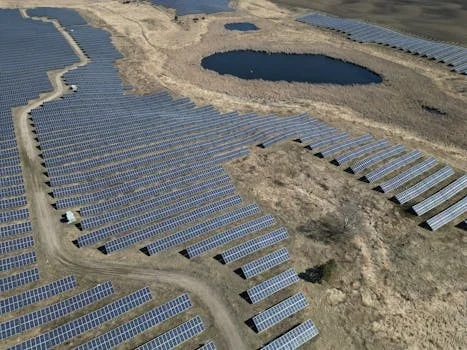
Integrating solar energy into photovoltaic (PV) wastewater treatment systems can offset 40–70% of energy consumption, achieving payback periods as short as 5–8 years (EPA 2024 data). This substantial reduction in PV wastewater treatment cost is achieved by carefully sizing the solar array to meet the facility's specific energy demands. A general rule of thumb is that 1 kW of solar capacity can offset approximately 1,200 kWh per year. For a typical PV manufacturing plant treating 200 m³/day of wastewater, an estimated 50–100 kW solar array is often sufficient to cover a significant portion of the treatment system's energy needs, depending on local solar insolation and system efficiency.
To ensure 24/7 operation of critical wastewater treatment processes, battery storage systems are typically required. These systems store excess solar energy generated during peak sunlight hours for use during nighttime or cloudy periods. Current 2025 benchmarks indicate battery storage costs ranging from $200–$400 per kWh, a cost that continues to decline. The sizing of battery storage depends on the desired autonomy (how long the system can run without grid power or sunlight) and the specific energy profile of the treatment plant.
The return on investment (ROI) for solar energy for wastewater treatment is compelling. Payback periods for solar-powered systems typically range from 5–8 years, a stark contrast to the 10–15 years often seen for systems relying solely on conventional grid electricity. This accelerated payback is driven by reduced operational costs, particularly the significant savings on electricity bills, and often enhanced by government incentives. the lifecycle cost analysis consistently favors solar integration over the 20-25 year lifespan of a PV system.
One innovative approach is floating PV wastewater treatment. Deploying solar panels on treatment ponds or reservoirs offers several advantages: it eliminates the need for expensive land acquisition, reduces water evaporation, and minimizes algae growth by shading the water body. Crucially, studies like the Kelseyville case study demonstrate that the cooling effect of the water can improve solar panel efficiency by 5–10% compared to ground-mounted systems, further boosting energy output and financial returns.
| Parameter | Typical Value/Range | Notes |
|---|---|---|
| Solar Capacity (per 1 kW) | ~1,200 kWh/year offset | Assumes average solar insolation |
| Array Size (for 200 m³/day plant) | 50–100 kW | Varies by energy demand & climate |
| Energy Offset Potential | 40% – 70% | Dependent on system design & climate |
| Battery Storage Cost | $200 – $400/kWh | 2025 industry benchmarks |
| Solar System Payback Period | 5 – 8 years | Compared to 10-15 years for conventional |
| Floating PV Efficiency Boost | 5% – 10% | Due to water cooling effect |
Cost Comparison: Solar vs. Conventional Energy for PV Wastewater Treatment
Conventional grid electricity for PV wastewater treatment plants currently averages $0.12–$0.20 per kilowatt-hour (kWh) in 2025, significantly higher than the levelized cost of solar energy. These figures are subject to regional variations, utility rate structures, and peak demand charges, which can inflate PV wastewater treatment cost. Relying solely on grid power exposes manufacturers to volatile energy markets and unpredictable future price increases, directly impacting operational budgets.
In contrast, the levelized cost of solar energy for wastewater treatment, which includes the initial CAPEX and ongoing operation and maintenance (O&M) spread over the system's lifespan, typically ranges from $0.05–$0.10/kWh. This lower and more predictable cost provides long-term budget stability and hedges against energy price fluctuations. When evaluating the lifecycle cost analysis, a solar-powered wastewater treatment system for a 200 m³/day plant can realize savings of $1 million to $3 million over its 20-year operational lifespan compared to a conventional grid-powered system.
various financial mechanisms and government incentives significantly improve the ROI of solar integration. Net metering policies allow PV plants to export excess electricity back to the grid, receiving credits that further reduce their overall energy bill. In the U.S., the Investment Tax Credit (ITC) can cover up to 30% of the solar system's cost, dramatically lowering the initial investment and accelerating the payback period. Similar incentives exist globally, making solar a financially attractive option for reducing wastewater treatment CAPEX OPEX.
| Energy Source | Cost per kWh (USD) | Lifecycle Savings (20-year, 200 m³/day plant) | Cost Stability |
|---|---|---|---|
| Conventional Grid Electricity | $0.12 – $0.20 | Baseline (no savings) | Volatile, subject to market fluctuations |
| Solar Energy (Levelized Cost) | $0.05 – $0.10 | $1,000,000 – $3,000,000 | Stable, predictable over system lifespan |
Cost-Optimized Equipment Selection for PV Wastewater Treatment
Selecting cost-optimized equipment for photovoltaic (PV) wastewater treatment requires matching system components to specific influent characteristics and desired effluent quality while balancing capital and operational expenses. The initial step in any photovoltaic wastewater treatment scheme is pretreatment, typically involving DAF systems for PV wastewater pretreatment and coarse solids removal. Rotary mechanical bar screens (e.g., HydropureWater GX Series) effectively remove large debris, protecting downstream equipment, with CAPEX ranging from $20,000–$100,000.
Primary treatment often utilizes Dissolved Air Flotation (DAF) systems (e.g., HydropureWater) to efficiently remove oils, grease (FOG), and suspended solids. DAF systems are critical for reducing the organic load and turbidity, costing between $50,000–$300,000. For secondary treatment of high-TDS wastewater, Membrane Bioreactor (MBR) systems (e.g., HydropureWater DF Series) are highly effective, providing superior effluent quality suitable for reuse. MBR systems, which combine biological treatment with membrane filtration, represent a significant investment, ranging from $200,000–$1,000,000, but offer a compact footprint and consistent performance.
Tertiary treatment, particularly for plants aiming for water reuse or ZLD solutions for PV wastewater, often involves Reverse Osmosis (RO) systems. RO systems effectively remove dissolved salts and remaining contaminants, producing high-purity water, with costs typically between $100,000–$500,000. Finally, sludge dewatering cost reduction is achieved through equipment like plate and frame filter presses (e.g., HydropureWater Series). These presses reduce sludge volume by 70–90%, significantly lowering disposal costs, with CAPEX ranging from $30,000–$200,000. Matching equipment to influent quality—for example, selecting specific fluoride removal technologies if high fluoride levels are present, or robust pH adjustment systems for highly acidic or alkaline streams—is crucial for both cost-effectiveness and regulatory compliance.
Frequently Asked Questions
Addressing common inquiries regarding photovoltaic (PV) wastewater treatment costs and solar integration provides clarity for decision-makers evaluating system upgrades and new installations.
What is the average PV wastewater treatment cost per m³?
The average cost for conventional PV wastewater treatment in 2025 ranges from $0.80–$2.50 per m³. This figure includes operational expenses such as energy, chemicals, labor, maintenance, and sludge disposal, which vary based on influent quality and treatment complexity.
How much energy can solar save for wastewater treatment?
Solar-powered systems can reduce the energy costs of PV wastewater treatment by 40–70%. This significant offset depends on factors like the solar array's size, local solar insolation, and the specific energy demands of the treatment plant's equipment.
What are the main CAPEX components for a PV wastewater plant?
Key CAPEX components for a PV wastewater treatment plant include civil works, equipment procurement (e.g., MBRs, DAFs, RO systems, filter presses), installation costs, and commissioning. These typically range from $500,000 to $5 million for systems treating 50–500 m³/day.
How does floating PV benefit wastewater treatment?
Floating PV installations offer multiple benefits: they minimize land use requirements, reduce water evaporation from treatment ponds, and suppress algae growth. Additionally, the water's cooling effect can enhance solar panel efficiency by 5–10% compared to land-based arrays.
What is the payback period for solar-powered PV wastewater treatment?
Solar-powered PV wastewater treatment systems typically achieve a payback period of 5–8 years. This accelerated ROI is driven by substantial reductions in energy costs and often boosted by government incentives and tax credits for renewable energy adoption.
Related Equipment

The following HydropureWater products are engineered for the wastewater challenges discussed above:
- filter presses to reduce PV sludge disposal costs — view specifications, capacity range, and technical data
Need a customized solution? Request a free quote with your specific flow rate and pollutant parameters.