In Angola, a 5,000 m³/day municipal wastewater treatment plant costs $2.5M–$4.2M in CAPEX (2025), with OPEX ranging from $0.35–$0.65/m³ depending on technology. For example, an MBR system achieves 99%+ contaminant removal but requires 30% higher CAPEX than conventional activated sludge, while DAF systems offer 40% cost savings for industrial pretreatment. Local factors like 14% import duties on equipment and $0.12/kWh electricity (vs $0.08 in South Africa) add 15–20% to total costs. Use this guide to model your project’s budget with Angola-specific data.
Why Wastewater Treatment Costs in Angola Are Unique: 5 Local Factors That Drive Your Budget
Angola’s 14% import duty on wastewater equipment adds 15–20% to total CAPEX compared to neighboring SADC countries that may offer exemptions for essential infrastructure. While international benchmarks often cite equipment costs as a fixed percentage of the project, the Angola Customs 2024 tariff schedule necessitates a higher contingency for logistics and duties. For engineers and municipal planners, this means that a system priced at $1M in a free-trade zone will effectively cost $1.15M–$1.2M by the time it reaches a site in Luanda or Huambo.
Labor and energy further distort the budget. Skilled operators in Angola command $8–$15/hour, which is significantly higher than rates in India ($3–$5) but remains 60% lower than in South Africa ($20–$30/hour). However, the real driver of long-term expenditure is electricity. At $0.12/kWh (industrial rate, 2025), power is 50% more expensive than in South Africa and double the cost of China. This makes aeration-heavy processes like MBR particularly sensitive to energy price fluctuations. Conversely, local material availability offers a slight reprieve; concrete and steel are 25% cheaper than in Europe, though they remain 30% more expensive than in China according to the Angola Construction Cost Index 2024.
| Cost Driver | Angola Rate (2025) | Budget Impact | Comparison/Benchmark |
|---|---|---|---|
| Import Duties | 14% (Standard Tariff) | +15–20% CAPEX | 0% in many SADC infrastructure zones |
| Electricity | $0.12/kWh | +30% OPEX for Aeration | $0.08/kWh in South Africa |
| Skilled Labor | $8–$15/hour | 20% of Total OPEX | $20–$30/hour in South Africa |
| Concrete/Steel | Local Index 2024 | -25% vs. Europe | +30% vs. China |
| Permitting/EIA | $50k–$200k | Fixed CAPEX cost | Per Ministry of Environment 2023 fees |
Finally, regulatory fees for Environmental Impact Assessments (EIAs) and discharge permits can range from $50,000 to $200,000 per the Angola Ministry of Environment 2023 fee schedule. These upfront costs must be amortized over the plant's life, particularly for smaller industrial projects where they represent a larger percentage of the initial investment.
Wastewater Treatment Plant Cost Breakdown: CAPEX and OPEX by Plant Size and Technology
CAPEX for 1,000–10,000 m³/day plants in Angola (2025) ranges from $1.2M to $8.5M, with Membrane Bioreactor (MBR) systems consistently costing 30% more than conventional activated sludge due to membrane costs and advanced control requirements. According to internal HydropureWater field data (2025), the total cost of ownership is heavily weighted toward energy (40%) and chemicals (25%), with labor and maintenance comprising the remaining 35%. This is a critical distinction for procurement officers evaluating global cost benchmarks for WWTPs, as the high energy rates in Angola favor technologies that optimize oxygen transfer efficiency.
For a standard 5,000 m³/day municipal project, an activated sludge plant typically costs $3.2M CAPEX with an OPEX of $0.45/m³. In contrast, an MBR plant of the same capacity requires $4.2M CAPEX and $0.55/m³ OPEX. While the MBR is more expensive, it achieves 99%+ contaminant removal, making it the preferred choice for water reuse applications in Luanda’s industrial parks. For industrial pretreatment, DAF pretreatment for Angola’s industrial wastewater can reduce downstream biological costs by up to 40% by removing fats, oils, and grease (FOG) before they reach the main treatment stage. This adds $500K–$1.2M in CAPEX but significantly lowers the complexity of the biological system.
| Flow Rate (m³/day) | Technology | CAPEX ($ USD) | OPEX ($/m³) | Removal Efficiency (%) |
|---|---|---|---|---|
| 1,000 | Activated Sludge | 1.2M – 1.5M | 0.48 | 90–95% |
| 1,000 | MBR | 1.6M – 1.9M | 0.62 | 99%+ |
| 5,000 | Activated Sludge | 3.2M – 3.8M | 0.45 | 90–95% |
| 5,000 | MBR | 4.2M – 4.9M | 0.55 | 99%+ |
| 10,000 | Activated Sludge | 6.5M – 7.2M | 0.38 | 90–95% |
| 10,000 | MBR | 8.5M – 9.8M | 0.48 | 99%+ |
To maintain these efficiencies, chemical dosing for Angola’s municipal WWTPs must be automated to compensate for the high variability in influent quality. Manual dosing often leads to chemical waste, which, at 25% of OPEX, can quickly erode a project's profitability.
Engineering Specs for Angola: Contaminant Loads, Removal Targets, and Process Design
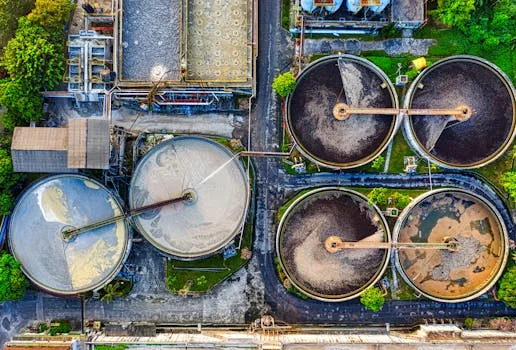
Municipal wastewater in Angola typically exhibits 300–600 mg/L BOD and 250–500 mg/L TSS, reflecting the high organic density of urban sewage in Luanda and Benguela. According to World Bank 2023 data, ammonia nitrogen (NH₃-N) levels range from 30 to 60 mg/L, requiring robust nitrification cycles in the process design. For industrial sectors such as mining and oil and gas, the contaminant profile shifts toward 1,000–5,000 mg/L COD and significant heavy metal concentrations, which must be treated according to the Angola Ministry of Environment 2024 discharge limits.
Angola Decree 47/2023 mandates 90%+ removal for BOD and TSS in municipal applications and up to 95%+ for industrial effluents. Meeting these targets requires precise process selection. While a 1.7 MGD (approx. 6,400 m³/day) conventional activated sludge plant is sufficient for basic discharge compliance, MBR systems for Angola’s water reuse projects are necessary when the effluent is destined for irrigation or industrial cooling. The higher removal efficiency of MBR (99%+ for BOD and bacteria) ensures that the water meets WHO guidelines for non-potable reuse, a critical factor in Angola’s water-scarce regions.
| Parameter | Influent (Municipal) | Effluent Target (Decree 47/2023) | Required Technology |
|---|---|---|---|
| BOD₅ (mg/L) | 300 – 600 | < 25 | AS or MBR |
| TSS (mg/L) | 250 – 500 | < 35 | AS or MBR |
| NH₃-N (mg/L) | 30 – 60 | < 10 | Nitrification/Denitrification |
| COD (mg/L) | 600 – 1,200 | < 125 | AS or MBR |
| Oil & Grease | 50 – 150 | < 10 | DAF Pretreatment |
For industrial facilities, how DAF systems work for industrial pretreatment is essential knowledge for plant managers. By removing 95% of FOG and suspended solids before biological treatment, DAF systems protect the sensitive bacteria in activated sludge or MBR tanks, preventing "slug" loads from crashing the system and causing regulatory non-compliance.
MBR vs Activated Sludge vs DAF: Cost Comparison and Decision Framework for Angola
MBR technology provides 99%+ contaminant removal and a 60% smaller footprint than conventional systems, though it carries a 30% higher CAPEX and 20% higher OPEX due to the energy required for membrane scouring. In the context of Luanda, where land value is high and water scarcity is a recurring issue, the ability to reuse effluent for irrigation or cooling towers often justifies the premium. However, it is important to note that the high energy costs in Angola ($0.12/kWh) can make MBR less attractive for off-grid sites without dedicated renewable power.
Activated sludge remains the standard for large-scale municipal plants where land is available. It offers the lowest CAPEX ($3.2M for 5,000 m³/day) but requires more intensive manual operation and a larger footprint for clarifiers. For industrial operators in the food processing or mining sectors, DAF is often the most cost-effective first step. A DAF system can achieve 95%+ removal of Fats, Oils, and Grease (FOG) and TSS at 40% lower CAPEX than biological systems, though it cannot remove dissolved organics (BOD) on its own. For a detailed cost comparison of MBR and activated sludge, engineers must weigh the cost of land versus the cost of power and membranes.
| Feature | MBR | Activated Sludge | DAF (Pretreatment) |
|---|---|---|---|
| CAPEX | High ($$$) | Medium ($$) | Low ($) |
| OPEX | High (Energy/Membranes) | Medium (Labor) | Low (Chemicals) |
| Footprint | Smallest (40% of AS) | Large | Compact |
| Effluent Quality | Ultra-High (Reuse ready) | Good (Discharge only) | Pre-treated only |
| Best Use Case | Water Reuse / Small Space | Municipal Discharge | Industrial FOG/TSS |
In Angola's specific economic climate, the decision framework should prioritize energy source. If a site relies on diesel generators, the high energy demand of MBR may be prohibitive. In such cases, solar-powered DAF or traditional activated sludge with high-efficiency diffusers is more sustainable. Conversely, for urban developments with stable grid access and a need for landscape irrigation, MBR is the clear winner.
ROI Calculator: How to Justify Your Wastewater Treatment Plant Investment in Angola
Compliance savings represent the most immediate return on investment for WWTPs in Angola, as companies can avoid $50,000–$500,000 per year in fines under Angola Decree 47/2023. For a 5,000 m³/day plant, the avoidance of these penalties alone can cover 10-15% of the initial CAPEX within the first year of operation. water reuse creates a direct revenue stream or cost-offset. MBR effluent can replace 30–50% of freshwater consumption for non-potable needs, saving between $0.50 and $1.50/m³ based on current World Bank 2024 water tariff data for the region.
Energy optimization is the third pillar of ROI. Implementing solar-powered DAF or activated sludge systems can cut energy costs by 40%, leveraging Angola Renewable Energy Agency 2025 incentives. The standard ROI formula for these projects is: (Annual Savings from Compliance + Water Reuse + Energy Savings) / (CAPEX + Annual OPEX). For a typical $3.2M activated sludge plant saving $200,000 in fines and $150,000 in water costs, the payback period is approximately 3.5 years.
Example ROI Calculation (5,000 m³/day Plant):
CAPEX: $3,200,000
Annual OPEX: $821,250 ($0.45/m³ * 365 days * 5,000)
Annual Savings (Fines): $200,000
Annual Savings (Water Reuse): $150,000
Payback Period: ~3.5 Years (Adjusted for 14% duty and local labor)
Planners should use a localized ROI calculator framework that accounts for the 14% import duty on the initial investment and the $0.12/kWh energy rate. By factoring in the escalating cost of freshwater and the increasing strictness of environmental enforcement, the financial case for advanced treatment technology becomes significantly stronger over a 10-year horizon.
Frequently Asked Questions
What is the average cost of a wastewater treatment plant in Angola?
For a 5,000 m³/day municipal plant, CAPEX ranges from $2.5M (activated sludge) to $4.2M (MBR), with OPEX of $0.35–$0.65/m³ based on 2025 data. Industrial pretreatment systems like DAF typically cost between $500K and $1.2M depending on the contaminant load.
How do Angola’s wastewater treatment standards compare to global benchmarks?
Angola’s Decree 47/2023 is largely aligned with the EU Urban Waste Water Directive 91/271/EEC regarding BOD and TSS limits. However, Angola maintains stricter limits for heavy metals, such as a 0.1 mg/L limit for chromium, which is more stringent than the 0.5 mg/L standard found in South Africa.
What are the biggest cost drivers for WWTPs in Angola?
The primary cost drivers are import duties (14%), high industrial energy costs ($0.12/kWh), and skilled labor ($8–$15/hour). Together, these local variables add 15–30% to the cost of projects compared to global benchmarks. Incorporating solar power can mitigate energy costs by up to 40%.
Can I reuse treated wastewater in Angola?
Yes, treated wastewater reuse is encouraged, particularly for industrial and agricultural applications. However, to meet safety standards, MBR or advanced tertiary treatment is required. MBR effluent currently meets WHO guidelines for non-potable reuse, such as industrial cooling and municipal irrigation.
What financing options are available for WWTPs in Angola?
Financing is available through the World Bank (e.g., the $45.58M Lobito/Benguela project) and the Angola 2025 Green Fund for municipal projects. Private industrial plants often access equipment financing through export credit agencies, such as the China Exim Bank, which frequently supports infrastructure development in the region.