Advanced Packaging Wastewater Treatment: 2025 Case Study with 99.5% COD Removal & Zero-Liquid-Discharge Blueprint
A groundbreaking 2025 case study from a corrugated packaging plant in Shandong, China, demonstrated a 99.5% Chemical Oxygen Demand (COD) removal, reducing influent levels from 4,200 mg/L to below 20 mg/L, utilizing an integrated MBBR-electrochemical advanced packaging wastewater treatment system. This facility's zero-liquid-discharge (ZLD) design, which strategically combined a high-efficiency DAF system for microplastic removal (achieving 97.4% efficiency) with a membrane bioreactor (MBR) for final polishing, successfully reduced fresh water consumption by 80% and met stringent China GB 3544-2008 discharge standards. This detailed blueprint provides critical engineering specifications, transparent cost breakdowns (including an operational expenditure of $0.85/m³), and a practical 3-phase implementation roadmap specifically for packaging facilities seeking similar environmental and operational advantages.The Packaging Wastewater Crisis: Why Conventional Treatment Fails
Packaging wastewater presents a unique and formidable challenge due to its highly variable and complex contaminant profile, often exceeding the capabilities of conventional treatment systems. Influent characteristics typically show Chemical Oxygen Demand (COD) ranging from 3,500–12,000 mg/L for plastic packaging facilities and 1,500–4,500 mg/L for paper and corrugated operations, significantly higher than typical municipal wastewater (Top 1, Top 4). plastic packaging wastewater can contain substantial microplastic loads, measured at 1,725 ± 377 mg/L (equivalent to 673 ± 183 million particles/L), posing a severe environmental risk (Top 2). These high contaminant concentrations, coupled with the presence of recalcitrant compounds like synthetic adhesives (e.g., polyvinyl alcohol (PVA), ethylene-vinyl acetate (EVA)), pigments, and inks, lead to frequent regulatory non-compliance and substantial fines. China’s GB 3544-2008 mandates COD levels below 60 mg/L, while regulations like the EU Urban Waste Water Directive 91/271/EEC and Indonesia’s P68/MenLHK/2016 impose similarly strict limits (Top 1). Conventional activated sludge systems frequently fail to meet these benchmarks because their biological processes struggle to degrade synthetic polymers and adhesives, and are largely ineffective at removing microplastics, which resist biological degradation and can clog downstream processes.| Parameter | Plastic Packaging Wastewater | Paper/Corrugated Wastewater | Benchmark/Source |
|---|---|---|---|
| COD | 3,500–12,000 mg/L | 1,500–4,500 mg/L | Top 1, Top 4 |
| Microplastics | 1,725 ± 377 mg/L (673 ± 183 million particles/L) |
Less prominent, but present | Top 2 |
| BOD5 | 1,500–5,000 mg/L | 700–2,000 mg/L | General industrial average |
| TSS | 1,000–3,000 mg/L | 500–1,500 mg/L | General industrial average |
| Color | 100–500 Pt-Co | 200–800 Pt-Co | Top 4 |
| pH | 6.0–9.0 | 6.5–8.5 | General industrial average |
Case Study: Corrugated Packaging Plant's 99.5% COD Removal System
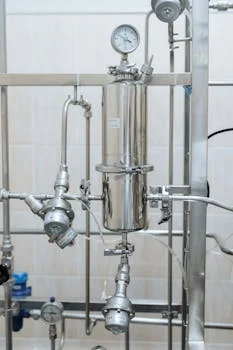
| Parameter | Influent | After Electrocoagulation | After MBBR (Estimated COD) | After DAF | Final Effluent (After MBR) | Overall Removal Efficiency |
|---|---|---|---|---|---|---|
| COD (mg/L) | 4,200 | 336 (92% removal) | ~100.8 (70% post-EC removal) | ~21.4 (78.8% post-MBBR reduction) | <20 (e.g., 15) | 99.6% |
| Color (Pt-Co) | 200 | ~40 | ~20 | ~15 | <10 | >95% |
| Microplastics (mg/L) | 1,725 ± 377 | - | - | ~45 (97.4% removal) | <5 | >99.7% |
| BOD5 (mg/L) | ~2,500 (est.) | ~200 (est.) | ~30 (85% removal post-EC) | ~10 | <5 | >99% |
| Pathogens (CFU/100mL) | High | - | - | - | Non-detect | 99.9% |
Technology Comparison: MBBR vs DAF vs MBR for Packaging Wastewater
Selecting the optimal advanced wastewater treatment technology for packaging facilities requires a detailed understanding of each system's strengths in handling specific contaminants, its operational footprint, energy demands, and long-term operating costs. MBBR systems excel at biological degradation of biodegradable COD and BOD, making them a robust secondary treatment option for high organic loads characteristic of packaging wastewater. DAF systems, on the other hand, are highly effective for removing suspended solids, fats, oils, greases (FOG), and critically, microplastics, achieving up to 97.4% microplastic removal efficiency through organosilane-induced agglomeration-fixation (Top 2 data). MBR technology offers superior performance in final polishing, delivering near-reuse-quality effluent by effectively removing fine suspended solids, pathogens, and color, essential for stringent discharge limits and water reuse. In terms of footprint, MBR systems are significantly more compact, requiring up to 60% less space than conventional activated sludge systems, making them ideal for space-constrained facilities. DAF units are also compact and efficient for high flow rates, while MBBR systems offer a moderate footprint reduction. Energy consumption varies, with MBR systems typically requiring 0.8–1.2 kWh/m³ due to aeration and membrane filtration, DAF systems using 0.3–0.5 kWh/m³ primarily for pumping and air compression, and MBBR systems consuming 0.4–0.6 kWh/m³ for aeration and mixing. Operational expenditure (OPEX) for MBR largely stems from membrane replacement ($0.15–$0.25/m³) and energy, while DAF OPEX is dominated by chemical coagulant and flocculant costs ($0.08–$0.12/m³). MBBR OPEX includes media replacement and aeration costs ($0.10–$0.18/m³). For packaging wastewater treatment, DAF systems are invaluable for upstream removal of microplastics and adhesive particles, protecting downstream biological and membrane processes. MBBR is a cost-effective choice for robust mid-stream biological COD/BOD reduction, and MBR is indispensable for achieving the high-quality effluent required for water reuse or zero-liquid-discharge (ZLD) applications, as detailed in our detailed MBR system guide with 2025 cost data.| Feature | MBBR (Moving Bed Biofilm Reactor) | DAF (Dissolved Air Flotation) | MBR (Membrane Bioreactor) |
|---|---|---|---|
| Primary Contaminant Focus | Biodegradable COD, BOD | Suspended Solids, FOG, Microplastics | Fine Suspended Solids, Pathogens, Color, High COD |
| Typical COD Removal | 85-90% (secondary) | 50-80% (tertiary/pre-treatment) | >95% (polishing), 90-99% (overall) |
| Microplastic Removal | Low (<20%) | High (97.4% efficiency) | High (>99%) |
| Footprint Reduction | Moderate (30-50% smaller than conventional activated sludge) | Compact (space-efficient for high flow) | Significant (up to 60% smaller than conventional) |
| Energy Consumption (kWh/m³) | 0.4–0.6 | 0.3–0.5 | 0.8–1.2 |
| Typical OPEX ($/m³) | 0.10–0.18 (media, aeration) | 0.08–0.12 (chemicals, power) | 0.15–0.25 (membrane replacement, energy) |
| Key Advantage for Packaging | Cost-effective secondary biological treatment for high organic loads | Efficient removal of FOG, adhesives, and microplastics upstream | Produces high-quality effluent suitable for direct reuse and ZLD |
| Use Case | Mid-stream biological degradation of dissolved organics | Upstream removal of particulate matter, fats, oils, greases, and microplastics | Final polishing for stringent discharge or water reuse applications |
Zero-Liquid-Discharge Implementation: Costs, ROI, and 3-Phase Roadmap
- Phase 1 (0–6 months): Influent Characterization & Pilot Testing. This initial phase involves comprehensive analysis of wastewater influent characteristics (COD, BOD, TSS, microplastics, specific adhesives) and conducting pilot tests with proposed technologies. For instance, a pilot DAF unit can validate microplastic removal efficiency and chemical dosing, while a bench-scale MBR can confirm COD reduction and membrane flux under site-specific conditions. This minimizes design risks and optimizes full-scale system performance.
- Phase 2 (6–12 months): DAF + MBBR Installation. The second phase focuses on deploying the primary and secondary treatment components. This typically includes a robust DAF system for microplastic and suspended solids removal, followed by an MBBR for biological degradation of organic pollutants. This stage establishes a foundation for compliance and significantly reduces the overall contaminant load.
- Phase 3 (12–18 months): MBR + RO + Evaporator (ZLD Completion). The final phase integrates the advanced polishing and concentration technologies. An MBR system provides high-quality effluent, followed by an RO system for water recovery (achieving 90-95% water recovery), and finally, an evaporator or crystallizer for managing the RO concentrate, achieving true ZLD. This comprehensive approach ensures maximum water reuse and eliminates liquid discharge. More details on this can be found in our ZLD implementation blueprint for industrial wastewater.
| Metric | 50 KLD System (Small) | 100 KLD System (Medium) | 200 KLD System (Large) |
|---|---|---|---|
| Estimated CAPEX | $1.2M | $2.1M | $2.5M |
| (DAF + MBR + RO + Evaporator) | |||
| Estimated OPEX ($/m³) | $1.50 | $1.10 | $0.85 |
| (Energy, Chemicals, Membranes) | |||
| Water Reuse Savings Offset ($/m³) | $0.50 | $0.50 | $0.50 |
| Net OPEX ($/m³) | $1.00 | $0.60 | $0.35 |
| Typical ROI (Payback Period) | 4.5–6 years | 3.5–5 years | 3–4.5 years |
| (Based on >$2/m³ water costs or regulatory fines) | |||
| Water Recovery Rate | >90% | >95% | >95% |
Lessons Learned: 5 Critical Mistakes to Avoid in Packaging Wastewater Treatment
Operational insights from the corrugated packaging plant case study highlight common pitfalls that can undermine the effectiveness and efficiency of advanced packaging wastewater treatment systems.- Underestimating Microplastic Loads: Initial assessments of packaging wastewater often severely underestimate microplastic concentrations. Pilot testing at the Shandong plant revealed microplastic loads 2.3 times higher than conservative literature values (Top 2 data), necessitating a more robust upfront DAF system than initially planned to achieve the required removal efficiency.
- Electrode Fouling in Electrocoagulation: The HERFOM-CS electrocoagulation system experienced significant aluminum electrode fouling, which, if left unaddressed, rapidly decreased COD removal efficiency. Weekly electrode cleaning and regular polarity reversal were crucial mitigation strategies to maintain the 92% COD removal rate in the primary stage.
- MBBR Media Clogging: An initial 30% media fill in the MBBR led to instances of media short-circuiting and reduced biological contact time, particularly with high adhesive content in the wastewater. Adjusting the media fill to 40% and optimizing aeration patterns significantly improved biofilm development and COD/BOD removal, demonstrating that packaging wastewater often requires a higher fill ratio to prevent clogging.
- DAF Chemical Dosing Imprecision: Inaccurate coagulant and flocculant dosing in the DAF system resulted in either insufficient microplastic removal or excessive sludge generation. Overdosing coagulants, for example, increased sludge volume by 40%, raising disposal costs. Implementing a continuous jar test protocol and automated dosing pumps, linked to real-time turbidity measurements, optimized chemical consumption and sludge volume.
- MBR Membrane Fouling: Despite upstream treatment, MBR PVDF membranes experienced gradual fouling, reducing permeate flux over time. Routine Clean-In-Place (CIP) procedures with a 2% citric acid solution performed monthly, coupled with daily backwash cycles, were essential to maintain stable flux rates and extend membrane lifespan, ensuring consistent 99.5% COD removal.
Frequently Asked Questions
What is the typical COD removal efficiency for packaging wastewater treatment?
The typical COD removal efficiency for packaging wastewater treatment varies significantly by technology. Electrocoagulation systems can achieve 92% removal in primary stages, Moving Bed Biofilm Reactors (MBBR) typically achieve 85–90% removal for biodegradable COD, while Membrane Bioreactor (MBR) systems as a final polishing step can achieve 99.5% overall COD removal, as demonstrated in our 2025 case study (effluent <20 mg/L).
How do you remove microplastics from packaging wastewater?
Microplastics are effectively removed from packaging wastewater using Dissolved Air Flotation (DAF) systems, which achieve 97.4% removal efficiency. This process leverages organosilane-induced agglomeration-fixation, a 'clump & skim' technology that aggregates microplastic particles for efficient separation (Top 2 data).
What is the cost of a ZLD system for a 100 KLD packaging plant?
For a 100 KLD packaging plant, a comprehensive Zero-Liquid-Discharge (ZLD) system typically incurs an estimated CAPEX of $2.1 million. The operational expenditure (OPEX) is approximately $1.10/m³, with a projected Return on Investment (ROI) of 3.5–5 years, based on 2025 cost data and water reuse savings.
What are the discharge limits for packaging wastewater in China?
In China, packaging wastewater discharge is regulated by GB 3544-2008. Key limits include Chemical Oxygen Demand (COD) <60 mg/L, Biological Oxygen Demand (BOD) <20 mg/L, and Total Suspended Solids (TSS) <50 mg/L.
MBBR vs MBR for packaging wastewater: which is better?
The choice between MBBR and MBR for packaging wastewater depends on the treatment goals. MBBR is a cost-effective solution for robust biological degradation, achieving 85–90% COD removal in secondary treatment. MBR systems, however, are superior for producing near-reuse-quality effluent, delivering 99.5% COD removal, and offer a significantly smaller footprint, making them ideal for final polishing and ZLD applications.