Photovoltaic wastewater treatment systems reduce operational costs by 30–40% while cutting carbon emissions by 45 million tons annually (EPA 2024). For a 500 m³/day industrial plant, capital expenditures (CAPEX) typically range from $800K–$1.2M, with payback periods of 5–7 years driven by substantial energy savings. These solar-powered systems integrate seamlessly with existing treatment processes, offering long-term return on investment (ROI) through reduced grid dependence and guaranteed compliance with increasingly stringent sustainability mandates.
Why Industrial Plants Are Switching to Solar-Powered Wastewater Treatment
Wastewater treatment facilities consume between 5,000 and 7,000 kWh per million gallons, making energy the second-largest operational cost after labor (EPA 2024). This substantial energy demand, coupled with volatile grid electricity prices and increasing environmental regulations, drives industrial plants to seek sustainable alternatives like solar-powered wastewater treatment systems. Relying solely on conventional grid power exposes facilities to unpredictable operational expenses and hinders progress towards corporate sustainability goals.
For example, a 500 m³/day industrial plant in Jiangsu, China, successfully reduced its energy costs by 35% after integrating a 200 kW solar array into its existing wastewater treatment infrastructure (HydropureWater 2024). This real-world case demonstrates the tangible financial and environmental benefits of transitioning to solar power. Beyond cost savings, regulatory drivers such as the EU Industrial Emissions Directive 2010/75/EU and China’s ambitious 2025 carbon neutrality goals provide strong incentives for industrial facilities to adopt renewable energy solutions for their wastewater treatment processes.
Industrial wastewater treatment plant solar integration can be achieved through three primary models: on-grid, off-grid, and hybrid systems. On-grid systems connect directly to the public electricity network, allowing plants to draw power when solar generation is insufficient and export surplus electricity back to the grid. This model offers grid reliability but still incurs grid charges. Off-grid systems operate entirely independently, relying on solar generation and battery storage, which is ideal for remote locations or facilities seeking complete energy independence but requires significant battery investment. Hybrid systems, the most common for industrial applications, combine solar power with a grid connection and often incorporate battery storage. This approach maximizes energy savings and resilience by optimizing solar utilization while maintaining grid backup, making it a robust solution for diverse operational demands and ensuring continuous treatment even during periods of low solar irradiance or high energy demand.
Photovoltaic Wastewater Treatment System Components and Costs
The total capital expenditure (CAPEX) for a photovoltaic wastewater treatment system is primarily determined by the size and complexity of its core components, each contributing significantly to the overall solar-powered wastewater treatment system cost. Understanding these individual costs is crucial for accurate budgeting and project planning for industrial-scale systems.
The solar array, comprising photovoltaic panels, represents a major portion of the investment, typically costing between $0.70 and $1.10 per watt in 2025 market rates. For industrial plants treating 500–2,000 m³/day, systems ranging from 200 kW to 500 kW are common, translating to an array cost of $140,000 to $550,000. Battery storage is critical for off-grid reliability and for optimizing energy use in hybrid systems, with lithium-ion batteries costing $120–$200 per kWh. These batteries are specified by their depth of discharge (DoD) capabilities, which affect usable capacity and lifespan, typically offering 10–15 years of service. Inverters, essential for converting DC solar power to AC for plant operations, typically cost $0.15–$0.30 per watt. While string inverters are common for larger arrays, microinverters offer panel-level optimization but at a higher unit cost, with both types incurring efficiency losses of 2–5% during conversion. The treatment equipment itself, such as an energy-efficient MBR system for solar-powered plants or a solar-compatible DAF system for industrial wastewater, often features advanced aeration and pumping technologies designed to minimize energy consumption, with aeration systems typically consuming 0.2–0.5 kWh/m³ and pumping systems 0.1–0.3 kWh/m³ depending on the process. Finally, installation and permitting costs, including civil works, electrical wiring, and regulatory compliance, usually account for 10–15% of the total CAPEX, with regional variations heavily influenced by local labor rates and specific environmental compliance requirements in regions like China or the EU.
| Component | Typical Cost Range (2025) | Notes for Industrial WWTPs |
|---|---|---|
| Solar Array (PV Panels) | $0.70 – $1.10 per watt | 200-500 kW systems common for 500-2,000 m³/day plants. |
| Battery Storage (Lithium-ion) | $120 – $200 per kWh | Critical for off-grid or hybrid systems; DoD and lifespan are key metrics. |
| Inverters | $0.15 – $0.30 per watt | Converts DC to AC; efficiency losses 2-5%; string vs. microinverters. |
| Mounting & Racking | $0.10 – $0.20 per watt | Ground-mount vs. rooftop options, structural considerations. |
| Balance of System (BOS) | $0.05 – $0.15 per watt | Wiring, conduit, disconnects, monitoring systems. |
| Wastewater Treatment Equipment | Variable (process dependent) | Energy-efficient MBR, DAF, aeration, pumps (e.g., 0.2-0.5 kWh/m³ for aeration). |
| Installation & Permitting | 10% – 15% of total CAPEX | Includes labor, civil works, electrical, commissioning, and regulatory approvals. |
CAPEX vs. OPEX: Solar-Powered Wastewater Treatment Cost Breakdown
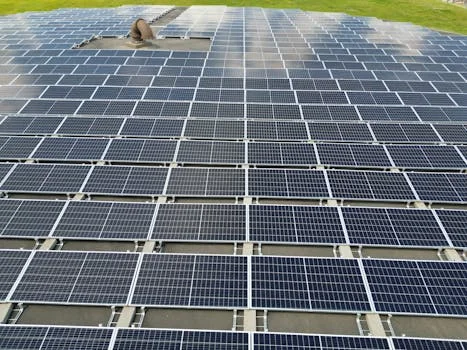
Implementing a solar-powered wastewater treatment system typically entails a higher initial capital expenditure (CAPEX) compared to conventional grid-reliant systems, but this is quickly offset by significant operational expenditure (OPEX) reductions over the system's lifespan. For a 500 m³/day industrial plant, the CAPEX for a solar-powered WWTP ranges from $800K–$1.2M, which is generally higher than the $600K–$900K required for a comparable conventional system. This difference primarily accounts for the solar array, battery storage, and specialized integration components.
However, the long-term financial benefits are substantial. Solar integration leads to a 30–40% reduction in energy costs, representing a major OPEX saving. solar-powered aeration systems can improve overall treatment efficiency, potentially leading to additional savings from reduced chemical dosing by optimizing biological processes. Maintenance costs for solar arrays are remarkably low, averaging $0.01–$0.02 per watt annually, especially considering their 25-year lifespans. This predictability contrasts sharply with the inherent volatility of grid electricity prices, which can fluctuate by 5–15% annually due to market dynamics and geopolitical factors, making OPEX reduction with solar power a more stable and predictable financial strategy.
Government incentives play a pivotal role in making the initial CAPEX more manageable and accelerating ROI. China, for instance, offers a 50% subsidy for industrial solar projects as of 2025, significantly reducing the upfront investment. The European Union provides various incentives, including tax credits that can cover up to 30% of eligible costs for renewable energy installations. In the U.S., the Inflation Reduction Act (IRA) includes direct-pay incentives for clean energy projects, allowing eligible entities to receive cash payments equivalent to tax credits, further lowering the effective CAPEX for solar-powered WWTPs.
| Cost Category | Conventional WWTP (500 m³/day) | Solar-Powered WWTP (500 m³/day) | Notes |
|---|---|---|---|
| CAPEX (Initial Investment) | $600K – $900K | $800K – $1.2M | Higher initial cost due to solar array, batteries, inverters. |
| Annual Energy Costs | $150K – $250K (grid dependent) | $90K – $175K (30-40% reduction) | Significant OPEX reduction with solar power. |
| Annual Maintenance (Solar) | N/A | $2K – $5K (for 200-500 kW system) | Low maintenance for solar arrays over 25+ years. |
| Annual Maintenance (WWTP) | $30K – $50K | $30K – $50K | Similar for core treatment equipment. |
| Chemical Costs | $20K – $40K | $15K – $35K (potential reduction with optimized aeration) | Solar-powered aeration can enhance efficiency. |
| Government Incentives (CAPEX reduction) | N/A | Up to 50% subsidy (China), 30% tax credit (EU), IRA direct pay (U.S.) | Crucial for lowering effective upfront cost. |
| Grid Price Volatility Risk | High (5-15% annual fluctuations) | Low (reduced dependence) | Solar offers stability against rising electricity costs. |
ROI Calculator: How Long Until Your Solar-Powered WWTP Pays Off?
Calculating the payback period for a photovoltaic wastewater treatment system provides a clear financial metric for industrial decision-makers, demonstrating how quickly the initial investment is recouped through operational savings. The fundamental payback period formula is straightforward:
Payback Period = (CAPEX - Incentives) / (Annual Energy Savings + OPEX Reduction)
For an illustrative example, consider a 1,000 m³/day industrial plant investing in a solar-powered system with a total CAPEX of $1.0M. If the plant qualifies for $50K in government incentives and realizes annual energy savings and other OPEX reductions totaling $120K, the payback period would be calculated as: ($1,000,000 - $50,000) / $120,000 = $950,000 / $120,000 ≈ 7.9 years. This detailed regional cost comparisons for solar-powered WWTPs demonstrates how a wastewater treatment ROI calculator can provide invaluable insights.
A crucial aspect of financial planning is sensitivity analysis, which evaluates how varying external factors, such as energy price fluctuations, impact the ROI. If grid electricity costs increase by 10% annually, the annual savings from solar power would commensurately rise, leading to a faster payback. Conversely, a decrease in grid prices would extend the payback period. This analysis helps industrial plants assess risk and optimize their investment strategies.
| Scenario | Annual Energy Savings (Example) | Grid Energy Price Fluctuation | Adjusted Annual Savings | Payback Period (Example CAPEX: $950K) |
|---|---|---|---|---|
| Base Case | $120,000 | 0% | $120,000 | 7.9 years |
| Moderate Grid Price Increase | $120,000 | +5% annually | $126,000 | 7.5 years |
| Significant Grid Price Increase | $120,000 | +10% annually | $132,000 | 7.2 years |
| Moderate Grid Price Decrease | $120,000 | -5% annually | $114,000 | 8.3 years |
Beyond direct financial returns, the non-financial ROI of solar-powered WWTPs is increasingly significant. This includes the accrual of carbon credits, which can be traded or contribute to emissions reduction targets. Enhanced brand reputation through demonstrable sustainability efforts attracts environmentally conscious customers and investors. compliance with evolving Environmental, Social, and Governance (ESG) mandates positions companies favorably in the global market, with some studies showing that companies with strong ESG performance can achieve up to 20% higher valuations.
Solar-Powered vs. Conventional Wastewater Treatment: Which Is Right for Your Plant?
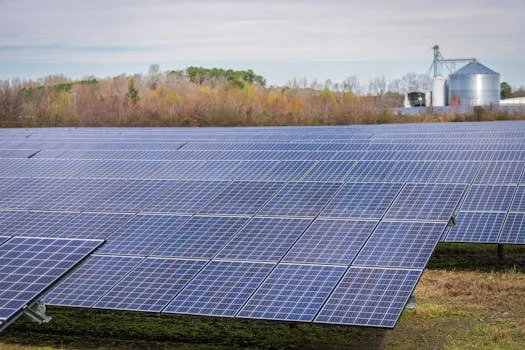
The decision to implement a solar-powered wastewater treatment system hinges on a careful evaluation of a plant's specific operational context, geographical location, and long-term strategic objectives. Solar integration is particularly ideal for industrial facilities located in regions with abundant sunshine and high electricity costs, making the economics of energy generation highly favorable. It is also an optimal solution for off-grid plants requiring reliable, self-sufficient power, or for companies with strong ESG commitments aiming for carbon neutrality and enhanced brand image. A decision framework often considers factors like available land for solar arrays, existing grid infrastructure, and the plant's operational hours.
However, solar power may not be suitable for all applications. Plants with limited available space for solar panel installation, or those with exceptionally high nighttime energy demands that cannot be fully met by economically viable battery storage, might find conventional or grid-reliant hybrid systems more practical. In such cases, carefully designed hybrid solutions, combining solar with grid power and strategic battery backup, often provide the best balance of sustainability and operational reliability. For example, a semiconductor plant in Taiwan successfully reduced its energy costs by 40% through a solar-DAF hybrid system, integrating solar power to offset peak grid demand while leveraging grid stability for continuous operations (HydropureWater 2024). This approach is particularly relevant for operations demanding uninterrupted power, such as solar-powered ZLD systems for semiconductor plants.
Looking ahead, advancements in battery storage technology, such as the development of more efficient and cost-effective solid-state batteries, are expected to significantly improve solar viability by 2027. These innovations will enhance energy density, reduce charging times, and extend lifespan, making off-grid and high-autonomy hybrid solar solutions even more economically attractive and operationally robust for industrial wastewater treatment.
Frequently Asked Questions
To provide further clarity on photovoltaic wastewater treatment price and implementation, here are answers to common questions:
- What is the typical payback period for a solar-powered wastewater treatment system? The typical payback period for industrial plants ranges from 5 to 7 years, though this can be significantly shortened with the application of government incentives and higher grid electricity prices.
- How much energy can a solar-powered WWTP save compared to a conventional system? A solar-powered wastewater treatment system can lead to a 30–40% reduction in energy costs compared to a conventional system, according to EPA 2024 data, primarily by displacing grid electricity consumption.
- Are there government incentives for installing solar-powered wastewater treatment systems? Yes, numerous incentives exist globally. These include China’s 50% subsidy for industrial solar projects, the EU’s 30% tax credits, and the U.S. Inflation Reduction Act’s direct-pay options, all designed to reduce the initial CAPEX.
- Can solar power handle the energy demands of a large industrial WWTP? Yes, solar power can effectively meet the energy demands of large industrial WWTPs, especially when integrated as hybrid systems with grid connections and robust battery storage for nighttime operation or periods of low solar irradiance.
- What are the maintenance requirements for a solar-powered WWTP? Maintenance requirements for solar-powered WWTPs are minimal. Solar arrays typically require only $0.01–$0.02 per watt annually for cleaning and routine inspections, offering a reliable energy source with a lifespan exceeding 25 years.