A Manila wastewater treatment plant cost typically runs ₱15,000–₱50,000 per m³/day of design capacity, depending on process train and DENR discharge class. A 500 CMD MBR package for a Laguna food plant often starts near ₱7.5M, while a 10,000 CMD municipal SBR train in Pasig City is commonly budgeted around ₱150M. Class C targets used here (BOD ≤ 50 mg/L, TSS ≤ 70 mg/L, COD ≤ 150 mg/L) usually add 15–25% CAPEX for polishing. Industrial reuse tariffs of ₱50–₱120/m³ and Clean Water Act daily fines drive payback more than equipment list price alone.
Manila Wastewater Treatment Plant Cost: What Buyers Should Budget
A Manila wastewater treatment plant cost usually falls between ₱15,000 and ₱50,000 per m³/day of design capacity, excluding land. SBR trains sit near ₱15,000–₱30,000 per m³/day. MBR trains sit near ₱25,000–₱50,000 per m³/day. Class C polishing often adds 15–25% CAPEX. Reuse value and daily fines move payback more than the equipment brand.
For Metro Manila, Laguna, and Pasig projects, CAPEX typically runs ₱15,000–₱50,000 per m³/day excluding land. SBR trains usually cost ₱15,000–₱30,000 per m³/day; MBR trains ₱25,000–₱50,000 per m³/day. Reuse at ₱50–₱120/m³ and RA 9275 fine exposure often set payback more than reactor brand. Most food plants we size land in the lower MBR band after FOG pretreatment.
Why Manila Influent and Rules Change the Cost Picture
Manila food-processing loads often arrive at BOD 300–1,200 mg/L, so generic Philippine cost curves understate them. Influent BOD often runs 300–1,200 mg/L and TSS 400–1,500 mg/L, versus roughly 200–500 mg/L BOD and 400–1,000 mg/L TSS in lighter Cebu-type plants. Meeting Class C discharge targets (BOD ≤ 50 mg/L, TSS ≤ 70 mg/L, COD ≤ 150 mg/L) therefore needs stronger biology and solids capture than a low-strength municipal train.
Maynilad and Manila Water industrial reuse tariffs of ₱50–₱120/m³ in recent tariff schedules can cut freshwater OPEX by about 30–40% when effluent reaches reuse quality. Non-compliance risk is material under Republic Act 9275. Earlier planning notes often cited ₱50,000–₱100,000/day; the Pollution Adjudication Board Resolution No. 05 (2021), effective 2022, restates the inflation-adjusted graduated range at about ₱23,580–₱471,590/day for GES failures (PAB, 2021). Annex A of that resolution lists ₱28,531.17–₱570,623.34 per day for 2026, after the statutory 10% rise every two years.
| Parameter | Manila Influent (Typical Industrial/Food Processing) | DENR Class C Effluent Standard (2025) | Impact on Treatment Cost |
|---|---|---|---|
| BOD (mg/L) | 300–1,200 | ≤ 50 | Requires high-efficiency biological treatment; higher CAPEX for advanced systems. |
| TSS (mg/L) | 400–1,500 | ≤ 70 | Demands robust primary and secondary settling or filtration; increases CAPEX for clarification and filtration stages. |
| COD (mg/L) | 600–2,500 (approx. 2x BOD) | ≤ 150 | Indicates recalcitrant organic matter; may require tertiary treatment or advanced oxidation processes, adding to CAPEX. |
| Water Tariff for Reuse (₱/m³) | N/A | N/A | ₱50–₱120/m³ offers significant OPEX savings, improving ROI for treatment investments. |
| Daily Fines for Non-Compliance (₱) | N/A | 50,000–100,000 | Deters investment in substandard treatment; incentivizes compliance and robust design. |
National unit-cost benchmarks still help for first-pass screening. For a country-wide view of philippines sewage treatment plant construction cost per cubic meter per day, use that sibling guide, then overlay Manila land, FOG, and reuse tariffs before locking CAPEX.
denr class c discharge cost impact
DENR Class C discharge cost impact in this Manila guide is the 15–25% CAPEX adder for polishing toward BOD ≤ 50 mg/L, TSS ≤ 70 mg/L, and COD ≤ 150 mg/L. The DENR slides of DAO 2016-08, given at the WEPA workshop on 6 February 2020, set Class C BOD5 at 50 mg/L and TSS at 100 mg/L. COD on that same slide is 100 mg/L for Class C, which is stricter than the 150 mg/L figure kept in the table.
TSS of 70 mg/L in the table matches Class A on those slides, not the Class C limit of 100 mg/L. Designing COD only to 150 mg/L can miss the 100 mg/L Class C limit and force a later aeration retrofit. Most food plants we size still keep the tighter TSS target when the creek is already stressed, and they park that solids step inside the 15–25% polish allowance. Class C, on the same DENR slide, is the freshwater class for fishery, boating, and agriculture or irrigation.
What Drives Water Treatment Plant Cost Breakdown?

Water treatment plant cost breakdown in Manila puts process CAPEX at ₱15,000–₱50,000 per m³/day before land, permits, and OPEX. SBR CAPEX usually falls at ₱15,000–₱30,000 per m³/day; MBR at ₱25,000–₱50,000 per m³/day, both excluding land and ECC work. Laguna industrial land often prices at ₱15,000–₱30,000/m², while Pasig urban parcels can reach ₱50,000–₱100,000/m².
Permitting commonly bundles a DENR ECC at ₱500,000–₱2M, LGU permits at ₱200,000–₱800,000, and an EIS at ₱1M–₱3M for larger or environmentally critical sites. Energy typically consumes 40–50% of OPEX, chemicals 20–30%, and labor 15–20%. For a 1,000 CMD MBR, membrane replacement alone can run ₱2M–₱5M per year. Odor biofilters add ₱1M–₱3M CAPEX; sludge haul to accredited landfills costs ₱5,000–₱15,000 per ton.
| Cost Category | Estimated Range (Manila, 2025) | Notes |
|---|---|---|
| CAPEX per m³/day (SBR) | ₱15,000–₱30,000 | Excludes land and permitting. |
| CAPEX per m³/day (MBR) | ₱25,000–₱50,000 | Higher CAPEX due to advanced membrane technology. |
| Land Cost (Laguna Industrial Zone) | ₱15,000–₱30,000/m² | Variable based on specific location and zoning. |
| Land Cost (Pasig Urban Area) | ₱50,000–₱100,000/m² | Significantly higher due to urban density and demand. |
| DENR ECC Application | ₱500,000–₱2,000,000 | Dependent on project scale and environmental sensitivity. |
| LGU Permits | ₱200,000–₱800,000 | Includes business permits, building permits, etc. |
| Environmental Impact Study (EIS) | ₱1,000,000–₱3,000,000 | Required for larger or environmentally critical projects. |
| OPEX - Energy | 40–50% of total OPEX | Directly tied to aeration, pumping, and sludge handling. |
| OPEX - Chemicals | 20–30% of total OPEX | Includes coagulants, flocculants, disinfectants. |
| OPEX - Labor | 15–20% of total OPEX | Skilled operators and maintenance staff. |
| MBR Membrane Replacement | ₱2,000,000–₱5,000,000/year (for a 1,000 CMD plant) | Critical for MBR performance and longevity. |
| Odor Control (Biofilters) | ₱1,000,000–₱3,000,000 | Essential for urban proximity and community acceptance. |
| Sludge Disposal | ₱5,000–₱15,000/ton | To government-accredited sanitary landfills. |
Where floor space is tight, MBR systems shrink the wet footprint and push effluent toward reuse quality without a large clarifier field.
mbr package price manila 2026
An MBR package price for Manila in this 2026 guide remains ₱25,000–₱50,000 per m³/day, excluding land and ECC work. A 500 CMD food package is screened near ₱7.5M, while a 1,000 CMD train at ₱25,000 per m³/day is ₱25M before the yearly membrane line. Membrane replacement on that 1,000 CMD scale runs ₱2M–₱5M per year. Most plants we size for tight lots land in the lower half of the band once FOG pretreatment is in place.
sbr capex per cubic meter pasig
SBR CAPEX per cubic meter for a Pasig train is usually ₱15,000–₱30,000 per m³/day before land. A 2,000 CMD SBR case in Pasig is about ₱30M CAPEX and nearer ₱10M/year OPEX when sludge yield and polishing rise. Pasig urban land at ₱50,000–₱100,000/m² can dwarf the reactor line, which is why footprint is priced with the tanks. A 10,000 CMD municipal SBR train in Pasig City is commonly budgeted around ₱150M.
laguna food plant mbr cost
A Laguna food plant MBR cost often starts near ₱7.5M at 500 CMD, using ₱25,000–₱50,000 per m³/day before land. Laguna industrial land in this guide is ₱15,000–₱30,000/m², below the Pasig urban band of ₱50,000–₱100,000/m². A 2,000 CMD MBR contrast here uses about ₱50M CAPEX and ₱8M/year OPEX. Meat-processing influent in the DENR 2020 briefing runs BOD 1,000–1,500 mg/L and COD 2,000 mg/L, at the top of the 300–1,200 mg/L BOD band used for Manila food plants.
Republic Act 9275 Section 5 treats Laguna Lake Development Authority territory as one management area. The Act's effluent standards and wastewater charge still apply there, so a Laguna discharge permit is not a separate science from the Class C limits above.
Technology Comparison: MBR, SBR, DAF, and Activated Sludge
MBR trains cut footprint by about 60% versus conventional activated sludge. Healthy membranes can reach BOD ≤ 5 mg/L and TSS ≤ 2 mg/L at ₱25,000–₱50,000 per m³/day. SBR CAPEX sits lower at ₱15,000–₱30,000 per m³/day, but Manila food plants need equalization because batch cycles dislike FOG and COD spikes.
DAF as pretreatment removes about 92–97% of TSS from high-FOG streams at ₱8,000–₱20,000 per m³/day and is rarely a standalone finish. Activated sludge can start at ₱12,000–₱25,000 per m³/day, yet high BOD loads often force extended aeration and raise OPEX by 20–30%.
A worked contrast helps. A 2,000 CMD MBR in Laguna may show about ₱50M CAPEX and ₱8M/year OPEX. A 2,000 CMD SBR in Pasig may show about ₱30M CAPEX but nearer ₱10M/year OPEX when sludge yield and polishing rise. For national municipal specs and supplier risk notes, see the guide on municipal sewage treatment plants in the Philippines.
| Technology | Footprint | Effluent Quality | CAPEX Range (₱/m³/day) | OPEX Considerations | Manila Suitability |
|---|---|---|---|---|---|
| MBR | Smallest (60% smaller than AS) | Excellent (BOD ≤ 5 mg/L, TSS ≤ 2 mg/L) - Class A potential | 25,000–50,000 | Higher (membrane replacement, energy) | Land-constrained sites, high-quality effluent for reuse. |
| SBR | Medium | Good (BOD ≤ 20 mg/L, TSS ≤ 30 mg/L) | 15,000–30,000 | Moderate (variable influent requires careful control) | Cost-effective for moderate loads, requires equalization for Manila's variability. |
| DAF | Medium | Excellent for TSS/FOG (92-97% TSS removal) | 8,000–20,000 | Moderate (chemical, energy) | Ideal for pre-treatment of high-FOG industrial wastewater. |
| Activated Sludge (AS) | Largest | Fair (BOD ≤ 30 mg/L, TSS ≤ 40 mg/L) | 12,000–25,000 | Higher for high BOD (extended aeration, larger volumes) | Lowest CAPEX, but struggles with Manila's high BOD without significant upgrades. |
High-FOG slaughterhouse and kitchen waste streams usually need DAF pre-treatment before biology. When reuse or Class A polishing is the gate, MBR systems remain the compact finish many EPC packages select.
How Does Sludge Thickening Cut Disposal Costs?
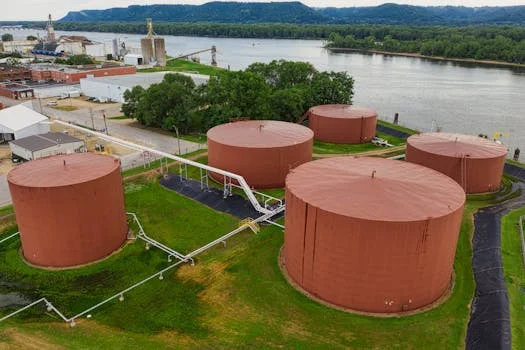
Sludge thickening that roughly doubles cake solids can cut haul volume nearly in half at Manila landfill rates of ₱5,000–₱15,000 per ton. If a 1,000 CMD plant ships 4 tons/day at 2% solids, doubling solids toward 4% can drop mass toward 2 tons/day and save on the order of ₱10,000–₱30,000 per operating day before polymer and power. That saving sits beside reuse revenue and avoided fines in any honest payback model. Gravity thickeners suit steadier municipal sludge; dissolved-air or rotary thickeners suit greasy industrial cake that resists settling.
Manila ROI: Payback Periods and Cost Savings
Manila ROI for a WWTP is best framed as (annual reuse savings + avoided fines) divided by annualized ownership cost. Reuse at ₱50–₱120/m³ on 1,000 CMD yields about ₱18.25M–₱43.8M per year if every cubic meter displaces potable supply. Avoided daily fines previously modeled at ₱50,000–₱100,000/day equal ₱18.25M–₱36.5M per year; PAB’s 2022 graduated schedule now spans roughly ₱23,580–₱471,590/day depending on flow and exceedance (PAB Resolution No. 05, 2021).
manila wwtp payback period calculator
A Manila WWTP payback period calculator divides annual reuse savings plus avoided fines by annualized ownership cost. Reuse at ₱50–₱120/m³ on 1,000 CMD yields about ₱18.25M–₱43.8M per year if every cubic meter displaces potable supply. Avoided fines previously modeled at ₱50,000–₱100,000/day equal ₱18.25M–₱36.5M per year. PAB Resolution No. 05, Series of 2021, Annex A lists ₱28,531.17–₱570,623.34 per day for 2026, above the 2022–2023 band of about ₱23,580–₱471,590/day.
Applied on all 365 days, that 2026 envelope is about ₱10.41M–₱208.28M per year, from ₱28,531.17 or ₱570,623.34 times 365. Rule III of the resolution sets the peso amount from discharge volume and the highest percent exceedance, not from a flat daily rate. The table figure of 50,000–100,000 per day matches the Section 28 clean-up failure band of ₱50,000–₱100,000 per day, a different penalty from the GES envelope. Most plants we review price reuse at ₱50–₱120/m³ before they price the maximum fine.
An illustrative 1,000 CMD MBR at ₱25,000 per m³/day (₱25M CAPEX) with ₱12M/year combined reuse and avoided-fine credit pays back in about 4.2 years. MBR packages often land in a 3–5 year band; SBR packages often need 5–7 years when OPEX and polishing rise. For a contrasting state-level CAPEX/OPEX layout, compare the Wastewater Treatment Plant Cost in New South Wales Australia.
| Metric | Manila-Specific Value | Impact on ROI |
|---|---|---|
| Annual Water Reuse Savings | ₱18.25M - ₱43.8M (for 1,000 CMD @ ₱50-₱120/m³) | Directly increases annual savings, shortening payback. |
| Avoided Daily Fines | ₱18.25M - ₱36.5M (for ₱50,000-₱100,000/day) | Significant financial incentive for compliance, bolstering ROI. |
| Payback Period (MBR) | 3–5 years | Higher CAPEX offset by lower OPEX and higher reuse value. |
| Payback Period (SBR) | 5–7 years | Lower CAPEX, but potentially higher OPEX and lower reuse efficiency. |
| Example: 1,000 CMD MBR in Laguna | CAPEX: ₱25M, Annual Savings: ₱12M | Payback: ~4.2 years. |
Step-by-Step Budgeting Checklist for Manila Plants
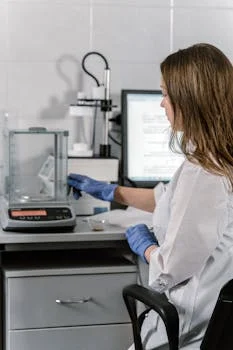
Budgeting a Manila WWTP starts with accredited influent testing (₱15,000–₱30,000 per full panel), then technology selection against BOD, FOG, and land constraints. Soil tests (₱50,000–₱150,000) and geotechnical reports (₱200,000–₱500,000) fix foundation and pile allowances before structural drawings freeze. DENR ECC work often needs 6–12 months at ₱500,000–₱2M; LGU permits add 3–6 months at ₱200,000–₱800,000.
Construction windows run about 12–24 months for municipal plants and 6–12 months for compact industrial packages. Commissioning and DENR performance proving can add ₱1M–₱3M. Fast-track or remote sites should weigh containerized WWTP options against civil tanks. When influent COD sits near 2× BOD, revisit how Manila’s high COD/BOD ratio affects treatment design before locking aeration power.
Selection checklist most owners walk with us:
- Confirm receiving-water class and SEQPs before choosing Class C versus Class A polish.
- Measure FOG and peak/average flow; size equalization if SBR is shortlisted.
- Price land ₱/m² against footprint—MBR wins when Pasig-type land exceeds ₱50,000/m².
- Separate ECC, LGU, and EIS line items; do not bury them in “soft costs.”
- Model sludge at ₱5,000–₱15,000/ton with and without thickening.
- Stress-test ROI at both ₱50 and ₱120 per m³ reuse credit.
- Hold 10–15% contingency for odor control, bypass piping, and first membrane set.
Who this is for: plant engineers, EPC estimators, and procurement leads sizing 100–10,000 CMD industrial or municipal trains in Metro Manila, Laguna, and Pasig. Who should look elsewhere: buyers needing only a national average without Manila land or FOG overlays—start with the Philippines unit-cost sibling instead. Next step: send flow, BOD/COD, FOG, and discharge class for a scoped CAPEX/OPEX build-up via our request-quote form.
Frequently Asked Questions
What is the cheapest wastewater treatment option for a small factory in Manila?
For about 100 CMD, the lowest first-cost path is usually DAF pretreatment at ₱8,000–₱20,000 per m³/day plus activated sludge at ₱12,000–₱25,000 per m³/day. Combined CAPEX often lands near ₱2M–₱3M when civil works stay simple. That train fits low-FOG factories that can accept larger footprint and Class C discharge. If land is scarce or reuse is required, step up to SBR or MBR even when list price rises.
How much does a 5,000 CMD municipal plant cost in Manila?
A 5,000 CMD municipal plant in Manila typically budgets ₱75M–₱150M for SBR and ₱125M–₱250M for MBR, including design, construction, and DENR permit allowances used in this guide. Unit rates imply about ₱15,000–₱30,000 per m³/day for SBR and ₱25,000–₱50,000 per m³/day for MBR before land. Soft soils in flood-prone barangays can push piles and odor packages above those bands.
What are the ongoing costs for a wastewater treatment plant in Manila?
Ongoing OPEX usually falls between ₱5,000 and ₱15,000 per m³/day of capacity when energy, chemicals, labor, and sludge haul are bundled. Energy is commonly 40–50% of that total, chemicals 20–30%, and labor 15–20%. A medium MBR should also reserve ₱2M–₱5M per year for membrane replacement on a 1,000 CMD scale. Thickening that doubles solids can materially cut the sludge line item.
Can I reuse treated wastewater in Manila?
Yes, when effluent meets Class A targets used here (BOD ≤ 10 mg/L, TSS ≤ 10 mg/L) and the water utility or end use accepts the quality. MBR trains are sized to hit those numbers with healthy membranes. SBR trains can reach Class A after tertiary filtration, which often adds 10–15% CAPEX. Reuse credits of ₱50–₱120/m³ are the main payback lever for industrial campuses.
What permits do I need for a wastewater treatment plant in Manila?
You need a DENR Environmental Compliance Certificate, LGU building and sanitation permits, and a wastewater discharge permit renewed annually. The full path commonly takes 9–18 months end to end. Annual discharge permit fees in this guide run about ₱50,000–₱200,000. Start ECC scoping early; it is usually the longest single gate on the schedule.