Why FGD Specifications Matter: Emissions Compliance, Cost, and Operational Reliability
Flue gas desulfurization specifications set the SO₂ outlet, reagent stoichiometry, L/G ratio, materials, and turndown that keep a scrubber inside its permit.CapEx for utility-scale systems typically runs $150 to $300 per kW (DOE 2023).
Earlier secondary summaries sometimes cite SO₂ bands of 0.03–0.15 lb/MMBtu.Under the Clean Air Act, civil judicial penalties under 42 U.S.C. 7413(b) reach $124,426 per day per violation for assessments on or after January 8, 2025; the 2024 inflation table already set $121,275 per day (40 CFR Part 19). In 2024, a mid-sized coal-fired power plant in the Ohio River Valley faced over $1.2 million in EPA penalties after its aging flue gas desulfurization (FGD) system failed to hold SO₂ below the NSPS limit during a peak load event. That case shows the narrow margin FGD designers now work within.
Poor specifications also compromise reliability. Suboptimal design drives fouling, scaling, and mist eliminator clogging, which average about 120 hours of unplanned downtime per year in industrial boilers (EPRI 2023). Capital costs for utility-scale FGD systems currently run $150 to $300 per kW, with limestone-based units at the lower end and dual-alkali units at the top (DOE 2023). Holding a limestone stoichiometric ratio of 1.02 to 1.05 captures the most SO₂ while limiting reagent waste and gypsum disposal costs. For facilities with complex discharge streams, it is often necessary to explore wastewater treatment solutions for FGD blowdown streams to keep local water-quality rules in check.
Flue Gas Desulfurization Methods: Performance Specifications by Technology
Wet limestone FGD remains the default for large coal-fired boilers because it is reliable and produces marketable gypsum. Dual-alkali and magnesium oxide (MgO) systems suit specific industrial furnaces where floor space is limited or inlet SO₂ runs high. According to EPA 2023 benchmarks, dual-alkali systems can reach 98% SO₂ removal, which helps on high-sulfur coal where limestone struggles to clear 95%.
The flue gas desulfurization process tracks the liquid-to-gas (L/G) ratio: the slurry volume contacting a unit of flue gas. Higher L/G improves capture but raises pumping power. MgO systems operate at L/G 0.5–0.9 versus 0.8–1.2 for limestone, cutting energy demand while adding reagent regeneration hardware. The table below consolidates 2025 performance benchmarks for the main FGD technologies used in industrial settings.
| Parameter | Limestone (Wet) | Dual-Alkali | Magnesium Oxide (MgO) | Calcium Carbonate |
|---|---|---|---|---|
| SO₂ Removal Efficiency | 90–95% | 95–98% | 92–96% | 88–92% |
| Liquid/Gas (L/G) Ratio | 0.8–1.2 | 0.6–1.0 | 0.5–0.9 | 1.0–1.4 |
| Stoichiometric Ratio | 1.02–1.05 | 0.95–1.0 | 0.9–0.95 | 1.05–1.10 |
| Primary Byproduct | Gypsum (Marketable) | Sodium Sulfate (Landfill) | Magnesium Sulfate (Reusable) | Calcium Sulfite (Waste) |
| Reagent Cost | Low | Moderate (Regenerable) | High (Regenerable) | Low |
Limestone systems react slurry with SO₂ inside an absorber tower, forming calcium sulfite that is then oxidized to gypsum. Dual-alkali units capture SO₂ with a soluble sodium-based wash, then move the liquor to an external regeneration tank where lime precipitates the sulfur and recovers the sodium reagent. For plants running integrated air quality control, the pulse jet baghouse for particulate control typically mounts upstream of the FGD system to keep fly ash out of the reagent slurry.
Critical FGD Design Parameters: Gas, Liquid, and Material Specifications
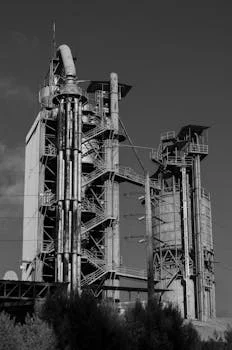
Robust FGD design depends on tight gas and liquid flow parameters to prevent mechanical failure and keep emissions stable. Flue gas flow rates run 50,000 lb/h on small furnaces and above 2,000,000 lb/h on utility-scale boilers. Maximum allowable turndown typically sits at 30–50%; running below that band gives poor slurry atomization and localized corrosion inside the absorber tower. Most plants we size for variable load stay closer to the 50% end so they have headroom for swing operation.
Material selection follows ASTM D4618, which covers FGD components with protective linings. Because absorber internals see pH dropping to 5.0 or lower, carbon steel must be rubber-lined or built from 316L stainless steel. Corrosion allowances typically run 0.125 to 0.25 inches. Mist eliminator design is critical for limiting reagent carryover; chevron-type eliminators are preferred for high-sulfur service, with a design target below 0.005 lb/MMBtu carryover. Designers also need to review particulate control specifications for FGD systems so the gas entering the scrubber carries low solids loading.
| Design Parameter | Standard Specification Range | Impact of Non-Compliance |
|---|---|---|
| Inlet Gas Temperature | 250°F – 350°F | Reagent evaporation, liner degradation |
| Outlet Gas Temperature | 120°F – 150°F | Acid dew point corrosion in stack |
| Max Pressure Drop | ≤ 6 in H₂O | 15–20% increase in fan power consumption |
| Liquid Slurry Pressure | 15 – 30 psia | Poor atomization, reduced SO₂ removal |
| Mist Eliminator Carryover | < 0.005 lb/MMBtu | Stack rain, downstream duct corrosion |
| Absorber Material | ASTM D4618 (Rubber-lined/316L) | Structural failure, high maintenance costs |
FGD System Costs: Capital, Operating, and Life-Cycle Analysis
Total cost of ownership splits between capital expenditure (CapEx) and operating expenditure (OpEx). Per 2023 DOE data, limestone FGD stays the most cost-effective option for large-scale operations at $150 to $200 per kW. Dual-alkali systems, while more efficient, can hit $300 per kW because of reagent regeneration and filtration circuits. When teams evaluate the Flue Gas Desulfurization (FGD) Scrubber System, byproduct revenue belongs in the model.
Operating costs are dominated by reagent consumption and parasitic power load. Reagent costs run $0.50 to $2.00 per MWh, driven by local limestone or lime pricing. Waste disposal is the swing variable: clean gypsum can be sold to wallboard makers for roughly $5 to $10 per ton, while contaminated landfill disposal costs $20 to $50 per ton. A standard 500 MW coal plant at 95% SO₂ removal typically sees a 3 to 5 year ROI once avoided EPA fines and byproduct sales are factored in (EPA 2024).
| Cost Category | Limestone FGD (Est.) | Dual-Alkali FGD (Est.) | MgO FGD (Est.) |
|---|---|---|---|
| Capital Cost ($/kW) | $150 – $200 | $250 – $300 | $200 – $250 |
| Reagent ($/MWh) | $0.50 – $1.10 | $1.20 – $1.80 | $0.80 – $1.50 |
| Maintenance ($/MWh) | $0.15 – $0.25 | $0.30 – $0.45 | $0.25 – $0.40 |
| Power Load (%) | 1.0 – 1.5% | 1.2 – 1.8% | 0.8 – 1.2% |
Choosing the Right FGD System: Decision Framework for Engineers and Procurement Teams
FGD selection is a multi-variable trade-off between technical requirements, geography, and economics. Engineers usually work through a five-step framework to lock in the right technology for a given site.
- Step 1: Assess Fuel Sulfur Content: Low-sulfur fuels (<1%) may only require dry sorbent injection. Medium to high-sulfur fuels (1–3%+) require wet limestone or dual-alkali systems to meet 2025 emission standards.
- Step 2: Evaluate Space Constraints: Limestone systems need floor area for reagent prep and gypsum dewatering. If space is tight, MgO or dual-alkali units with smaller absorber dimensions usually fit.
- Step 3: Determine Byproduct Potential: Where a wallboard market exists, limestone FGD wins on gypsum offtake. With no local market, MgO regeneration cuts the waste stream heading to landfill.
- Step 4: Compare Life-Cycle Costs: Dual-alkali carries higher CapEx, but its lower stoichiometric ratio and higher removal efficiency can drop long-term OpEx on plants with high capacity factors.
- Step 5: Check Reagent Availability: Limestone is cheap and widely available. Specialty reagents such as MgO can carry freight costs that wipe out the technical advantage.
Pulling these factors into a decision matrix lets procurement justify the Flue Gas Desulfurization (FGD) Scrubber System on site-specific engineering data rather than the lowest bid price.
Common FGD Operational Problems and Troubleshooting Guide
Consistent SO₂ removal depends on proactive maintenance and live monitoring of key performance indicators. Most FGD failures trace back to chemical imbalance in the reagent slurry or mechanical wear in high-velocity zones. The list below covers the most common issues and the engineering fixes that resolve them.
- Fouling: Caused by high Total Suspended Solids (TSS) in the reagent slurry. Symptoms: Increased pressure drop across the absorber and reduced SO₂ removal. Fix: Raise the blowdown rate to drop slurry density or add pre-filtration to keep TSS below 50 mg/L.
- Scaling: Occurs when calcium sulfate saturation exceeds 15% in the slurry. Symptoms: White, hard deposits on absorber walls and spray nozzles. Fix: Lower operating pH to 5.0–5.5 or feed organophosphonate scale inhibitors.
- Mist Eliminator Clogging: Caused by gypsum carryover or high particulate load. Symptoms: Visible droplets leaving the stack and a pressure drop spike. Fix: Increase wash frequency to every 2–4 hours or upgrade to high-velocity chevron-type eliminators.
- Reagent Inefficiency: Often caused by poor atomization. Symptoms: High reagent consumption with flat SO₂ removal. Fix: Inspect and optimize spray nozzle pressure (typically 40–60 psig) and verify the L/G ratio matches current boiler load.
Who this is for and who should look elsewhere
This guide targets plant engineers, EPC contractors, and procurement managers sizing utility or industrial FGD systems burning coal, oil, or high-sulfur waste. If your scope is dry sorbent injection for sub-1% sulfur fuel, or a small package boiler under 50,000 lb/h flue gas, the L/G and turndown numbers above will over-spec your case. Send flue gas flow, fuel sulfur, and target SO₂ outlet to our FGD engineering team for a scrubber sizing and cost band within two business days.
Frequently Asked Questions
What is the typical SO₂ removal efficiency for limestone FGD?
Most modern wet limestone FGD systems achieve 90–95% removal efficiency. Reaching 98%+ usually requires dual-alkali technology or a step change in L/G ratio and absorber height (EPA 2023). Higher efficiency also lifts pumping power, so the CapEx versus OpEx trade-off has to be sized against the local avoided-fine value.
What materials are used for FGD absorber towers?
Standard construction uses carbon steel with a high-grade rubber lining for pH 5–6 service. For more aggressive chemistry at pH below 5, 316L stainless steel or fiberglass-reinforced plastic (FRP) is required per ASTM D4618. Corrosion allowance on the carbon steel shell typically runs 0.125 to 0.25 inches.
How often should mist eliminators be cleaned?
For coal-fired boilers, mist eliminators should undergo a thorough inspection and manual cleaning every 3–6 months. High-sulfur applications may need automated wash cycles every 1–2 hours to prevent gypsum buildup (EPRI 2023). Wash water quality matters as much as frequency because high TSS in the wash loops re-deposits solids on the chevron packs.
What is the maximum allowable pressure drop for FGD systems?
The industry benchmark is ≤ 6 in H₂O. Exceeding that limit forces the induced draft (ID) fans to work harder, raising parasitic power load by 15–20%. Operators usually alarm at 5 in H₂O so they have time to wash the eliminator or adjust L/G before tripping.
Can FGD systems handle variable load conditions?
Yes, but they are limited by a turndown ratio of 30–50%. Running below 30% capacity risks poor gas distribution and slurry settling, which can damage absorber internals (DOE 2023). Plants with frequent deep load swings often add a recirculation loop or a smaller spare scrubber to stay inside that window.