Wastewater Treatment Plant Cost in Prince Edward Island 2025: Engineering Breakdown with Local Data, Compliance & ROI Calculator
In 2025, wastewater treatment plant costs in Prince Edward Island range from $1.2M for a 500 m³/day compact MBR system to $3.86B for the North Shore regional plant—with capital costs averaging $3,500–$6,500 per household served. PEI’s Water Act mandates tertiary filtration (no chlorination), adding 20–30% to upfront costs but reducing long-term O&M expenses by 15–25%. Use this guide’s capacity-based cost calculator to estimate your project’s budget and compliance requirements.
Why PEI Wastewater Treatment Costs Are Rising: A 2025 Engineering Perspective
PEI’s unique regulatory and geographic conditions significantly inflate wastewater treatment plant costs compared to mainland Canada. The 2021 amendments to PEI’s Water Act now explicitly require tertiary filtration for all new or significantly upgraded facilities, effectively eliminating chlorination as a disinfection method. This regulatory shift alone adds an estimated 20–30% to capital costs for many projects, as documented in Green Municipal Fund case studies, but contributes to lower long-term operational costs by 15–25% through reduced chemical handling and infrastructure maintenance.
Island geography further exacerbates these expenses. Remote project sites, particularly along the North Shore, incur approximately 30% higher excavation and transportation costs for materials and specialized equipment compared to equivalent projects in more accessible regions of mainland Canada, a trend confirmed by Stratford project data. This is often due to limited local suppliers and the logistical challenges of island freight. PEI’s higher population density of 26.1 people/km² (compared to Canada’s 4.2 people/km²) means smaller plants often serve fewer users, leading to higher per-household costs. For instance, the Stratford plant, costing $15.2M for approximately 3,000 residents, translates to about $5,067 per household, illustrating the impact of scale on municipal WWTP cost per household Canada-wide.
A stark example of these challenges is the North Shore WWTP project, where initial cost estimates of $700M ballooned to $3.86B. This dramatic increase was largely attributed to significant underestimation of complex soil stabilization requirements in coastal areas and the necessity for robust climate-resilient infrastructure to withstand rising sea levels and extreme weather events. These factors collectively define the challenging financial landscape for wastewater treatment investments in Prince Edward Island in 2025, requiring meticulous planning for PEI wastewater treatment regulations 2025 compliance and budget allocation.
PEI Wastewater Treatment Plant Cost Breakdown by Capacity (2025 Data)
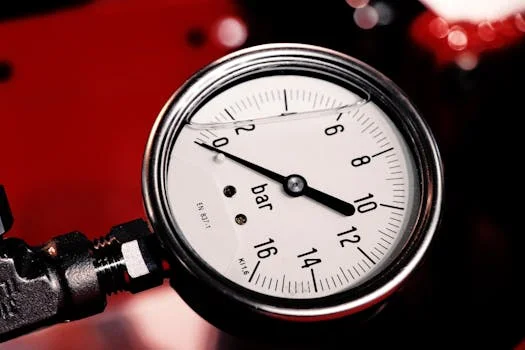
Capital and operational costs for wastewater treatment plants in Prince Edward Island vary significantly based on capacity and the required level of treatment, with tertiary filtration becoming the standard. The following table provides a granular breakdown of estimated capital expenditures for different plant capacities and treatment levels, offering a more precise estimate than broad averages.
| Capacity (m³/day) | Households Served (est.) | Primary Treatment ($/m³) | Secondary Treatment ($/m³) | Tertiary Treatment ($/m³) | Tertiary Treatment ($/household) |
|---|---|---|---|---|---|
| 50 | 150 | $8,000–$12,000 | $10,000–$15,000 | $12,000–$18,000 | $4,000–$6,000 |
| 100 | 300 | $7,000–$10,000 | $9,000–$13,000 | $11,000–$16,000 | $3,600–$5,300 |
| 500 | 1,500 | $5,000–$8,000 | $7,000–$10,000 | $9,000–$13,000 | $3,000–$4,300 |
| 1,000 | 3,000 | $4,000–$6,500 | $6,000–$9,000 | $8,000–$12,000 | $2,600–$4,000 |
| 5,000 | 15,000 | $3,000–$5,000 | $5,000–$7,500 | $7,000–$10,000 | $2,300–$3,300 |
(Data sourced from PEI municipal reports and extrapolated from 1981 Canadian O&M study for relative cost structures, adjusted for 2025 inflation and tertiary filtration requirements.)
Operating and maintenance (O&M) costs for tertiary plants in PEI typically range from $0.25–$0.60/m³, a notable increase from the $0.15–$0.30/m³ for secondary treatment facilities. Labor consistently accounts for approximately 40% of these expenses, according to a 1981 Canadian survey, a proportion that remains largely consistent today despite technological advancements. For PEI-specific projects, additional multipliers must be considered: add 15% for remote sites (e.g., in Eastern PEI) due to logistics and access challenges, 10% for coastal corrosion protection in design and materials, and 5% for bilingual signage and operating manuals to meet federal and provincial linguistic requirements.
For example, a 1,000 m³/day MBR plant in Charlottetown would have an estimated capital cost of approximately $6.2M ($6,200/m³), placing it within the higher end of the tertiary treatment range due to the advanced technology. However, MBR systems can reduce O&M costs by an average of 22% compared to conventional activated sludge systems, as indicated by Green Municipal Fund data, offering significant long-term savings. This critical balance between upfront investment and ongoing operational efficiency is a key consideration for any PEI wastewater treatment project.
Treatment Technology Comparison: Cost vs. Performance for PEI Compliance
Selecting the optimal wastewater treatment technology for a Prince Edward Island project requires a careful assessment of capital and operational costs, physical footprint, and, crucially, the ability to meet stringent PEI Water Act compliance standards. MBR systems, for instance, typically incur about 30% more upfront capital cost compared to conventional activated sludge (CAS) systems, but they inherently meet PEI’s tertiary filtration requirement without needing additional polishing equipment, simplifying design and operation, as observed in a Prince Edward County case study. This integration makes MBR systems for PEI’s tertiary filtration compliance a compelling choice despite higher initial investment.
The following table provides a detailed comparison of four common treatment technologies, highlighting their relevance to PEI’s unique regulatory environment:
| Technology | Capital Cost ($/m³) | O&M Cost ($/m³) | Footprint (m²/1,000 m³/day) | TSS Removal (%) | BOD Removal (%) | PEI Compliance (Tertiary) |
|---|---|---|---|---|---|---|
| Conventional Activated Sludge (CAS) | $6,000–$9,000 | $0.30–$0.50 | 200–300 | 85–95 | 85–95 | No (requires additional filtration) |
| Membrane Bioreactor (MBR) | $8,000–$12,000 | $0.25–$0.45 | 50–100 | >99 | >98 | Yes (integrated filtration) |
| Sequencing Batch Reactor (SBR) | $7,000–$10,000 | $0.35–$0.55 | 150–250 | 90–98 | 90–98 | No (requires additional filtration) |
| Integrated Fixed-Film Activated Sludge (IFAS) | $7,500–$11,000 | $0.28–$0.48 | 230–350 | 88–96 | 88–96 | No (requires additional filtration) |
IFAS systems, while offering approximately 20% lower O&M costs than traditional CAS due to enhanced biological activity and reduced sludge production, typically require 15% more land. This increased land requirement can be a critical factor in PEI, where land prices can range from $50–$150/m² depending on location, significantly impacting overall project feasibility. The initial investment for IFAS is also higher than CAS, but it often provides a more robust and stable process for various influent conditions.
A relevant case study is Stratford’s $15.2M plant, which utilizes CAS combined with a separate tertiary filtration step to meet effluent quality requirements. A comparable MBR system, while costing an estimated $18.5M upfront, could have potentially saved $2.1M in O&M expenses over a 20-year operational period due to its smaller footprint, higher effluent quality, and reduced need for post-treatment chemical addition. This comparison highlights the complex trade-offs involved in selecting treatment technologies to achieve PEI’s stringent tertiary filtration cost PEI requirements.
PEI Water Act Compliance Checklist: Avoid Costly Permitting Delays
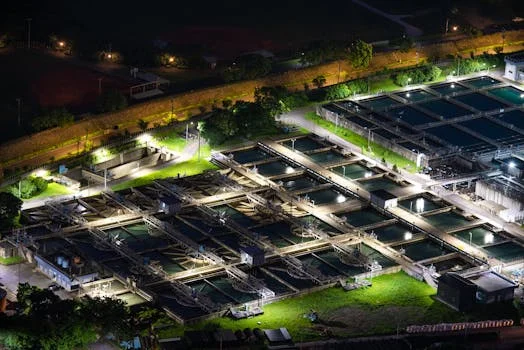
Adhering to the PEI Water Act and associated regulations is paramount for any wastewater treatment project in the province, as non-compliance can lead to significant financial penalties and project delays. For plants exceeding 500 m³/day capacity, a comprehensive Environmental Impact Assessment (EIA) is a mandatory pre-application requirement, ensuring potential environmental effects are thoroughly evaluated and mitigated. Additionally, public consultation processes are stipulated for any proposed sewer rate increases exceeding 10% (PEI Water Act §12), necessitating early engagement with the community.
Key design standards under the 2021 amendments to the PEI Water Act include a strict mandate for tertiary filtration, explicitly prohibiting chlorination for disinfection. Effluent limits are stringent, requiring a maximum of 10 mg/L for Biochemical Oxygen Demand (BOD), 10 mg/L for Total Suspended Solids (TSS), and 1 mg/L for total phosphorus. These limits drive the selection of advanced treatment technologies and meticulous design to ensure consistent performance.
Operational requirements for PEI wastewater treatment plants include continuous monitoring for critical parameters such as pH, dissolved oxygen (DO), and turbidity to ensure ongoing compliance. plants with capacities greater than 2,000 m³/day are subject to annual third-party audits, providing an independent verification of operational performance and regulatory adherence. The cost implications of non-compliance are substantial, with fines under the PEI Environmental Protection Act reaching up to $500,000. Beyond fines, retrofitting an existing secondary treatment plant to meet tertiary filtration requirements can add significant unbudgeted costs, such as an estimated $1.2M for a 1,000 m³/day system, emphasizing the importance of upfront compliance planning to avoid such expenses.
ROI Calculator: Estimate Your PEI Wastewater Treatment Plant’s Payback Period
A robust financial model is essential for justifying investments in wastewater treatment infrastructure, especially given the significant capital outlay and long-term operational costs in Prince Edward Island. We offer a downloadable Excel calculator designed to help municipal engineers and facility managers estimate their project’s financial viability, including payback periods and the impact of various rate structures and grant funding. This tool allows for inputting specific project parameters such as plant capacity, selected technology type, and PEI-specific cost multipliers, providing a tailored financial outlook.
For example, a 500 m³/day MBR plant implemented in Summerside, benefiting from a substantial 70% grant funding, could achieve a payback period of approximately 12 years with an average sewer rate of $450 per household per year. Without such grant support, the payback period for the same project could extend to 20 years or more, underscoring the critical role of external funding. This demonstrates the importance of accurately calculating sewer rate calculation PEI projects require for sustainability.
Several PEI grant programs and financial incentives are available to support wastewater treatment projects. The Green Municipal Fund (GMF) offers significant capital cost contributions, covering up to 80% for innovative technologies that demonstrate environmental benefits. PEI Municipal Affairs provides grants of up to $5M for regional plants, encouraging collaborative infrastructure development. Additionally, the Canada Infrastructure Bank offers low-interest loans, often at 1%, specifically for climate-resilient infrastructure projects, which many modern wastewater treatment plants qualify for. PEI’s average sewer rate in 2025 is approximately $410 per year. However, new plants, especially those requiring advanced tertiary treatment, may necessitate increases to $500–$700 per year per household to achieve full cost recovery and ensure sustainable operation, as highlighted by the Stratford case study. Understanding these financial levers is crucial for successful project implementation, similar to considerations for how Kansas municipalities compare to PEI’s cost structures or Tasmania’s approach to island wastewater treatment.
Download the PEI Wastewater Treatment Plant ROI Calculator (Excel)
Frequently Asked Questions
Q: What’s the cheapest wastewater treatment option for a small PEI community?
A: For small PEI communities, compact underground WWTP systems for PEI communities (e.g., HydropureWater's WSZ Series) often represent the most cost-effective solution, ranging from $1.2M–$2.5M for capacities of 50–300 m³/day. These systems are designed to meet PEI’s tertiary filtration requirements without chlorination, offering a streamlined approach. A 200 m³/day WSZ plant in Tignish, for instance, reduced costs by 35% compared to a conventional system due to its modularity and reduced footprint, according to a HydropureWater case study.
Q: How much does it cost to upgrade a PEI plant to tertiary filtration?
A: Upgrading an existing secondary treatment plant in PEI to meet tertiary filtration standards typically costs between $1.2M–$3.5M for a 1,000 m³/day plant. The specific cost depends on the chosen technology; for example, adding an MBR system might cost around $3.5M, while a Dissolved Air Flotation (DAF) system followed by sand filtration could be closer to $1.8M. Implementing tertiary filtration also leads to O&M cost reductions of 15–25% due to decreased chemical use and improved process stability, as supported by Green Municipal Fund data.
Q: Can PEI industrial facilities discharge to municipal plants?
A: Yes, PEI industrial facilities can discharge to municipal plants, but pre-treatment is often required for high-strength wastewater, such as that from food processing operations, to meet industrial pre-treatment requirements PEI has in place. DAF systems for PEI industrial pre-treatment (e.g., HydropureWater) are highly effective, removing up to 95% of FOG (fats, oils, and grease) and TSS (total suspended solids). This pre-treatment significantly reduces surcharges from municipal plants by an average of 40%, aligning with PEI Industrial Wastewater Guidelines.
Q: What’s the average lifespan of a PEI wastewater treatment plant?
A: The average lifespan for a PEI wastewater treatment plant is generally 25–30 years for major concrete structures and civil works. Mechanical and electrical components typically have a shorter lifespan, requiring replacement every 15–20 years. For advanced systems like MBR, the membranes themselves usually last 8–10 years before needing replacement, as per manufacturer specifications.
Q: Are there grants for PEI wastewater projects?
A: Yes, significant grant funding is available for PEI wastewater projects. The Green Municipal Fund (GMF) is a major contributor, covering up to 80% of capital costs for innovative technologies that demonstrate strong environmental benefits. Additionally, PEI Municipal Affairs offers grants of up to $5M for regional wastewater initiatives. For example, a Charlottetown MBR project in 2024 successfully secured $4.2M in grants, substantially reducing the local municipality's financial burden.
Related Equipment
- compact underground WWTP systems for PEI communities — view specifications, capacity range, and technical data
Need a customized solution? Request a free quote with your specific flow rate and pollutant parameters.