South Dakota’s sewage treatment equipment market is fragmented, with suppliers ranging from local contractors like Carl A. Nelson & Co. (specializing in design-build projects) to national manufacturers offering modular systems. For industrial facilities, key considerations include SD DANR’s operator certification requirements (mandatory for public systems) and equipment efficiency benchmarks—e.g., DAF systems must achieve 90%+ TSS removal for food processing wastewater (per EPA 2024 guidelines). This guide compares 5 top suppliers, details technical specs for 4 equipment types, and provides South Dakota-specific cost data ($120–$450/m³/day for municipal systems).
Why South Dakota’s Sewage Treatment Equipment Market is Unique
The South Dakota Department of Agriculture and Natural Resources (SD DANR) enforces strict operator certification requirements across four distinct classes to manage the state's unique hydrogeological challenges. Public water and wastewater systems are required by state law to be operated by professionals certified within Class I through Class IV tiers. While industrial pre-treatment plants, such as the facility serving Royal Canin, may occasionally qualify for exemptions, the complexity of modern equipment often necessitates high-level certification to ensure compliance. Automated equipment selection is increasingly driven by the need to reduce the physical burden on these certified operators, as the state faces a shortage of qualified personnel in rural districts.
Demographic distribution significantly influences equipment demand, as 60% of South Dakota’s 880,000 residents live in rural areas (USDA 2023). This creates a bifurcated market: rural municipalities require compact, low-maintenance solutions like a compact WSZ underground sewage treatment system for rural South Dakota projects (handling 1–80 m³/h), while urban centers like Sioux Falls undertake massive infrastructure projects. In 2024, Sioux Falls initiated a $150M wastewater upgrade to accommodate rapid population growth, emphasizing high-capacity systems that can handle fluctuating hydraulic loads during storm events.
Climate is perhaps the most critical factor for equipment longevity in the region. With freeze-thaw cycles and winter temperatures dropping to -30°F, equipment must be either buried below the frost line or housed in heavily insulated, heated enclosures. Systems like the HydropureWater WSZ series are specifically designed for these conditions, utilizing subterranean installation to leverage natural ground insulation. For systems experiencing winter-related failures, the South Dakota Association of Rural Water Systems (SDARWS) provides a technical assistance trailer for $300 per half-day to assist with emergency troubleshooting and leak detection.
5 Top Sewage Treatment Equipment Suppliers in South Dakota: Technical Comparison
Supplier selection in South Dakota is dictated by a balance between local design-build expertise and the technical superiority of modular, prefabricated systems. Local firms offer rapid response times for maintenance, which is critical during the harsh winter months, while national and international manufacturers provide the advanced membrane and flotation technologies required for stringent EPA 2024 effluent standards.
| Supplier | Primary Equipment Types | Flow Rate Range | Compliance Expertise | Lead Time | Cost Range (Est.) | Notable SD Project |
|---|---|---|---|---|---|---|
| Carl A. Nelson & Co. | Design-Build, Industrial Pre-treatment | Custom / High | SD DANR, EPA | 20–30 weeks | Project-based | Royal Canin Pre-treatment |
| HydropureWater | DAF, MBR, WSZ (Modular) | 1–300 m³/h | ISO, EPA, SD DANR Docs | 8–12 weeks | $120–$400/m³/day | Industrial Food Processing |
| Evoqua (Xylem Brand) | MBR, Clarifiers, Disinfection | 10–1,000+ m³/h | National Standards | 16–24 weeks | $250–$500/m³/day | Sioux Falls Expansion |
| Xylem (Leopold) | Filtration, Controls, MBR | Variable | EPA, International | 14–20 weeks | $300–$550/m³/day | Rapid City Municipal |
| SDARWS Partners | Rural Package Plants, Septic | 1–50 m³/h | SD DANR Class I-II | 6–10 weeks | $100–$250/m³/day | Rural Water Districts |
The trade-offs between these suppliers are clear: local design-build firms like Carl A. Nelson provide 24-hour service and deep familiarity with South Dakota soil conditions but often integrate third-party equipment, which can increase total procurement costs. Conversely, manufacturers like HydropureWater offer modular high-efficiency DAF system for South Dakota food processing plants with shorter lead times and integrated compliance documentation, though they may require local contractors for the final installation phase.
Key Equipment Types for South Dakota Projects: Specs, Costs, and Use Cases
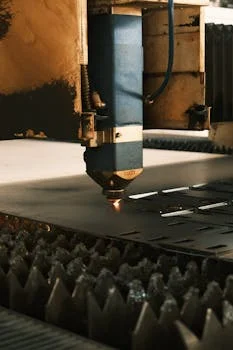
Technical performance in South Dakota's wastewater sector is measured by a system's ability to maintain effluent quality during extreme temperature fluctuations reaching -30°F. Selecting the correct technology depends on whether the project is a space-constrained urban upgrade or a remote industrial site.
| Parameter | DAF | MBR System | WSZ (Underground) | Sludge Dewatering |
|---|---|---|---|---|
| Flow Rate (m³/h) | 4–300 | 2–500 | 1–80 | 5–100 (Sludge Vol) |
| TSS Removal (%) | 92–97% | >99% | 85–90% | N/A (Dry Cake) |
| BOD Removal (%) | 70–85% | >98% | 80–90% | N/A |
| Footprint (m²) | Small (15–60) | Very Small (10–40) | Zero (Buried) | Medium (20–80) |
| Energy (kWh/m³) | 0.2–0.4 | 0.6–1.2 | 0.3–0.5 | 0.1–0.3 |
| Operator Req. | Class II | Class III/IV | Class I/II | Class I |
| Maintenance | Monthly | Bi-Weekly (CIP) | Quarterly | Weekly |
| Lifespan (Years) | 15–20 | 10–15 (Membranes) | 20–25 | 15–20 |
| CapEx ($/m³/day) | $150–$300 | $250–$450 | $120–$250 | $50–$150 |
| OpEx ($/m³) | $0.05–$0.12 | $0.15–$0.30 | $0.04–$0.10 | $0.02–$0.08 |
Use-case matching is vital for ROI. A MBR system for space-constrained municipal upgrades in Sioux Falls or Rapid City is the preferred choice for urban centers where land value is high and effluent must meet non-potable reuse standards. For the state's robust food processing sector, particularly in poultry or pet food production, DAF systems are the industry standard for removing Fats, Oils, and Grease (FOG). To understand the specific engineering requirements of these units, engineers should consult detailed DAF system specifications and selection criteria for industrial wastewater. Rural communities often opt for WSZ systems to avoid the aesthetic and climate-related issues of open-air lagoons.
South Dakota Compliance Checklist: How to Avoid Costly Violations
Failure to secure an Industrial Pretreatment or NPDES permit from the SD DANR can result in fines exceeding $10,000 per day for non-compliant industrial facilities. The permitting process in South Dakota is rigorous, often requiring 3 to 12 months for approval depending on the complexity of the discharge. Key permits include the National Pollutant Discharge Elimination System (NPDES) for surface water discharge and the Industrial Pretreatment Permit for facilities discharging into municipal sewers.
Compliance benchmarks are increasingly aligned with federal EPA 2024 guidelines, which mandate Total Suspended Solids (TSS) levels below 30 mg/L and Biological Oxygen Demand (BOD) below 25 mg/L for most municipal outlets. Ammonia limits are particularly strict in South Dakota to protect cold-water fisheries, often capped at <2 mg/L. Modern MBR systems, with their sub-micron filtration, easily exceed these benchmarks, whereas older activated sludge plants may require chemical polishing to comply.
When evaluating suppliers, use this compliance support checklist:
- Does the supplier provide a performance guarantee that aligns with SD DANR effluent limits?
- Are the electrical components UL-listed and NEMA 4X rated for outdoor exposure?
- Does the supplier offer SD DANR-certified operator training as part of the commissioning package?
- Is there a comprehensive documentation package for the Industrial Pretreatment permit application?
- Can the supplier demonstrate how Colorado’s municipal sewage treatment standards compare to South Dakota’s to leverage regional best practices?
Cost Breakdown: Sewage Treatment Equipment in South Dakota (2025 Data)
Capital expenditure for municipal sewage treatment in South Dakota averages between $120 and $450 per cubic meter of daily capacity, depending on the complexity of the treatment train. These costs are influenced by the state’s labor rates and the logistical expense of transporting heavy equipment to remote rural sites.
| Project Scale | Equipment Cost ($/m³/day) | Installation Cost ($/m³/day) | Permitting & Engineering |
|---|---|---|---|
| Small (<50 m³/day) | $200–$450 | $80–$150 | $10,000–$25,000 |
| Medium (50–500 m³/day) | $150–$350 | $50–$100 | $25,000–$75,000 |
| Large (>500 m³/day) | $120–$250 | $30–$80 | $75,000+ |
Operational and Maintenance (O&M) costs must be factored into the 20-year lifecycle of the equipment. In South Dakota, energy costs remain relatively stable ($0.05–$0.20/m³), but labor costs for Class IV operators can reach $150 per hour for contract services. To calculate the Return on Investment (ROI), facilities should use the following formula: Payback Period = Total Capital Cost / (Annual Savings in Discharge Fees - Annual O&M Costs).
Example: A food processing facility in Aberdeen installs a $500,000 DAF system. By reducing TSS and FOG, they save $150,000 annually in municipal surcharges. With O&M costs of $30,000, the payback period is 4.16 years ($500,000 / $120,000).
Step-by-Step Procurement Checklist for South Dakota Projects
A structured procurement process for South Dakota wastewater projects requires a minimum of 12 months for planning, permitting, and equipment lead times. Following this sequence minimizes the risk of regulatory delays and winter-related installation failures.
- Characterize Influent: Conduct 24-hour composite sampling to determine peak TSS, BOD, and flow rates.
- Consult SD DANR: Determine specific permit requirements and effluent limits for your discharge point.
- Shortlist Suppliers: Identify three vendors with documented success in cold-weather climates.
- Technical Evaluation: Use the parameter tables above to compare removal efficiencies and footprints.
- Total Cost of Ownership (TCO) Analysis: Request 5-year O&M projections, including chemical and membrane replacement costs.
- Reference Checks: Contact existing South Dakota facilities (e.g., in Rapid City or Sioux Falls) using similar equipment.
- Operator Strategy: Determine if you will hire a full-time certified operator or use a contract service.
- Permit Submission: Submit NPDES or Pretreatment applications at least 6 months prior to desired startup.
- Contract Finalization: Include performance-based penalty clauses for delays in equipment delivery or effluent quality failure.
- Seasonal Installation: Schedule major civil works and equipment setting between May and October to avoid frost-related delays.
Common pitfalls include assuming industrial pre-treatment does not require SD DANR oversight and underestimating the impact of winter on chemical storage. Always ensure chemical feed lines are heat-traced and insulated to prevent freezing.
Frequently Asked Questions
Q: Can I install my own septic system in South Dakota?
A: No. South Dakota Administrative Rule 74:53 requires all individual and small on-site wastewater systems to be designed and installed by licensed professionals. For small-scale commercial or rural housing applications, a compact WSZ underground sewage treatment system for rural South Dakota projects is a common choice for meeting SD DANR compliance while maintaining low visibility.
Q: Where do wastewater operators make the most money in South Dakota?
A: According to 2024 SD DANR data, Class IV operators in Sioux Falls and Rapid City earn the highest salaries, ranging from $60,000 to $85,000 per year. This is due to the complexity of the biological nutrient removal (BNR) systems used in these cities. Rural operators typically earn between $45,000 and $65,000.
Q: What’s the best sewage treatment equipment for a South Dakota food processing plant?
A: DAF systems are generally considered the best solution for the initial treatment phase because they remove 90%+ of FOG and TSS, which are the primary drivers of municipal surcharges. For plants aiming for zero-liquid discharge or high-quality reuse, an MBR system is often added as a secondary stage. Expected capital costs for these combined systems range from $200–$400/m³/day.
Q: How do I find a SD DANR-certified wastewater operator?
A: The SD DANR Office of Water maintains a public database of certified operators. Additionally, organizations like the South Dakota Association of Rural Water Systems provide lists of contract operators who can assist smaller facilities with compliance and reporting.
Q: What’s the average cost of a municipal sewage treatment plant in South Dakota?
A: For a mid-sized municipality, costs typically range from $120 to $450 per cubic meter of daily capacity. A 500 m³/day MBR plant generally costs between $250 and $350 per unit of capacity, while larger conventional activated sludge plants benefit from economies of scale, often costing $150 to $250 per unit of capacity.