Wastewater Treatment Plant Cost in Cameroon 2025: Engineering Breakdown with Local Data, Compliance & ROI Calculator
In Cameroon, wastewater treatment plant costs vary widely by capacity and technology. For municipal plants, expect $1.6M–$80M for 1,000–50,000 m³/day systems (e.g., the $80M Mefou plant in Yaounde). Industrial plants range from $50,000 for a 1 m³/h compact system to $5M+ for 100 m³/h MBR plants. Local compliance (e.g., Cameroon’s 2020 Water Code) mandates effluent limits of <30 mg/L BOD and <50 mg/L TSS, adding 10–20% to capital costs. Use this guide to compare technologies, calculate ROI, and navigate permitting.
Why Wastewater Treatment Costs in Cameroon Are Rising in 2025
Cameroon’s 2020 Water Code (Law No. 2020/014) imposes stricter effluent limits, requiring tertiary treatment levels of <30 mg/L BOD, <50 mg/L TSS, and <10 mg/L ammonia for discharges into sensitive water bodies, according to the Ministry of Water and Energy (2023). These regulatory shifts are a response to rapid industrialization and urban sprawl, particularly in the Littoral and Centre regions. In Douala and Yaounde, industrial growth is significantly outpacing wastewater infrastructure development; data from the Cameroon Chamber of Commerce (2024) indicates that approximately 60% of active factories still lack adequate primary or secondary pretreatment systems.
The environmental consequences of this infrastructure gap are manifesting in critical groundwater contamination. In the Buea municipality, recent studies published in the Journal of Pollution (2024) show that 40% of community wells exceed WHO nitrate limits, primarily due to poorly managed septic systems and untreated runoff. This public health risk is driving a transition toward compact underground sewage treatment plants for Cameroon’s urban areas, which offer a decentralized alternative to massive, centralized municipal works that often face funding bottlenecks.
For industrial facility managers, the "cost of inaction" has become a quantifiable liability. Under current enforcement protocols, non-compliant facilities face fines of up to 5M XAF per month. Beyond direct financial penalties, the reputational damage and the risk of losing export opportunities—particularly for food processors seeking access to the EU market—are significant. Meeting international standards for wastewater discharge is no longer optional for businesses integrated into global supply chains. as water scarcity intensifies in northern regions, the necessity for water reuse technologies is inflating initial capital expenditure (CAPEX) while offering long-term operational resilience.
Wastewater Treatment Plant Cost Breakdown by Capacity: From $860/Household to $80M Municipal Plants
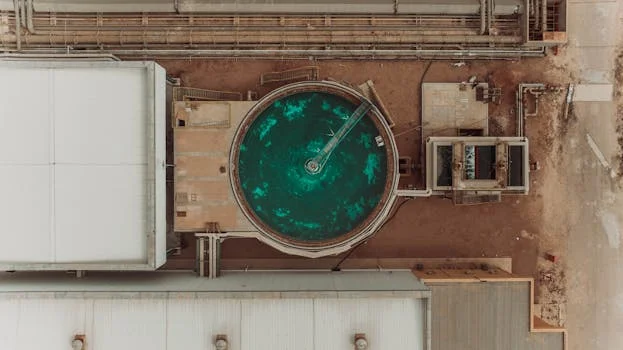
Capital expenditure for wastewater treatment in Cameroon is heavily dictated by the scale of the facility and the required effluent quality. Engineering data suggests that while larger municipal plants benefit from economies of scale in terms of cost per cubic meter treated, the initial investment remains prohibitive for many regional councils without international financing or DBOT (Design, Build, Operate, Transfer) partnerships. For example, the Mefou plant in Yaounde, designed to treat 50,000 m³/day, required an investment of approximately $80M, reflecting the high cost of civil works and specialized electromechanical equipment in the Central African context.
In contrast, decentralized systems for smaller townships or industrial zones follow a different cost curve. In Buea, the average cost for constructing a standard septic tank is approximately $860 per household. When scaled to a town of 4,864 households, the cumulative cost reaches $4.2M, yet these systems often fail due to poor desludging practices—only about 10% of tanks are desludged annually, leading to frequent overflows and groundwater leaching. This highlights the "hidden" operation and maintenance (O&M) costs that are often omitted from initial budget requests.
| Plant Capacity (m³/h or m³/day) | Estimated CAPEX Range (USD) | Primary Application | Assumptions |
|---|---|---|---|
| 1–10 m³/h | $50,000 – $200,000 | Hotels, Clinics, Small Factories | Includes civil works; excludes land; 20-year lifespan. |
| 10–100 m³/h | $500,000 – $2M | Industrial Zones, Small Towns | Includes automated control systems and pretreatment. |
| 100–1,000 m³/h | $2M – $10M | Medium Municipalities (50k–200k people) | Standard activated sludge or SBR technology. |
| 1,000–50,000 m³/day | $10M – $80M | Large Municipal (e.g., Yaounde/Douala) | Complex DBOT structures; includes sludge handling. |
Beyond the equipment purchase, project managers must account for land acquisition (typically 5–15% of total costs in urban Douala), permitting fees (2–5%), and annual O&M, which can range from 10% to 20% of the initial capital cost. For municipalities, the DBOT model has emerged as a viable path; a 10,000 m³/day plant in Yaounde completed around 2015 cost approximately $15M under a 20-year concession. This structure shifts the operational risk to the contractor, ensuring the plant remains functional despite local budget fluctuations. For those evaluating regional benchmarks, it is useful to see how Cameroon’s costs compare to South Africa’s advanced wastewater sector, where mature supply chains often lower the cost of specialized components.
Technology Comparison: MBR vs. DAF vs. Conventional Activated Sludge for Cameroon’s Climate
Selecting the appropriate treatment technology in Cameroon requires balancing effluent requirements against the high ambient temperatures of the tropical climate. Temperatures in Douala often range between 25°C and 35°C, which accelerates biological activity but significantly reduces the solubility of oxygen in the water. This necessitates precise aeration control to prevent anaerobic pockets in Conventional Activated Sludge (CAS) systems. While CAS remains the most common municipal choice due to lower CAPEX ($500–$1,000/m³/h), its large footprint and the requirement for highly skilled operators make it less ideal for space-constrained industrial zones.
For industrial applications, particularly in the food and textile sectors concentrated in the Magzi industrial zones, DAF systems for industrial pretreatment in Cameroon’s food and textile sectors are highly effective. Dissolved Air Flotation (DAF) can remove up to 95% of Fats, Oils, and Grease (FOG), which are prevalent in palm oil processing and brewery effluents. Meanwhile, for facilities requiring high-quality effluent for reuse or discharge into sensitive rivers like the Wouri, MBR systems for high-quality effluent in Cameroon’s industrial zones offer a footprint 60% smaller than CAS, though they carry a higher CAPEX of $1,500–$3,000/m³/h.
| Parameter | MBR (Membrane Bioreactor) | DAF (Dissolved Air Flotation) | CAS (Activated Sludge) |
|---|---|---|---|
| Effluent Quality (BOD/TSS) | <5 / <1 mg/L | <50 / <30 mg/L (Pretreat) | <30 / <50 mg/L |
| Footprint (m² per m³/h) | 2 – 5 m² | 5 – 10 m² | 15 – 30 m² |
| Capital Cost ($/m³/h) | $1,500 – $3,000 | $800 – $1,500 | $500 – $1,000 |
| Energy Use (kWh/m³) | 0.8 – 1.5 kWh | 0.2 – 0.5 kWh | 0.3 – 0.6 kWh |
| Suitability for Cameroon | Urban areas; Water reuse | Food/Textile pretreatment | Large-scale municipal |
In Cameroon’s climate, sludge management is a critical O&M factor. High humidity can impede traditional drying beds, making mechanical dewatering essential. Engineers should consider sludge dewatering solutions for Cameroon’s wastewater plants that utilize screw presses or belt presses to reduce sludge volume by up to 80%, significantly lowering disposal costs at municipal landfills. Adjusting Sludge Retention Times (SRT) is also vital; the warm climate allows for shorter SRTs but increases the risk of "bulking" if aeration is not carefully monitored.
Cameroon’s Wastewater Compliance Checklist: Permits, Discharge Limits, and Penalties
Navigating the regulatory landscape in Cameroon requires coordination between multiple ministries, primarily the Ministry of Environment, Protection of Nature and Sustainable Development (MINEPDED) and the Ministry of Water and Energy (MINEE). According to the 2020 Water Code, all industrial and municipal discharges must meet specific physicochemical standards. Failure to adhere to these limits results in administrative fines, with the potential for plant shutdowns if violations persist beyond a three-month grace period.
Standard Effluent Limits (Cameroon Water Code 2020):
- BOD5: <30 mg/L (Municipal); <50 mg/L (Industrial)
- TSS: <50 mg/L (Municipal); <100 mg/L (Industrial)
- Ammonia (NH4-N): <10 mg/L (Municipal); <20 mg/L (Industrial)
- E. coli: <1,000 CFU/100 mL (Required for agricultural reuse)
- pH: 6.5 – 8.5
The permitting process typically spans 6 to 12 months. It begins with a mandatory Environmental Impact Assessment (EIA), which must be conducted by a MINEPDED-certified consultant. Following the EIA, the developer must submit detailed engineering site plans and operator certifications to the Urban Council (e.g., Communauté Urbaine de Douala). Local nuances are critical: urban councils often impose stricter local limits than the national code if the discharge point is near a protected mangrove or a primary source of drinking water. Penalties for non-compliance are structured as monthly recurring fines, often reaching 5M XAF per month, which can quickly eclipse the cost of an upgraded treatment system.
ROI Calculator: How to Justify Your Wastewater Treatment Plant Investment
Justifying the investment in a wastewater treatment plant (WWTP) in Cameroon requires a transition from viewing the plant as a "sunk cost" to an asset that generates operational savings and potential revenue. The most immediate return comes from the avoidance of environmental fines. For a 1,000 m³/day plant, avoiding a 5M XAF monthly fine results in a direct saving of 60M XAF ($100,000) per year. When combined with the high cost of potable water in Douala—ranging from 800 to 1,200 XAF/m³—the economics of water reuse become compelling.
The ROI Formula:
ROI (%) = [(Annual Savings + Annual Revenue) / (Total Capital Cost + Annual O&M)] × 100
Consider a hypothetical textile factory in Douala with a $2M MBR plant investment. If the factory reuses 70% of its treated water for cooling and process wash-down, it saves approximately 400,000 m³ of potable water annually. At 1,000 XAF/m³, this equates to 400M XAF ($660,000) in savings. Additionally, some industries are exploring revenue by selling treated water to neighboring construction sites for dust suppression or irrigation at rates of 300–600 XAF/m³. In this scenario, the payback period is often less than four years, providing a 25% annual ROI. large-scale anaerobic digestion systems can qualify for UN Carbon Credits (CDM projects), providing up to $5 per ton of CO2e captured, adding another layer of financial justification for municipal planners.
Frequently Asked Questions
Q: How much does it cost to set up a sewage treatment plant in Cameroon?
A: Costs range from $50,000 for a 1 m³/h compact system to $80M for a 50,000 m³/day municipal plant. For example, a 10 m³/h MBR plant typically costs between $150,000 and $300,000, while a 100 m³/h conventional plant ranges from $500,000 to $1M. You must budget an additional 20–30% for land, permitting, and initial O&M.
Q: Which country has the best wastewater treatment plant in Africa?
A: South Africa and Morocco currently lead the continent in wastewater infrastructure, treating over 80% of urban wastewater. However, Cameroon’s Mefou plant (50,000 m³/day) is one of the most advanced facilities in Central Africa, utilizing integrated activated sludge processes and UV disinfection to meet international discharge standards.
Q: How much is a cubic meter of water in Cameroon?
A: Potable water from the Douala Water Utility (Camwater) costs between 800 and 1,200 XAF/m³ for industrial users. In contrast, treated wastewater for industrial reuse costs between 200 and 500 XAF/m³, making it a significantly more cost-effective alternative for non-potable uses like cooling, boiler feed (with additional polishing), and irrigation.
Q: What are the alternatives to a full-scale wastewater treatment plant in Cameroon?
A: For small communities or isolated facilities, options include:
- Septic tanks: Approximately $860/household, though they require strict desludging schedules to prevent failure.
- Constructed wetlands: Low O&M cost ($20–$50/m³ capacity) but require large land areas.
- Decentralized MBR systems: $1,500–$3,000/m³/h; high-quality effluent in a very small footprint.
- DAF systems: $800–$1,500/m³/h; ideal for industrial pretreatment before discharging to municipal sewers to avoid surcharges.