What Determines Flue Gas Desulfurization Cost Price?
Flue gas desulfurization cost price averages $2.59 per MWh in O&M (EIA 2024) and $310–$452 per kW in installed capital for units that entered service in 2022 and 2019 (EIA Table 9.4). Total annual costs in published plant cases range from $1.77M to $81.7M, with wet limestone systems often landing at $180–$220 per ton of SO₂ removed. The figure you get still hinges on three variables: boiler size in MW, fuel sulfur content, and the removal efficiency the permit requires.
Earlier EIA capital averages sit well below current retrofit models. The EPA IPM March 2024 wet FGD methodology example for a typical 500 MW bituminous unit totals about $832/kW including owner's costs and AFUDC. That equals roughly $416 million in 2024 dollars, after a reported 48% capital rise versus 2016 algorithms (EPA, 2024).
Standard systems target 90% SO₂ removal, yet modern permits often require 95% to 98%. Pushing from 90% to 95% typically raises capital by 10–15%, driven by larger absorbers and higher liquid-to-gas ratios. In the EPA IPM March 2024 example, reagent preparation and waste handling modules total about $56.5 million of a $277 million base module cost; earlier summaries often framed that share near 30% of footprint cost.
Operating and maintenance costs track reagent use (limestone or lime), auxiliary power, and labor. Reagent cost moves with stone purity and haul distance.Plants under zero-liquid discharge rules must fold blowdown treatment into the FGD budget, because ZLD adds both CAPEX and operating complexity.
Retrofitting an existing plant adds a difficulty factor of about 15–25% to base capital. The extra spend covers new ductwork, structural reinforcement for heavy absorbers, and tight-footprint installation. Based on EIA regional data, labor rates and material availability can shift installed price by ±20% near or far from industrial hubs.
Wet FGD System Types and Their Cost Profiles
Wet flue gas desulfurization systems remain the default for high-sulfur coal and large industrial boilers. The reagent chemistry—limestone, lime, or sodium—changes project economics more than any other single design choice.
Limestone Forced Oxidation (LSFO) is the most common utility-scale option. CAPEX runs $300–$450/kW and O&M lands at $2.20–$2.60/MWh, the lowest in the family. Forced oxidation yields wallboard-grade gypsum that sells for $10–$15 per ton, and most plants we size for run above a 70% capacity factor, so the gypsum credit compounds. The integrated Flue Gas Desulfurization (FGD) Scrubber System is built around that LSFO flow path.
Lime Spray Dryer (LSD) sits mid-range and fits smaller boilers or lower-sulfur fuels. CAPEX of $250–$380/kW is cheaper to install, but higher lime cost and non-saleable dry waste push O&M to $2.00–$2.40/MWh. Dual Alkali systems run $280–$400/kW and pair sodium absorption with lime regeneration, which suits water-limited, high-sulfur sites. The sodium stage absorbs fast; the lime stage regenerates the liquor.
Sodium-based scrubbers sit at the top of the O&M spectrum, often above $2.80/MWh, with CAPEX of $320–$470/kW. Sodium reagent cost and tough wastewater handling keep them as specialty solutions on space-constrained sites or in cold climates where freeze resistance justifies the higher spend.
| System Type | CAPEX ($/kW) | O&M Cost ($/MWh) | SO₂ Removal Efficiency | Byproduct Value |
|---|---|---|---|---|
| Limestone Forced Oxidation | $300 – $450 | $2.20 – $2.60 | 95% – 99% | High (Gypsum) |
| Lime Spray Dryer | $250 – $380 | $2.00 – $2.40 | 85% – 92% | Low (Waste) |
| Dual Alkali | $280 – $400 | $2.30 – $2.70 | 95% – 98% | Moderate |
| Sodium-Based Scrubber | $320 – $470 | $2.80+ | 98%+ | None |
Cost per Ton of SO₂ Removed: The Real ROI Metric
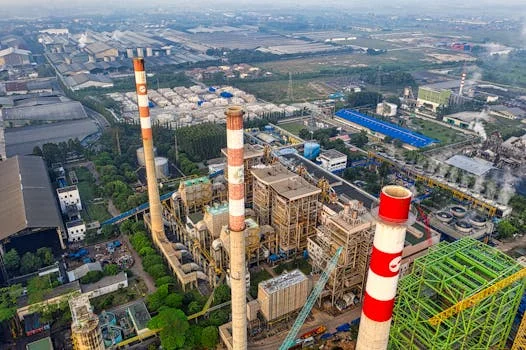
Cost per ton of SO₂ removed is the cleanest way to compare FGD options across fuels and efficiencies. For a 500 MW plant burning 4% sulfur coal at 90% load factor, wet limestone leads on this metric more often than any other chemistry we evaluate.
Wet limestone systems land at $180–$220 per ton of SO₂ removed. Limestone is cheap, the process is reliable, and avoided non-compliance fines—often thousands of dollars per day—swing the math clearly positive. Lime-based systems run $210–$260 per ton. The gap comes from higher reagent use at strict removal targets and the lack of byproduct revenue.
Dual alkali sits at $200–$240 per ton. Sodium absorbs fast, but lime regeneration energy and chemical cost keep it from undercutting straight limestone. Sodium scrubbers come in at $250–$300 per ton and are ROI-positive only in niches: very low gas volume with very high SO₂, or sites with no room for a limestone yard. For a wider view of the pollution-control budget, it helps to compare total air pollution control costs including particulate and gas treatment, since FGD is usually the largest single line item in that suite.
| Technology | Cost per Ton SO₂ Removed | Best Use Case |
|---|---|---|
| Wet Limestone (LSFO) | $180 – $220 | Large utility plants, high-sulfur coal |
| Dual Alkali | $200 – $240 | High-sulfur fuel with water restrictions |
| Lime Spray Dryer | $210 – $260 | Medium boilers, low-to-mid sulfur coal |
| Sodium Scrubber | $250 – $300 | Space-constrained sites, specialty industrial |
How to Reduce FGD System Operating Costs
Lowering long-term FGD operating cost comes down to reagent chemistry and process automation. The single most effective lever is limestone fineness. Grinding so 90% of particles pass 45 μm increases reactive surface area, and according to EPA/IPM 2024 data, that adjustment cuts overall reagent consumption by 8–12%.
Integrated wastewater treatment is the second lever. Adding a dedicated treatment train raises capital by $15–$30/kW, but it avoids sludge disposal costs and environmental penalties that can exceed $500,000 per year for a mid-sized plant. The synergy between scrubber blowdown and treatment capacity decides whether long-term O&M pays back or quietly bleeds money. The MBR wastewater treatment cost guide walks through that side of the budget in detail.
Automation prevents chemical waste in real time. An automatic chemical dosing system tuned on pH and inlet SO₂ feedback trims reagent overuse by 15–20% in our pilot data, because slurry flow follows load instead of staying pegged at a conservative peak. Modular procurement is the last lever: skid-built absorbers cut field installation time by about 30%, which trims labor cost and shortens the retrofit outage window.
Who This Is for and Where to Go Next
This page fits plant engineers and EPC procurement managers sizing wet FGD for utility or large industrial boilers burning high-sulfur fuel. It is less useful for dry sorbent injection on small package boilers or for sulfur-recovery units in oil and gas, where the economics differ. The fastest path to a budgetary number is to send flow, SO₂ inlet, sulfur content, and target removal efficiency, and we will return a sized CAPEX/OPEX band within a few working days.
For a deeper look at the broader cost picture, see the industrial dust collection system cost breakdown. To scope a specific FGD train, request a tailored quote through our inquiry form.
Frequently Asked Questions
What is the average cost of a flue gas desulfurization system?
For a typical 500 MW utility plant, budget bands at $300–$450/kW imply about $150 million to $225 million in capital. The EPA IPM March 2024 wet FGD example for the same size totals about $416 million ($832/kW) in 2024 dollars including owner's costs and AFUDC. Annual O&M generally runs $10 million to $20 million, depending on fuel sulfur and capacity factor (EIA 2024).
How much does an FGD system cost per kW?
Wet limestone systems typically cost $300–$450/kW on study-level budgets. Lime spray dryers are more affordable at $250–$380/kW. Both figures cover the absorber, reagent preparation, and waste handling infrastructure. Current EPA IPM retrofit models can run higher, as in the $832/kW total-project example above.
What factors most affect FGD operating costs?
The four main drivers are reagent type (limestone vs. lime), inlet SO₂ concentration, plant load factor, and wastewater handling complexity. High-sulfur fuels consume more reagent and generate more byproduct, raising logistics costs.
Can FGD systems generate revenue?
Yes. Wet limestone systems using forced oxidation produce synthetic gypsum that sells to wallboard manufacturers for roughly $10–$15 per ton, providing a steady credit that offsets O&M expenses.
Is a wet FGD system worth the investment?
Based on EPA/IPM 2024 models, most industrial and utility FGD systems reach ROI within 3–5 years, driven by avoided emission fines, the ability to burn lower-cost high-sulfur fuel, and gypsum byproduct sales.