Erbil Hospital Wastewater: Fungal Contamination and Regulatory Risks
Hospital wastewater treatment in Erbil faces severe public health risk. Measured fungal counts reach 8,300 CFU/mL. BOD₅ sits at 300–500 mg/L against the KRG 150 mg/L sewer limit. TSS at Hawler, Rezgary, and Rozhawa hospitals runs 250–450 mg/L against a 50 mg/L cap. KRG Environmental Protection and Improvement Law No. 8 of 2008 governs discharge, with Environmental Violations Regulation No. 2 of 2023 covering project owners. MBR, DAF, and chemical dosing are the three technology families that address this profile.
Environmental sampling at Hawler Teaching Hospital, Rezgary Teaching Hospital, and Rozhawa Emergency Hospital identified 13 fungal genera in untreated medical effluent. Aspergillus niger and Candida albicans dominated. Rezgary peaked at 8,300 CFU/mL, a level tied to high ambient temperatures and missing primary treatment. These organisms drive hospital-acquired infections, including candidiasis and aspergillosis.
The biochemical profile compounds the problem. BOD₅ sits between 300 and 500 mg/L, well above the 150 mg/L sewer cap. Phosphate (PO₄) runs 5–10 mg/L against a 2 mg/L KRG cap, and nitrate (NO₃) runs 20–40 mg/L against a 10 mg/L cap. Nutrient overshoot of this magnitude stresses Erbil’s groundwater and accelerates eutrophication in receiving wadis.
Enforcement has tightened. Earlier local briefs cited fines of $10,000 to $50,000 per violation under a 2023 framing. KRG Interior enforcement now cites Article 42, Clause 3 of Law No. 8 of 2008, with fines from 100,000 to 10 million IQD, and facility shutdown remains possible for repeat offenders. Most plants we size for the region are already upgrading from septic tanks to packaged biological trains because inspector visits have become routine.
| Parameter | Erbil Hospital Influent (Avg) | KRG Discharge Limit (Law No. 8) | Variance (%) |
|---|---|---|---|
| Fungal Count (CFU/mL) | 4,500 - 8,300 | ≤ 100 | +4,400% |
| BOD₅ (mg/L) | 300 - 500 | 150 | +233% |
| Phosphate (PO₄) (mg/L) | 5 - 10 | 2 | +400% |
| Nitrate (NO₃) (mg/L) | 20 - 40 | 10 | +300% |
| TSS (mg/L) | 250 - 450 | 50 | +800% |
KRG and International Standards for Hospital Wastewater Discharge in Erbil
KRG Law No. 8 sets the strictest wastewater discharge limits in Kurdistan’s history, and the regional government has adopted a Zero Discharge policy for untreated medical effluent. Every medical facility, regardless of bed count, must run pre-treatment before sending flow to the municipal sewer or any surface water body. The Iraqi Ministry of Environment 2024 guidelines layer on stricter hospital-specific caps: fecal coliform ≤ 200 CFU/100 mL and COD ≤ 125 mg/L.
WHO guidance on healthcare wastewater stresses disinfection. For Erbil hospitals, the operational target is a free chlorine residual ≥ 0.5 mg/L post-contact, set high enough to knock down Candida auris and other AMR organisms. Erbil’s 35–45°C summers make this harder: heat accelerates biological activity and fungal regrowth in the pipe network, so aeration basins need cooling or the disinfection stage needs a UV unit rated for warm, turbid water.
The reuse case widens the gap. Any Erbil hospital aiming for landscape irrigation must hit BOD₅ ≤ 30 mg/L, the EPA reuse ceiling, not the KRG 150 mg/L sewer cap. Sizing the train to the reuse number protects the project if KRG tightens again. Procurement teams comparing hospital wastewater treatment standards across the Middle East should plan equipment that meets both sewer and reuse thresholds. For projects in nearby Gulf markets, the parallel framework in hospital wastewater treatment in Salalah shows a similar MBR-led pathway.
| Parameter | KRG Law No. 8 (2023) | Iraqi EPA (2024) | WHO Guidelines |
|---|---|---|---|
| BOD₅ (mg/L) | ≤ 150 | ≤ 30 | ≤ 25 |
| COD (mg/L) | ≤ 250 | ≤ 125 | ≤ 150 |
| TSS (mg/L) | ≤ 50 | ≤ 30 | ≤ 35 |
| Fecal Coliform (CFU/100mL) | ≤ 1,000 | ≤ 200 | ≤ 100 |
| Fungal Count (CFU/mL) | ≤ 100 | Not Specified | Sterile/Non-detectable |
| Residual Chlorine (mg/L) | 0.2 - 0.5 | 0.5 - 1.0 | ≥ 0.5 |
Engineering Solutions for Erbil Hospitals: MBR vs. DAF vs. Chemical Dosing
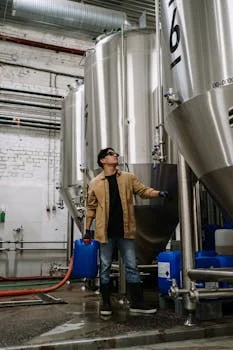
Technology choice for Erbil’s hospital wastewater comes down to three trade-offs: fungal kill rate, footprint, and how the train holds up at 40°C ambient with airborne dust. The three families in use are Membrane Bioreactors (MBR), Dissolved Air Flotation (DAF), and chemical dosing with sedimentation.
MBR is the fungal-kill benchmark. With 0.1 μm membrane pores, MBR systems for hospital wastewater in Erbil remove 99.9% of fungal spores and bacteria, dropping Rezgary-class influent of 8,300 CFU/mL below 10 CFU/mL. The trains combine biological degradation with ultrafiltration in one tank, cutting footprint roughly 50% versus conventional activated sludge, a real benefit on tight Erbil urban sites. The catch is cooling: aeration basins need temperature control to keep biomass healthy through the 35–45°C summer.
DAF targets FOG and phosphate. DAF systems for nutrient and FOG removal in hospital effluent lift suspended solids and bound phosphate on micro-bubbles for surface skimming. TSS removal runs 90–95%, useful for high-FOG kitchens and surgical suites. Dust storms are the weak point: airborne grit clogs micro-bubble diffusers and cuts efficiency 20–30% unless the DAF sits in a NEMA-rated enclosure.
Chemical dosing with sedimentation fits small clinics under 50 beds where capital is the constraint. PAC plus ozone or chlorine dioxide hits 80–90% fungal inactivation at lower install cost, but reagent consumption pushes OPEX to $0.50–$1.00/m³. For these sites, compact Medical & Hospital Wastewater Treatment System units provide packaged ozone disinfection without the operational load of a biological train.
| Feature | MBR System | DAF System | Chemical Dosing |
|---|---|---|---|
| Fungal Removal Efficacy | 99.9% | 60-70% | 80-90% |
| BOD₅ Reduction | 95% | 70-80% | 70% |
| Nutrient Removal | 90% | 60-70% (PO₄) | 40-50% |
| Energy Consumption | 0.8 - 1.2 kWh/m³ | 0.5 - 0.8 kWh/m³ | 0.2 - 0.4 kWh/m³ |
| Maintenance Interval | 3-6 months (cleaning) | Weekly (skimming) | Daily (monitoring) |
Cost Breakdown and ROI for Hospital Wastewater Treatment in Erbil
Capital outlay in the 2025 Erbil market runs $1,200–$1,800 per m³/day for MBR, $800–$1,500 per m³/day for DAF, and $300–$600 per m³/day for chemical dosing. The MBR premium covers membrane modules and the automation needed to hold fungal counts below the KRG 100 CFU/mL ceiling.
OPEX lands in a different order. MBR runs $0.30–$0.50/m³, dominated by aeration energy and periodic membrane replacement. Chemical dosing runs $0.50–$1.00/m³ because reagent use is continuous. The KRG Green Investment Fund 2024 covers 30% of CAPEX for biological systems (15% for chemical dosing), which materially changes the comparison.
Worked example: a 200-bed Erbil hospital at 30 m³/day needs roughly $45,000 CAPEX for an MBR. The same hospital otherwise faces $20,000/year in KRG fines plus municipal surcharges for high-strength discharge. After the 30% subsidy, net CAPEX is $31,500, and ROI lands near 1.6 years once avoided fines and reuse credits for landscape irrigation are counted. Adding sludge management solutions for hospital wastewater systems trims hauled waste volume and disposal cost further. For broader regional context on how African projects are funding similar upgrades, see hospital wastewater treatment in Cameroon.
| Cost Component | MBR System | DAF System | Chemical Dosing |
|---|---|---|---|
| CAPEX (per m³/day) | $1,200 - $1,800 | $800 - $1,500 | $300 - $600 |
| OPEX (per m³) | $0.30 - $0.50 | $0.40 - $0.70 | $0.50 - $1.00 |
| KRG Subsidy (2024) | 30% | 30% | 15% |
| Estimated ROI (Years) | 1.5 - 3.5 | 2.5 - 4.0 | 3.0 - 5.0 |
Step-by-Step System Selection Checklist for Erbil Hospitals
Procurement teams that follow the same six-step pattern tend to avoid the most common Erbil retrofit mistakes: undersized disinfection, neglected dust protection, and missed KRG paperwork.
- Step 1: Quantify daily flow from bed count. Clinics under 50 beds produce 5–10 m³/day; hospitals above 200 beds often exceed 100 m³/day.
- Step 2: Test influent at a KRG-approved lab. Measure BOD₅, TSS, fungal counts, and nutrients. Baseline numbers, not estimates, drive correct sizing.
- Step 3: Match technology to the dominant contaminant. Fungal loads above 5,000 CFU/mL push the choice toward MBR; high FOG and phosphate favor a DAF pre-treatment stage upstream of the biological train.
- Step 4: Resolve site constraints. Tight urban sites often need underground integrated sewage treatment systems to keep footprint, odor, and noise down.
- Step 5: Plan climate resilience. House VFDs and PLCs in cooled enclosures, and specify UV units rated for the turbidity spikes that follow dust storms.
- Step 6: Budget KRG compliance. Quarterly lab testing plus the annual permit renewal averages $2,000/year; include it in OPEX from day one.
For projects in Thailand sizing similar biological trains, the regulatory framing in wastewater treatment regulations in Thailand shows the same permit-driven pattern. Lift-station selection on adjacent hospital sites often follows the comparison laid out in prefabricated vs traditional pump stations.
Plant managers ready to size a train for Erbil hospital loads can request a packaged system quote with flow, fungal count, and site constraints attached.
Frequently Asked Questions
What are the KRG penalties for discharging untreated hospital wastewater in Erbil?
KRG Interior enforcement cites fines of 100,000 to 10 million IQD under Article 42, Clause 3 of Environmental Protection and Improvement Law No. 8 of 2008. Earlier local briefs used a $10,000–$50,000 range under a 2023 framing. Environmental Violations Regulation No. 2 of 2023 also covers project owners. Repeat offenders still face facility shutdown and license revocation, so the second inspection matters more than the first.
How effective are MBR systems at removing fungi from hospital wastewater?
MBR systems remove 99.9% of fungal spores through 0.1 μm ultrafiltration membranes. Influent above 8,000 CFU/mL drops to under 10 CFU/mL, well below the KRG 100 CFU/mL ceiling for hospital discharge. That margin holds only if aeration stays cool through Erbil’s 35–45°C summer peaks.
What is the lifespan of a hospital wastewater treatment system in Erbil?
MBR systems run 10–15 years and DAF systems 15–20 years with proper maintenance. Membranes typically need replacement every 3–5 years, and pumps every 5–7 years depending on feed-water hardness. Dust protection and cooled enclosures extend those intervals in Erbil’s climate.
Can hospital wastewater be reused in Erbil?
Yes. Effluent at BOD₅ ≤ 10 mg/L meets KRG reuse criteria for landscape irrigation and cooling-tower makeup. Landscape irrigation also tracks the EPA reuse ceiling of BOD₅ ≤ 30 mg/L used as a design benchmark. MBR trains are the standard route to that quality without a separate polishing stage.
How does Erbil’s climate affect wastewater treatment system performance?
Summer temperatures of 35–45°C depress biomass activity if aeration is not cooled, and dust storms clog DAF diffusers. Cooled enclosures, NEMA-rated housings, and turbidity-rated UV units keep output stable through the worst weeks of the year.