In Canberra, wastewater treatment plant costs vary widely by scale and technology. Residential systems for a 4-bedroom home typically range from $15,000 to $25,000 (installed), including aerated wastewater treatment systems (AWS) or septic tanks. Commercial or municipal plants start at $500,000 for 10,000 GPD (gallons per day) capacity, with costs scaling to $5M+ for larger facilities. Key factors include flow rate, effluent quality requirements (e.g., ACT EPA standards), and technology choice (e.g., MBR vs. conventional activated sludge). This guide provides engineering specs, local compliance rules, and an ROI calculator to help you select the right system for your project.
Why Wastewater Treatment Plant Costs in Canberra Vary So Widely
Capital expenditure for wastewater treatment in the Australian Capital Territory is primarily driven by three variables: hydraulic load capacity, stringent effluent quality standards mandated by the ACT EPA, and site-specific geotechnical constraints. While a residential developer in a new Gungahlin suburb might budget $16,000 for an on-site system, a commercial facility manager in Fyshwick could face costs exceeding $1,000,000 for a plant capable of handling 10,000 gallons per day (GPD). This disparity is not merely a matter of scale; it reflects the complexity of removing contaminants to meet local discharge permits.
Technology choice accounts for a significant portion of the price variance. Conventional aerated systems, often used for residential projects, cost between $5,000 and $15,000 for the equipment alone. These systems typically achieve 90% Total Suspended Solids (TSS) removal. In contrast, an MBR membrane bioreactor system for high-efficiency wastewater treatment costs between $20,000 and $50,000 for residential scales but offers 99% TSS removal and superior nutrient reduction. For industrial applications requiring the removal of fats, oils, and grease (FOG), a DAF system for industrial wastewater pretreatment can range from $30,000 to $100,000 depending on flow volume and chemical dosing requirements.
Compliance costs in Canberra are influenced by the ACT EPA standards, which often require Biological Oxygen Demand (BOD) levels below 10 mg/L and TSS below 15 mg/L. Achieving these levels necessitates tertiary treatment stages, adding 15-25% to the total project cost. the approval process in the ACT is rigorous, typically taking 3 to 6 months. Failure to comply can result in fines exceeding $10,000 for residential owners and significantly higher for commercial entities.
Finally, Canberra’s diverse geography impacts installation labor. Rocky terrain in northern districts like Gungahlin often requires specialized excavation equipment, potentially adding $3,000 to $7,000 to the civil works budget. Conversely, projects in low-lying areas of Tuggeranong may require advanced anti-buoyancy measures and high-water-table engineering, which can increase costs by 10-30% compared to standard installations.
Wastewater Treatment Plant Costs in Canberra by Project Scale
Residential wastewater systems in Canberra for a standard four-bedroom dwelling require a capital investment between $15,000 and $25,000, while commercial-grade facilities for high-density developments often exceed $500,000. Understanding the cost breakdown by scale is essential for accurate budgeting and feasibility studies. Residential projects are typically "turnkey" installations, whereas commercial and municipal projects involve complex civil engineering and multi-stage procurement processes.
For a residential project (1–10 m³/day), the cost is split between equipment ($8,000–$15,000), excavation ($3,000–$5,000), permits ($1,000–$2,000), and labor ($3,000–$5,000). Data from recent Canberra residential builds indicates that a 4-bedroom home system averages approximately $16,000. Commercial projects (10–100 m³/day), such as a small hotel or a multi-unit residential complex, range from $200,000 to $1,000,000. In these instances, civil works and sophisticated control systems represent a larger share of the budget. For example, a 50 m³/day plant for a commercial site often requires a $500,000 investment to meet the 5 critical stages of wastewater treatment required for safe discharge or reuse.
Municipal-scale plants (100+ m³/day) involve multi-million dollar budgets. While Canberra’s primary treatment occurs at the Lower Molonglo Water Quality Control Centre—a facility with a 200 ML/day capacity that cost over $200M to develop—smaller decentralized municipal plants for outlying communities start at $1,000,000. These projects must account for land acquisition, which in the Canberra region can cost between $50,000 and $500,000 per acre, and power infrastructure upgrades, such as new transformers, which add $20,000 to $100,000.
| Project Scale | Flow Capacity (m³/day) | Estimated Total Cost (AUD) | Key Cost Components |
|---|---|---|---|
| Residential | 1 – 10 | $15,000 – $25,000 | Equipment, excavation, basic permits |
| Commercial | 10 – 100 | $200,000 – $1,000,000 | Advanced filtration, civil works, EPA approvals |
| Municipal | 100 – 1,000+ | $1,000,000 – $10,000,000+ | Land, power infra, tertiary treatment, SCADA |
Engineering Specifications for Canberra Wastewater Treatment Systems
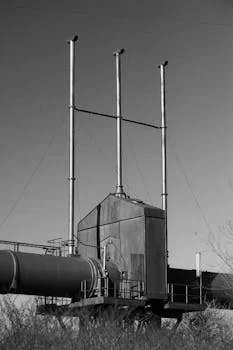
Engineering design for Canberra-based wastewater systems must accommodate specific hydraulic flow rates ranging from 1.5 m³/day for single households to over 100 m³/day for municipal-scale infrastructure. Technical specifications must be meticulously matched to the influent profile to ensure the effluent meets the ACT EPA's stringent discharge standards. For high-density urban sites in Canberra, footprint efficiency is often the deciding factor between technology types.
Membrane Bioreactor (MBR) systems are increasingly favored for urban Canberra projects due to their compact footprint, requiring only 0.5 m² per m³/day treated. In comparison, conventional activated sludge systems require up to 2 m² per m³/day. While MBR systems have a higher energy consumption (0.8–1.2 kWh/m³) compared to Aerated Wastewater Systems (AWS) (0.3–0.5 kWh/m³), the resulting effluent quality is significantly higher. MBR systems consistently achieve TSS levels below 1 mg/L, making the water suitable for high-grade reuse, whereas AWS systems typically reach 10–15 mg/L TSS.
Sludge management is another critical engineering parameter. Systems in the ACT typically produce 0.2–0.4 kg of dry solids per m³ of wastewater treated. Disposal costs at ACT facilities range from $100 to $300 per tonne, making sludge reduction technologies a valuable investment. The WSZ series underground integrated sewage treatment plant is a common choice for projects where aesthetic impact and noise must be minimized, as it houses the entire process sub-surface.
| Parameter | AWS (Aerated System) | MBR (Membrane Bioreactor) | Conventional Activated Sludge |
|---|---|---|---|
| Effluent BOD (mg/L) | 15 – 20 | < 5 | 20 – 30 |
| Effluent TSS (mg/L) | 10 – 15 | < 1 | 20 – 30 |
| Footprint (m²/m³/d) | 1.5 – 2.0 | 0.5 – 0.8 | 2.0 – 3.0 |
| Energy Use (kWh/m³) | 0.3 – 0.5 | 0.8 – 1.2 | 0.4 – 0.6 |
| Annual Power Cost* | $1,000 – $2,500 | $2,500 – $5,000 | $1,500 – $3,000 |
*Estimates based on residential scale (2 m³/day).
Canberra Compliance: ACT EPA Standards and Approval Process
The ACT Environment Protection Authority (EPA) enforces a maximum Biological Oxygen Demand (BOD) limit of 10 mg/L for treated effluent discharged into local waterways. These standards are among the strictest in Australia to protect the sensitive Murrumbidgee River catchment. Compliance is not optional; a Canberra restaurant was recently fined $25,000 for repeatedly exceeding BOD and oil/grease limits in their discharge, illustrating the financial risk of inadequate treatment systems.
The approval process follows a structured timeline that varies by project complexity. Residential approvals generally take 3 to 6 months, while commercial or municipal projects can take 12 months or longer. The process begins with a detailed site assessment and soil permeability test, followed by the submission of engineering designs to the EPA. Once the EPA reviews and issues a construction permit, the system can be installed, followed by a final inspection and the issuance of an operational license. For commercial operators, ongoing monitoring is mandatory, with quarterly lab testing costing between $200 and $1,000 per sample depending on the required parameters.
| Parameter | Residential Limit | Commercial/Municipal Limit | Sensitive Area Limit |
|---|---|---|---|
| BOD (mg/L) | < 20 | < 10 | < 5 |
| TSS (mg/L) | < 30 | < 15 | < 10 |
| Ammonia (mg/L) | N/A | < 1.0 | < 0.5 |
| Total Phosphorus | N/A | < 0.5 | < 0.1 |
ROI Calculator: Wastewater Treatment Plant Costs vs. Long-Term Savings
The payback period for advanced wastewater treatment systems in the ACT typically ranges from 3 to 7 years for commercial applications, largely driven by a 30-50% reduction in municipal water procurement costs through onsite reuse. In Canberra’s climate, where water restrictions are a recurring reality, the ability to reuse treated effluent for irrigation, cooling towers, or toilet flushing provides a significant hedge against rising utility prices. A medium-sized Canberra hotel, for example, can save approximately $50,000 annually by transitioning from potable water to treated wastewater for its landscaping needs.
The financial feasibility of a project is calculated using the ROI formula: (Annual Savings + Incentives) / (Capital Cost + Annual O&M). Beyond direct water savings, the ACT Government occasionally offers rebates for water-efficient infrastructure. Residential upgrades may qualify for rebates up to $5,000, while commercial industrial projects can access grants up to $50,000 for systems that significantly reduce the load on the municipal sewer network. When factoring in the avoidance of EPA fines and the increased property value associated with sustainable infrastructure, the long-term financial case for high-quality treatment becomes clear.
For a commercial project with a capital cost of $500,000 and annual operating costs of $25,000, saving $100,000 a year in water and discharge fees results in a simple payback period of approximately 6.6 years. If the facility utilizes an MBR membrane bioreactor system for high-efficiency wastewater treatment, the higher effluent quality may allow for even broader reuse applications, further accelerating the return on investment.
How to Choose the Right Wastewater Treatment System for Your Canberra Project
Selecting an optimal wastewater configuration in Canberra requires a five-step technical assessment that aligns influent characteristics with the specific environmental sensitivities of the Murrumbidgee River catchment. Engineers and facility managers must look beyond initial capital costs to consider the total cost of ownership, including energy, chemicals, and sludge disposal over a 20-year lifecycle. To see how these requirements differ globally, you can learn how Nova Scotia’s municipal plants compare to Canberra’s standards.
- Step 1: Define Scale and Flow: Determine the peak and average daily flow (ADF). A standard 4-bedroom home is calculated at 1.5 m³/day, while commercial sites must account for staff, guests, and industrial processes.
- Step 2: Set Effluent Targets: Determine if the water will be discharged to the environment (<10 mg/L BOD) or reused for high-contact applications (<1 mg/L TSS via MBR).
- Step 3: Evaluate Site Constraints: Assess the available footprint and soil type. In rocky areas like Gungahlin, an above-ground or integrated system like the WSZ series underground integrated sewage treatment plant may reduce excavation costs.
- Step 4: Compare Technology Performance: Weigh the lower CapEx of AWS against the higher effluent quality and compact size of MBR. Use the engineering specs table provided above for head-to-head data.
- Step 5: Engage Local Expertise: Consult with Canberra-based suppliers and environmental consultants who understand the ACT EPA’s specific preferences and the local climate's impact on biological treatment processes.
Frequently Asked Questions
Where does Canberra’s sewage go?
Most of Canberra’s sewage is transported via a vast network of pipes to the Lower Molonglo Water Quality Control Centre (LMWQCC). This facility treats the waste of over 400,000 people before discharging high-quality effluent into the Murrumbidgee River. Rural and peri-urban properties not connected to this network must use on-site treatment systems.
How much does an ATU septic system cost in Canberra?
An Aerated Treatment Unit (ATU) for a standard residential property typically costs between $15,000 and $25,000 for full installation. This includes the tank, aerators, control panel, and the irrigation field required for effluent disposal.
What are the ongoing costs of a wastewater treatment plant in Canberra?
Residential systems require $400–$800 annually for maintenance and $1,000–$2,000 for electricity. Commercial plants have higher O&M budgets, ranging from $5,000 to $20,000 for maintenance and $10,000 to $50,000 for power, depending on the technology used.
Can I reuse treated wastewater in Canberra?
Yes, wastewater reuse is encouraged in the ACT but requires specific EPA approvals. MBR technology is the gold standard for reuse because it produces effluent with extremely low turbidity and pathogen counts, suitable for irrigation and industrial cooling.
How long does it take to get approval for a wastewater treatment plant in Canberra?
The timeline is generally 3–6 months for residential systems and 6–12 months for commercial projects. Delays are most common when initial site assessments are incomplete or when the proposed technology does not meet ACT EPA nutrient removal standards.