Why West Virginia’s Wastewater Treatment Costs Are Rising in 2025
Wastewater treatment plant costs in West Virginia range from $25M for small municipal upgrades (e.g., Cheat Lake’s $25.5M sale) to $47M+ for new greenfield plants (e.g., Buckhannon’s $47.3M project). Key cost drivers include treatment technology (MBR systems cost 30–50% more than conventional activated sludge), capacity (average $8–12 per gallon for new plants), and compliance upgrades (e.g., Wheeling’s $31M DEP-mandated project). This guide breaks down costs by phase, compares technologies, and provides a step-by-step ROI calculator for West Virginia municipalities and industries.
The West Virginia Department of Environmental Protection (WV DEP) issued updated 2024 guidelines for sewer overflows that have significantly increased the financial burden on local governments. The City of Wheeling recently committed $31 million specifically to update its Centre Wheeling facility to meet these new standards and avoid federal offenses related to raw sewage discharge. These regulatory pressures are compounded by the state's aging infrastructure; a 2023 WV DEP report indicated that approximately 40% of West Virginia’s 149 municipal plants are over 30 years old, operating well past their intended design life.
Climate impact is another localized cost driver. Increased annual rainfall and more frequent flash flooding in the Appalachian region have forced municipalities to invest in sewer separation projects to prevent system overloads. In Wheeling, these climate-resiliency measures are adding 15–20% to total project costs. Local leaders are prioritizing these upgrades to support industrial growth, ensuring utility capacity is not a bottleneck for new businesses entering the state.
Current benchmarks for mid-sized West Virginia cities can be seen in Weirton’s $37.3 million sanitary plant project. Currently at 75% completion, this project serves as a critical data point for procurement officers evaluating the cost of modernizing a 3 MGD (million gallons per day) facility in the current economic climate. Compared to Ohio’s wastewater treatment costs and funding options, West Virginia projects often face higher site preparation costs due to the state's unique topography, despite slightly lower average labor rates.
Wastewater Treatment Plant Cost Breakdown: What Drives the $25M–$50M Price Tag?
The following breakdown provides insight into wastewater treatment plant costs.Engineering and design fees for West Virginia wastewater projects typically account for 10–15% of the total budget, while physical construction and site work represent 60–70% of the expenditure. The remaining budget is split between specialized equipment (15–20%) and a necessary contingency fund (5–10%). For a project like Buckhannon’s $47.3 million plant, the "soft costs"—including legal fees, property acquisition, and financing—can exceed $8 million before the first shovel hits the ground.
Technology selection is the primary variable in capital expenditure (CAPEX). According to 2024 EPA benchmarks, Membrane Bioreactor (MBR) systems currently cost between $10 and $15 per gallon of capacity, whereas Conventional Activated Sludge (CAS) systems range from $6 to $10 per gallon. While CAS is cheaper upfront, it requires a significantly larger footprint, which can be problematic in West Virginia’s narrow river valleys where flat land is at a premium. Capacity scaling also plays a role: a 1 MGD plant may cost $12–$15 million, but a 5 MGD plant does not cost five times that amount, usually averaging closer to $40–$45 million due to economies of scale in headworks and administrative facilities.
Compliance add-ons for nutrient removal and disinfection are increasingly mandatory in the Chesapeake Bay watershed regions of West Virginia. Installing biological phosphorus removal systems can add $3 million to $8 million to a project, while advanced disinfection systems, such as chlorine dioxide generators or high-intensity UV arrays, typically add $500,000 to $2 million depending on flow rates.
| Project Phase | Percentage of Total Cost | Estimated Cost (3 MGD Plant) | Key West Virginia Factor |
|---|---|---|---|
| Design & Engineering | 10–15% | $3.7M – $5.5M | Complex permitting with WV DEP |
| Construction & Site Work | 60–70% | $22.2M – $25.9M | Rock excavation & steep terrain |
| Equipment & Systems | 15–20% | $5.5M – $7.4M | MBR vs. CAS technology choice |
| Contingency & Legal | 5–10% | $1.8M – $3.7M | Financing fees & property rights |
Specific regional factors in West Virginia include labor costs that sit approximately 10–15% below the national average. However, these savings are often offset by the mountainous terrain, which can increase excavation and foundation costs by 10–15% compared to flatter Midwestern states. Permitting delays in the state can add 6 to 12 months to a project timeline, increasing the risk of material price inflation during the waiting period.
Treatment Technology Comparison: Cost vs. Performance for West Virginia Plants
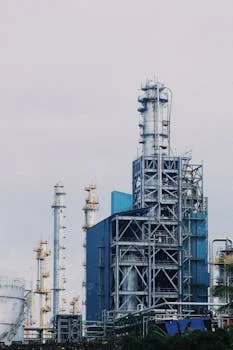
Conventional Activated Sludge remains the standard for many West Virginia municipalities due to its lower capital cost of $6–$10 per gallon and familiar maintenance routines. However, for urban areas like Charleston or Huntington where land is limited, MBR systems for high-efficiency treatment in urban areas provide a 60% smaller footprint and superior BOD/TSS removal (>99%), albeit at a higher energy cost of 0.8–1.2 kWh/m³.
For smaller communities or industrial sites, modular solutions are becoming the preferred choice. The use of cost-effective WSZ series package plants for small communities can reduce capital costs to $3–$7 per gallon. These systems are particularly effective for populations under 5,000, as seen in the success of Petersburg’s 1.35 MGD plant, which maintains low O&M costs while discharging into the sensitive Potomac River system.
Sludge management is the final technical hurdle. The choice between plate-and-frame filter presses for cost-effective sludge dewatering ($200K–$1M) and belt presses ($150K–$800K) significantly impacts both capital and disposal costs.
| Technology | Capital Cost (Per Gallon) | Energy Use (kWh/m³) | Footprint Requirement | BOD Removal % |
|---|---|---|---|---|
| Conventional (CAS) | $6 – $10 | 0.4 – 0.6 | High | 85 – 95% |
| MBR | $10 – $15 | 0.8 – 1.2 | Low | >99% |
| Package Plant (WSZ) | $3 – $7 | 0.5 – 0.8 | Very Low | 90 – 95% |
| DAF (Pretreatment) | $2 – $5 | 0.3 – 0.5 | Low | N/A (FOG Focus) |
ROI Calculator: How to Justify Your Wastewater Treatment Investment in West Virginia
Justifying a multi-million dollar wastewater investment requires a comprehensive Return on Investment (ROI) analysis.Step 1: Estimate Capital Cost. Use the benchmark of $10M per 1 MGD for a conventional plant. For a 2 MGD plant in a city like Morgantown, assume a $20M CAPEX.
Step 2: Calculate Annual O&M. Conventional plants cost roughly $0.50–$1.50 per 1,000 gallons to operate. For 2 MGD, this equates to approximately $730,000 to $1,000,000 annually.
Step 3: Quantify Compliance Savings. West Virginia municipalities often face EPA fines of $25,000 to $100,000 per year for repeated overflows. A new plant eliminates these costs entirely.
Step 4: Factor in Funding Incentives. Securing a 45% USDA Rural Development grant reduces the $20M CAPEX to $11M, significantly accelerating the ROI.
Step 5: Compare to Outsourcing. Private operators often charge $2–$5 per 1,000 gallons. Owning a modern, efficient plant usually reduces this effective rate to under $1.50 per 1,000 gallons over a 20-year lifecycle.
| ROI Factor | Annual Impact (2 MGD Plant) | 10-Year Cumulative Value |
|---|---|---|
| Avoided EPA Fines | $50,000 | $500,000 |
| Energy Efficiency Savings | $85,000 | $850,000 |
| Reduced Sludge Disposal | $120,000 | $1,200,000 |
| Economic Growth (New Tax Base) | $250,000 | $2,500,000 |
| Total Benefit | $505,000 | $5,050,000 |
When evaluating these numbers, consider how Alaska’s wastewater costs compare to West Virginia’s.
Funding Your West Virginia Wastewater Project: Grants, Loans, and Creative Options
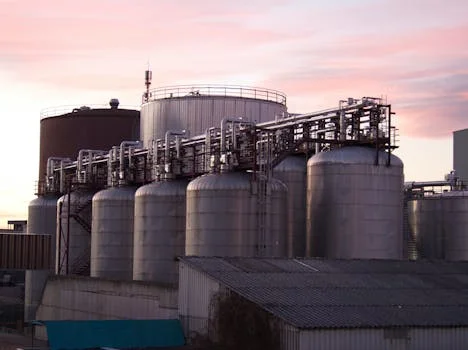
The USDA Rural Development Water & Waste Disposal Loan and Grant Program is the primary vehicle for smaller communities (under 10,000 residents). This program can provide grants covering up to 45% of project costs. For larger projects, the West Virginia Infrastructure and Jobs Development Council offers low-interest loans, typically around 3%, to help bridge the gap for projects like Buckhannon’s $47.3 million plant.
The EPA Clean Water State Revolving Fund (CWSRF) remains a cornerstone for DEP-compliant projects. Public-Private Partnerships (P3s) are also emerging as a viable alternative; the $25.5 million sale of the Cheat Lake wastewater system to a private operator demonstrates how municipalities can transfer long-term maintenance risks to specialized firms.
To repay these loans, rate increases are often unavoidable but manageable. Some municipalities are also exploring energy performance contracts (ESCOs), where the energy savings from modern high-efficiency blowers and pumps are used to pay off the equipment's financing over time.
Frequently Asked Questions
How much does it cost to set up a sewage treatment plant in West Virginia?
Costs range from $3 million for a 0.5 MGD package plant to $50 million or more for a 5 MGD conventional municipal plant.
How much does it cost to install a sewage treatment plant?
Installation costs, which include site preparation, piping, and physical construction, typically