Hospitals in Kalimantan must treat medical effluent to Permenkes No. 7/2019 and SNI 6989.59:2019 limits, including BOD ≤ 30 mg/L and COD ≤ 100 mg/L. Combined Biological AOP (CBA) systems, used in 579 Indonesian hospitals, achieve 92–97% COD removal. Capital costs range from IDR 500M for 10 m³/day plants to IDR 2.5B for 50 m³/day units. This guide maps checklist compliance costs equipment hospital indonesia teams need for screening, oxidation, and disinfection.
Checklist Compliance Costs Equipment Hospital Indonesia Buyers Review First
Hospital wastewater treatment in Kalimantan combines pre-treatment, biological oxidation, and disinfection to meet Permenkes No. 7/2019 limits of BOD ≤ 30 mg/L and COD ≤ 100 mg/L. CBA systems used in 579 Indonesian hospitals achieve 92–97% COD removal. Typical capital costs range from IDR 500 million for 10 m³/day plants to IDR 2.5 billion for 50 m³/day units.
Untreated effluent from hospitals in South Kalimantan poses a direct contamination risk to local watersheds and groundwater. Balangan Regional Public Hospital documented a 12 m³/day discharge. In Balangan and Banjarmasin, high water tables and unlined septic tanks allow pathogens and chemical residues to reach drinking-water pathways when secondary treatment is skipped.
Antibiotic-resistant bacteria amplify that risk. WHO 2023 data on AMR in Indonesia identify hospital effluent as a primary reservoir for multi-drug resistant E. coli. When those organisms enter Kalimantan river systems, horizontal gene transfer can make routine infections harder to treat. KLHK scrutiny of medical discharges has increased as a result.
Regulatory exposure is material for facility managers. Under Permen LHK No. 5/2014, hospitals that miss discharge standards face fines from IDR 100 million to IDR 500 million. South Kalimantan DLH teams now run more unannounced inspections. Repeat violations can revoke operating licenses, so a compliant WWTP is an institutional baseline. Procurement teams often benchmark against a global hospital wastewater treatment standards framework before locking long-term capital plans.
Indonesian Hospital Wastewater Standards Kalimantan Plants Must Meet
Permenkes No. 7/2019 sets BOD ≤ 30 mg/L and COD ≤ 100 mg/L for hospital liquid waste before discharge. Some South Kalimantan districts lower chlorine residual to ≤ 0.5 mg/L versus the national ≤ 1 mg/L limit to protect Barito basin ecology. Engineers must confirm both national and district rules before design freeze.
SNI 6989.59:2019 defines sampling practice. Hospitals must collect 24-hour composite samples for BOD and COD so morning ward cleaning and laundry peaks are represented. Disinfection must deliver a 99.9% (3-log) reduction for total and fecal coliform. Many designers now prefer disinfection methods for hospital wastewater such as UV or ozone to limit trihalomethane formation.
| Parameter | Permenkes No. 7/2019 Limit | Monitoring Frequency | Sampling Method |
|---|---|---|---|
| pH | 6.0 – 9.0 | Daily (In-situ) | Grab Sample |
| BOD₅ | ≤ 30 mg/L | Monthly | 24-hr Composite |
| COD | ≤ 100 mg/L | Monthly | 24-hr Composite |
| TSS | ≤ 30 mg/L | Monthly | Grab Sample |
| Fecal Coliform | ≤ 1,000 MPN/100 mL | Monthly | Grab Sample |
| Chlorine Residual | ≤ 1.0 mg/L (National) | Daily | Grab Sample |
Permen LHK No. 5/2014 governs reporting cadence. Complex parameters such as BOD and COD need quarterly submissions, while pH and coliform logs are monthly. Kalimantan hospitals upload results to the SIMPEL portal to keep compliance status current.
How is Indonesia tightening environmental compliance for industrial wastewater emissions in 2026?
Hospital and industrial plants share the same enforcement spine: Permenkes limits, Permen LHK No. 5/2014 sanctions, and SIMPEL reporting. DLH inspections in South Kalimantan have already tightened. Public PROPER ranking downgrades and license risk now sit beside IDR 100–500 million fines, so 2026 projects plan monitoring and disinfection capacity earlier in design.
Hospital Wastewater Treatment Systems in Kalimantan: CBA vs MBR vs DAF
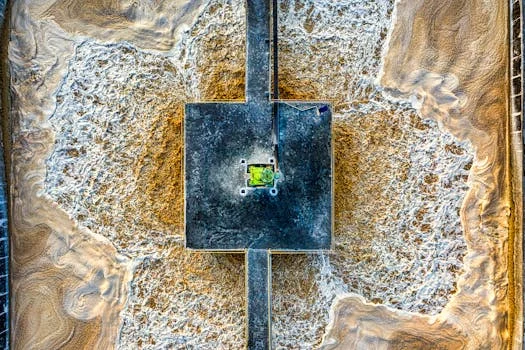
CBA systems combine biological oxidation with catalytic ozonation for complex medical effluent. Typical hydraulic retention time is 8 to 12 hours. Activated sludge reduces organics, then AOP ozone targets pharmaceutical residues and pathogens. Banjarbaru projects such as RSUD Ulin use this path when high removal is required inside a moderate footprint.
Space-limited sites in Samarinda or Balikpapan often select MBR systems for hospital wastewater in Kalimantan. PVDF membranes with 0.1 μm pores replace secondary clarifiers and support higher MLSS. Footprint can fall by up to 50% while TSS removal approaches 99%. RSUD Dr. Soetomo in Samarinda uses MBR to treat high-strength effluent in a compact layout.
DAF is mainly a pre-treatment stage where kitchens or surgical centers generate high FOG loads. DAF systems for pre-treatment of hospital wastewater attach micro-bubbles to solids and grease, then skim the float. That protects downstream biology during load spikes and keeps overall train stability.
| System Type | COD Removal | BOD Removal | TSS Removal | Best Use Case |
|---|---|---|---|---|
| CBA | 92–97% | 90–95% | 85–90% | General public hospitals; pharmaceutical removal |
| MBR | 95–98% | 95–99% | >99% | Space-constrained urban hospitals |
| DAF | 40–60% | 30–50% | 85–90% | Pre-treatment for high FOG/grease loads |
How do MBR wastewater treatment systems compare on costs, compliance, and ROI?
Against CBA, MBR posts higher COD and BOD removal bands (95–98% and 95–99%) and >99% TSS removal in the comparison table above. CAPEX for 10 m³/day MBR sits at IDR 800M–1.1B versus IDR 500M–700M for CBA. Monthly OPEX is also higher at IDR 8M–20M because of membrane scouring and 3-to-5-year membrane replacement. ROI still lands in the 3-to-5-year window when avoided fines and non-potable reuse are counted.
Cost Breakdown for Kalimantan Hospital Wastewater Plants
A 10 m³/day CBA plant in Kalimantan starts near IDR 500 million. Larger 50 m³/day MBR trains can reach IDR 2.5 billion after logistics. Remote Central or North Kalimantan sites often carry a 15% to 20% transport premium for heavy equipment and filter media. Regional hospital groups sometimes secure 10–15% discounts on bulk orders.
OPEX tracks energy and chemicals. CBA runs about IDR 5M to IDR 15M per month for ozone and catalyst media. MBR runs IDR 8M–20M per month. DAF is cheaper at IDR 3M–10M per month but still needs a secondary biological stage for full compliance.
| System Capacity | CBA CAPEX (IDR) | MBR CAPEX (IDR) | Avg. Monthly OPEX |
|---|---|---|---|
| 10 m³/day | 500M – 700M | 800M – 1.1B | 5M – 8M |
| 30 m³/day | 900M – 1.2B | 1.4B – 1.8B | 10M – 15M |
| 50 m³/day | 1.8B – 2.2B | 2.1B – 2.5B | 15M – 22M |
Avoided fines average about IDR 250M per incident in ROI models. Recycled effluent for irrigation or cooling can cut water purchase costs. Kemenkes grants can cover up to 70% of CAPEX for public hospitals, and ADB environmental loans remain a common long-term funding path.
What are typical costs for disinfection of piping, tanks, structures, and equipment?
Plant-level OPEX already embeds disinfection energy and chemicals inside the IDR 5M–20M monthly bands above. Chlorine dioxide, UV, and ozone are all approved under Permenkes No. 7/2019. Chlorine dioxide is often chosen where long discharge pipes need a stable residual to limit bacterial regrowth after the main process train.
Step-by-Step Deployment Checklist for Kalimantan Hospitals
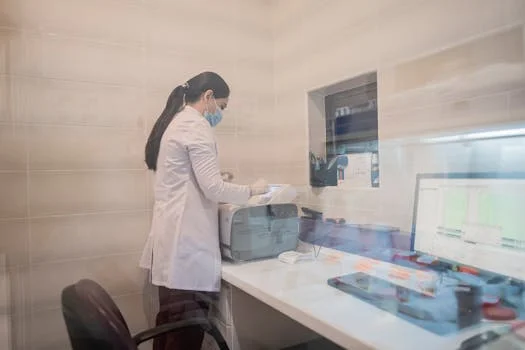
Kalimantan deployments move through AMDAL or UKL-UPL review, usually over a 3-to-6-month DLH timeline. Work starts with flow modeling and influent characterization, including disinfectant and antibiotic spikes that can inhibit biology. Hospitals near watersheds often use tools such as HEC-RAS to test monsoon discharge effects.
- Site Assessment & Influent Characterization: Determine peak daily flow and chemical composition (BOD, COD, TSS, FOG).
- Regulatory Permitting: Submit UKL-UPL for systems <50 m³/day or AMDAL for >50 m³/day to the DLH.
- Technology Selection: Choose between CBA, MBR, or DAF based on space, budget, and effluent goals. Smaller clinics often specify the Medical & Hospital Wastewater Treatment System as a modular package train.
- Civil Works & Installation: Construction typically takes 4–8 weeks for integrated systems. Ensure all tanks are lined to prevent Kalimantan's acidic soil from corroding the structure.
- Commissioning & Testing: Conduct a 30-day performance test. Final discharge must be validated by a KAN-accredited laboratory using SNI 6989.59:2019 protocols.
Contractors must segregate kitchen grease traps and provide equalization for high-pH laundry surges. After commissioning, operators need SVI monitoring practice and ozone generator calibration training before handover closes.
What belongs on a package wastewater treatment plant supplier checklist?
Verify rated flow, guaranteed BOD/COD/TSS values, disinfection method, lined tank materials for acidic soils, and KAN lab acceptance testing. For 1–5 m³/day clinics, compact packages such as a Medical & Hospital Wastewater Treatment System can fit footprints near 0.5 m² when pre-certified to SNI effluent limits. Confirm spare-parts lead times for Kalimantan logistics before award.
Frequently Asked Questions
What are the penalties for non-compliance with hospital wastewater standards in Indonesia?
Fines range from IDR 100 million to 500 million under Permen LHK No. 5/2014. Hospitals also face administrative sanctions, PROPER ranking downgrades, and possible shutdowns for repeat violations.
How much does a hospital wastewater treatment system cost in Kalimantan?
CAPEX ranges from IDR 500 million for a 10 m³/day CBA system to IDR 2.5 billion for a 50 m³/day MBR system, including local shipping and installation adjustments.
What disinfection methods are approved for hospital wastewater in Indonesia?
Chlorine dioxide (ClO₂), UV, and ozone are approved under Permenkes No. 7/2019. Chlorine dioxide is often preferred for long discharge pipes because it holds a stable residual.
Can small clinics in Kalimantan use package treatment systems?
Yes. Compact package systems target clinics at 1–5 m³/day, with footprints as small as 0.5 m² when pre-certified to SNI effluent standards.
What are the maintenance requirements for a CBA system?
Plan quarterly AOP catalyst replacement, monthly ozone electrode service, and daily RAS rate checks. Annual membrane cleaning applies if a filtration stage is included.
Who This Is For / Who Should Look Elsewhere / Next Step
This guide is for hospital engineers, DLH compliance officers, and procurement teams sizing Kalimantan medical WWTPs against Permenkes No. 7/2019. Municipal or non-medical industrial plants should use sector-specific emission guides instead of this hospital checklist. If you are matching checklist compliance costs equipment hospital indonesia scope to a clinic or ward expansion, share flow and influent data so the process train and disinfection package can be sized against the tables above.