Wastewater Treatment Plant Cost in Northern Ireland 2025: Engineering Breakdown with Local Data, Compliance & ROI Calculator
In Northern Ireland, wastewater treatment plant costs vary dramatically by scale and technology. Domestic systems (1–20 PE) range from £8,000 to £25,000 installed, while commercial plants (20–500 PE) cost £30,000–£500,000. NI Water’s £3.5B 2026 development plan highlights municipal projects exceeding £100M. Key cost drivers include NIEA compliance (e.g., <125 mg/L BOD for discharges to sensitive areas), site conditions, and technology choice—MBR systems cost 30–50% more upfront but reduce long-term OPEX by 20–40%.
Why Northern Ireland’s Wastewater Costs Are Unique: NI Water’s £3.5B Challenge
Northern Ireland Water requires approximately £3.5 billion in capital investment by 2026 to upgrade its aging wastewater infrastructure and meet escalating environmental standards. This funding gap, identified in the PC21 business plan, stems from decades of underinvestment in the province’s 1,000+ wastewater treatment works (WWTW). For engineers and developers, this translates to a complex procurement environment where regional infrastructure constraints often necessitate private, decentralized treatment solutions to bypass capacity "bottlenecks" in Belfast, Derry, and the mid-Ulster corridors.
The primary driver for these costs is the strict adherence to the EU Urban Waste Water Directive 91/271/EEC, which remains integrated into Northern Ireland’s regulatory framework. As the population grows and industrial activity increases, the Northern Ireland Environment Agency (NIEA) has tightened discharge consents to protect local ecosystems, particularly the Lough Neagh catchment area. These regulations demand higher treatment efficiencies, which naturally increase capital expenditure (CAPEX) for advanced filtration and biological nutrient removal (BNR) systems.
Geographic and logistical factors further inflate costs in the region. Engineering data suggests that construction and installation costs for wastewater projects in Northern Ireland are 15–25% higher than the UK average. This is attributed to the specialized labor required for NI-specific geological conditions—such as high water tables and peat soils—and the logistical overhead of importing high-specification membrane or flotation components through Belfast or Larne ports. For context, the recent €550M upgrade of the Ringsend plant in Dublin serves as a regional benchmark; while NI projects are typically smaller in scale, they face identical inflationary pressures on mechanical and electrical (M&E) components and chemical reagents.
Northern Ireland Wastewater Treatment Compliance: NIEA Standards and Discharge Limits
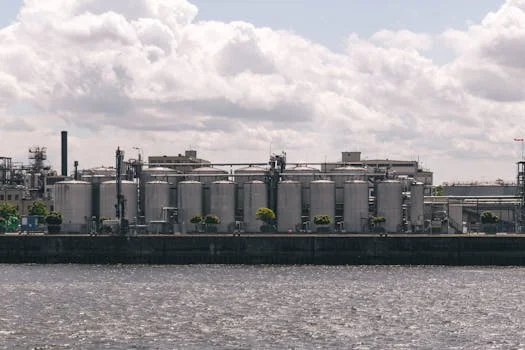
The Northern Ireland Environment Agency (NIEA) enforces discharge limits under the Water (Northern Ireland) Order 1999, requiring all non-mains wastewater systems to hold a "Consent to Discharge." Compliance is not a static target; limits are determined by the sensitivity of the receiving water body. For projects discharging into "sensitive areas" (as defined by the EU Directive 91/271/EEC), such as the Lough Neagh or Upper Lough Erne catchments, phosphorus and nitrogen removal is mandatory, significantly increasing the complexity of the treatment train. Failure to meet these standards can result in NIEA fines of up to £20,000 per day or criminal prosecution for repeat offenders.
For industrial facilities, particularly in the healthcare or pharmaceutical sectors, specialized disinfection options for NI’s hospital and industrial wastewater are required to mitigate the risk of antimicrobial resistance (AMR) and chemical toxicity. The permitting process itself adds to the project timeline and budget, with NIEA fees ranging from £500 for small domestic units to over £5,000 for large-scale industrial discharge applications. This process involves a pre-application consultation, a formal Environmental Impact Assessment (EIA) for larger works, and rigorous soil percolation testing.
| Parameter | Standard Limit (Non-Sensitive) | Sensitive Area Limit (e.g., Lough Neagh) | Typical Industrial Limit (NI) |
|---|---|---|---|
| BOD (Biochemical Oxygen Demand) | < 20 mg/L | < 10 mg/L | < 250 mg/L (Pre-treatment) |
| COD (Chemical Oxygen Demand) | < 125 mg/L | < 75 mg/L | < 600 mg/L |
| TSS (Total Suspended Solids) | < 30 mg/L | < 15 mg/L | < 100 mg/L |
| Ammoniacal Nitrogen (NH3-N) | < 5 mg/L | < 1 mg/L | < 10 mg/L |
| Total Phosphorus (TP) | N/A | < 1 mg/L | < 2 mg/L |
Wastewater Treatment Plant Costs in Northern Ireland: 2025 Breakdown by System Type
Domestic system installation in Northern Ireland currently ranges from £8,000 to £25,000, influenced heavily by the high prevalence of peat soils which increase excavation and stabilization costs by 10–15%. For a standard 6-person household (Population Equivalent or PE), the hardware for a package treatment plant costs between £3,500 and £6,000, with the remainder of the budget allocated to civil works, electrical connections, and the NIEA-mandated drainage field. In rural areas of Fermanagh or Tyrone, where soil percolation is often poor, the requirement for raised mound systems or sand filters can push the total cost toward the higher end of the £25,000 spectrum.
Commercial systems (20–500 PE) designed for hotels, nursing homes, or small industrial units require a more robust engineering approach. A compact underground sewage treatment system for NI’s urban sites is often the preferred solution to minimize footprint and odor complaints. These systems typically range from £30,000 to £500,000. The cost variance is driven by the specific influent characteristics; for instance, a commercial kitchen will require advanced grease traps and biological secondary treatment, whereas a warehouse may only require standard sanitary treatment. Site assessments (£300) and detailed soil testing (£1,500) are non-negotiable pre-requisites at this scale to ensure the system does not fail NIEA inspection post-installation.
| System Scale | Population Equivalent (PE) | Estimated Total Cost (Installed) | Primary Cost Drivers |
|---|---|---|---|
| Domestic (Small) | 1–10 | £8,000 – £15,000 | Soil type, drainage field length |
| Domestic (Large) | 10–25 | £15,000 – £28,000 | Pump station requirements |
| Commercial (Small) | 25–100 | £30,000 – £120,000 | NIEA discharge limits, grease traps |
| Commercial (Medium) | 100–500 | £120,000 – £500,000 | Sludge handling, tertiary treatment |
| Municipal/Industrial | 500+ | £1M – £100M+ | M&E complexity, BNR requirements |
For large-scale municipal or industrial projects exceeding 500 PE, CAPEX is dictated by the level of automation and the specific technology employed. In these scenarios, an MBR membrane bioreactor for NI’s sensitive catchment areas is frequently specified despite its higher initial cost. The ability of MBR to produce high-quality effluent in a compact footprint offsets the massive civil engineering costs associated with traditional large-scale clarifiers and aeration basins, particularly in space-constrained urban zones like Belfast Harbour.
Technology Comparison: MBR vs. DAF vs. Conventional Activated Sludge for NI Projects
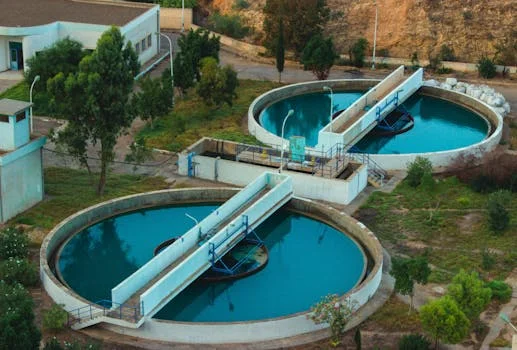
MBR systems achieve 99% pathogen removal, justifying a 30–50% higher upfront CAPEX for projects in Northern Ireland’s high-sensitivity catchments, such as the River Bann or the shores of Lough Neagh. While a Conventional Activated Sludge (CAS) system might cost £800 per PE, an MBR system will range between £1,200 and £2,000 per PE. However, for engineers, the decision is rarely based on CAPEX alone. MBR systems eliminate the need for secondary clarifiers and tertiary sand filters, reducing the total footprint by up to 50%. In NI, where land acquisition and planning permission are significant hurdles, this footprint reduction can save tens of thousands in ancillary project costs.
For industrial applications, particularly within Northern Ireland’s robust food and drink sector (poultry, dairy, and meat processing), Dissolved Air Flotation (DAF) is the engineering gold standard. A high-efficiency DAF system for industrial wastewater in NI’s food processing zones is essential for removing Fats, Oils, and Grease (FOG) and Total Suspended Solids (TSS) before biological treatment or discharge to the sewer. DAF systems typically cost £800–£1,500 per PE equivalent of organic load. When compared to CAS, DAF systems provide superior resilience against "shock loads" common in industrial production cycles, protecting the downstream biological processes from failure and subsequent NIEA penalties.
| Technology | CAPEX Index | OPEX (per m³) | Compliance Risk | Footprint |
|---|---|---|---|---|
| Conventional (CAS) | Low (1.0) | £0.15 – £0.25 | Moderate | Large |
| MBR | High (1.5) | £0.10 – £0.20 | Very Low | Compact |
| DAF (Pre-treatment) | Medium (1.2) | £0.08 – £0.18 | Low | Medium |
A detailed MBR vs. conventional system comparison for NI projects reveals that while CAS has the lowest entry cost, its energy consumption for aeration and the high cost of sludge disposal in Northern Ireland (often involving long-distance transport to centralized processing hubs) make it less economical over a 20-year lifecycle. MBR systems, through automated sludge age control and high biomass concentration, can reduce sludge volume by 20–30%, offering a significant operational advantage in the NI market.
ROI Calculator: How to Justify Your Northern Ireland Wastewater Treatment Investment
Industrial facility operators in Northern Ireland can achieve a 3–5 year payback period by integrating water reuse, leveraging rebates of up to £0.50/m³ for industrial users who reduce their reliance on the mains supply. The Return on Investment (ROI) for a wastewater plant is calculated by weighing the initial CAPEX and annual OPEX against the "avoided costs" of non-compliance and utility charges. In the NI context, the primary avoided cost is often the NIEA non-compliance penalty, which can exceed the cost of the entire treatment system within a single year of operational failure.
ROI Formula: (Annual Savings + Avoided Penalties) / (CAPEX + Annual OPEX) × 100
For a medium-sized commercial plant (200 PE), the annual OPEX benchmarks in Northern Ireland range from £0.05 to £0.20 per cubic meter of treated water. By utilizing high-efficiency equipment, such as MBR or DAF, operators can reduce chemical consumption and energy use. the NI Water "Large User" tariff structure provides a financial incentive for companies to treat their own wastewater to a standard suitable for "greywater" reuse in cooling towers or wash-down areas, further accelerating the ROI.
| Project Type | Typical CAPEX | Annual Savings (Est.) | Payback Period |
|---|---|---|---|
| Domestic Upgrade | £12,000 | £1,500 (Maintenance/Sludge) | 8 Years |
| Commercial (Hotel) | £85,000 | £22,000 (Water Reuse/Fees) | 3.8 Years |
| Industrial (Dairy) | £450,000 | £115,000 (Trade Effluent Savings) | 3.9 Years |
| Municipal (Small Town) | £2.5M | £180,000 (OPEX Efficiency) | 14 Years |
Financing options in Northern Ireland include NI Water infrastructure grants for specific development zones and potential eligibility for green financing incentives via local banks like Danske or Ulster Bank, which prioritize projects demonstrating significant environmental impact reduction. Additionally, the replacement of aging septic tanks with modern treatment plants may qualify for specific rural development funding, depending on the current NIEA priority status of the local water catchment.
Frequently Asked Questions
What is the average cost of a NIEA Consent to Discharge application?
For standard domestic systems, the fee is approximately £500. For commercial or industrial discharges, the fee can range from £1,000 to £5,000 depending on the volume and complexity of the effluent. It is essential to consult the NIEA Water Management Unit in Lisburn for current fee schedules.
How often must a wastewater plant in Northern Ireland be serviced?
NIEA guidelines and manufacturer warranties generally require a professional service every 6 to 12 months. For commercial systems, quarterly inspections are recommended to ensure compliance with discharge limits and to prevent mechanical failure that could lead to environmental fines.
Can I install a treatment plant in areas with heavy clay or peat soil?
Yes, but it requires specific engineering modifications. In NI, this often involves the installation of a "raised mound" or a "constructed wetland" to facilitate secondary filtration when soil percolation (Vp rate) is poor. This typically adds £5,000–£10,000 to the total installation cost.
Is MBR technology overkill for a small NI business?
Not necessarily. If your business is located near a sensitive waterway or if you have limited land for a traditional drainage field, the compact footprint and superior effluent quality of an MBR system may be the only way to secure NIEA approval for your project.