The wastewater treatment plant cost in Johor Bahru for a 500 m³/day industrial plant is RM3.2 million in this cost model, against outsourcing at RM1.80/m³. Johor has committed more than RM5 billion to three new reservoirs and three treatment plants. The Straits Times reported on 6 March 2025 that the plants lift treated-water capacity by 41%, from 2,171 MLD to 3,061 MLD. Zero purchases of Singapore treated water are targeted after 2030.
Project notes still use a 3.8% annual population growth rate and a 20% reliance on imported water from Singapore. Those notes expect SAJ treated water to rise from RM1.80 to RM2.20 per m³ in 2025. The Straits Times, citing a December 2024 parliamentary reply, put local treatment at about RM1.80 per m³ and Singapore supply at about 11 sen per m³. A completed step to RM2.20 per m³ was not in that March 2025 report.
Wastewater Treatment Plant Cost in Johor Bahru
A 500 m³/day industrial wastewater plant in Johor Bahru is carried at RM3.2 million CAPEX and RM0.90/m³ OPEX, with a stated 4.5-year payback against outsourcing at RM1.80/m³. The same model lists a 50 m³/day package plant at RM1,500,000 and RM1.45/m³. Unit OPEX falls to RM0.50/m³ at 5,000 m³/day.
Scale changes cost per cubic meter more than the plant name does. A 50 m³/day package plant has a lower cheque, at RM1,500,000, but OPEX of RM1.45/m³ is higher because chemical dosing and energy are less efficient at that size. Most plants we size for a single factory stop at 500 m³/day rather than the municipal row.
| Plant Capacity (m³/day) | Estimated CAPEX (RM) | OPEX (RM/m³) | Payback Period (Years) | Primary Application |
|---|---|---|---|---|
| 50 | 1,500,000 | 1.45 | 7.5 | Small Food Processing / Clinics |
| 200 | 2,100,000 | 1.10 | 5.8 | Textile / Metal Finishing |
| 500 | 3,200,000 | 0.90 | 4.5 | Chemical / Palm Oil Refineries |
| 2,000 | 8,500,000 | 0.65 | 3.2 | Industrial Parks / Large F&B |
| 5,000 | 18,000,000 | 0.50 | 2.8 | Municipal / Township Projects |
Land acquisition remains a variable cost in Johor Bahru’s project budgets. In established industrial zones like Tebrau or Senai, land prices range from RM150 to RM300 per m², potentially adding 10–15% to total costs. Rural areas toward Kota Tinggi offer lower land prices (RM50–100 per m²) but may incur higher logistics and piping expenses. The permitting process through the Department of Environment (DOE) Malaysia typically takes 6 to 12 months, and engineers must account for capital holding costs during this pre-construction phase.
Using cost benchmarks for wastewater treatment plants in Asia helps a Johor bidder test these ringgit rows against regional equipment prices before tender.
Industrial Wastewater Treatment Cost Johor 2026
Industrial wastewater treatment cost in Johor in 2026 still uses a 500 m³/day CAPEX of RM3.2 million in this model, while the state’s new water supply is a separate RM5 billion programme. Reservoirs are expected to cost more than RM1.5 billion, and three paired plants about RM3.5 billion for 890 million litres a day (Johor works exco Mohamad Fazli, The Straits Times, 6 March 2025).
Federal money covers the reservoirs on Sungai Johor, Sungai Pontian and Sungai Sedili. Johor funds the three plants through Ranhill SAJ. Earlier notes treated the 41% as demand growth by 2030, driven by a 3.8% annual population growth rate. The reported 41% is added treated-water capacity, from 2,171 MLD to 3,061 MLD, with zero Singapore purchases targeted after 2030.
Project notes still carry a 20% reliance on imported water. Bakaj records put the draw at 16 MGD against a 5 MGD contract volume, adding about RM180,000 a year (The Star, 3 December 2024). Singapore may take up to 250 MGD of raw water at 3 sen per 1,000 gallons, and Johor buys treated water back at 50 sen per 1,000 gallons. By 2024 the state had approved 17 data centres needing 59.06 MLD, about 2.7% of capacity, and a further 20 to 30 are expected by 2030.
Equipment Costs: What Drives Your Plant’s Budget
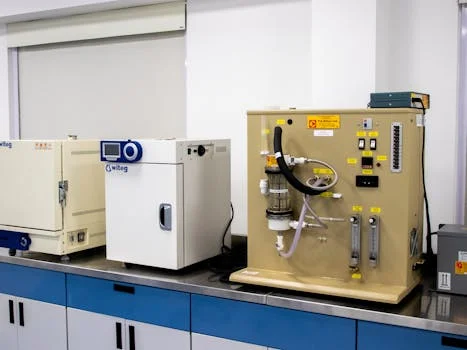
Equipment cost for a Johor food plant is often led by pre-treatment. A high-efficiency DAF system for FOG and TSS removal typically accounts for 20–25% of the total equipment budget for food and beverage plants in Johor. High fats, oils and grease favour dissolved air flotation over a clarifier. A reuse spec instead needs a compact MBR system for high-BOD wastewater.
| Equipment Type | CAPEX (RM) | OPEX (Low/High) | Efficiency (Removal Rate) | Best Use Case |
|---|---|---|---|---|
| DAF System (100 m³/h) | 800,000 | Low-Med | 95% TSS / 90% FOG | F&B, Slaughterhouses |
| MBR System (500 m³/day) | 1,200,000 | High | 99% BOD / 99% Bacteria | Water Reuse, High-BOD |
| Plate & Frame Filter Press | 250,000 | Low | 35-45% Cake Solids | Sludge Dewatering |
| Chemical Dosing Unit | 120,000 | Med-High | N/A | pH Correction / Coagulation |
| UV Disinfection Unit | 180,000 | Low | 99.9% Pathogen Kill | Municipal / Reuse |
A Johor food plant in these notes cut initial CAPEX by 25% by installing a DAF system (RM650,000) instead of a conventional clarifier (RM850,000) for primary treatment. The DAF footprint was 60% smaller, so civil cost fell with it. MBR membranes still need about RM120,000 a year of OPEX on a 500 m³/day plant. Conventional activated sludge in the same note is about RM80,000 a year and leaves a weaker effluent.
Sludge hauling in Johor can exceed RM200 per ton, so cake dryness is a monthly cash item. Selecting the right sludge dewatering press for reduced disposal costs belongs in the equipment budget, not in a later variation. A sludge dewatering equipment comparison shows plate and frame presses often yield the driest cake. Most plants we size for slaughterhouse sludge run the press harder than the DAF.
Johor Bahru DOE Effluent Compliance Upgrade Cost
Johor Bahru DOE effluent compliance upgrade cost follows the 2009 schedules, not a 2025 SAJ drinking-water tariff. According to the Department of Environment guide (Eleventh Edition, October 2010), new sewage Standard A is BOD5 20 mg/L, COD 120 mg/L and suspended solids 50 mg/L at 20°C. Standard B sewage is BOD5 50 mg/L, COD 200 mg/L and suspended solids 100 mg/L. Standard A is only for Third Schedule catchments.
Industrial mixed effluent in the Fifth Schedule is BOD5 20 mg/L and suspended solids 50 mg/L for Standard A, and BOD5 40 mg/L and suspended solids 100 mg/L for Standard B. Lead is 0.10 mg/L on Standard A and 0.5 mg/L on Standard B. Oil and grease is 1.0 mg/L and 10 mg/L. COD for other industries is 80 mg/L and 200 mg/L, and textile COD is 80 mg/L and 250 mg/L.
Earlier notes required BOD below 20 mg/L and TSS under 50 mg/L for every new industrial discharge, and said that beat national Standard B. Those values match Standard A, not every Johor outfall. Upgrading legacy trains for BOD < 20 mg/L and TSS < 50 mg/L is marked here as a 15–20% CAPEX increase compared to 2020 levels (HydropureWater engineering data). Most upgrade files we see bid Standard B hardware into a Standard A drain.
From October 2009 a new industrial effluent source or an upgrade needs prior written notification under the Industrial Effluent Regulations 2009, P.U.(A) 434. A licence to occupy is only for prescribed premises such as palm oil mills, rubber mills and scheduled-waste facilities. Carry the noted 6 to 12 months as holding cost, with a professional engineer on the submission.
Project notes put fines at RM50,000 to RM500,000 under the Environmental Quality (Sewage) Regulations 2009, and treat that range as larger than the amortized cost of a high-spec train. The DOE guide’s RM500,000 cap is EQA Section 34B, for illegal scheduled waste, not a sewage discharge fine. The 1989 prescribed-premises rules cap a fine at RM50,000, plus up to RM1,000 a day if the offence continues.
A textile case in the notes drew a RM300,000 fine for repeated COD violations, then RM1.2 million for an MBR upgrade. The same notes say DOE may issue a Prohibition Order and halt production until the wastewater system meets the limit. Pre-treatment for Lead < 0.1 mg/L or high FOG adds RM200,000 to RM400,000 of CAPEX in the model. Reading how DAF systems perform in high-FOG applications is the practical route for COD and FOG, not a larger clarifier by default.
Pollution-control kit can take an initial allowance of 40% and an annual allowance of 20% under the Income Tax (Qualifying Plant Allowances) (Control Equipment) Rules 1998, as the DOE guide states. That allowance does not cut the RM3.2 million invoice.
In-House vs Outsourced Wastewater Treatment ROI Malaysia

In-house treatment at 500 m³/day costs RM 4,246,250 over five years in this model, against RM 1,642,500 for outsourcing at RM1.80/m³. Water reuse for cooling or irrigation can shorten payback by 1–2 years. The saving used here is RM0.50 to RM0.80 per m³. On a 500 m³/day plant that reuse credit is stated as annual savings exceeding RM100,000.
| Financial Metric (5-Year Horizon) | In-House Treatment (500 m³/day) | Outsourced Treatment (SAJ/Private) |
|---|---|---|
| Initial CAPEX | RM 3,200,000 | RM 0 |
| Annual OPEX (Power, Chem, Labor) | RM 164,250 | RM 328,500 (at RM1.80/m³) |
| Maintenance & Compliance Fees | RM 45,000 | RM 0 |
| Total 5-Year Cost | RM 4,246,250 | RM 1,642,500 |
| Cost per m³ (Amortized 10 Years) | RM 1.25 | RM 1.80 - 2.20 |
Although the 5-year total cost is higher for in-house treatment due to upfront CAPEX, ownership becomes more economical over 10 years on the model’s RM 1.25 per m³. Outsourced water stays at RM 1.80 - 2.20 per m³, and most plants we review only clear that gap when daily flow stays near the design 500 m³/day. Annual in-house OPEX is RM 164,250, against RM 328,500, and maintenance is RM 45,000 against RM 0. After the 4.5-year payback point, the facility operates at a 50% cost advantage compared to market rates on that operating bill.
Which seven items move the Johor budget?
Seven items move a Johor wastewater budget more than brand choice. Fix each one before you compare vendor quotes.
- Design flow against the 50, 200, 500, 2,000 or 5,000 m³/day row.
- Influent FOG and BOD, which pick DAF at about 20–25% of equipment cost or an MBR at RM1,200,000 for 500 m³/day.
- Standard A or Standard B on the actual outfall.
- Land at RM150 to RM300 per m² in Tebrau or Senai, or RM50–100 per m² toward Kota Tinggi, a 10–15% swing.
- Sludge haulage above RM200 per ton and cake solids of 35-45%.
- Holding cost across the 6 to 12 months noted for DOE permitting.
- Reuse credit of RM0.50 to RM0.80 per m³ where cooling demand is real.
Who Should Use This Johor Cost Model
Factory engineers and EPC estimators screening 50 to 5,000 m³/day can use this Johor cost model, and township civil takeoffs should not. Food, textile, metal finishing and palm-oil sites can start on the capacity table. Promoters should not treat RM18,000,000 as a turnkey municipal price. Zones in the Iskandar Malaysia corridor, including Pasir Gudang and Tanjung Langsat, are the industrial cases, and most plants we size there sit on the 200 or 500 m³/day row.
Selangor factory rates do not belong in a Johor Bahru estimate. Read Sewage Treatment Equipment Suppliers Selangor Malaysia when the site is Shah Alam, then return to these Johor rows for Pasir Gudang or Senai.
Next, lock average daily flow, influent COD and the receiving-water standard, then request a sized budget. Send the flow sheet through a Johor plant budget request.
Frequently Asked Questions
What CAPEX should a 500 m³/day Johor plant carry?
A 500 m³/day industrial plant in this model carries RM3,200,000 CAPEX, RM0.90/m³ OPEX and a 4.5-year payback against outsourcing at RM1.80/m³. The 200 m³/day row is RM2,100,000 and RM1.10/m³ over 5.8 years. A 5,000 m³/day row is RM18,000,000 and RM0.50/m³ over 2.8 years. The 50 m³/day row is the long payback, at 7.5 years.
Does Standard A or Standard B apply to a Johor factory?
Standard A applies to Third Schedule inland waters, and Standard B applies to other inland waters or Malaysian waters (DOE investor guide, 2010). New sewage Standard A is BOD5 20 mg/L and suspended solids 50 mg/L at 20°C, while Standard B is BOD5 50 mg/L and suspended solids 100 mg/L. Industrial mixed effluent Standard B is BOD5 40 mg/L and suspended solids 100 mg/L, not 50 mg/L. Ask DOE which schedule the outfall sits in before you freeze the process.
How much does a DOE compliance upgrade add in Johor?
A heavy-metal or high-FOG pre-treatment step adds RM200,000 to RM400,000 of CAPEX in this model, and a full MBR block for 500 m³/day is listed at RM1,200,000. One Johor textile case in the notes paid a RM300,000 fine, then spent RM1.2 million on an MBR. Legacy plants chasing BOD < 20 mg/L and TSS < 50 mg/L are marked up 15–20% against 2020 levels. Holding cost during a 6 to 12 month permit window sits on top of that cheque.
When does in-house treatment beat outsourcing on cash?
In-house treatment is more expensive over five years in this model: RM 4,246,250 against RM 1,642,500 outsourced at RM1.80/m³. The same sheet puts the 10-year unit cost at RM 1.25 versus RM 1.80 - 2.20, and annual OPEX at RM 164,250 versus RM 328,500. That operating gap is the 50% cost advantage after the stated 4.5-year payback. Reuse at RM0.50 to RM0.80 per m³ can add more than RM100,000 a year on a 500 m³/day plant.